The Profession of Arms: A Guide for Young Army Officers
It takes courage, especially for a young officer, to check a man met on the road for not saluting properly or for slovenly appearance, but, every time he does, it adds to his stock of moral courage, and whatever the soldier may say, he has respect for the officer who does pull him up.
Read Document →The Dragon's Teeth: Assessing China's Military Modernization
PLA has focused on modernising its capabilities across all warfare domains to achieve these goals. This includes land, air, and maritime operations, nuclear, space, counter-space, electronic warfare and cyberspace operations, aiming to become a fully integrated joint force.
Read Document →Transforming the PLA: A Decade of reorganisation from SSF to ISF
PRC has engaged in a sustained and broad effort to transform the PLA from an infantry-heavy, low-technology, ground forces-centric military into a high-technology, networked force with an increasing emphasis on joint operations and naval and air power projection.
Read Document →Eyes without Borders: Exploring the World of Open Source Intelligence (OSINT) in the Digital Age
Open Source Intelligence (OSINT) is gaining prominence with the rise of social media, the digital society and the vast growth of publicly and commercially available information (PAI and CAI).
Read Document →
The PLA’s Developing Cyber Warfare Capabilities and India's Options
Informationised warfare blurs the lines between peacetime and wartime. A nation in the information age cannot wait for the hostilities to break out to collect intelligence, carryout influence operations, develop antisatellite systems or design computer software weapons.
Read Document →
Galwan and After
Why did China did this when he is under tremendous pressure in all fronts, is this China's salami slice tactics being progressed rigorously, what will be new Rules of Engagement, what will be escalatory control mechanism, who has taken this decision, will there be some pressure put by China in India's North-East through insurgency.
Read Document →
India’s Joint Doctrine for Cyberspace Operations: A Critical Review
Chief of Defence Staff (CDS) General Anil Chauhan and Secretary, Department of Military Affairs, formally released declassified versions of the Joint Doctrines for Cyberspace Operations during the Chiefs of Staff Committee meeting in New Delhi.
Read Document →
Know your Enemy General(now Field Marshal) Syed Aseem Munir
Gen SA Munir's position in the hierarchy of Pakistan was not very comfortable. The state of economy, insurgency in Pakhtoonistan and Balochistan, attack on the Jaffar Express, constant protests by supporters of Imran Khan's supporters inside and outside of parliament.
Read Document →
Decoding Operation SINDOOR: Key Aspects and Implications
Precision strikes were carried out on nine sites—four in Pakistan and five in PoK—linked to anti-India terrorist groups such as the LeT, JeM and the Hizbul Mujahideen. The targeted sites included Muridke (LeT headquarters) and Bahawalpur (JeM headquarters).
Read Document →
Chinese Cyber Exploitation in India's Power Grid - Is There a linkage to Mumbai Power Outage?
The New York Times (NYT), based on analysis by a U.S. based private intelligence firm Recorded Future, reported that a Chinese entity penetrated India’s power grid at multiple load dispatch points. Chinese malware intruded into the control systems that manage electric supply across India, along with a high-voltage transmission substation and a coal-fired power plant
Read Document →19 November 2019
China’s Indigenous Carrier Transits Taiwan Strait
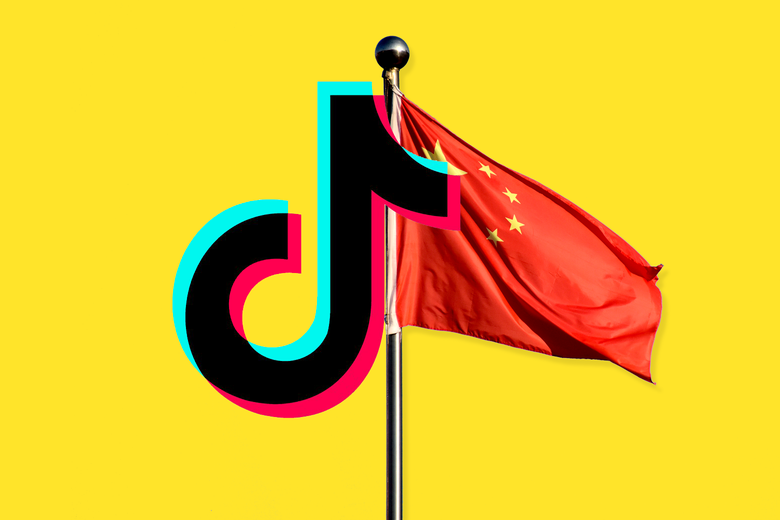
The Furor Over TikTok Is About Something Much Bigger
Is BRICS Losing Its Shine for China?
China’s Surveillance State Has Eyes on Central Asia
China’s advanced surveillance regime is taking root along the length of the Belt and Road—especially the Belt, the overland Eurasian routes that were the origin of the government’s ambitious investment project. Recently, Kyrgyzstan opened a new police command center in its capital, Bishkek, putting its new facial recognition cameras to work. The equipment was supplied—reportedly free of charge—by the China National Electronics Import and Export Corporation, a defense company currently sanctioned by the United States.China’s Pacific Challenge – Analysis
China Has Always Trailed the U.S. in Chipmaking. In the Trade War Era, Will It Finally Catch Up?
Putin Moves Closer To China As New ‘Technological War’ With U.S. Intensifies
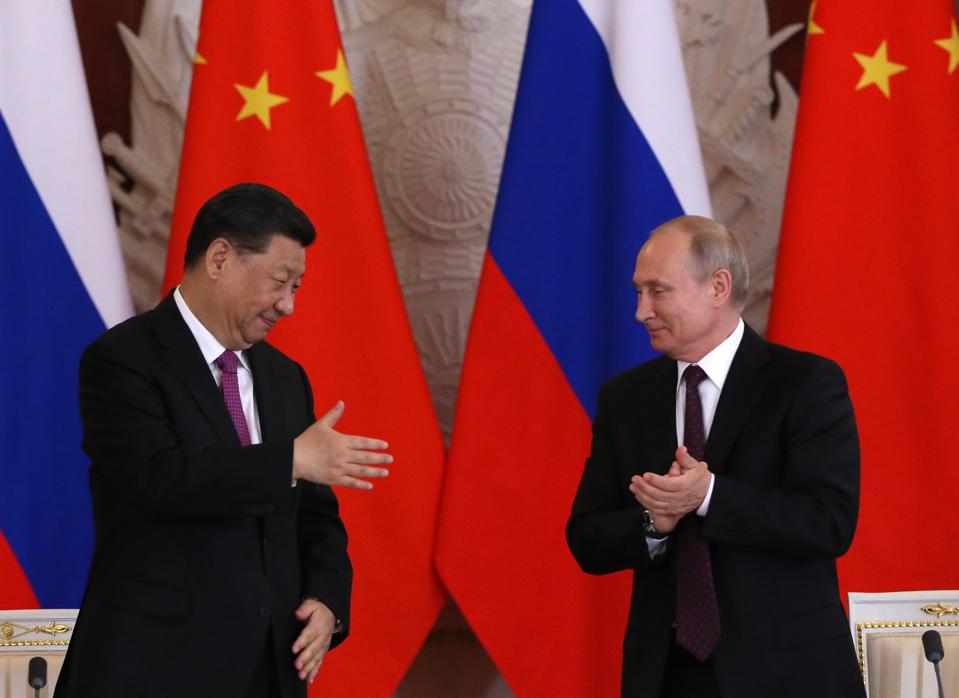
In the world of authoritarian regimes, an alarming game of “keeping up with the Joneses,” or more accurately the Xis, is playing out as Russia’s President Vladimir Putin looks on with envy at China’s technological lockdown. Putin has described the standoff between China, Russia and the U.S. as a technological war—one that has inspired additional domestic controls as the tech world polarises. Changes have been made to the online infrastructure, and now we’re seeing proposals to restrict the content and applications running across the top. If there is a template Putin wants to follow for Russia’s digital future, it isn't difficult to figure out where it is coming from.Ukraine Doesn’t Need Aid. It Needs Land Reform.
Ukraine remains one of six nations in the world where selling land is forbidden. It shares this dubious distinction with North Korea, Cuba, Venezuela, Tajikistan, and the Democratic Republic of the Congo.While Impeachment Mania Consumes Washington, a New North Korea Crisis Is Brewing.
If President Trump doesn’t want to ring in the New Year with the first North Korean ICBM launch in over two years, then it would behoove him to look in the mirror and ask himself what his administration can do to prevent dialogue from crumbling. How to deal with a declining Russia
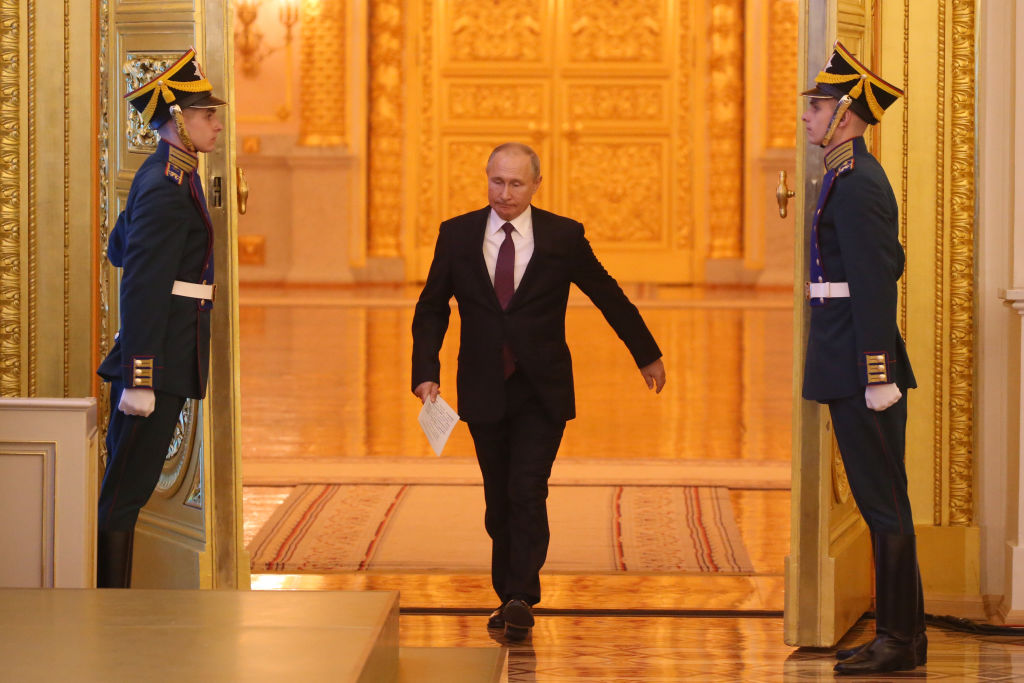
The Kremlin is on a roll. Under President Vladimir Putin, Russia has replaced the United States in Syria, continues to intervene in Eastern Ukraine, and recently hosted an African summit in Sochi. Appearances, however, can be deceiving. True, Russia retains a vast nuclear arsenal, equal in size to that of the US, and it used force effectively against Georgia in 2008 and Ukraine in 2014, provided military assistance to save Bashar al-Assad’s regime in Syria, and has used cyber means to disrupt US and other elections. But Russia can only be an international spoiler. Behind the adventurism, it is a country in decline.Russia's Undeclared 'New-Generation War' On The West
Russia has the capability and demonstrated intent to do more than just play a spoiling role in international politics.The Ukraine-Russia War: Five Cutting Edge Books
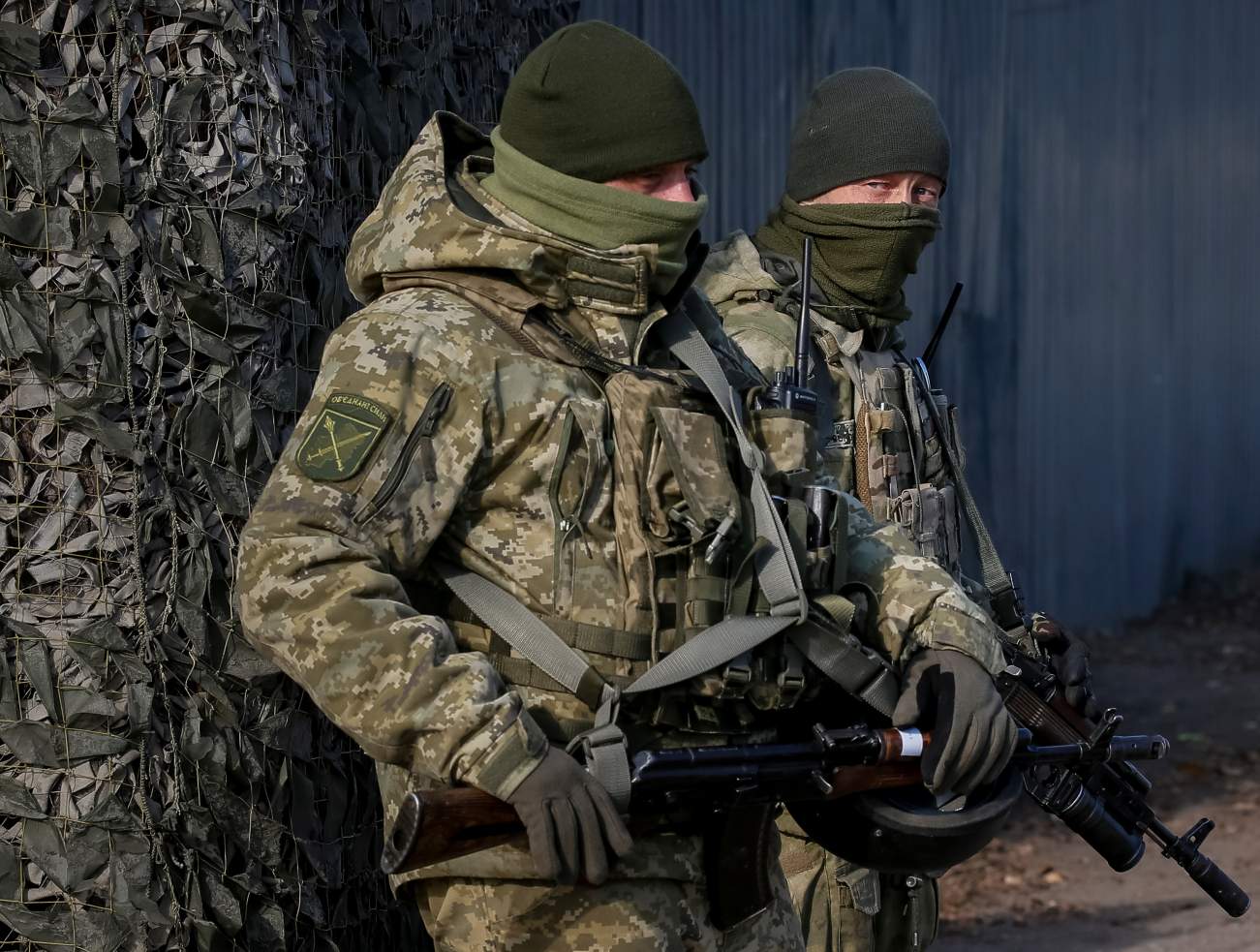
When, on 21 November 2013, former Ukrainian President Victor Yanukovych decided to postpone an EU Association Agreement, few would have predicted that this would lead to a prolonged inter-communal conflict in Europe’s borderland. What started as a peaceful demonstration of support for Ukraine’s pro-European course by thousands of people in Maidan Square in Kiev has developed into a vicious confrontation dividing families, communities and the Ukrainian nation. Since the events of 2013, E-International Relations has published five books covering the crisis from a wide range of angles and viewpoints, with contributions from almost 40 leading scholars. Each book is free to read and can be downloaded by clicking on the cover image below.What Is an Oligarch?
'No Friends But the Mountains.' What Life Looks Like for the Kurds of Syria, Now That the U.S. Has Pulled Back
The modern Middle East was formed exactly 100 years ago when, in the wake of World War I, the victors began creating new countries. Among the populations deemed deserving of nationhood — along with Armenians and Azeris — were the Kurds. The Kurds had lived for centuries in the mountains and high plains where Mesopotamia becomes Anatolia and, with their own language, culture and identity, met the criteria for a nation of their own.Israel Tests New Air-Ground Tactics Vs. Islamic Jihad
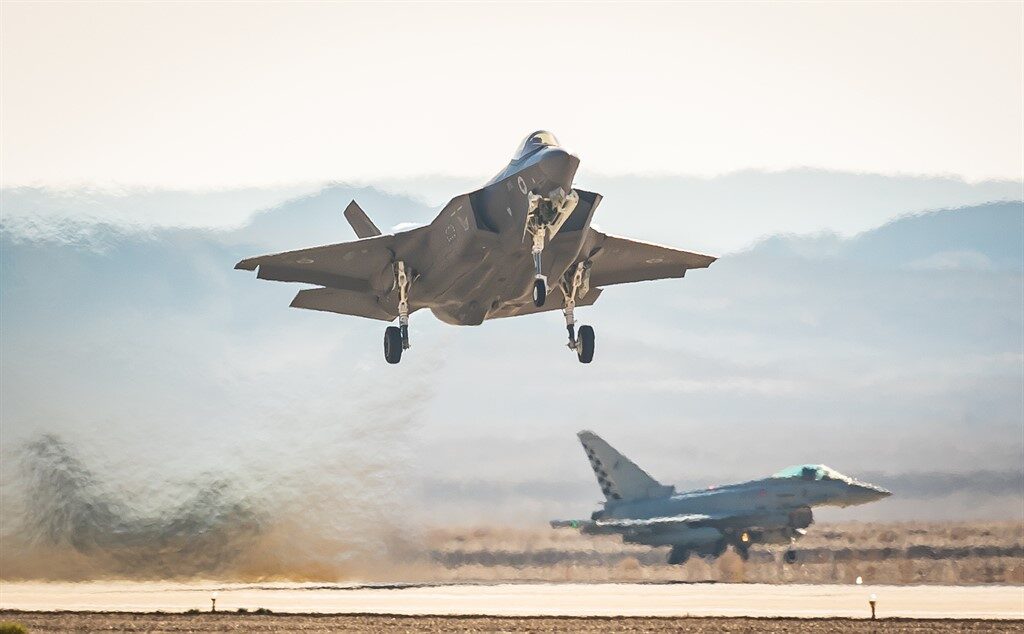
The Israeli Air Force just wrapped up a “Blue Flag” wargame with the US & European allies and a real war with Islamic Jihad in Gaza.
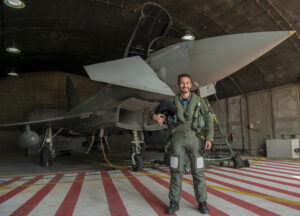
An Italian Air Force pilot poses in front of his F-2000 Eurofighter Typhoon during the 2019 Blue Flag exercises at Uvda airbase in Israel.Germany Can Reduce Its External Surplus
For years, Germany's ballooning current-account surplus has rankled the rest of the world, and German policymakers have thrown up their hands as if powerless to do anything about it. But the external imbalance is a result of policies that are fully within the government's power to change.Guinea's President Tempts Fate to Extend His Reign
Guinea's President Alpha Conde greets his supporters in the capital, Conakry, on Oct. 31, 2019, after weeks of violent protests against the leader's perceived bid to prolong his rule claimed around 10 lives.What the Impeachment Inquiry Means for the U.S. Relationship With Ukraine
The quickly unfolding impeachment inquiry into U.S. President Donald Trump has already ensnared many other people, while raising more and more questions. From the extent of Trump’s involvement in pressuring Ukraine to investigate his domestic political rivals to the culpability of prominent officials in and outside his administration in that scheme, the public hearings that started this week have set the stage for an impeachment vote that could be among the most pivotal political moments in recent American history.Doomed from the Skies, Damned on the Ground
UK government funds 18 projects to develop anti-drone technologies
Government has listened to ideas, is now funding the development of proof-of-concepts and prototypes.Social Media in Asia: A New Frontier for Mass Surveillance and Political Manipulation
Although stark across Asia, the rise of social media monitoring tools and disinformation campaigns is a global phenomenon.Don’t get too hyper about hypersonics: The Drift, Season II, Vol. I
Hot Electrons Harvested Without Tricks
Why Matter Matters: How Technology Characteristics Shape the Strategic Framing of Technologies
Previous work stresses that actors use strategic technology framing—i.e. purposeful language and rhetoric—to shape technology expectations, persuade stakeholders, and influence the evolution of technologies along their life-cycle. Currently, however, the literature predominantly describes strategic technology framing as a sociopolitical process, and provides only limited insights into how the framing itself is shaped by the material characteristics of the technologies being framed. To address this shortcoming, we conducted a comparative, longitudinal case study of two leading research organizations in the United States and Germany pursuing competing solar photovoltaic (PV) technologies to examine how technology characteristics shape the strategic framing of technologies. We show that to frame PV technologies in their own favor, executives made use of four framing dimensions (potential, prospect, performance, and progress) and three framing tactics (conclusion, conditioning, and concession). Moreover, we show that which framing dimensions and tactics actors selected depended on the maturity and evolution of the technology they pursued, respectively. By highlighting how technology characteristics shape strategic technology framing, we contribute to the literatures on social movements, institutional entrepreneurship, and impression management. Additionally, by providing a coherent framework of strategic technology framing, our study complements existing findings in the literature on the sociology of expectations and contributes to a better understanding of how technology hypes emerge.Winter 2019 U.S.- China Cybersecurity Update
It is difficult to accurately speculate on the progress of U.S.-China trade negotiations, as media reports on the status of key policy proposals seemingly differ each day depending on the transparency and messaging agenda of the sources involved. However, what has been certain during the winter of 2019 is that major updates to U.S. and Chinese cybersecurity regulations are in the process of being implemented, and these developments stand to set key precedents for the intersection of applicable foreign investment and cybersecurity regulations in the U.S. and China. The Dollar Goes to War
Although it hasn’t commanded the same attention as US President Donald Trump’s tweets and tariffs, America’s increasingly aggressive use of the dollar as a means of diplomatic coercion could bring about a sea change for the global economy. Is America wading too far into the unknown?Army Tests Out Drone that Can Fire Grenades into Enemy Hideouts
U.S. Army weapons officials are testing an experimental drone armed with a multi-shot, 40mm grenade launcher to destroy enemy targets hiding behind cover.The Pentagon and Lockheed Are Fighting Over Who Really Owns the F-35's Buggy Computers
Exploring the Foundation of Multi-Domain Operations
Crypto army: token rewards for Chinese soldiers
The People’s Liberation Army could soon be rewarding its soldiers’ good performance with cryptocurrency tokens if China’s military brass embrace blockchain technology, according to a military newspaper.