Stories about killer robots, machine-augmented heroes, laser weapons and battles in space - outer or cyber - have always been good for filling cinema seats, but now they have started to liven up sober academic journals and government white papers.The Profession of Arms: A Guide for Young Army Officers
It takes courage, especially for a young officer, to check a man met on the road for not saluting properly or for slovenly appearance, but, every time he does, it adds to his stock of moral courage, and whatever the soldier may say, he has respect for the officer who does pull him up.
Read Document →The Dragon's Teeth: Assessing China's Military Modernization
PLA has focused on modernising its capabilities across all warfare domains to achieve these goals. This includes land, air, and maritime operations, nuclear, space, counter-space, electronic warfare and cyberspace operations, aiming to become a fully integrated joint force.
Read Document →Transforming the PLA: A Decade of reorganisation from SSF to ISF
PRC has engaged in a sustained and broad effort to transform the PLA from an infantry-heavy, low-technology, ground forces-centric military into a high-technology, networked force with an increasing emphasis on joint operations and naval and air power projection.
Read Document →Eyes without Borders: Exploring the World of Open Source Intelligence (OSINT) in the Digital Age
Open Source Intelligence (OSINT) is gaining prominence with the rise of social media, the digital society and the vast growth of publicly and commercially available information (PAI and CAI).
Read Document →
The PLA’s Developing Cyber Warfare Capabilities and India's Options
Informationised warfare blurs the lines between peacetime and wartime. A nation in the information age cannot wait for the hostilities to break out to collect intelligence, carryout influence operations, develop antisatellite systems or design computer software weapons.
Read Document →
Galwan and After
Why did China did this when he is under tremendous pressure in all fronts, is this China's salami slice tactics being progressed rigorously, what will be new Rules of Engagement, what will be escalatory control mechanism, who has taken this decision, will there be some pressure put by China in India's North-East through insurgency.
Read Document →
India’s Joint Doctrine for Cyberspace Operations: A Critical Review
Chief of Defence Staff (CDS) General Anil Chauhan and Secretary, Department of Military Affairs, formally released declassified versions of the Joint Doctrines for Cyberspace Operations during the Chiefs of Staff Committee meeting in New Delhi.
Read Document →
Know your Enemy General(now Field Marshal) Syed Aseem Munir
Gen SA Munir's position in the hierarchy of Pakistan was not very comfortable. The state of economy, insurgency in Pakhtoonistan and Balochistan, attack on the Jaffar Express, constant protests by supporters of Imran Khan's supporters inside and outside of parliament.
Read Document →
Decoding Operation SINDOOR: Key Aspects and Implications
Precision strikes were carried out on nine sites—four in Pakistan and five in PoK—linked to anti-India terrorist groups such as the LeT, JeM and the Hizbul Mujahideen. The targeted sites included Muridke (LeT headquarters) and Bahawalpur (JeM headquarters).
Read Document →
Chinese Cyber Exploitation in India's Power Grid - Is There a linkage to Mumbai Power Outage?
The New York Times (NYT), based on analysis by a U.S. based private intelligence firm Recorded Future, reported that a Chinese entity penetrated India’s power grid at multiple load dispatch points. Chinese malware intruded into the control systems that manage electric supply across India, along with a high-voltage transmission substation and a coal-fired power plant
Read Document →9 January 2017
*** 10 trends for the future of warfare
Stories about killer robots, machine-augmented heroes, laser weapons and battles in space - outer or cyber - have always been good for filling cinema seats, but now they have started to liven up sober academic journals and government white papers.*** Declassified: How India Tracked Pakistan’s Development of a Nuclear Device
*** 10 Conflicts to Watch in 2017
*** Russia Looks for an Exit in Syria
** Rethinking the Threat of Islamic Extremism: The Changes Needed in U.S. Strategy
* Quit Social Media. Your Career May Depend on It.
I’m a millennial computer scientist who also writes books and runs a blog. Demographically speaking I should be a heavy social media user, but that is not the case. I’ve never had a social media account.IN SEARCH OF CREDIBLE DETERRENCE
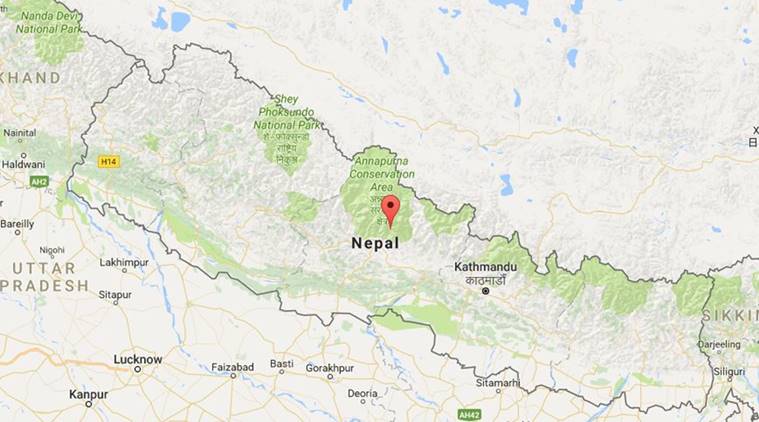
Next Door Nepal: Being with the force
Medalless army
How Will Demonetization Affect Business in India in 2017?
How Russia May Approach the Taliban and Afghanistan in 2017
China Brief
DEMYSTIFYING THE A2/AD BUZZ
Anti-access and area denial — best known by its shorthand A2/AD — has crossed the buzzword threshold. It’s a quite impressive feat for such a distinctively non-user friendly and technical concept, which alludes to that family of military capabilities used to prevent or constrain the deployment of opposing forces into a given theater of operations and reduce their freedom of maneuver once in a theater. A2/AD’s popularity may well be justified. For all its possible criticisms and shortcomings, the concept can help us better understand the unfolding global competition for military access and movement in an increasingly mature precision-strike context.Europe and China's New Silk Roads
The purpose of this report is to provide a comparative perspective of China’s ‘One Belt, One Road’ initiative (OBOR), as seen from the various European Union member states. The Chinese leadership officially launched this framework in autumn 2013, presenting it immediately as a key national concept and foreign policy priority for the years to come. This report covers the role of OBOR in the relations between China and fourteen EU member states, including all larger countries and many middle-sized ones, as seen from the European side. It does so by systematically treating three basic questions across a selection of EU member states and at the EU level itself:Inside Russia's New Foreign Policy Master Plan
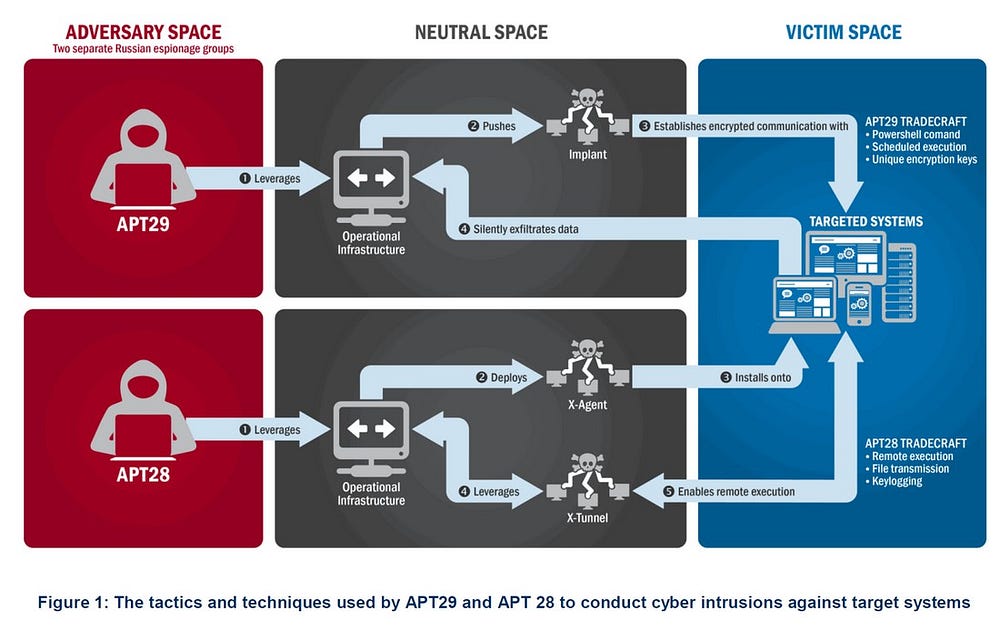
Russian Hackers Began Honing Their Election-Tampering Skills in 2010
Vladimir Putin and Squirrels: Masters of the Universe
'Optionality' and the Future of US Defense Procurement
The Year in Review: Russia and the 2016 U.S. Election
THE FUTURE OF AIR SUPERIORITY PART II: THE 2030 PROBLEM
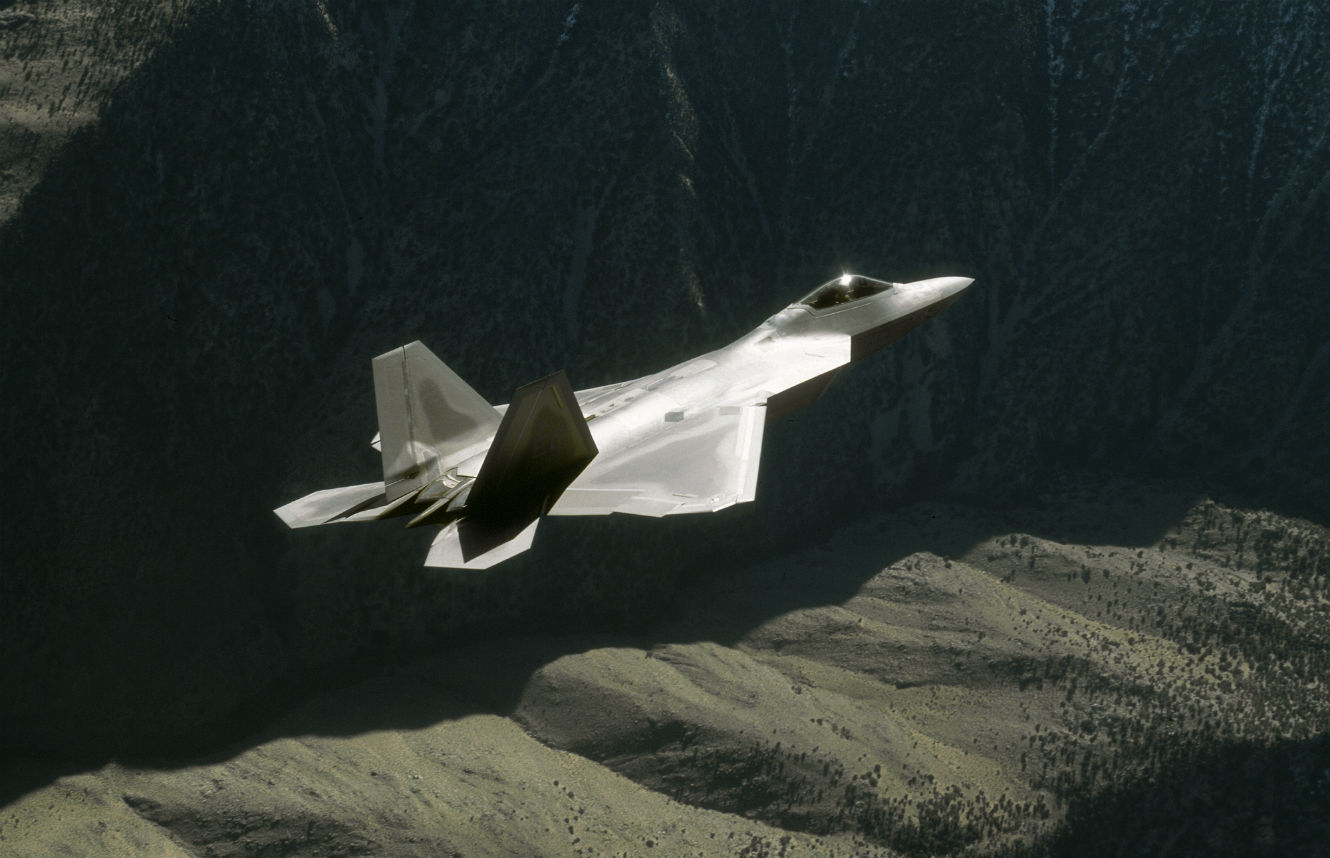
In early 2015, the U.S. Air Force was about to begin work on its next-generation air-to-air fighter, commonly known as F-X. When beginning such a program, military services usually start with an “analysis of alternatives” to help them define the desired attributes of new systems. The objective of this analysis is to determine the most rational investment decisions prior to committing taxpayer dollars. Key funding decisions typically follow shortly on the heels of this analytic effort. As the Air Force approached these decisions, it had to decide how much of its topline budget authority it was willing to allocate to the emerging F-X program. Out of this came a cost estimate for the F-X program based on trends from similar programs in the past. The result was not pretty.