The Profession of Arms: A Guide for Young Army Officers
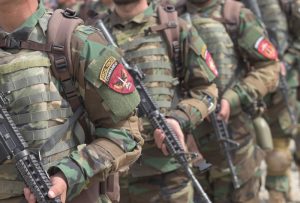
It takes courage, especially for a young officer, to check a man met on the road for not saluting properly or for slovenly appearance, but, every time he does, it adds to his stock of moral courage, and whatever the soldier may say, he has respect for the officer who does pull him up.
Read Document →The Dragon's Teeth: Assessing China's Military Modernization
PLA has focused on modernising its capabilities across all warfare domains to achieve these goals. This includes land, air, and maritime operations, nuclear, space, counter-space, electronic warfare and cyberspace operations, aiming to become a fully integrated joint force.
Read Document →Transforming the PLA: A Decade of reorganisation from SSF to ISF
PRC has engaged in a sustained and broad effort to transform the PLA from an infantry-heavy, low-technology, ground forces-centric military into a high-technology, networked force with an increasing emphasis on joint operations and naval and air power projection.
Read Document →Eyes without Borders: Exploring the World of Open Source Intelligence (OSINT) in the Digital Age
Open Source Intelligence (OSINT) is gaining prominence with the rise of social media, the digital society and the vast growth of publicly and commercially available information (PAI and CAI).
Read Document →
The PLA’s Developing Cyber Warfare Capabilities and India's Options
Informationised warfare blurs the lines between peacetime and wartime. A nation in the information age cannot wait for the hostilities to break out to collect intelligence, carryout influence operations, develop antisatellite systems or design computer software weapons.
Read Document →
Galwan and After
Why did China did this when he is under tremendous pressure in all fronts, is this China's salami slice tactics being progressed rigorously, what will be new Rules of Engagement, what will be escalatory control mechanism, who has taken this decision, will there be some pressure put by China in India's North-East through insurgency.
Read Document →
India’s Joint Doctrine for Cyberspace Operations: A Critical Review
Chief of Defence Staff (CDS) General Anil Chauhan and Secretary, Department of Military Affairs, formally released declassified versions of the Joint Doctrines for Cyberspace Operations during the Chiefs of Staff Committee meeting in New Delhi.
Read Document →
Know your Enemy General(now Field Marshal) Syed Aseem Munir
Gen SA Munir's position in the hierarchy of Pakistan was not very comfortable. The state of economy, insurgency in Pakhtoonistan and Balochistan, attack on the Jaffar Express, constant protests by supporters of Imran Khan's supporters inside and outside of parliament.
Read Document →
Decoding Operation SINDOOR: Key Aspects and Implications
Precision strikes were carried out on nine sites—four in Pakistan and five in PoK—linked to anti-India terrorist groups such as the LeT, JeM and the Hizbul Mujahideen. The targeted sites included Muridke (LeT headquarters) and Bahawalpur (JeM headquarters).
Read Document →
Chinese Cyber Exploitation in India's Power Grid - Is There a linkage to Mumbai Power Outage?
The New York Times (NYT), based on analysis by a U.S. based private intelligence firm Recorded Future, reported that a Chinese entity penetrated India’s power grid at multiple load dispatch points. Chinese malware intruded into the control systems that manage electric supply across India, along with a high-voltage transmission substation and a coal-fired power plant
Read Document →31 January 2020
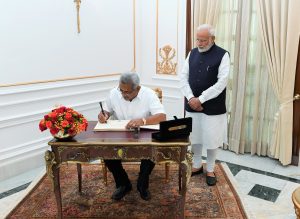
Sri Lanka’s Role in Sino-Indian Competition in South Asia
U.S. Air Force communications aircraft crashes in Taliban controlled district
Afghanistan’s Turbulent Decade
In November 2010, Afghan and U.S. officials were increasingly hopeful about ending the insurgency in Afghanistan through negotiations with the second-in-command of the Taliban group: Mullah Akhtar Mansour. NATO forces escorted Mansour to the Afghan presidential palace and even paid him for his participation. That effort was part of a larger policy change to end the insurgency through a peace settlement.More TAPI Delays, This Time in Afghanistan
Not that the Turkmenistan-Afghanistan-Pakistan-India (TAPI) pipeline needs any more delays, but Afghan officials say laws on land acquisition for the project as it crosses Afghanistan have not been signed, meaning the project’s timeline remains as foggy as ever.In Afghanistan, Religious Schools Are a Breeding Ground for Islamic State Influence
KUNAR, Afghanistan—A small group of boys sits cross-legged on the floor, reciting the Quran under their breath, their bodies moving rhythmically to the Arabic words, in the light-flooded rooms of the religious school connected to the mosque in the village of Lamatak. Asia Times | Did the US just concede defeat in China tech war? | Article
The Commerce Department has abandoned long-expected rules to tighten controls on US firms’ exports to Huawei, China’s national champion in broadband technology and the world leader in 5G Internet equipment. The Wall Street Journal this morning reported that the Defense Department blocked a long-signaled change in export rules that would forbid US companies from selling components to Huawei from foreign subsidiaries if 10% of the content is derived from US technology. The Treasury Department reportedly backed the Pentagon’s objections.Will the Coronavirus Cause a Major Growth Slowdown in China?
NEW YORK – The panic generated by the new coronavirus, 2019-nCov, which originated in Wuhan, one of China’s largest cities and a major domestic transport hub, reminds many of the fear and uncertainty at the peak of the 2003 SARS crisis. China’s stock market, after rising for months, has reversed itself in recent days, and global markets have followed suit, apparently reflecting concerns about the epidemic’s impact on the Chinese economy and global growth. Are these worries justified?Counterterrorism and Preventive Repression: China’s Changing Strategy in Xinjiang
Huawei Wins the 5G Battle for Britain (But America and China's 5G Fight Is Not Over)
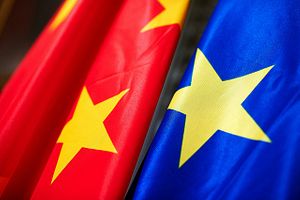
Europe in US-China Rivalry: Stakes and Strategy
Trans-Pacific View author Mercy Kuo regularly engages subject-matter experts, policy practitioners, and strategic thinkers across the globe for their diverse insights into U.S. Asia policy. This conversation with Jonathan Holslag – professor of international politics at Free University of Brussels, special adviser to the first vice president of the European Commission, and author of numerous publications, including The Silk Road Trap (Polity Press 2019) – is the 220th in “The Trans-Pacific View Insight Series.”Is China Setting Itself Up for Another Epidemic?
On Sunday, a friend of mine in China wrote an ominous, two-word post on WeChat: “Broke out.” He meant that a mysterious surge in cases of pneumonia in Wuhan, a city in central China, was, in fact, an outbreak of something more serious.China's biological 'Chernobyl': Different country, same lies
Europe in US-China Rivalry: Stakes and Strategy
A Global Economy Without a Cushion
The Fate Of The Gray Area In Europe – OpEd
January 2020 Issue of the CTC “Sentinel” Now Online
Europe’s odd-couple politics
PARIS — A kaleidoscope of novel political coalitions are taking shape around Europe as old two-party systems crumble.How the North Korean hackers behind WannaCry got away with a stunning crypto-heist
What Are the Implications of South Korea’s Decision to Send a Naval Unit to the Strait of Hormuz?
The announcement by the Republic of Korea (ROK) Ministry of National Defense (MND) that it would independently deploy the Cheonghae naval unit to the Strait of Hormuz on January 21 was met with mixed reactions from the United States, the Gulf states — namely Saudi Arabia and the United Arab Emirates (UAE) – Iran, and the South Korean public. The decision came amid mounting pressures for South Korea to join the U.S.-led maritime force in the Strait of Hormuz following escalations from the Fujairah tanker attacks on May 19, 2019 and the Saudi Aramco attack on September 14, 2019 to the assassination of Iran’s Quds Force commander, Qassem Soleimani, on January 3.Physicists mobilize to reduce the nuclear threat. Again.
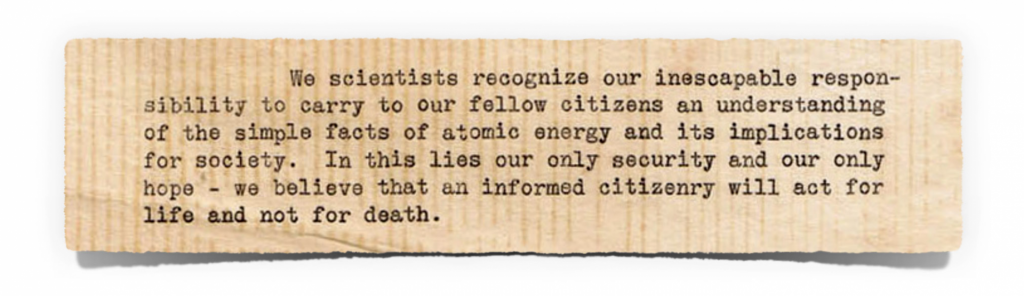
From Albert Einstein letter, Emergency Committee of Atomic Scientists, December 1946We’re Banning Facial Recognition. We’re Missing the Point.
Communities across the United States are starting to ban facial recognition technologies. In May of last year, San Francisco banned facial recognition; the neighboring city of Oakland soon followed, as did Somerville and Brookline in Massachusetts (a statewide ban may follow). In December, San Diego suspended a facial recognition program in advance of a new statewide law, which declared it illegal, coming into effect. Forty major music festivals pledged not to use the technology, and activists are calling for a nationwide ban. Many Democratic presidential candidates support at least a partial ban on the technology.Shaping a Multiconceptual World
Is Your Brand-New Windows 10 PC Really Slow? Use This One Trick To Speed It Up.
There is nothing more aggravating than getting a new PC home, unboxing it and discovering a horrifying fact: it is really, really slow. And worse still, it takes forever to boot up.IBM Just Called Out Google Over Their "Quantum Computer"
On Oct. 23, 2019, Google published a paper in the journal Nature entitled “Quantum supremacy using a programmable superconducting processor.” The tech giant announced its achievement of a much vaunted goal: quantum supremacy.Training Artificial Intelligence Is Fundamental
Hackers Brought Down A U.S. F-15, Is Americas Air Force At Risk?
Israeli Anti-Drone Technology Could Soon Be Guarding More International Airports
More countries participate in international cyber exercise
A NATO-accredited entity said they reached new levels of cooperation during the organization’s annual cyber exercise, an event that combined technical skills with kinetic force and the input of Cyber Commands’ members.We Can End Our Endless Wars
Does the Military Develop Narcissistic Leaders?
Narcissism certainly exists among military leaders, but whether or not the military encourages narcissism is worth considering. To be sure, there is an understandable desire among military members to be part of something “special.” Particularly in the vein of Special Forces, Rangers, Seals, PJs, SOAR, Recon, Delta, SAS, SBS, paratroopers, Royal Marines Commandos, fighter pilots, operators, etc. This goal is admirable and the wish to be the best, and surrounded by the best, is a worthy one. It motivates one to set goals, attain a high level of physical fitness, and complete challenging military training courses where the emphasis is on determination, endurance, and physical excellence as well as tactical and technical competence. The members of these units deserve our highest admiration for carrying out missions often involving dangerous tasks in the defense of our countries and (usually) doing so in a highly professional manner. 30 January 2020
A New Look At Ritwik Ghatak’s Bengal
Afghanistan at an Impasse
The Wuhan Virus: How to Stay Safe
As the new Wuhan coronavirus has spread not only all over mainland China, but also worldwide, panic is rising. Inside China there is a growing sense of helplessness, as the government is compelled to take drastic measures to stop the virus, including introducing some travel restrictions in Beijing. I have received panicked queries from journalists and public health workers in China, asking, “How can we protect ourselves and our families?”