The Profession of Arms: A Guide for Young Army Officers
It takes courage, especially for a young officer, to check a man met on the road for not saluting properly or for slovenly appearance, but, every time he does, it adds to his stock of moral courage, and whatever the soldier may say, he has respect for the officer who does pull him up.
Read Document →The Dragon's Teeth: Assessing China's Military Modernization
PLA has focused on modernising its capabilities across all warfare domains to achieve these goals. This includes land, air, and maritime operations, nuclear, space, counter-space, electronic warfare and cyberspace operations, aiming to become a fully integrated joint force.
Read Document →Transforming the PLA: A Decade of reorganisation from SSF to ISF
PRC has engaged in a sustained and broad effort to transform the PLA from an infantry-heavy, low-technology, ground forces-centric military into a high-technology, networked force with an increasing emphasis on joint operations and naval and air power projection.
Read Document →Eyes without Borders: Exploring the World of Open Source Intelligence (OSINT) in the Digital Age
Open Source Intelligence (OSINT) is gaining prominence with the rise of social media, the digital society and the vast growth of publicly and commercially available information (PAI and CAI).
Read Document →
The PLA’s Developing Cyber Warfare Capabilities and India's Options
Informationised warfare blurs the lines between peacetime and wartime. A nation in the information age cannot wait for the hostilities to break out to collect intelligence, carryout influence operations, develop antisatellite systems or design computer software weapons.
Read Document →
Galwan and After
Why did China did this when he is under tremendous pressure in all fronts, is this China's salami slice tactics being progressed rigorously, what will be new Rules of Engagement, what will be escalatory control mechanism, who has taken this decision, will there be some pressure put by China in India's North-East through insurgency.
Read Document →
India’s Joint Doctrine for Cyberspace Operations: A Critical Review
Chief of Defence Staff (CDS) General Anil Chauhan and Secretary, Department of Military Affairs, formally released declassified versions of the Joint Doctrines for Cyberspace Operations during the Chiefs of Staff Committee meeting in New Delhi.
Read Document →
Know your Enemy General(now Field Marshal) Syed Aseem Munir
Gen SA Munir's position in the hierarchy of Pakistan was not very comfortable. The state of economy, insurgency in Pakhtoonistan and Balochistan, attack on the Jaffar Express, constant protests by supporters of Imran Khan's supporters inside and outside of parliament.
Read Document →
Decoding Operation SINDOOR: Key Aspects and Implications
Precision strikes were carried out on nine sites—four in Pakistan and five in PoK—linked to anti-India terrorist groups such as the LeT, JeM and the Hizbul Mujahideen. The targeted sites included Muridke (LeT headquarters) and Bahawalpur (JeM headquarters).
Read Document →
Chinese Cyber Exploitation in India's Power Grid - Is There a linkage to Mumbai Power Outage?
The New York Times (NYT), based on analysis by a U.S. based private intelligence firm Recorded Future, reported that a Chinese entity penetrated India’s power grid at multiple load dispatch points. Chinese malware intruded into the control systems that manage electric supply across India, along with a high-voltage transmission substation and a coal-fired power plant
Read Document →23 September 2018
Takshashila Discussion Document: The Doklam Imbroglio
India, Russia focus on innovative elements in strategic partnership
India must not hurry Narendra Modi into a summit with Imran Khan
Is This the Revival of Russia-India Economic Ties?
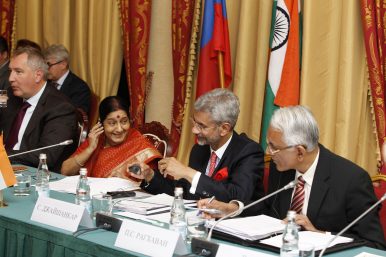
For the last several years Russia and India have been struggling to retain the legacy of their long-term friendship as their foreign policy courses have moved slowly in opposite directions. However, U.S President Donald Trump’s approaches to global trade and other issues exposes shared interests yet again between Moscow and New Delhi. Both realize that in order to mitigate the consequences of U.S. actions, they should focus on their shared interests. The last week saw an intensification of the bilateral dialogue between Russian and Indian officials. Indian Minister of Commerce and Industry, and Civil Aviation Suresh Prabhu led the Indian delegation at the Eastern Economic Forum (EEF) in Vladivostok from September 11-13. Meanwhile, External Affairs Minister Sushma Swaraj visited Moscow on September 13-14 where she met her Russian counterpart Sergey Lavrov and co-chaired with Deputy Prime Minister Yury Borisov the India-Russia Intergovernmental Commission on Technical and Economic Cooperation. Both visits were aimed at bolstering economic ties and preparing the ground for the upcoming summit between Indian Prime Minister Narendra Modi and Russian President Vladimir Putin. Asia's Next Crisis: The Coming Conflict Over Taiwan?
Beijing may be tempted to call Washington’s bluff on the assumption that it won’t respond. China may think that such an outcome—achieving forced reunification of Taiwan and China, strengthening China’s dominance of East Asia, and ending US strategic primacy in Asia—may be worth the risk of a war across the straits. Taiwan is a country under siege as it faces the prospect of eventual reunification with China, on China’s terms, and potentially as soon as 2021—the centenary of the founding of the Chinese Communist Party. From Xi Jinping’s perspective, the successful reunification of China and Taiwan, through force if necessary, would firmly entrench his position as China’s paramount leader, with prestige far exceeding Mao Zedong’s or Deng Xiaoping’s. Achieving that goal quickly is seen by Xi as an essential prerequisite for realizing the ‘ China Dream ’ of national rejuvenation. As ‘a rich country with a strong army’, China would be, in every sense, a new middle kingdom—a global superpower for the 21st century—that ultimately eclipses the United States.What’s China up to in Antarctica?
As the trade war rages, China’s economic tightrope tremors
China Struggles With Belt And Road Pushback – Analysis

China’s Trade-War Tack Is Steeped in History
David Fickling is a Bloomberg Opinion columnist covering commodities, as well as industrial and consumer companies. He has been a reporter for Bloomberg News, Dow Jones, the Wall Street Journal, the Financial Times and the Guardian. President Donald Trump certainly has a way of picking his moment. After weeks of will-he, won’t-he, the U.S. government’s latest announcement on tariffs on $200 billion-worth of Chinese goods came Tuesday Beijing time, just as the nation was preparing a nationalistic commemoration of resistance to foreign humiliation. Sept. 18, 1931 marks the Mukden Incident, when dissident Japanese soldiers staged a fake attack on a railway line near the modern Chinese city of Shenyang as a pretext to their country’s invasion of Manchuria.China Once Looked Tough on Trade. Now Its Options Are Dwindling.
BEIJING — President Trump imposed tariffs in July on $34 billion in Chinese goods. China matched them dollar for dollar with its own. Then he hit an additional $16 billion in goods in August. China matched that, too. Now, Mr. Trump has made his biggest move yet, announcing 10 percent tariffs starting in a week on $200 billion a year of Chinese goods. But this time, China can’t match them all — and that crystallizes a growing problem for Beijing. On Tuesday, Chinese officials responded to the president’s latest move by following through on an earlier threat to impose tariffs on $60 billion in American goods — nearly everything China buys from the United States.The EU Is Looking Like Europe’s Next Failed Empire
James Stavridis is a Bloomberg Opinion columnist. He is a retired U.S. Navy admiral and former military commander of NATO, and dean emeritus of the Fletcher School of Law and Diplomacy at Tufts University. He is also an operating executive consultant at the Carlyle Group.Francis Fukuyama: Identity politics is undermining democracy
Francis Fukuyama is a political scientist at Stanford University. His latest book is “Identity: The Demand for Dignity and the Politics of Resentment,” which came out in September. He recently spoke with The WorldPost’s editor in chief, Nathan Gardels.Russia reveals the MH17 ‘smoking gun’
Trans-Atlantic Scorecard – September 2018
Russia in Ukraine 2013-2016: The Application of New Type Warfare Maximizing the Exploitation of Cyber, IO, and Media
The Psychology of Strategy & Strategy, Evolution, and War
Bitcoin Hasn’t Funded any Terror Attacks in Europe, Europol Report Reveals
Bitcoin and similar digital assets were not used to fund any of the recent terror attacks in Europe, finds a Europol report that paints a clear picture of the contribution of cryptocurrencies to online crime.Mis-sold, expensive and overhyped: why our universities are a con
In any other area it would be called mis-selling. Given the sheer numbers of those duped, a scandal would erupt and the guilty parties would be forced to make amends. In this case, they’d include some of the most eminent politicians in Britain.IN CYBERWAR, THERE ARE NO RULES
How Air Force Tankers, Transports Can Survive In High-Tech War
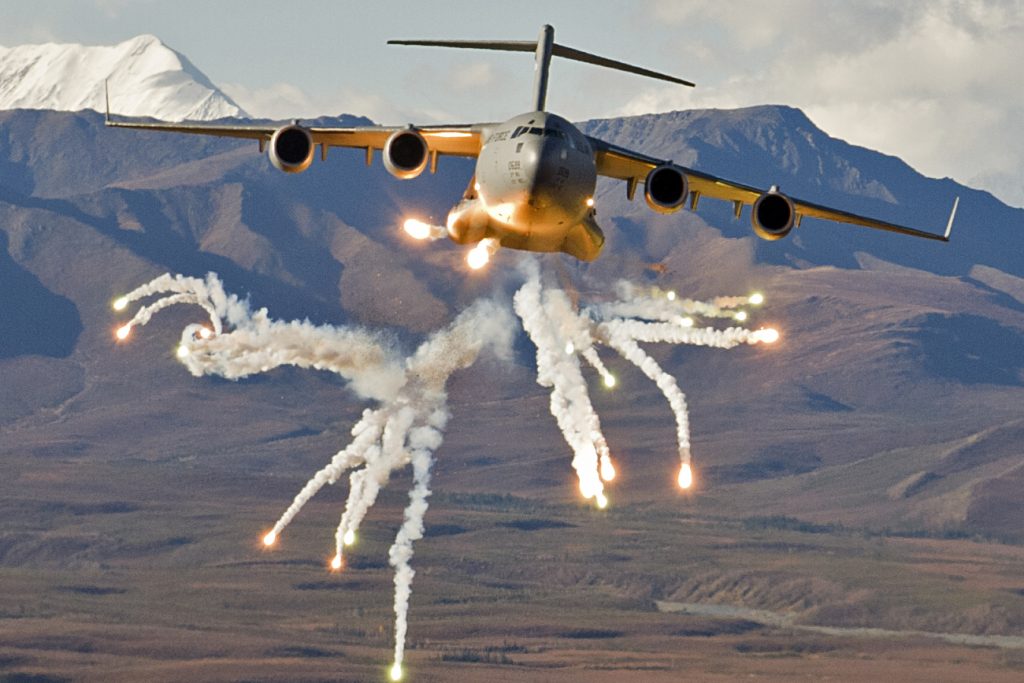
AFA: Air Mobility Command’s tankers and transports would be big, slow targets in a major war, but without them, most of the US military can’t move. The imperative to fly fuel, supplies, and troops in the face of high-tech threats – from anti-aircraft missiles to cyber attack – is forcing AMC to change its approach to aircraft upgrades, communications networks, and what they ask airmen to think about every day, its new commander told reporters here this morning. AMC wants to stimulate innovative thinking by all its people, Gen. Maryanne Miller said, but “not so much on innovation for innovation’s sake” – they have to be “much more focused.” On what? “It needs to be on our resilient and agile response,” she said, “being able to operate in that contested, degraded, or operationally challenged threat environment.”What’s Next for the New ASEAN-Singapore Cyber Center?
This week, Singapore announced the setting up of a new cybersecurity body to boost the capabilities of Southeast Asian states in this realm. While the move is just the latest in a string of measures proposed by the city-state over the past few years, it nonetheless bears noting within the context of the significant challenges that the region faces in the cyber domain and Singapore’s leadership efforts in helping manage those in concert with regional partners. As I have noted before in these pages, Singapore as a country and Southeast Asia as a region have been grapping with a growing cyber challenge as states try to balance the opportunities afforded by the digital economy – a significant driver of economic and technological progress – with the issues raised due to the increased sophistication of cyber threats in an increasingly networked world and their links to other challenges such as terrorism and fake news.Are We Being Played in the Pacific?
If you were trying to design a low-cost strategy to constrict the operational horizon of an important US ally in the region, China’s ploys in the Pacific wouldn’t be a bad model to examine. China has been talking a big game in the Pacific. It’s been reported as looking to fund a major regional military base in Fiji and scoping Vanuatu for a military base of its own. And it apparently has plans to refurbish four ports in Papua New Guinea, including the strategically significant Manus Island. Over the decade 2006–2016, it has committed US$1.8 billion in aid, and Chinese telco Huawei has sought to build undersea internet cables in the region.Virtual Training Will Save Real Army Lives: Close Combat Task Force
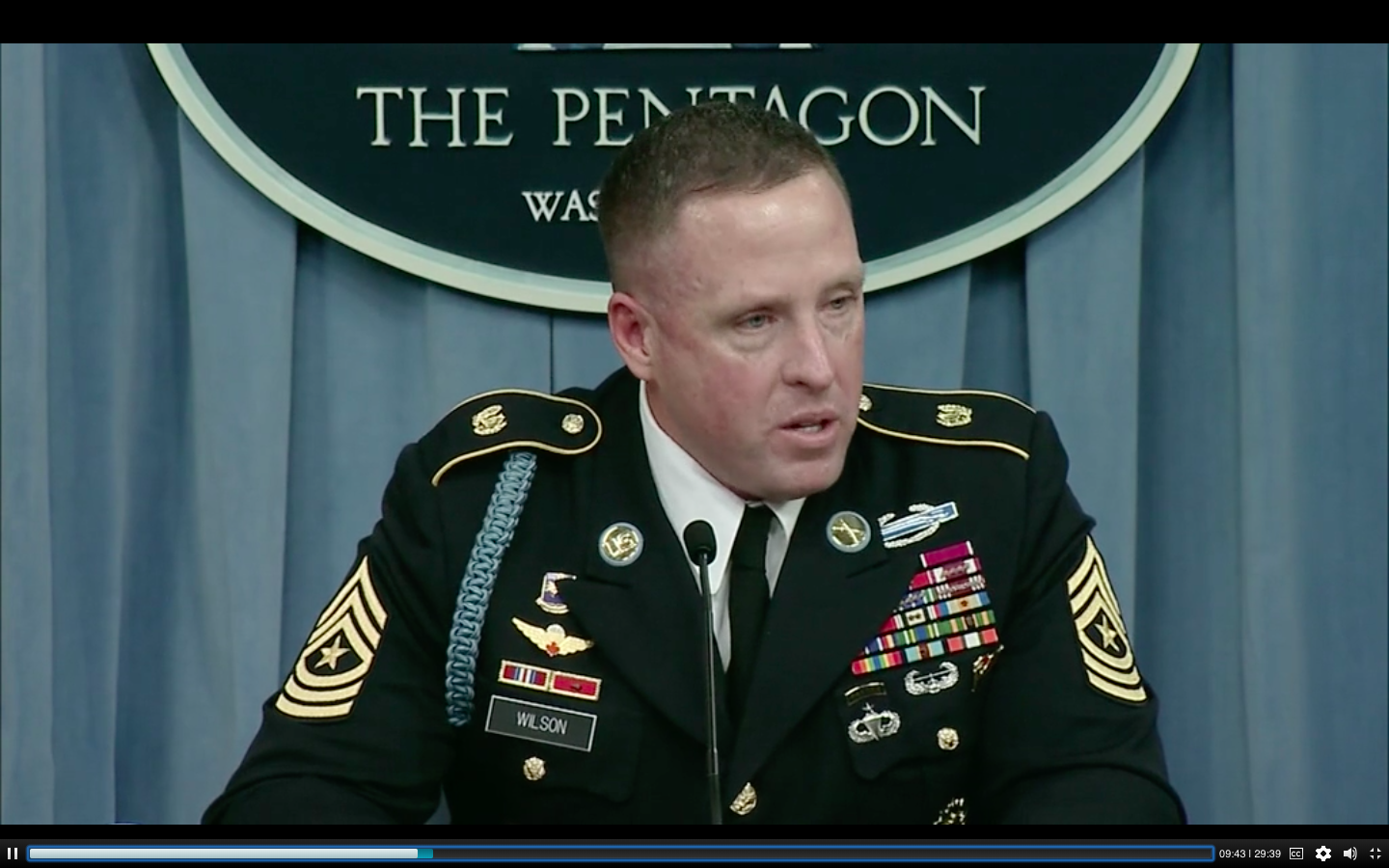
PENTAGON: Of all the technologies and tactics that the defense secretary’s Close Combat Lethality Task Force has looked at, I asked one battle-hardened noncom here this morning, what’s the one thing you personally think has the most potential to save lives? His answer wasn’t a bigger gun or a new drone. Instead, Sgt. Major Jason Wilson said, without a second of hesitation, “the Synthetic Training Environment.” That’s a new combination of virtual reality and real-world data that could revolutionize training for an ancient art — what Wilson called “extreme violence within line of sight of the enemy.”Task Force Looks at Making Infantry Squads More Lethal
Here's 1 Way to Replace Navy Aircraft Carriers Could this work?
There is an ongoing debate about the continued viability of the aircraft carrier. Proponents point to the fact the carrier provides a range of capabilities essential for power projection and sea control that, without basing rights, cannot be provided in any other way. Opponents note that several nations have drones and cruise missiles that vastly outrange the short-legged carrier air wing. They also note that China has developed a ballistic missile specifically to kill carriers. A particular concern is that a carrier and air wing alone cost $20 billion and 5,000 Americans live aboard. This is an enormous investment of eggs is a possibly fragile basket.