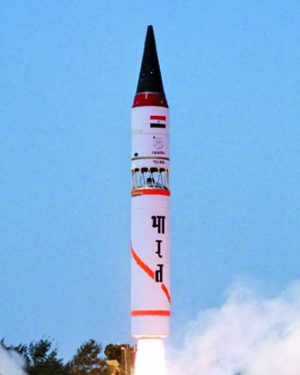
India conducted the first night test of its Agni III surface-to-surface ballistic missile off the coast of the state of Odisha on Saturday, December 1. The test used a missile selected randomly from the production set. The test, however, ended in an alleged failure, as one report suggested that the missile tumbled into the sea during stage separation.The Profession of Arms: A Guide for Young Army Officers
It takes courage, especially for a young officer, to check a man met on the road for not saluting properly or for slovenly appearance, but, every time he does, it adds to his stock of moral courage, and whatever the soldier may say, he has respect for the officer who does pull him up.
Read Document →The Dragon's Teeth: Assessing China's Military Modernization
PLA has focused on modernising its capabilities across all warfare domains to achieve these goals. This includes land, air, and maritime operations, nuclear, space, counter-space, electronic warfare and cyberspace operations, aiming to become a fully integrated joint force.
Read Document →Transforming the PLA: A Decade of reorganisation from SSF to ISF
PRC has engaged in a sustained and broad effort to transform the PLA from an infantry-heavy, low-technology, ground forces-centric military into a high-technology, networked force with an increasing emphasis on joint operations and naval and air power projection.
Read Document →Eyes without Borders: Exploring the World of Open Source Intelligence (OSINT) in the Digital Age
Open Source Intelligence (OSINT) is gaining prominence with the rise of social media, the digital society and the vast growth of publicly and commercially available information (PAI and CAI).
Read Document →
The PLA’s Developing Cyber Warfare Capabilities and India's Options
Informationised warfare blurs the lines between peacetime and wartime. A nation in the information age cannot wait for the hostilities to break out to collect intelligence, carryout influence operations, develop antisatellite systems or design computer software weapons.
Read Document →
Galwan and After
Why did China did this when he is under tremendous pressure in all fronts, is this China's salami slice tactics being progressed rigorously, what will be new Rules of Engagement, what will be escalatory control mechanism, who has taken this decision, will there be some pressure put by China in India's North-East through insurgency.
Read Document →
India’s Joint Doctrine for Cyberspace Operations: A Critical Review
Chief of Defence Staff (CDS) General Anil Chauhan and Secretary, Department of Military Affairs, formally released declassified versions of the Joint Doctrines for Cyberspace Operations during the Chiefs of Staff Committee meeting in New Delhi.
Read Document →
Know your Enemy General(now Field Marshal) Syed Aseem Munir
Gen SA Munir's position in the hierarchy of Pakistan was not very comfortable. The state of economy, insurgency in Pakhtoonistan and Balochistan, attack on the Jaffar Express, constant protests by supporters of Imran Khan's supporters inside and outside of parliament.
Read Document →
Decoding Operation SINDOOR: Key Aspects and Implications
Precision strikes were carried out on nine sites—four in Pakistan and five in PoK—linked to anti-India terrorist groups such as the LeT, JeM and the Hizbul Mujahideen. The targeted sites included Muridke (LeT headquarters) and Bahawalpur (JeM headquarters).
Read Document →
Chinese Cyber Exploitation in India's Power Grid - Is There a linkage to Mumbai Power Outage?
The New York Times (NYT), based on analysis by a U.S. based private intelligence firm Recorded Future, reported that a Chinese entity penetrated India’s power grid at multiple load dispatch points. Chinese malware intruded into the control systems that manage electric supply across India, along with a high-voltage transmission substation and a coal-fired power plant
Read Document →13 December 2019
Failed Agni III Test May Dent India’s Credible Deterrence
India conducted the first night test of its Agni III surface-to-surface ballistic missile off the coast of the state of Odisha on Saturday, December 1. The test used a missile selected randomly from the production set. The test, however, ended in an alleged failure, as one report suggested that the missile tumbled into the sea during stage separation.What Did the U.S. Get for $2 Trillion in Afghanistan?
Hurdles Remain for Renewed Afghan Peace Talks
Welcome to Foreign Policy’s Security Brief. What’s on tap today: Peace talks between Washington and the Taliban could be back on, Iraqi Prime Minister Adel Abdel Mahdi steps down, and Russia begins selling natural gas to China.Taliban Ready to Resume Negotiations
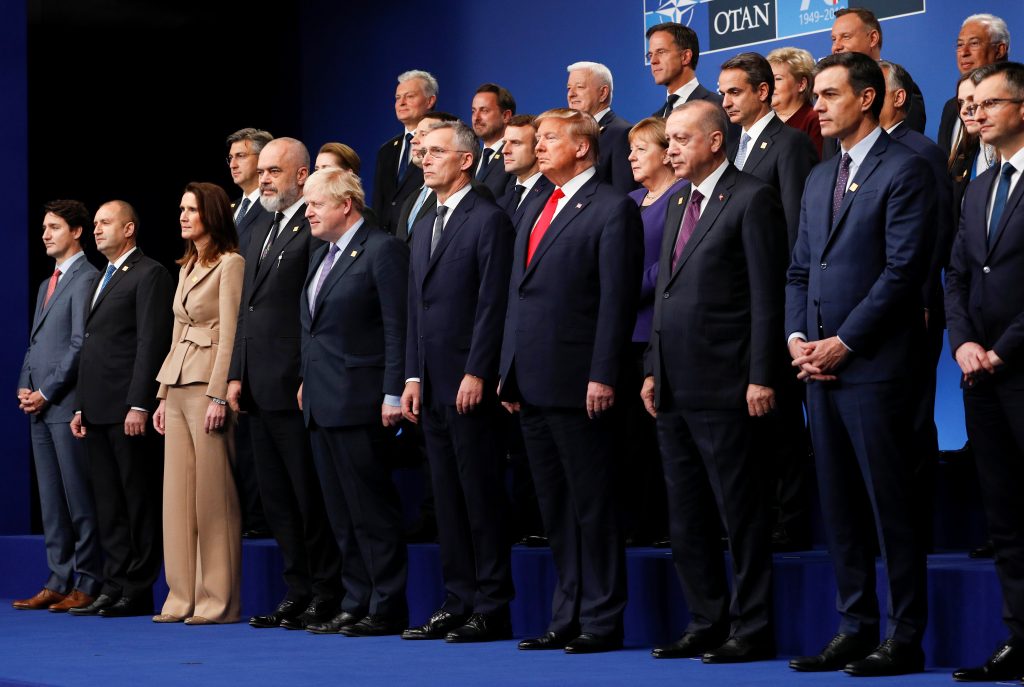
NATO’s China challenge
The New Geography of Global Diplomacy
Do No Harm in Hong Kong
In the months after large-scale protests first broke out in Hong Kong last June, U.S. policy circles remained relatively quiet. Yet as demonstrations turned violent and rumors of a Beijing-directed crackdown spread, concern in Washington grew. Last week, President Donald Trump signed the Hong Kong Human Rights and Democracy Act, which arrived at his desk with veto-proof backing from both houses of Congress. The legislation gives the U.S. government a stronger mandate to adjust its legal stance toward Hong Kong, as well as offering renewed sanctions authorities and a clearer expression of where the United States stands on the city’s future.Double Whammy for China
HONG KONG: China was taken aback as news emerged of the pro-democratic landslide in Hong Kong’s district council elections. Chinese media, after preparing articles based on assumptions of a pro-Beijing victory, were shocked into silence. Then China suffered another setback – US President Donald Trump signed into law the Hong Kong Human Rights and Democracy Act, approved overwhelmingly by both congressional chambers. The dual shock seems to have led China, for now, to adopt a conciliatory posture, asking the victorious democrats to help strengthen Hong Kong’s “one country, two systems.”China tells government offices to remove all foreign computer equipment
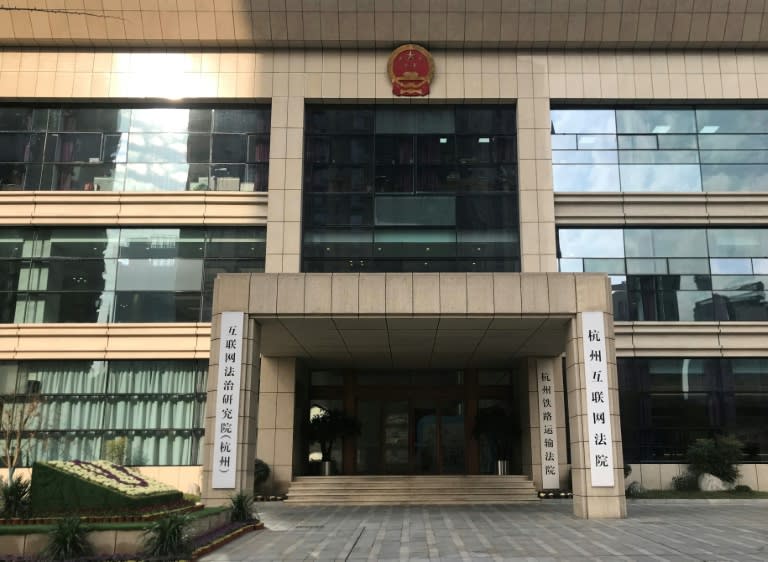
China has ordered that all foreign computer equipment and software be removed from government offices and public institutions within three years, the Financial Times reports.AI judges and verdicts via chat app: the brave new world of China's digital courts
Artificial-intelligence judges, cyber-courts, and verdicts delivered on chat apps -- welcome to China's brave new world of justice spotlighted by authorities this week.AT WAR WITH THE TRUTH
Aconfidential trove of government documents obtained by The Washington Post reveals that senior U.S. officials failed to tell the truth about the war in Afghanistan throughout the 18-year campaign, making rosy pronouncements they knew to be false and hiding unmistakable evidence the war had become unwinnable.All the King’s Consultants
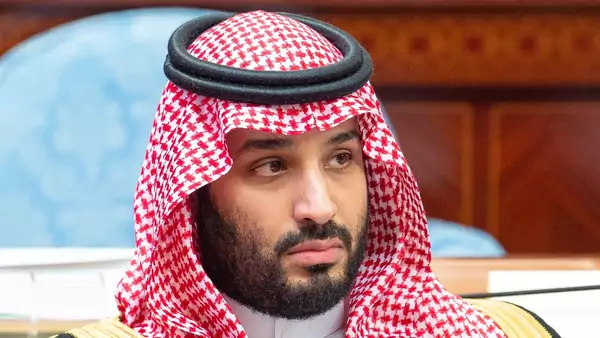
Mohammed bin Salman Is Having a Fire Sale of His Political Power
If not for protests in Iraq and Lebanon and the still unfolding drama in northeastern Syria, Saudi Aramco’s pending initial public offering (IPO) would be by far the biggest story in the Middle East. Perhaps history will still remember it as such.Turkey’s military drones: an export product that’s disrupting NATO
Iran’s Protests Are Not Just About Gas Prices
Awave of protest swept across Iran last week. The government had abruptly hiked gas prices in order to offset its budget deficit at a time of high inflation and negative economic growth. Angry protesters clashed with security forces, set government buildings and banks on fire, and blocked roads. The government responded with an iron fist, killing more than 200 protesters, arresting thousands, and shutting down the Internet across the country for about a week.Russia has strong hand to play at Paris meeting on eastern Ukraine
A group of European leaders meeting in Paris on Monday aims to revive progress on terms for peace in eastern Ukraine, an effort that has largely stalled since the second Minsk agreement was signed in February 2015.Trump Is Ratcheting Up His Trade Wars, Targeting Brazil and Argentina
It came in a predawn tweet, like so many things from President Donald Trump: The announcement of new tariffs on steel and aluminum imports from Brazil and Argentina. It was just the start of another wild week in Trump’s trade wars.How William Gibson Keeps His Science Fiction Real
What EU “Geopolitical” Power Will Cost
LONDON – With former German Defense Minister Ursula von der Leyen assuming the presidency of the European Commission, the European Union now has a new executive. Von der Leyen has promised to lead a “geopolitical” Commission, believing that Europe needs to be more assertive in its relations with other countries, and more hard-nosed in pursuing its own interests around the world, particularly vis-ร -vis the other large powers.How the Energy World of Tomorrow Reshapes Geopolitics
How Poverty Ends
For all the worries today about the explosion of inequality in rich countries, the last few decades have been remarkably good for the world’s poor. Between 1980 and 2016, the average income of the bottom 50 percent of earners nearly doubled, as this group captured 12 percent of the growth in global GDP. The number of those living on less than $1.90 a day—the World Bank’s threshold for “extreme poverty”—has dropped by more than half since 1990, from nearly two billion to around 700 million. Never before in human history have so many people been lifted out of poverty so quickly. Ukraine’s Leader to Face Down Putin for First Time
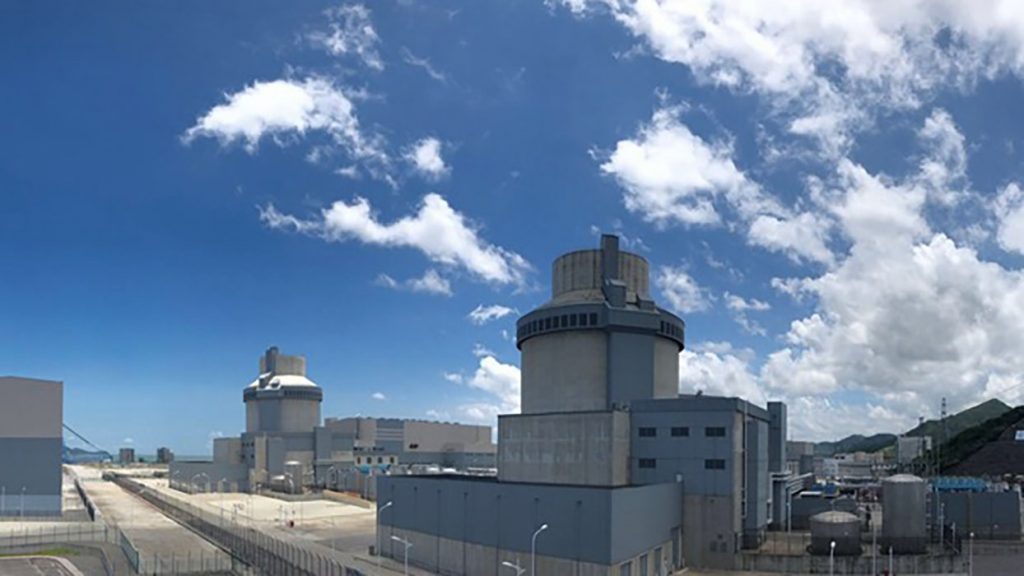
And the prize for global nuclear security goes to… China
In the mass media lately—and in presidential tweets—China has often come off poorly, due in part to the Chinese government’s authoritarian stance on human rights, its trade practices, its reliance on heavy-handed surveillance of its population, and its recent history of suppressing debate.How the Brexit Election Was Reduced to Trivia
Days before the United Kingdom heads to the polls for its most consequential election in a generation, the lead stories on the country’s two most-read newspaper websites summed up the pettiness of British politics. “Boris Johnson denies joking about Donald Trump at NATO reception and not taking him seriously,” cried The Guardian in a reference to the prime minister’s appearance in a video that appeared to show world leaders deriding the U.S. president at the recent NATO summit. “You don’t watch the Queen’s Speech, do you Jeremy Corbyn?” the Daily Mail screamed in response to the Labour leader’s unwillingness to confirm whether he sat down with his family to watch the monarch’s annual televised Christmas Day address.Ukraine’s Divided House Still Stands
Ukrainians register the deepening scandal around the alleged quid pro quo—U.S. President Donald Trump’s pressuring of Ukrainian President Volodymyr Zelensky—as a sideshow to the mind-bending problem that has hung over their country since 2014: Should Ukraine reintegrate the territories of its eastern region, known as Donbas, that are controlled by Russia and its separatist clients? If so, when? And how?Authority and Regulation in an Interconnected World
Russian forces enter former Islamic State stronghold in Syria after U.S. pullback
Unbordered Rights: The Geography of Cyberspace
FBI: No link found between cyberattack and Navy base attack
TALLAHASSEE, Fla. — The FBI said Monday it has found no signs of any link between a cyberattack on computer systems of a Florida Panhandle city and last week’s attack at the naval air station there in which a Saudi flight student killed three sailors and wounded eight others.Thinking in Space: The Role of Geography in National Security Decision-Making
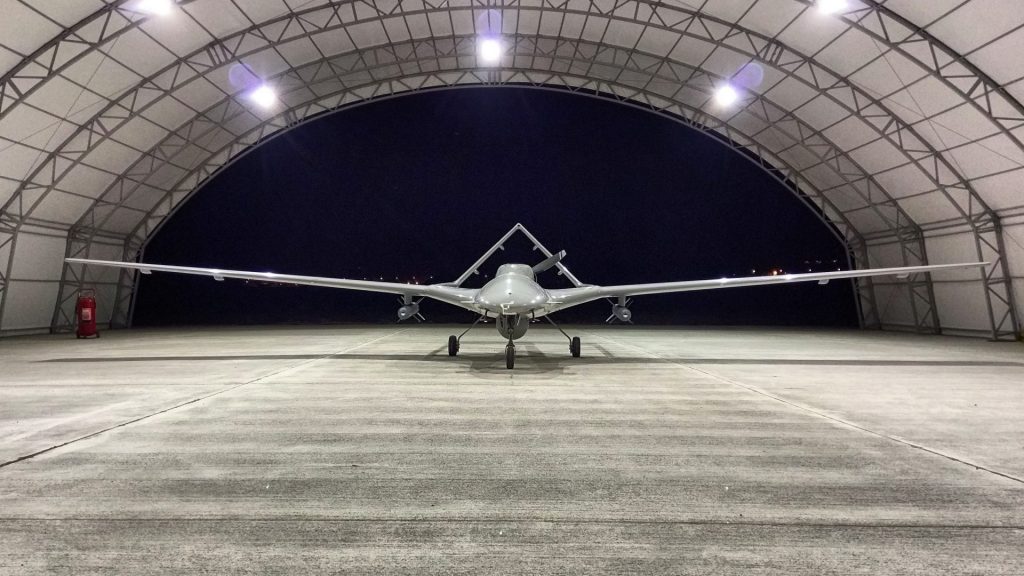
Turkey’s military drones: an export product that’s disrupting NATO
Just over a decade ago, the prototype of an unmanned aircraft that would become the Bayraktar TB2 took off for its maiden flight at Sinop Airport on the Black Sea. There were few signs then that the mid-sized, twin-boom aircraft would become Turkey’s first indigenously produced armed drone and the backbone of its unmanned air force. At the time, domestic drone manufacturers struggled against technical difficulties and foreign competition. Ten years on, however, the situation is radically different: Ankara’s drone program has morphed into a successful industry that’s already exporting products. It’s also a potent military force that’s further straining the NATO alliance.