The Profession of Arms: A Guide for Young Army Officers
It takes courage, especially for a young officer, to check a man met on the road for not saluting properly or for slovenly appearance, but, every time he does, it adds to his stock of moral courage, and whatever the soldier may say, he has respect for the officer who does pull him up.
Read Document →The Dragon's Teeth: Assessing China's Military Modernization
PLA has focused on modernising its capabilities across all warfare domains to achieve these goals. This includes land, air, and maritime operations, nuclear, space, counter-space, electronic warfare and cyberspace operations, aiming to become a fully integrated joint force.
Read Document →Transforming the PLA: A Decade of reorganisation from SSF to ISF
PRC has engaged in a sustained and broad effort to transform the PLA from an infantry-heavy, low-technology, ground forces-centric military into a high-technology, networked force with an increasing emphasis on joint operations and naval and air power projection.
Read Document →Eyes without Borders: Exploring the World of Open Source Intelligence (OSINT) in the Digital Age
Open Source Intelligence (OSINT) is gaining prominence with the rise of social media, the digital society and the vast growth of publicly and commercially available information (PAI and CAI).
Read Document →
The PLA’s Developing Cyber Warfare Capabilities and India's Options
Informationised warfare blurs the lines between peacetime and wartime. A nation in the information age cannot wait for the hostilities to break out to collect intelligence, carryout influence operations, develop antisatellite systems or design computer software weapons.
Read Document →
Galwan and After
Why did China did this when he is under tremendous pressure in all fronts, is this China's salami slice tactics being progressed rigorously, what will be new Rules of Engagement, what will be escalatory control mechanism, who has taken this decision, will there be some pressure put by China in India's North-East through insurgency.
Read Document →
India’s Joint Doctrine for Cyberspace Operations: A Critical Review
Chief of Defence Staff (CDS) General Anil Chauhan and Secretary, Department of Military Affairs, formally released declassified versions of the Joint Doctrines for Cyberspace Operations during the Chiefs of Staff Committee meeting in New Delhi.
Read Document →
Know your Enemy General(now Field Marshal) Syed Aseem Munir
Gen SA Munir's position in the hierarchy of Pakistan was not very comfortable. The state of economy, insurgency in Pakhtoonistan and Balochistan, attack on the Jaffar Express, constant protests by supporters of Imran Khan's supporters inside and outside of parliament.
Read Document →
Decoding Operation SINDOOR: Key Aspects and Implications
Precision strikes were carried out on nine sites—four in Pakistan and five in PoK—linked to anti-India terrorist groups such as the LeT, JeM and the Hizbul Mujahideen. The targeted sites included Muridke (LeT headquarters) and Bahawalpur (JeM headquarters).
Read Document →
Chinese Cyber Exploitation in India's Power Grid - Is There a linkage to Mumbai Power Outage?
The New York Times (NYT), based on analysis by a U.S. based private intelligence firm Recorded Future, reported that a Chinese entity penetrated India’s power grid at multiple load dispatch points. Chinese malware intruded into the control systems that manage electric supply across India, along with a high-voltage transmission substation and a coal-fired power plant
Read Document →5 April 2017
*** How Pakistan Warped into a Geopolitical Monster
*** Pakistan’s New Main Battle Tank? Turkey’s Altay Tank Enters Mass Production
** WHEN CLAUSEWITZ MEETS CรZANNE: MASTERY AND THE ART OF FUTURE WAR
What is the contribution of military mastery — the insight of the experienced warfighter — to future warfare? If the most lauded of Department of Defense innovation initiatives are any measure (the Defense Innovation Board, and Defense Innovation Unit Experimental — DIUx) the answer appears to be…not very much. Most defense innovation initiatives are geared toward geniuses and outsiders — cultivating partnerships with scientists and engineers; and curating bleeding edge concepts — biomimicry, artificial intelligence, quantum, and futurism fiction.* India's nuclear doctrine should no longer be taken for granted
In recent years, a debate over India’s nuclear doctrine – how and when it plans to use nuclear weapons – has rekindled. The issue was raised in the BJP’s 2014 manifesto, then by a couple of former heads of India’s Strategic Forces Command (SFC), and most recently by former defence minister Manohar Parrikar, all of whom urged changes to one or other aspect of India’s last published doctrine of 2003. In past weeks, attention has turned to former National Security Advisor Shivshankar Menon’s book Choices, which points to two important changes. Chenani-Nashri Tunnel: No Need To Move Mountains, Just Go Through Them Now
The strength of few words - Success in foreign policy relies on patience and restraint
In my line of work, I have had to read many memoirs by retired administrators and diplomats. Most are marked by dull prose, an inability to distinguish between the ephemeral and the lasting, a refusal to acknowledge mistakes or errors, and pomposity.A different kind of change
Rise of the PLA Navy and its implications for India
THE PINK FLAMINGO ON THE SUBCONTINENT: NUCLEAR WAR BETWEEN INDIA AND PAKISTAN
A “pink flamingo” is the term recently coined by Frank Hoffman to describe predictable but ignored events that can yield disastrous results. Hoffman argues that these situations are fully visible, but almost entirely ignored by policymakers. Pink flamingos stand in stark contrast to “black swans” — the unpredictable, even unforeseeable shocks whose outcomes may be entirely unknown.T he Evolution of the PLA’s Red-Blue Exercises
In the summer of 2016, the PLA completed the most recent round of its “Stride” (่ทจๅบ) exercises, a series of large-scale military training exercises that prominently feature simulated opposing force confrontations. Militaries and other national security actors have for decades utilized “red teams” to improve training and operations. Red teams provide a dynamic adversary and present the blue or “home” team with a more challenging and realistic training exercise. Sometimes red teams may even be tasked with mimicking a specific country or military unit. In the U.S. and other Western countries, the “Red” force typically represents the adversary, but in China, the designations are reversed, with “Red” units representing the PLA and “Blue” units representing the opposing force.China’s Once and Future Democracy
Despite Xi Jinping’s crackdown and Donald Trump’s silence on human rights, China has a vibrant democratic legacy that may yet reassert itself How America Manages To Mess Up In The Middle East Every Single Time
Andrew Bacevich’s America’s War for the Greater Middle East: A Military Historypresents a scathing critique of Washington’s policies in the Middle East. Read this one to know how the American foreign policy establishment comes together to construct one blunder after another. Is OPEC Losing Its Ability To Influence Oil Prices?

Russian Influence and Unconventional Warfare Operations in the ‘Grey Zone:’ Lessons from Ukraine
Opinion: No, Russia didn't hack the election
The Case for a European Nuke
Trump in the Middle East: The New Brutality
Thinking Strategically About a Nuclear Ban
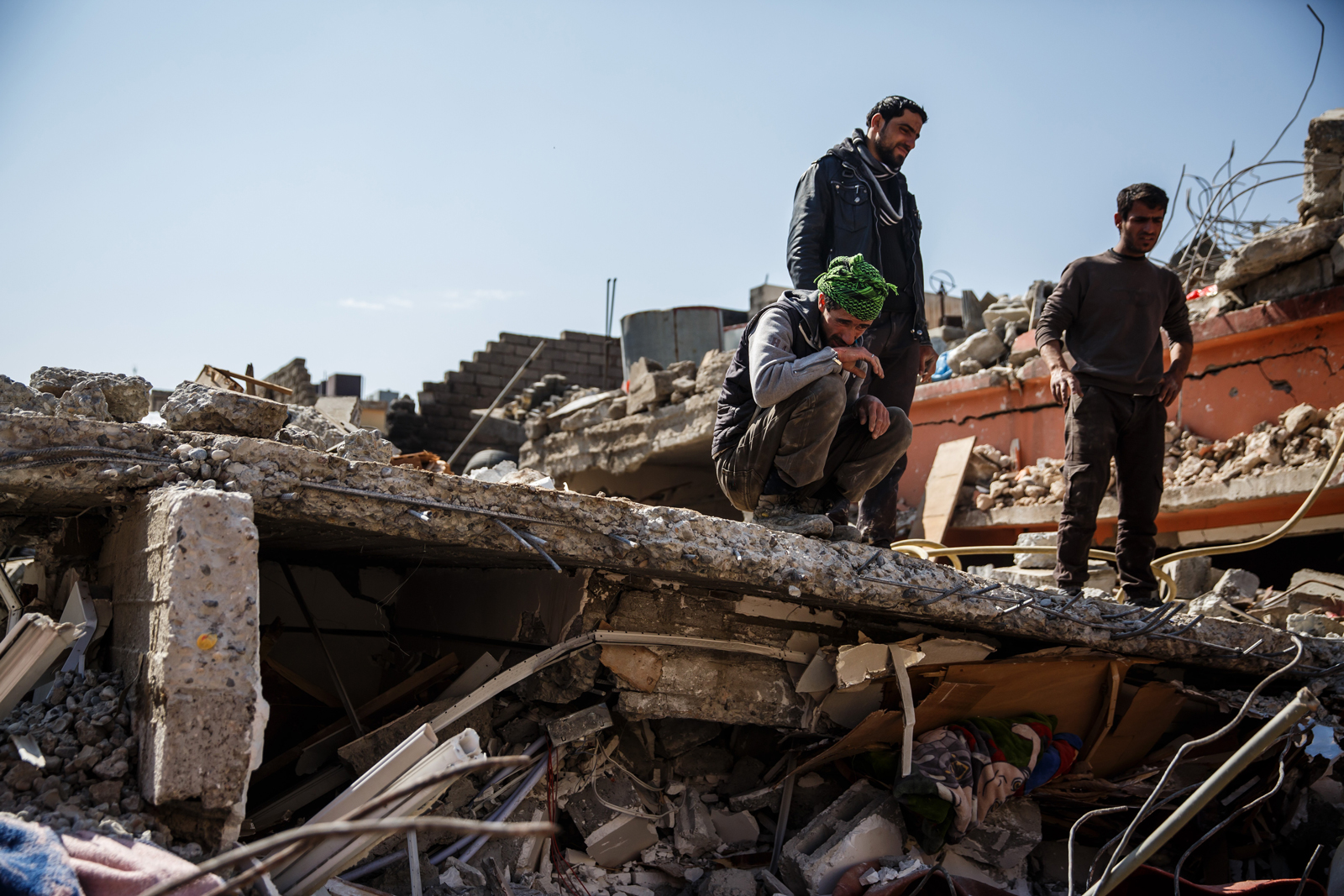
U.S. Generals Warn of More Civilian Casualties, As ISIS Wages Desperate Fight in Mosul
The close-quarter fighting between Iraqi forces and militants using human shields and booby-trapped houses to slow their advance is making it harder to avoid endangering more civilians, a top U.S. military commander said Wednesday.This Is How Russian Hackers Will Attack the US Next
ICIT: The Know Your Enemies 3.0 Advanced Persistent Threat Advisory is finally here
Allegations of cyber-incidents, IP theft, and cyber-attack have significant tangible results and seismic geopolitical implications. Most compromised organizations do not detect breaches until eight months after the initial incident; consequently, typical attribution is based on the scraps of evidence that the adversary intentionally (as a diversion or demonstration of skill) decided or carelessly left behind.IBM vs Microsoft: Two Tech Giants, Two Blockchain Visions
Noelle Acheson is a 10-year veteran of company analysis, corporate finance and fund management, and a member of CoinDesk's product team.