Chinese tech companies are among the largest firms in the world. Initially focused on the domestic market, they now sell various surveillance technologies to a global customer base. Increased collaboration between the party-state and private Chinese actors in the sale of surveillance products inspires trepidations about the proliferation of China’s surveillance tools, ergo the rise of unwarranted surveillance. Namely, researchers scrutinize China’s diplomatic activities, raising questions about the degree to which the government enables surveillance practices abroad. Large Chinese firms and state amplify debate and concerns by pushing to change the norms and mechanisms in the use of public security technology.The Profession of Arms: A Guide for Young Army Officers
It takes courage, especially for a young officer, to check a man met on the road for not saluting properly or for slovenly appearance, but, every time he does, it adds to his stock of moral courage, and whatever the soldier may say, he has respect for the officer who does pull him up.
Read Document →The Dragon's Teeth: Assessing China's Military Modernization
PLA has focused on modernising its capabilities across all warfare domains to achieve these goals. This includes land, air, and maritime operations, nuclear, space, counter-space, electronic warfare and cyberspace operations, aiming to become a fully integrated joint force.
Read Document →Transforming the PLA: A Decade of reorganisation from SSF to ISF
PRC has engaged in a sustained and broad effort to transform the PLA from an infantry-heavy, low-technology, ground forces-centric military into a high-technology, networked force with an increasing emphasis on joint operations and naval and air power projection.
Read Document →Eyes without Borders: Exploring the World of Open Source Intelligence (OSINT) in the Digital Age
Open Source Intelligence (OSINT) is gaining prominence with the rise of social media, the digital society and the vast growth of publicly and commercially available information (PAI and CAI).
Read Document →
The PLA’s Developing Cyber Warfare Capabilities and India's Options
Informationised warfare blurs the lines between peacetime and wartime. A nation in the information age cannot wait for the hostilities to break out to collect intelligence, carryout influence operations, develop antisatellite systems or design computer software weapons.
Read Document →
Galwan and After
Why did China did this when he is under tremendous pressure in all fronts, is this China's salami slice tactics being progressed rigorously, what will be new Rules of Engagement, what will be escalatory control mechanism, who has taken this decision, will there be some pressure put by China in India's North-East through insurgency.
Read Document →
India’s Joint Doctrine for Cyberspace Operations: A Critical Review
Chief of Defence Staff (CDS) General Anil Chauhan and Secretary, Department of Military Affairs, formally released declassified versions of the Joint Doctrines for Cyberspace Operations during the Chiefs of Staff Committee meeting in New Delhi.
Read Document →
Know your Enemy General(now Field Marshal) Syed Aseem Munir
Gen SA Munir's position in the hierarchy of Pakistan was not very comfortable. The state of economy, insurgency in Pakhtoonistan and Balochistan, attack on the Jaffar Express, constant protests by supporters of Imran Khan's supporters inside and outside of parliament.
Read Document →
Decoding Operation SINDOOR: Key Aspects and Implications
Precision strikes were carried out on nine sites—four in Pakistan and five in PoK—linked to anti-India terrorist groups such as the LeT, JeM and the Hizbul Mujahideen. The targeted sites included Muridke (LeT headquarters) and Bahawalpur (JeM headquarters).
Read Document →
Chinese Cyber Exploitation in India's Power Grid - Is There a linkage to Mumbai Power Outage?
The New York Times (NYT), based on analysis by a U.S. based private intelligence firm Recorded Future, reported that a Chinese entity penetrated India’s power grid at multiple load dispatch points. Chinese malware intruded into the control systems that manage electric supply across India, along with a high-voltage transmission substation and a coal-fired power plant
Read Document →19 October 2022
China’s surveillance ecosystem and the global spread of its tools
Chinese tech companies are among the largest firms in the world. Initially focused on the domestic market, they now sell various surveillance technologies to a global customer base. Increased collaboration between the party-state and private Chinese actors in the sale of surveillance products inspires trepidations about the proliferation of China’s surveillance tools, ergo the rise of unwarranted surveillance. Namely, researchers scrutinize China’s diplomatic activities, raising questions about the degree to which the government enables surveillance practices abroad. Large Chinese firms and state amplify debate and concerns by pushing to change the norms and mechanisms in the use of public security technology.Why Cyber Dogs Have Yet to Bark Loudly in Russia’s Invasion of Ukraine
Putin’s invasion of Ukraine didn’t rely on cyberwarfare. Here’s why.
Cyber Conflict and the Erosion of Trust

What Are the Implications of the Cyber Dimension of the China-Taiwan Crisis?

The Three Important Shifts Tucked Within the New National Security Strategy
Russia's Nuclear Signaling in Ukraine and China's Nuclear Policy

Engaging China on Strategic Stability and Mutual Vulnerability
Xi Jinping Is Weaker Than You Think

China leading the race for influence in Central Asia
The 20th National Congress of the CCP, with Nis Grรผnberg and Johnny Erling
The Dragon Reaches the Eastern Mediterranean: Why the Region Matters to China
Turkish and Iranian Involvement in Iraq and Syria
Ukraine and the Consequences for Nuclear Deterrence

IISS Roundtable – Russia and Iran: isolated from the West and drawing closer
Relations between Russia and Iran have long been characterised by a degree of mutual suspicion. This is in part because of Russia’s historical ambition to control the Caucasus region, which led to a series of wars with Tehran that ended in the nineteenth century, and in part because the countries have conflicting interests in the present-day Middle East. But the two now share an important geopolitical objective: undermining what they view as a Western-dominated international order.Iran’s Protests ... and the Afghan Sisters Next Door
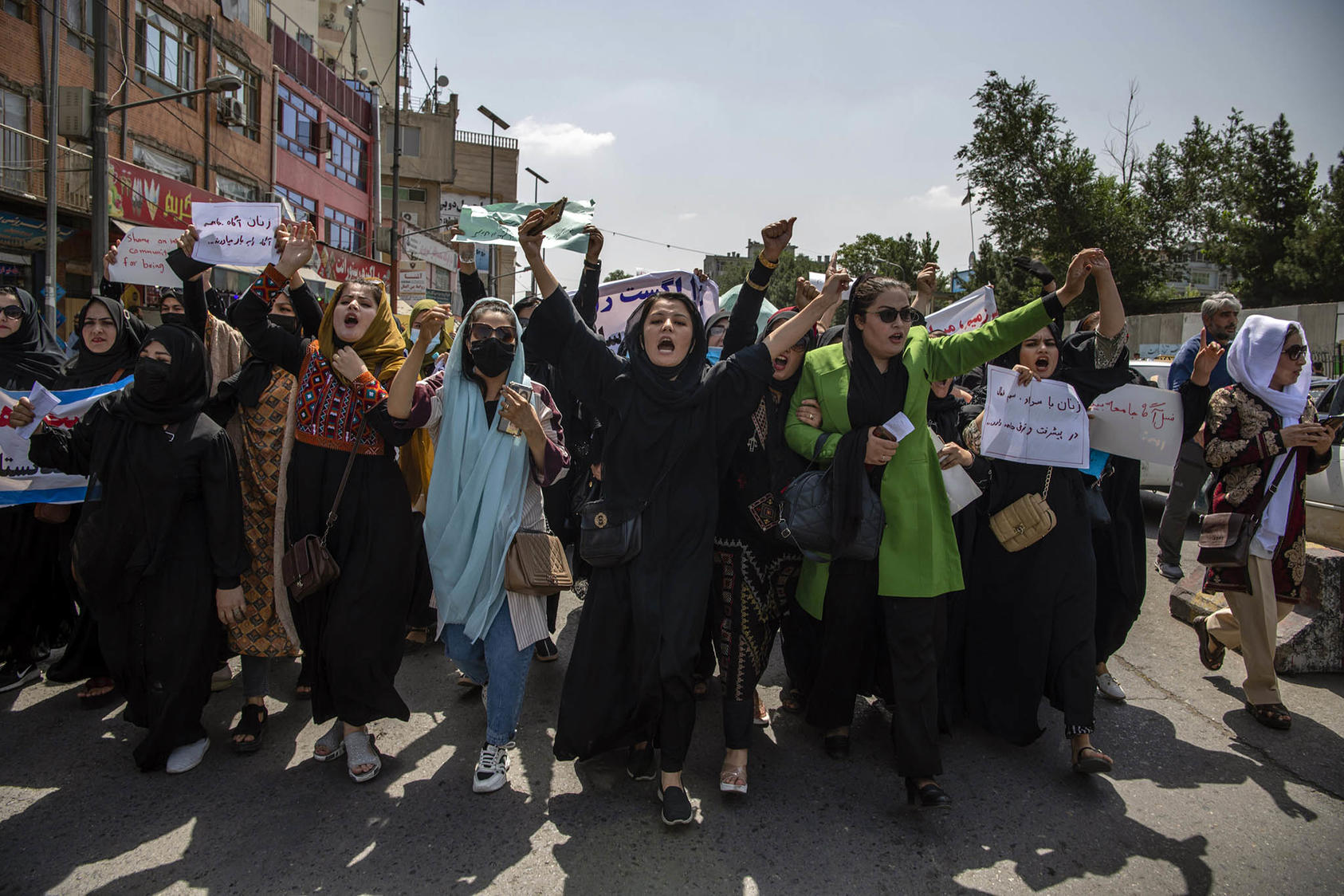
Iran’s women are seizing worldwide admiration with 26 days of courageous defiance against their authoritarian government’s violent confinement of females as second-class citizens who may not freely work, marry, divorce, travel or even be seen with their heads uncovered. Less noted are this audacious movement’s existing, and potential, connections to the tenacious, 14-month campaign by Afghan women resisting the even tighter oppression of the Taliban. Street protest slogans, social media posts and other links illustrate a synergy between the movements that both should use in the difficult task of converting their inspiring courage into real change.Geospatial Technology’s Role in the Conflict in Ukraine
U.S. Influence Operations: The Military’s Resurrected Digital Campaign for Hearts and Minds