The oil industry has been witnessing significant turmoil and uncertainty in recent months. The primary benchmark for international oil prices, the Brent crude, reached a level ($80.49 per barrel) in May that was not seen since 2014. Histrionics around the US sanctions on Iran have also affected sentiments considerably. In recent weeks, tariffs imposed by the Donald Trump administration and the increasing production from Saudi Arabia and Libya have caused abatement of prices. However, with the global economy in a better position now than in the last few years and the oil supply glut disappearing, crude price might not fall sharply over the near term, as it did before. High oil prices is a double whammy for India: it would not only widen the country’s trade deficit but also impose a fiscal burden on account of fertilizer, kerosene and LPG subsidies.The Profession of Arms: A Guide for Young Army Officers
It takes courage, especially for a young officer, to check a man met on the road for not saluting properly or for slovenly appearance, but, every time he does, it adds to his stock of moral courage, and whatever the soldier may say, he has respect for the officer who does pull him up.
Read Document →The Dragon's Teeth: Assessing China's Military Modernization
PLA has focused on modernising its capabilities across all warfare domains to achieve these goals. This includes land, air, and maritime operations, nuclear, space, counter-space, electronic warfare and cyberspace operations, aiming to become a fully integrated joint force.
Read Document →Transforming the PLA: A Decade of reorganisation from SSF to ISF
PRC has engaged in a sustained and broad effort to transform the PLA from an infantry-heavy, low-technology, ground forces-centric military into a high-technology, networked force with an increasing emphasis on joint operations and naval and air power projection.
Read Document →Eyes without Borders: Exploring the World of Open Source Intelligence (OSINT) in the Digital Age
Open Source Intelligence (OSINT) is gaining prominence with the rise of social media, the digital society and the vast growth of publicly and commercially available information (PAI and CAI).
Read Document →
The PLA’s Developing Cyber Warfare Capabilities and India's Options
Informationised warfare blurs the lines between peacetime and wartime. A nation in the information age cannot wait for the hostilities to break out to collect intelligence, carryout influence operations, develop antisatellite systems or design computer software weapons.
Read Document →
Galwan and After
Why did China did this when he is under tremendous pressure in all fronts, is this China's salami slice tactics being progressed rigorously, what will be new Rules of Engagement, what will be escalatory control mechanism, who has taken this decision, will there be some pressure put by China in India's North-East through insurgency.
Read Document →
India’s Joint Doctrine for Cyberspace Operations: A Critical Review
Chief of Defence Staff (CDS) General Anil Chauhan and Secretary, Department of Military Affairs, formally released declassified versions of the Joint Doctrines for Cyberspace Operations during the Chiefs of Staff Committee meeting in New Delhi.
Read Document →
Know your Enemy General(now Field Marshal) Syed Aseem Munir
Gen SA Munir's position in the hierarchy of Pakistan was not very comfortable. The state of economy, insurgency in Pakhtoonistan and Balochistan, attack on the Jaffar Express, constant protests by supporters of Imran Khan's supporters inside and outside of parliament.
Read Document →
Decoding Operation SINDOOR: Key Aspects and Implications
Precision strikes were carried out on nine sites—four in Pakistan and five in PoK—linked to anti-India terrorist groups such as the LeT, JeM and the Hizbul Mujahideen. The targeted sites included Muridke (LeT headquarters) and Bahawalpur (JeM headquarters).
Read Document →
Chinese Cyber Exploitation in India's Power Grid - Is There a linkage to Mumbai Power Outage?
The New York Times (NYT), based on analysis by a U.S. based private intelligence firm Recorded Future, reported that a Chinese entity penetrated India’s power grid at multiple load dispatch points. Chinese malware intruded into the control systems that manage electric supply across India, along with a high-voltage transmission substation and a coal-fired power plant
Read Document →2 August 2018
A long-term strategy to reduce crude imports
The oil industry has been witnessing significant turmoil and uncertainty in recent months. The primary benchmark for international oil prices, the Brent crude, reached a level ($80.49 per barrel) in May that was not seen since 2014. Histrionics around the US sanctions on Iran have also affected sentiments considerably. In recent weeks, tariffs imposed by the Donald Trump administration and the increasing production from Saudi Arabia and Libya have caused abatement of prices. However, with the global economy in a better position now than in the last few years and the oil supply glut disappearing, crude price might not fall sharply over the near term, as it did before. High oil prices is a double whammy for India: it would not only widen the country’s trade deficit but also impose a fiscal burden on account of fertilizer, kerosene and LPG subsidies.Pakistan, the United States, and the IMF
Book Review Roundtable: America’s Hot and Cold Relationship with Its Counterterrorism Partners
Oh, CPEC
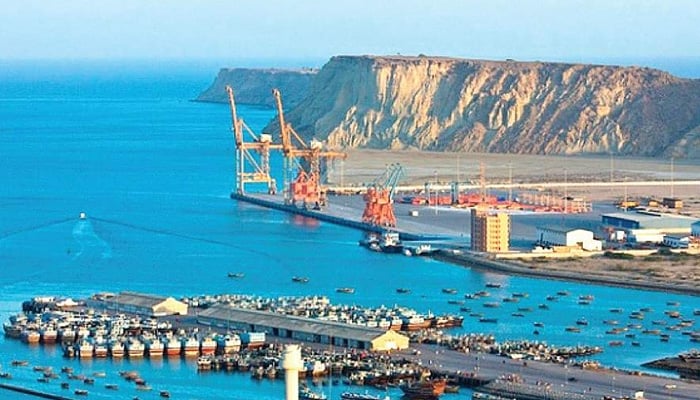
“In order for things to remain the same, everything must change” – Giuseppe Tomasi di Lampedusa Here’s the problem: the winning party, the Election Commission and other institutions involved in last week’s national polls say there is nothing wrong in the way the results were announced, and that the outcome of the electoral exercise is the will of the people. They say it’s fair play. Those affected by the unprecedented delay in poll results announcements and almost surreal developments in vote counting and tabulation, among other things, cry brazen foul play. They allege that the umpire’s thumb and finger both were at work in ensuring the PTI’s victory (and their loss). So while Imran Khan wants to make government at the centre and in Punjab, the broad coalition of parties (PML-N, MMA, ANP, PPP, PSP, MQM, and the rest) wants to expand their protest and question the very foundation on which the PTI’s victory stands.Returning Uighur Fighters and China’s National Security Dilemma
Taiwan’s Emerging Push for “Cyber Autonomy”
The Belt and Road Initiative: A Road to China’s World Cup Dreams?
China’s Belt and Road Makes Inroads in Africa
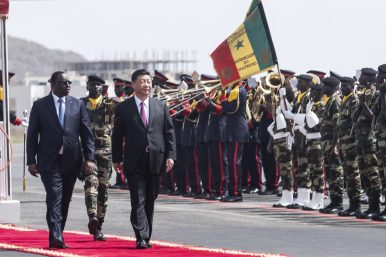
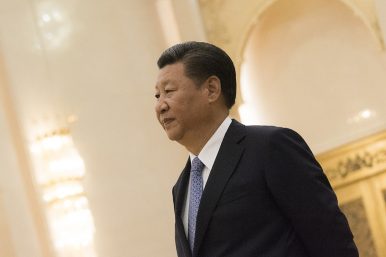
Everywhere Chinese leaders go, the Belt and Road follows – in speeches, if nothing else, but also often in investment agreements and even formal diplomatic documents. That was the case last week as well, when Chinese President Xi Jinping took a four-country tour of Africa, stopping in Senegal, Rwanda, South Africa (where he also attended the BRICS summit), and Mauritius. According to the summary of Xi’s trip from Chinese state news agency Xinhua, “the signing of cooperation documents regarding the Belt and Road Initiative” was a “key achievement” of Xi’s trip. Xi’s first stop in Africa, Senegal, saw the signing of an official cooperation document on the Belt and Road Initiative (BRI), the first time a country on Africa’s west coast has officially joined the project. The document formalizes pre-existing cooperation on infrastructure; as South China Morning Post reported, “In Senegal, Chinese loans have financed a highway linking the capital Dakar to Touba, its second main city, and part of an industrial park on the Dakar peninsula.”More on Li's Visit to Tibet
"Tibetans shall be happy in the land of Tibet, and Chinese in the land of China" says the Treaty of 821 The Two Voices of China? Remember after the Two Meetings in March, China decided to unify its Voice. A document of the State Council released on March 21, announced that Beijing had decided to form the world’s largest media group called Voice of China.Li Keqian on The Roof of the World
China Tibet Online reported that Chinese Premier Li Keqiang visited Southern Tibet on July 25. Apparently Li went directly to Nyingchi (Nyingtri) prefecture (City) bordering Arunachal Pradesh. He visited a village (Shiga village) in Mailing County in Nyingchi City; it is a new village inhabited by Monpas. According to the press release, the inhabitants of this ‘Monpa’ village have been relocated from 'impoverished areas'.We can't ignore Tibetan turmoil
Take the case of Sogyal Rinpoche, the Tibetan lama who wrote The Tibetan Book of Living and Dying (and sold three million copies); he guided an organisation called Rigpa, which has more than 100 centres in 40 countries around the world. Lerab Ling, in the Hรฉrault department of France, was the jewel on his crown; it was visited by VIPs and stars including Carla Bruni Sarkozy and French ministers. For years, rumours had been circulating about Sogyal’s (mis)behaviour, but last year, his ‘Crazy Wisdom’ caught up with the Buddhist teacher, particularly the way he used women for his pleasure, as well as his eccentric food habits; he had ultimately to retire from Rigpa’s leadership and go into ‘retreat’.China’s debt threat: time to rein in the lending boom
Is Islamic State Making Plans for a Comeback in Iraq?
Pompeo's Indo-Pacific Speech: Geoeconomics on a Shoestring
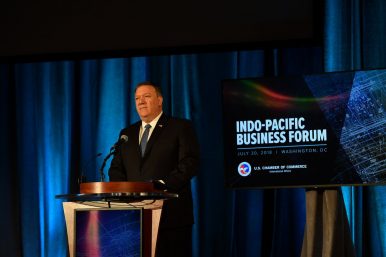
Monday was supposed to be a big day for the United States’ Indo-Pacific economic strategy. Ahead of a trip to Southeast Asia, where he will visit Malaysia, Indonesia, and Singapore, U.S. Secretary of State Mike Pompeo took a break from North Korea diplomacy to show the Indo-Pacific region that the United States was thinking strategically about the geoeconomic future of the region. In a speech to the U.S. Chamber of Commerce’s Indo-Pacific Business Forum, Pompeo outlined what is effectively the United States’ alternative to China’s Belt and Road Initiative: the beginning of an attempt by the United States to add economic ballast to its calls to maintain a “free and open Indo-Pacific.”Why the US Needs to Smarten Up to Keep Its Edge on China
Speaking earlier this month at the Aspen Security Forum, Christopher Wray, the director of the U.S. Federal Bureau of Investigation, was frank on his thoughts about China as an intelligence threat to the United States. “[China] represents the broadest, most challenging, most significant threat we face as a country,” Wray said, clarifying that he was speaking from a counter-intelligence perspective. The director justified that assessment by noting that Chinese espionage efforts in the United States manifested themselves in a “whole of state effort”.WAR FOR WATER? SYRIA, IRAQ AND TURKEY WILL NEXT FIGHT FOR RIVERS, REPORT SAYS
EUISS Yearbook of European Security (YES) 2018
Washington Should Not Forget Oman
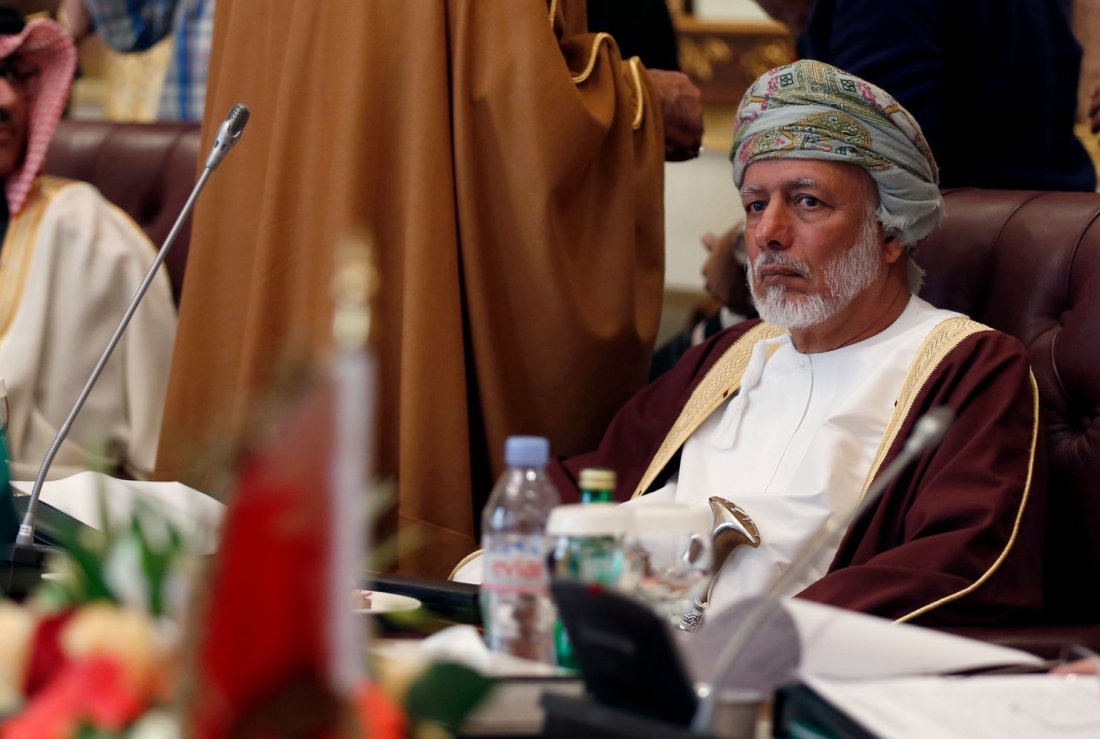
Whether it is the civil wars in Syria and Yemen, the fight against ISIS, Iranian aggression or the rift in Gulf relations, there is plenty happening in the Middle East to keep U.S. policymakers busy. However, with all the noise coming from the region, America should not ignore its relationship with the Sultanate of Oman. Oman is a relatively small oil-producing kingdom with one of the Arab world’s smallest populations. It is also one of the oldest countries in the region. Because of its strategic location on the southeastern section of the Arabian Peninsula and the Strait of Hormuz, Oman and the United States share many of the same challenges in the Middle East.Must Read: A Psychological Profile of Donald Trump - The Scary Version
The Decline and Fall of the American Empire
So what would the decline of America look like? I don’t ask the question because I think it’s happening (yet?), but because even the most inveterate optimist should be interested in the dangers, if only to ward them off. Here’s the cleanest tale of hypothetical decline I could come up with, keeping away from the more partisan or hysterical scenarios, or those involving a catastrophic deus ex machina. Imagine that the United States gets through the presidency of Donald Trump without a crippling constitutional crisis. Still, the shrill public debate — which will continue well past Trump’s time in office — will continue to prove unequal to the task of addressing the nation’s most pressing problems.GAO Report on National Security Risks of Foreign Investment in the U.S.
WhatsApp, Fake News? The Internet and Risks of Misinformation in India
The two worst things one has to bear with on Indian WhatsApp are fake news and good morning messages. Although I am not a frequent user, I was not spared. I have, for instance, once received a ridiculous message from Indian users claiming that Japan is the only country in the world where there are no mosques, no Muslims and no Arabic is taught. The underlying idea was that one of the most developed and organized countries keeps its status partially thanks to the fact that it has no Muslim minority and does not promote Islam. That’s not simply somebody’s mistake or an innocent good morning message. There was a vicious agenda behind creating such a message, an agenda unknowingly spread later both by those who believe it ideologically as well as those who likely meant no harm but did not bother to check the authenticity of the message.Busting The Green Door: Army SIGINT Refocuses On Russia & China
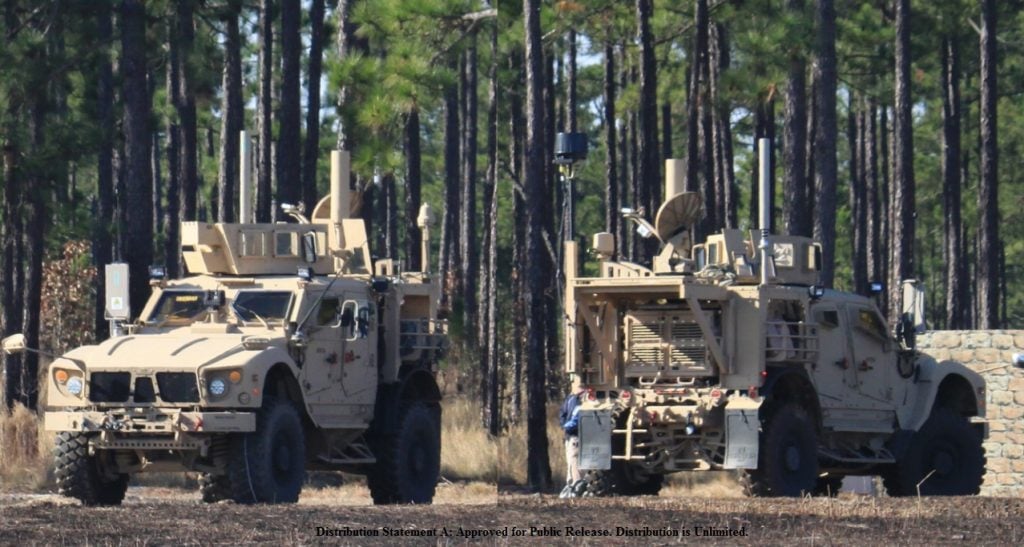
CAPITOL HILL: The Army has a new, two-pronged strategy for Signals Intelligence, its top intelligence official said at a recent forum here. First, SIGINT forces must continue their post-9/11 evolution from a secretive, insular priesthood to a hands-on helper for frontline troops. At the same time, SIGINT must scale up the “precision” techniques developed to track insurgents‘ and terrorists‘ transmissions so it can tackle much bigger and more sophisticated adversaries like Russia and China. Instead of pinpointing terrorist leaders for drone strikes or commando raids, SIGINT may be finding electronic weak points in enemy networks that US cyber and electronic warfare teams can then hack or jam.Capitalism needs a welfare state to survive
IN THE mythologies of both left and right, the welfare state is a work of socialism. Yet the intellectual tradition it owes most to is liberalism. The architect of its British version, William Beveridge, did not want to use the power of the state for its own sake. The point was to give people the security to pursue the lives they chose. And liberal reformers believed that by insuring people against some risks of creative destruction, welfare states would bolster democratic support for free markets.The Darker Shade of Gray: A New War Unlike Any Other
The AI that protects DoD networks from zero-day exploits
The National Security Agency is set to transfer a program that guards against malware to the Defense Information Systems Agency, according to a spokeswoman for the agency. The Sharkseer program protects the Department of Defense’s networks by using artificial intelligence to scan incoming traffic for vulnerabilities, according to program slides. Because the Sharkseer program’s primary purpose is to protect the Department of Defense’s networks, it “better aligns” with the DISA mission, Natalie Pittore, a spokeswoman for the NSA told Fifth Domain. The transition from NSA to DISA was laid out in the 2018 National Defense Authorization Act that lawmakers in Congress negotiated July 23, although the hand-off appears to have been long planned. Top NSA officials have identified the program as “among the highest priority cybersecurity initiatives” for several years, according to congressional records.A report by the UK Parliament raises disturbing questions about Facebook, Cambridge Analytica, and Russia’s relationship with the leaders of the Brexit movement
The case for rebuilding the U.S. military
The Stupidly Easy Way to Win World War III: 'Cut the Cables'
If, however, you wish to practice hybrid warfare—disruption and degradation with little overt engagement—then the ability to cut submarine cables at will and at depth gives you a very powerful weapon. Cut up undersea hydrophone networks and you deafen your adversary. Cut Internet cables and you have the ultimate denial-of-service cyber weapon. When a July 2015 undersea tremor triggered a rockslide between the islands of Saipan and Tinian in the Northern Marianas Islands, it cut the only fiber-optic cable connecting the archipelago to the global network. Air traffic control grounded flights, automated teller machines shut down, web and phone connections broke.Targeting the future of the DoD’s controversial Project Maven initiative
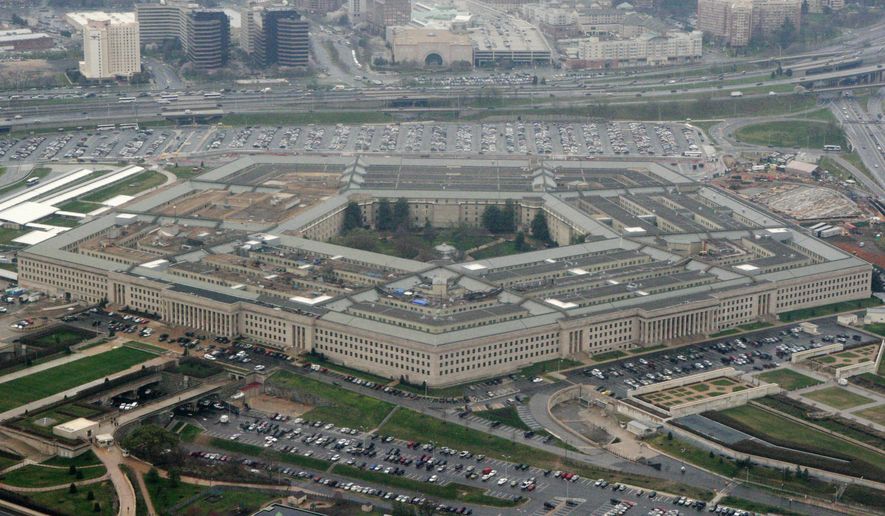
Bob Work, in his last months as deputy secretary of defense, wanted everything in place so that the Pentagon could share in the sweeping advances in data processing already enjoyed by the thriving tech sector. A memo dated April 26, 2017, established an “Algorithmic Warfare Cross-Functional Team,” a.k.a. “Project Maven.” Within a year, the details of Google’s role in that program, disseminated internally among its employees and then shared with the public, would call into question the specific rationale of the task and the greater question of how the tech community should go about building algorithms for war, if at all.