The Profession of Arms: A Guide for Young Army Officers
It takes courage, especially for a young officer, to check a man met on the road for not saluting properly or for slovenly appearance, but, every time he does, it adds to his stock of moral courage, and whatever the soldier may say, he has respect for the officer who does pull him up.
Read Document →The Dragon's Teeth: Assessing China's Military Modernization
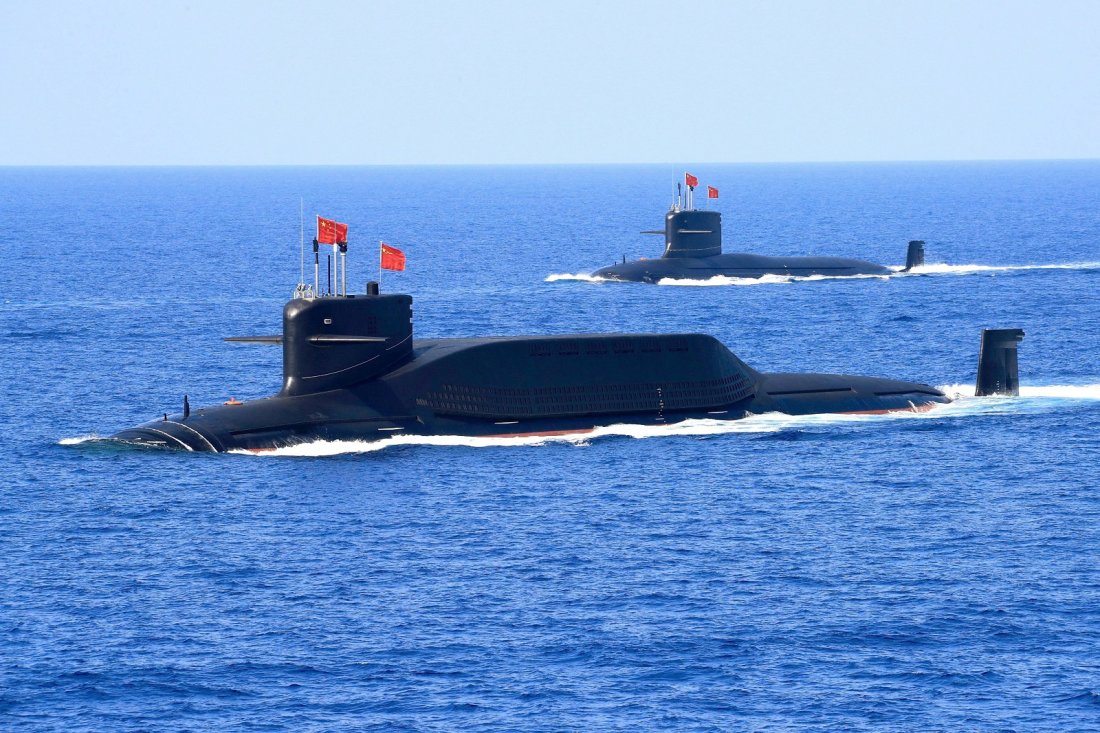
PLA has focused on modernising its capabilities across all warfare domains to achieve these goals. This includes land, air, and maritime operations, nuclear, space, counter-space, electronic warfare and cyberspace operations, aiming to become a fully integrated joint force.
Read Document →Transforming the PLA: A Decade of reorganisation from SSF to ISF
PRC has engaged in a sustained and broad effort to transform the PLA from an infantry-heavy, low-technology, ground forces-centric military into a high-technology, networked force with an increasing emphasis on joint operations and naval and air power projection.
Read Document →Eyes without Borders: Exploring the World of Open Source Intelligence (OSINT) in the Digital Age
Open Source Intelligence (OSINT) is gaining prominence with the rise of social media, the digital society and the vast growth of publicly and commercially available information (PAI and CAI).
Read Document →
The PLA’s Developing Cyber Warfare Capabilities and India's Options
Informationised warfare blurs the lines between peacetime and wartime. A nation in the information age cannot wait for the hostilities to break out to collect intelligence, carryout influence operations, develop antisatellite systems or design computer software weapons.
Read Document →
Galwan and After
Why did China did this when he is under tremendous pressure in all fronts, is this China's salami slice tactics being progressed rigorously, what will be new Rules of Engagement, what will be escalatory control mechanism, who has taken this decision, will there be some pressure put by China in India's North-East through insurgency.
Read Document →
India’s Joint Doctrine for Cyberspace Operations: A Critical Review
Chief of Defence Staff (CDS) General Anil Chauhan and Secretary, Department of Military Affairs, formally released declassified versions of the Joint Doctrines for Cyberspace Operations during the Chiefs of Staff Committee meeting in New Delhi.
Read Document →
Know your Enemy General(now Field Marshal) Syed Aseem Munir
Gen SA Munir's position in the hierarchy of Pakistan was not very comfortable. The state of economy, insurgency in Pakhtoonistan and Balochistan, attack on the Jaffar Express, constant protests by supporters of Imran Khan's supporters inside and outside of parliament.
Read Document →
Decoding Operation SINDOOR: Key Aspects and Implications
Precision strikes were carried out on nine sites—four in Pakistan and five in PoK—linked to anti-India terrorist groups such as the LeT, JeM and the Hizbul Mujahideen. The targeted sites included Muridke (LeT headquarters) and Bahawalpur (JeM headquarters).
Read Document →
Chinese Cyber Exploitation in India's Power Grid - Is There a linkage to Mumbai Power Outage?
The New York Times (NYT), based on analysis by a U.S. based private intelligence firm Recorded Future, reported that a Chinese entity penetrated India’s power grid at multiple load dispatch points. Chinese malware intruded into the control systems that manage electric supply across India, along with a high-voltage transmission substation and a coal-fired power plant
Read Document →7 May 2019
China and India look to cooperate despite belt and road disagreements
An India-China maneouvre could soon leave world's oil powers toothless
Turbocharging India’s Digital Economy
New digital ecosystems are springing up across India's economy, transforming business models and delivering huge productivity, efficiency, and growth benefits. And sectors that have not traditionally had technology at their core – such as agriculture, banking, health care, and logistics – are among those with the most potential.How Do You Save a Million People From a Cyclone? Ask a Poor State in India
Here is why 'frustrated' China changed its stand on Masood Azhar
Will Venezuela become South America's Afghanistan?
Venezuela is currently experiencing one of the greatest economic and humanitarian catastrophes in recent memory. After two decades of inept economic policies, inflation surpassed one million percent at the end of 2018, and more than three million Venezuelans fled the country in an attempt to escape the famine that has condemned one in seven children to malnutrition.ISIS’s New Target: South Asia
The Easter Sunday attacks in Sri Lanka have brought the island nation to the forefront of the global terrorism discourse. The Islamic State militant group, via its quasi-official Amaq News outlet, took credit for the attacks, releasing pictures and videos of the alleged attackers. The video showed the suicide bombers who conducted the raids wearing black overalls, faces covered, pledging allegiance to the Islamic State and its leader, Abu Bakr al-Baghdadi.China’s Belt and Road Initiative: Why the Price Is Too High
Fears of unsustainable indebtedness among many of the countries that are partnering in China’s Belt and Road Initiative (BRI) set the backdrop for a two-day meeting last week in Beijing. The $1 trillion initiative includes projects in transportation, energy and infrastructure in more than 70 countries across Asia, Europe, Africa and Oceania such as ports, railways, oil and gas pipelines, and power grids, along with plans for new economic corridors.U.S.-China Trade: Is a Deal Imminent
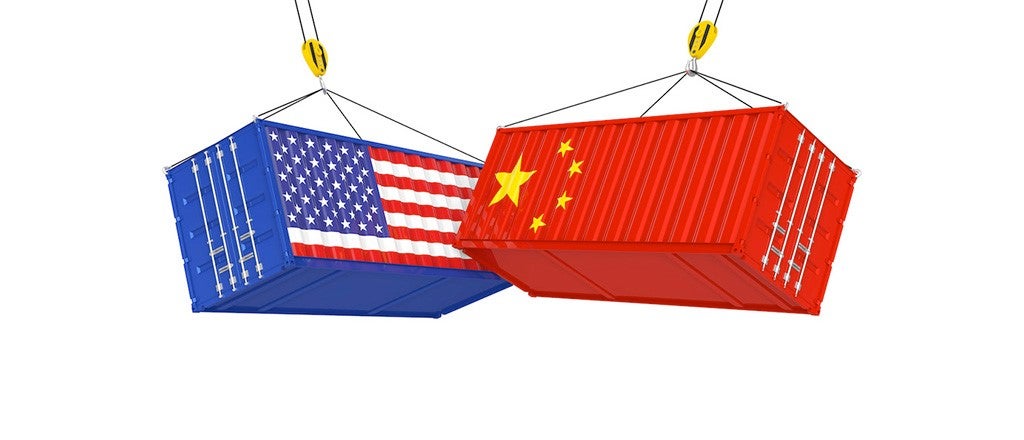
The trade standoff between the U.S. and China had the world riveted last year, although recently it seems that tensions are cooling. Charlene Barshefsky, a former U.S. trade representative who served during the Clinton administration, predicts there will soon be a trade deal with China that will secure some gains for the United States. But President’s Trump’s often combative negotiating style could harm the U.S. in the long run, she noted during an interview with Wharton Dean Geoffrey Garrett at a recent Penn Wharton China Lecture.Legal regulation of AI weapons under international humanitarian law: A Chinese perspective
China’s Belt and Road Partners Aren’t Fools
Bojan is three months unemployed, and his wife earns just 120 euros a month—not nearly enough to feed a family of four. He blames Serbia’s increasingly authoritarian president, Aleksandar Vucic, for his troubles. He also blames the European Union, which he says is Vucic’s ultimate master. He describes Brussels as a vaguely imperialist entity that demands too much of Serbia while delivering little. “And China?” I ask. “China is good. China is here to help,” he says.China’s Crackdown on Uighurs in Xinjiang
Human rights organizations, UN officials, and many foreign governments are urging China to stop the crackdown. But Chinese officials maintain that what they call vocational training centers do not infringe on Uighurs’ human rights. They have refused to share information about the detention centers, however, and prevent journalists and foreign investigators from examining them.A "People's War": How China Plans to Dominate the South China Sea
By all means, let’s review China’s way of war, discerning what we can about Chinese warmaking habits and reflexes. But these are not automatons replaying the Maoist script from the 1930s and 1940s. How they might transpose Maoist doctrine to the offshore arena—and how an unruly coalition can surmount such a challenge—is the question before friends of maritime freedom.Washington Is Dismissing China’s Belt and Road. That’s a Huge Strategic Mistake.
SINGAPORE — Last week, leaders and officials representing more than three dozen countries from across the world gathered in Beijing for the second Belt and Road summit. The event marks the two-year anniversary since China first convened its flagship initiative to coordinate trillions of dollars of infrastructure across Eurasia and the Indian Ocean in a broad effort to recreate the old Silk Roads.What is really going on in China?
Source Link
I was in China April 20-28, throughout which I experienced and carefully observed China first hand. Here is a summary: China is doing very well, as usual, and the trade war between the U.S. and China has zero effect on average Chinese citizens, so far. Specifically, let me highlight three big events that happened while I was there:
1. Another loyalty test
Regulations governing who gets promotion will also require candidates to be given a clean bill of health by the anti-corruption watchdog.
Rules show customary hallmarks of Xi Jinping's efforts to stamp his imprint on party, but one observer warns they could harm morale.
Pushing the jihadist genie back into the bottle: How to counter the ongoing terrorist threat
‘Global Britain’ Is a Pipe Dream
Among the more compelling arguments for Brexit in 2016 was the idea that the center of gravity of the global economy was shifting away from Europe. In order to capitalize on the new opportunities, the argument went, the United Kingdom should unmoor itself from the rigid and introspective European Union.President Trump Is Spending $20 Billion on an Aircraft Carrier. The Navy Wanted That Money for Cybersecurity
Going Toe-to-Toe With Ukraine’s Separatist Hackers
The spy software he was attempting to run against the Ukrainian government had infected the wrong machine, and now an analyst working for an American security company was picking apart the program—known as RatVermin—trying to understand how it worked.How NATO Could Solve the Suwalki Gap Challenge
Sebastien Roblin recently wrote a good summary of the increasingly popular narrative on the Suwalki Gap and—unintentionally—an equally good representation of the glaring gaps in it. Roblin notes that the forty-mile (more common measurement is sixty miles) corridor squeezed between Kaliningrad Oblast of Russia and Belarus represents a “natural chokepoint Russia could potentially assail from multiple directions to pinch off columns of NATO troops attempting to reinforce the Baltics.” Russia’s ability to prevent reinforcements from arriving is expected to enable its forces to occupy the Baltic states in thirty-six to sixty hours, according to a RAND Corporation study. Referring to the 2018 CEPA study authored by retired Lt. Gen. Ben Hodges, Roblin reiterates the solution to the conundrum: reinforce conventional deterrence by enhancing NATO military presence in the Baltic states and the ability to quickly amass troops on the Polish side of the corridor to keep it open.Regulating social media: lessons from Britain’s first highway code
There is much discussion currently regarding the regulation of the internet and, in particular, the taming of social media. Technology is causing problems to the extent that society is troubled, but this is not a new problem. There is a common pattern of technology emerging to address a problem, followed by the discovery that the technology itself can be the cause of a different set of, often more severe, problems. Nuclear power stations addressed the need for bulk electricity without the need to burn fossil fuels and damage the environment. But then, when nuclear power stations themselves had problems (for example the Chernobyl disaster of April 1986), the local issue of air pollution from fossil fuels transformed to a global issue of radiation from released nuclear fuel (World Nuclear Association, 2018). New technology often enables us to go faster or do more at reduced cost. It should not be a surprise then that the problems arising from new technology happen more quickly and with a more significant impact than the problems that arose from the old technology it replaced.UK to regulate social networks to curb the spread of harmful content
The UK‘s set to kick off this week with a move to regulate social media platforms, so as to hold them accountable for the spread of “online harms,” like misinformation, terrorist propaganda, and content depicting child sexual abuse.Implications of Quantum Computing for Encryption Policy
Forget about artificial intelligence, extended intelligence is the future
Last year, I participated in a discussion of The Human Use of Human Beings, Norbert Weiner’s groundbreaking book on cybernetics theory. Out of that grew what I now consider a manifesto against the growing singularity movement, which posits that artificial intelligence, or AI, will supersede and eventually displace us humans.How big tech designs its own rules of ethics to avoid scrutiny and accountability
Cybersecurity R&D to Counter Global Threats
National Cybersecurity R&D Programme
Basic Research in Cyber Security
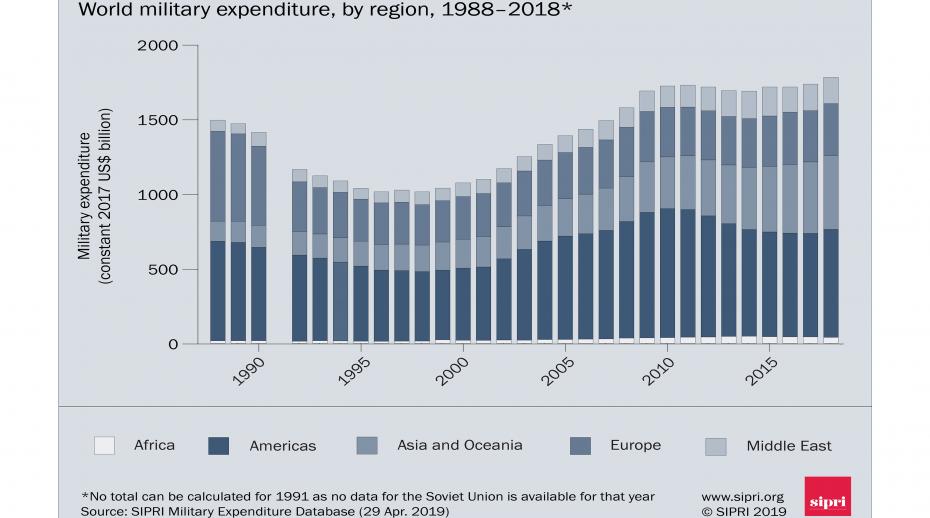
World military expenditure grows to $1.8 trillion in 2018
(Stockholm, 29 April 2019) Total world military expenditure rose to $1822 billion in 2018, representing an increase of 2.6 per cent from 2017, according to new data from the Stockholm International Peace Research Institute (SIPRI). The five biggest spenders in 2018 were the United States, China, Saudi Arabia, India and France, which together accounted for 60 per cent of global military spending. Military spending by the USA increased for the first time since 2010, while spending by China grew for the 24th consecutive year. The comprehensive annual update of the SIPRI Military Expenditure Database is accessible from today at www.sipri.org.Explained: How Israel Won a War in Just 6 Hours
At 7:10 a.m. Israeli time, sixteen Israeli Air Force Fouga Magister training jets took off and pretended to be what they were not. Flying routine flight paths and using routine radio frequencies, they looked to Arab radar operators like the normal morning Israeli combat air patrol.