The Profession of Arms: A Guide for Young Army Officers
It takes courage, especially for a young officer, to check a man met on the road for not saluting properly or for slovenly appearance, but, every time he does, it adds to his stock of moral courage, and whatever the soldier may say, he has respect for the officer who does pull him up.
Read Document →The Dragon's Teeth: Assessing China's Military Modernization
PLA has focused on modernising its capabilities across all warfare domains to achieve these goals. This includes land, air, and maritime operations, nuclear, space, counter-space, electronic warfare and cyberspace operations, aiming to become a fully integrated joint force.
Read Document →Transforming the PLA: A Decade of reorganisation from SSF to ISF
PRC has engaged in a sustained and broad effort to transform the PLA from an infantry-heavy, low-technology, ground forces-centric military into a high-technology, networked force with an increasing emphasis on joint operations and naval and air power projection.
Read Document →Eyes without Borders: Exploring the World of Open Source Intelligence (OSINT) in the Digital Age
Open Source Intelligence (OSINT) is gaining prominence with the rise of social media, the digital society and the vast growth of publicly and commercially available information (PAI and CAI).
Read Document →
The PLA’s Developing Cyber Warfare Capabilities and India's Options
Informationised warfare blurs the lines between peacetime and wartime. A nation in the information age cannot wait for the hostilities to break out to collect intelligence, carryout influence operations, develop antisatellite systems or design computer software weapons.
Read Document →
Galwan and After
Why did China did this when he is under tremendous pressure in all fronts, is this China's salami slice tactics being progressed rigorously, what will be new Rules of Engagement, what will be escalatory control mechanism, who has taken this decision, will there be some pressure put by China in India's North-East through insurgency.
Read Document →
India’s Joint Doctrine for Cyberspace Operations: A Critical Review
Chief of Defence Staff (CDS) General Anil Chauhan and Secretary, Department of Military Affairs, formally released declassified versions of the Joint Doctrines for Cyberspace Operations during the Chiefs of Staff Committee meeting in New Delhi.
Read Document →
Know your Enemy General(now Field Marshal) Syed Aseem Munir
Gen SA Munir's position in the hierarchy of Pakistan was not very comfortable. The state of economy, insurgency in Pakhtoonistan and Balochistan, attack on the Jaffar Express, constant protests by supporters of Imran Khan's supporters inside and outside of parliament.
Read Document →
Decoding Operation SINDOOR: Key Aspects and Implications
Precision strikes were carried out on nine sites—four in Pakistan and five in PoK—linked to anti-India terrorist groups such as the LeT, JeM and the Hizbul Mujahideen. The targeted sites included Muridke (LeT headquarters) and Bahawalpur (JeM headquarters).
Read Document →
Chinese Cyber Exploitation in India's Power Grid - Is There a linkage to Mumbai Power Outage?
The New York Times (NYT), based on analysis by a U.S. based private intelligence firm Recorded Future, reported that a Chinese entity penetrated India’s power grid at multiple load dispatch points. Chinese malware intruded into the control systems that manage electric supply across India, along with a high-voltage transmission substation and a coal-fired power plant
Read Document →3 August 2015
Revamping India’s scientific ecosystem
India: The Pharmacy of the World Where 'Crazy Drug Combinations' Go Unregulated
Aid Management and Institutional Capacity in Nepal
Pakistani Intelligence Was Secretly Treating Taliban Leaders and Fighters at Aga Khan University Hospital in Karachi
Mullah Omar’s Death Reveals That the Taliban Leadership Is Deeply Divided
It Took 18 Months for Afghan Intel Service to Determine that Taliban Leader Mullah Omar Had Died in a Hospital in Karachi
Mullah Omar’s Death Could Be a Nightmare for Afghanistan and NATO
JULY 30, 2015
Who is left among the Taliban leadership to conduct peace talks?
Reports on Wednesday that reclusive Taliban leader Mullah Omar had died will be rightly hailed by some as the demise of an American nemesis. But the death of the one-eyed Afghan commander may also scuttle the most promising peace talks in Afghanistan in a decade.
David Rohde is an investigative reporter for Reuters, two-time winner of the Pulitzer Prize, and a former reporter for The New York Times. His latest book, Beyond War: Reimagining American Influence in a New Middle East, was published in April. More He is the author, with Kristen Mulvihill, of A ... Full Bio
Omar’s direct role in day-to-day Taliban operations had been declining for years, according to Western diplomats in Afghanistan. Even if he is alive, the former leader of Afghanistan is believed to be severely ill.
Taliban leader Omar’s tale reflects clashing agendas
July 30
An Afghan store clerk shows a calendar with pictures of Afghan leaders including Mohammad Omar.
In early 2011, then-CIA Director Leon Panetta confronted the president of Pakistan with a disturbing piece of intelligence. The spy agency had learned that Mohammad Omar, the Taliban leader who had become one of the world’s most wanted fugitives after the Sept. 11, 2001, attacks, was being treated at a hospital in southern Pakistan. The American spy chief even identified the facility — the Aga Khan University Hospital in Karachi — and said the CIA had “some raw intelligence on this” that would soon be shared with its Pakistani counterpart, according to diplomatic files that summarize the exchange.
U.S. intelligence officials now think that Omar probably died two years later, in 2013, and Afghan officials said this week that he succumbed while being treated for a serious illness in a Karachi hospital, just as those earlier intelligence reports had indicated.
Will China Have a Mini US Navy By 2020?
What China Means by a 'Correct View' on WW2 History
The New Silk Road - A Chinese Style New Deal
China's Super Weapons: Beware the J-20 and J-31 Stealth Fighters
August 1, 2015
Throughout its history, the People’s Liberation Army Air Force (PLAAF) of the People’s Republic of China (PRC) has lagged behind the aerial programs of other world powers such as the United States. Now, the PRC has set its sights on producing indigenously designed “fifth generation” fighter jets comparable to the US F-22 Raptor and F-35 Lightning II. Many U.S. officials and pilots suspect that the Chinese have been using hacked U.S. technology to aid their indigenous development programs. The PRC is also leveraging additive manufacturing technology (better known as 3D-printing) in order to increase speed and efficiency in manufacturing aircrafts and compete with the U.S. The J-20 Black Eagle could be fully operational by 2018, and a second model, the J-31 Gyrfalcon, by 2020. If true, China’s new generation of fighters could have a substantial impact on its ability to either defend what it considers to be sovereign airspace, or to mount an aerial offensive in a wartime scenario, particularly against Taiwan (ROC).
Russia Races to Outflank China in Middle East Nuclear Technology Market
July 31, 2015
For the ASEAN-China South China Sea Code of Conduct, Ninth Time Isn't the Charm
August 01, 2015
What China Means by a 'Correct View' on WW2 History
August 01, 2015
As the August 15 anniversary of Japan’s surrender in World War II draws near, Chinese President Xi Jinping is determined that China’s role in the war not go unrecognized. On July 30, at a study session of the Chinese Communist Party Politburo focusing on what China calls the “Chinese People’s War of Resistance against Japanese Aggression,” Xi called for stepped-up efforts to preserve and study the history of both Japan’s invasion of China and China’s resistance, saying the country needs a national-level plan to coordinate efforts.
Xi’s vision includes more academic research, more collection and organization of historical records, and more publicity (or propaganda) efforts to shape public discourse. In other words, except to see yet more books and TV shows about the war with Japan.
The end goal, as Xi put it, is both to “let history talk” and “use historical facts to speak.” But in Xi’s formulation, which emphasizes a “correct view of history,” it’s clear that the second function – using historical facts to spread Beijing’s message – is the more important one. That’s why Xi singles out three “important topics” for historical focus: The “great significance” of the War of Resistance; the “important status” of China’s War of Resistance in the World Anti-Fascist War (the Chinese government’s preferred name for World War II); and how the central role of the Chinese Communist Party was “the key to victory” in the War of Resistance.
The Other Claimants: Vietnam and Philippines in the South China Sea
But the claimants don’t need satellites to see what their rivals are up to. Some of the occupied reefs and islands are so close that a pair of binoculars will suffice. China’s garrison on Johnson Reef is just 6 km (3.7 miles) from Vietnamese forces on Collins Reef and Beijing’s base on Subi Reef is only 26 km (16.1 miles) from the Philippine forces on Thitu Island. The Vietnamese and Philippine governments must therefore have been aware of China’s massive island-building operations within days of them starting. Asia’s largest dredging vessel, the German-designed Tian Jing Hao, began operations at Cuarteron Reef on September 9, 2013. Vietnam has a base on East London Reef just 30 km (18.6 miles) away, yet it was not until May 2014 that either Hanoi or Manila made any public reaction. What explains the silence?
New Satellite Imagery of All the Chinese Man-Made Islands in the South China Sea
White House Reportedly Decides to Retaliate Against China for Hacking, But Obama Team Does Not Know What to Do
U.S. Decides to Retaliate Against China’s Hacking
The decision came after the administration concluded that the hacking attack was so vast in scope and ambition that the usual practices for dealing with traditional espionage cases did not apply.
But in a series of classified meetings, officials have struggled to choose among options that range from largely symbolic responses — for example, diplomatic protests or the ouster of known Chinese agents in the United States — to more significant actions that some officials fear could lead to an escalation of the hacking conflict between the two countries.
What history says about the prospects for Islamic democracy
Scholars, pundits and journalists often look to Western history for analogies to help us understand ongoing dynamics in the Middle East: Jihadi terrorists are like European anarchists a century ago; the Arab Spring was like theEuropean Revolutions of 1848; the spread of the Islamic State and the deepening Saudi-Iranian rivalry means that the region is entering its own version of the miserable Thirty Years’ War (1618-1648); and so on. As Yuen Foong Khong has written, analogies can be misleading, sometimes tragically so. However, when used judiciously they can be helpful, and my recently published book, “Confronting Political Islam,” is built around several such analogies. One particularly telling comparison concerns the prospects for Islamic democracy in the Middle East. The Saudis’ Unconscionable War in Yemen
August 2, 2015
Saudi Arabia is tearing a nation apart and empowering Al Qaeda. So why is America onboard?
ISIS May be the Big Winner From Mullah Omar’s Death
U.S. Intelligence Finds That Despite a Year of U.S. Bombing, ISIS Is still Just As Strong As Its Was a Year Ago
Three reasons why Russia should not be called the greatest threat to the USA
Iran Nuclear Deal And Future Prospects – OpEd
Nuclear Deal And US Rebalancing: Not A Strategy For Peace – Analysis
New Intel Era: Tweet Alerts DIA To SCUD Launch, Not Spy Sats
Cybersecurity: We Need a Chinese Snowden
Digital India – Great Ambitions, Hurdles Galore
Robert Strausz-Hupe and the Balance of Tomorrow
August 01, 2015
In the immediate aftermath of the Second World War, Robert Strausz-Hupe, then a professor at the University of Pennsylvania, wrote a book entitled The Balance of Tomorrow, in which he envisioned not just the postwar struggle between the Soviet Union and the United States, but also the geopolitical rise of the Asian powers of China and India.
Strausz-Hupe was born in Vienna in 1903, in the decaying Austro-Hungarian Empire. In 1923, he emigrated to the United States and worked as an investment advisor to several American financial institutions. In the late 1930s, he began lecturing audiences on the coming war, and as a result of one such lecture in Philadelphia he was invited to teach at the University of Pennsylvania.
During the Second World War, Strausz-Hupe wrote a timely and informative book, Geopolitics: The Struggle for Space and Power, which analyzed the writings of Karl Haushofer and others associated with the German school of Geopolitik and their influence on German foreign policy.
Evolution of the US-ROK Alliance: North Korea Threat Profile
August 01, 2015
This is the fifth article in a series on the U.S. alliance with South Korea. Previous articles can be found in The Diplomat’s Koreas section.
Although the alliance has changed substantially since its Cold War origins, it is still grounded in protecting the ROK from DPRK attacks or invasion. While most U.S. Cold War adversaries have abandoned communism, or in the case of the PRC an ideological commitment to conflict with imperial powers, North Korea has not changed its ideology or hostile stance to the outside world. Even while North Korean citizens suffer from hunger and privation, the Kim regime spends an estimated 22.9 percent of its GDP on defense, the highest percentage in the world. In addition, despite North Korea’s relatively small size, it has one of the largest military forces in the world, with an estimated 1,190,000 troops in 2012, as compared to the 639,000 ROK troops. While it is true that many North Korean troops are less well nourished, trained, or equipped than their ROK or U.S. counterparts, North Korea maintains a 100,000+ large detachment of Special Operations forces trained to infiltrate into South Korea, attack strategic infrastructure, carry out assassinations, and potentially act as a delivery mechanism for a biological or chemical attack against the ROK. Making the DPRK threat more acute, the DPRK has positioned most of its forces and artillery south of Pyongyang and in close proximity to the DMZ, meaning that a DPRK attack could occur with little warning.
The Future of Democracy and Human Rights in Myanmar
August 01, 2015
She recently spoke with The Diplomat’s associate editor Prashanth Parameswaran about the future of democracy and human rights in Myanmar ahead of upcoming historic elections expected this November. An edited version of that interview follows.
How central is Australia to the Asian regional order?
August 01, 2015
There are two ways ANZUS might be relevant—through physical geography as a platform for hard power and as a geopolitical player. Let’s start with the former. ANU/CSIS says:
Australia’s geographic location is more important to the United States today than it has been at any time since the Second World War. Australia serves both as a link between the Indian and Pacific Oceans and as a sanctuary from China’s anti-access/area denial capabilities.
APA Board Plans to Recommend That American Shrinks Stay Away From Interrogation Work for CIA
Growing Number of Civilian Contractors Help Find Targets for American Drone Strikes
Documents From 5 U.S. Intelligence Agencies Found in Hillary’s Unclassified Email Server
Rajeev Chandrasekhar: The DoT panel says it wants net neutrality but can't tell us what that is
Jul 27, 2015
The first indication of the government’s opinion has left those following this debate confused and wary.

The Department of Telecommunications released its report on Net Neutrality last fortnight. I spent the weekend reading the 115 page document and have drawn a few conclusions. The first of which is that I could’ve used my weekend for some better reading.
Hacking Critical Infrastructure: A How-To Guide
Cyber-aided physical attacks on power plants and the like are a growing concern. A pair of experts is set to reveal how to pull them off — and how to defend against them.
How easy would it be to pull off a catastrophic cyber attack on, say, a nuclear power plant? At next week’s Black Hat and Def Con cybersecurity conferences, two security consultants will describe how bits might be used to disrupt physical infrastructure.
Dr. Strangelove Lives! Pentagon Wants to Develop New Generation of Cyber ‘Nuclear’ Weapons to Deter Foreign Nations From Attacking Us
Pentagon seeks cyber-weapons strong enough to deter attacks
Los AngelesTimes
The folks who brought the world the mushroom cloud are hard at work at a new project – coming up with cyber-weapons so strong that their very existence would deter foreign governments from attacking U.S. databases and critical computer systems.
The idea is to try to adapt a military concept that helped keep the world safe from nuclear bombings during the Cold War to the digital battlefield of the 21st century.
For four decades, the U.S. and the Soviet Union built up massive stockpiles of nuclear weapons but never used them. Part of the reason was the belief on both sides that any attack would be met with an equally devastating counterstrike. Military planners called the idea mutually assured destruction.
Today, plans for “cyber deterrence” aim to develop something analogous for the digital era.
National security officials have recently stepped up their public warnings about the need to build such a deterrent.
TNI Is HIRING: Defense and National Security Writer and Editor
July 31, 2015
The National Interest, a print and online magazine focusing on international affairs, foreign policy, national security, domestic politics and more is searching for an individual to join our online editorial team. This position is based in Washington, D.C.
This specific position entails writing and editing articles concentrating on defense, military hardware and national security issues as well as other duties as needed.
Lingering Ghosts: World War II and the Shaping of Modern Asia
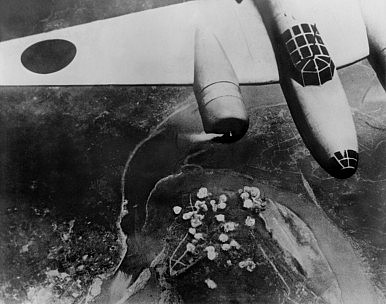
August 15, 1945 – the day Japan initially announced its surrender to the allies; the day that signaled the final end of World War Two. For the 400 million people of the Chinese Republic, that day also marked the end of eight years of all-out war, beginning with the Japanese attack on northern China in July 1937. Within six months most of China, including the capital Nanjing, had been conquered. By early 1942, following Pearl Harbor, the vast majority of East and Southeast Asia (excepting a few neutral outposts, such as Macao) had come under Japanese control. Tokyo’s hegemonistic vision of a Greater East Asia Co-Prosperity Sphere stretched from the Pacific Islands to Burma. Japanese forces were poised to invade British-controlled India to the west, Soviet-controlled Siberia to the north, and launch bombing raids against Australia’s Northern Territories.
Desert Storm, the Last Classic War
July 31, 2015
http://www.wsj.com/articles/desert-storm-the-last-classic-war-1438354990?mod=e2fb
A U.S. soldier near Kuwait’s border with Iraq watches a plume of smoke on the horizon, Kuwait, January 1991. He was part of the U.S.-led coalition that drove Saddam Hussein’s forces out of Kuwait. PHOTO: PETER TURNLEY/CORBIS