The Profession of Arms: A Guide for Young Army Officers
It takes courage, especially for a young officer, to check a man met on the road for not saluting properly or for slovenly appearance, but, every time he does, it adds to his stock of moral courage, and whatever the soldier may say, he has respect for the officer who does pull him up.
Read Document →The Dragon's Teeth: Assessing China's Military Modernization
PLA has focused on modernising its capabilities across all warfare domains to achieve these goals. This includes land, air, and maritime operations, nuclear, space, counter-space, electronic warfare and cyberspace operations, aiming to become a fully integrated joint force.
Read Document →Transforming the PLA: A Decade of reorganisation from SSF to ISF
PRC has engaged in a sustained and broad effort to transform the PLA from an infantry-heavy, low-technology, ground forces-centric military into a high-technology, networked force with an increasing emphasis on joint operations and naval and air power projection.
Read Document →Eyes without Borders: Exploring the World of Open Source Intelligence (OSINT) in the Digital Age
Open Source Intelligence (OSINT) is gaining prominence with the rise of social media, the digital society and the vast growth of publicly and commercially available information (PAI and CAI).
Read Document →
The PLA’s Developing Cyber Warfare Capabilities and India's Options
Informationised warfare blurs the lines between peacetime and wartime. A nation in the information age cannot wait for the hostilities to break out to collect intelligence, carryout influence operations, develop antisatellite systems or design computer software weapons.
Read Document →
Galwan and After
Why did China did this when he is under tremendous pressure in all fronts, is this China's salami slice tactics being progressed rigorously, what will be new Rules of Engagement, what will be escalatory control mechanism, who has taken this decision, will there be some pressure put by China in India's North-East through insurgency.
Read Document →
India’s Joint Doctrine for Cyberspace Operations: A Critical Review
Chief of Defence Staff (CDS) General Anil Chauhan and Secretary, Department of Military Affairs, formally released declassified versions of the Joint Doctrines for Cyberspace Operations during the Chiefs of Staff Committee meeting in New Delhi.
Read Document →
Know your Enemy General(now Field Marshal) Syed Aseem Munir
Gen SA Munir's position in the hierarchy of Pakistan was not very comfortable. The state of economy, insurgency in Pakhtoonistan and Balochistan, attack on the Jaffar Express, constant protests by supporters of Imran Khan's supporters inside and outside of parliament.
Read Document →
Decoding Operation SINDOOR: Key Aspects and Implications
Precision strikes were carried out on nine sites—four in Pakistan and five in PoK—linked to anti-India terrorist groups such as the LeT, JeM and the Hizbul Mujahideen. The targeted sites included Muridke (LeT headquarters) and Bahawalpur (JeM headquarters).
Read Document →
Chinese Cyber Exploitation in India's Power Grid - Is There a linkage to Mumbai Power Outage?
The New York Times (NYT), based on analysis by a U.S. based private intelligence firm Recorded Future, reported that a Chinese entity penetrated India’s power grid at multiple load dispatch points. Chinese malware intruded into the control systems that manage electric supply across India, along with a high-voltage transmission substation and a coal-fired power plant
Read Document →18 April 2021
How Will Digital Currencies Change Wallets?
The Unlikelihood of a War With China and Russia
The Taliban Are Ready to Exploit America’s Exit What a U.S. Withdrawal Means for Afghanistan
Yes, the Atrocities in Xinjiang Constitute a Genocide

Beyond U.S.-China Technology Competition
Alibaba fine, Huawei and Ericsson, and public opinion on military
12 April 2021, Yun Jiang and Adam Ni
Chinese authorities hit Alibaba with a ¥18.2 billion fine on Saturday for abusing its market dominance, restricting competition and stifling innovation.
Last November, Beijing torpedoed Alibaba’s sister firm Ant Group’s IPO at the eleventh hour. In December, the State Administration for Market Regulation announced its investigation of Alibaba.
Alibaba should be counting its stars if this is the end of the story. The fine is small change for the tech giant, only amounting to 4 per cent of its 2019 revenue from China. But more likely Beijing is just getting warmed up.
The Chinese leadership has designated “strengthening anti-monopoly work and preventing disorderly capital accumulation ๅผบๅๅๅๆญๅ้ฒๆญข่ตๆฌๆ ๅบๆฉๅผ ” as one of the eight economic policy priorities for 2021. The targets are tech giants that run the most prominent internet platforms in China. Tencent will likely be the next in line to be roughed up.
Beijing’s new zeal for “anti-monopoly” has several drivers. China’s super internet platforms (such as WeChat) pose actual market competition, innovation, and consumer rights issues. More broadly, China is grappling with how to regulate new technology like most countries.
But more interesting for us, this is about political economy. In Xi’s words, “the foundation of [China’s] political economy can only be Marxist political economy, not other economic theories”. In practical terms, this means that “the leading role of the state-owned economy must not be altered.” Beijing’s campaign to rein in China’s tech giants is part of a broader trend towards tighter state control over the economy.
Joe Biden calls time on America’s longest-ever war
America leaves behind a weak state and struggling army
Apr 13th 2021
The first American forces to enter Afghanistan in 2001 arrived on September 26th, when a cia team dropped into the Panjshir Valley in the north. At the peak of the war a decade later, America had more than 100,000 troops battling the Taliban.
Another decade on, all of them will be gone and the longest war in American history will be over—for the Americans, at least. On April 14th President Joe Biden announced that every American soldier would leave by September 11th, the 20th anniversary of the attacks that prompted America to invade in the first place.
American withdrawal need not return Afghanistan to the Taliban
The Taliban’s decision to back out of attending a peace summit, scheduled to start later this week in Turkey, seems to have prompted the Biden administration’s announcement of a full withdrawal of American forces from Afghanistan by Sept. 11. The Taliban will now most likely take even less interest in talks, as their goal all along was to secure a U.S. military withdrawal.
The Biden administration was hoping that, at the conference scheduled to be held in Turkey, it would get the Taliban’s agreement to an extension of the May 1 deadline for withdrawal of U.S. troops. By refusing to show up, the Taliban forced President Biden, who opposes keeping troops in Afghanistan, to announce a final withdrawal date.
The Taliban have always sought to run out the clock on the U.S., reflecting Taliban founder Mullah Omar’s belief that “Americans have all the clocks, but we have all the time.” They have shown little interest in sharing power, ending violence or defining the terms of a lasting peace.
Instead of betting everything on an elusive deal with the Taliban, U.S. interests would have been better served by working more closely with the Kabul government while planning for an American military withdrawal. That option can still be exercised instead of chasing an agreement with the Taliban.
The Afghan National Security Forces (ANSF) are not the South Vietnam army, which collapsed soon after American military withdrawal. Over the last three years, Afghan forces have undertaken more than 90 percent of all military operations, depending on NATO forces only for air support, technical intelligence and special operations capability.
Japan Faces Growing Pressure to Rethink Releasing Fukushima’s Wastewater into Ocean
Biden Is Done with Afghanistan. Is Afghanistan Done With America?
U.S. President Joe Biden’s expected announcement Wednesday afternoon that all U.S. troops will be out of Afghanistan by September is a recognition, at long last, that there was no U.S. victory to be found in the country’s craggy landscape.
In his speech, Biden said four U.S. presidents have wrestled with Afghanistan—and he would not pass the problem onto a fifth.
How Will Biden Pivot on South Asia?
After the U.S. withdraws from Afghanistan, its rivalry with China is likely to define the new administration’s…
“We cannot continue the cycle of extending or expanding our military presence in Afghanistan, hoping to create the ideal conditions for our withdrawal [and] expecting a different result,” Biden said.
Biden’s new timeline for U.S. withdrawal is only a few months later than the deal that former U.S. President Donald Trump signed up for early last year, when he reached a so-called peace agreement with the Taliban. Charitable observers would call Biden’s unconditional withdrawal an early example of what the president and his national security team have promised would be a foreign policy with “humility.” Critics would—and have—called it a humiliating defeat that leaves the United States less secure and abandons the Afghan people to a terrifying future.
The Most Urgent North Korean Nuclear Threat Isn’t What You Think
Should NATO Admit Ukraine?
April 15, 2021
There is no consensus in NATO in favor of Ukraine’s membership. What the most determined Western countries can do is provide intelligence and military support to Ukraine, including weaponry and capability building.
If you’re Ukrainian President Volodymyr Zelenskiy, these days the case seems obvious: yes, it should. The real question is whether doing so makes sense for NATO. By admitting Ukraine, the alliance would clearly gain an enthusiastic member. It would also gain a conflict that’s mostly frozen but regularly flares up. Given that only states that are not involved in territorial conflicts with their neighbors are allowed to join NATO, Russia can de facto prevent Ukraine’s accession by keeping the country in this conflict.
That raises the question of whether NATO should take a compassionate turn and admit Ukraine anyway. It would be a nice gesture, but it would also be less beneficial than it seems. Sure, Ukraine would be inside the alliance, but this would give Russia an excuse to act even more aggressively. NATO, in turn, would find its attention nearly completely devoted to this conflict. That would not serve the alliance well.
Strategic ambiguity is a much better course of action. Russia can’t know how NATO may respond to aggression toward Ukraine, so Moscow has to assume a muscular response. Remember: in deterrence, fear and surprise are the decisive factors.
U.S. Mounts All-Out Effort to Save Iran Nuclear Deal

Biden’s Afghanistan Exit Will Strengthen, Not Weaken, U.S. National Security
Already proponents of the war in Afghanistan are declaring that President Joe Biden’s promise to exit fully by September 11 is a disastrous mistake. Sen. Lindsey Graham’s verdict is not untypical: “he is paving the way for another 9/11.” But the longer America remains in Afghanistan, the more it weakens its own national security. The truth is that Biden is bowing to the inevitable—and the end of the war cannot come too quickly.War of unreality: Why Russia is threatening to escalate the Ukraine conflict
Gustav Gressel, 14 April 2021
War of unreality: Why Russia is threatening to escalate the Ukraine conflict
European governments have yet to learn a key lesson from the war in Ukraine. The alternative reality the Kremlin lives in is becoming increasingly dangerous.
Over the past two weeks, Russian military movements and deployments near Ukraine’s border have increasingly caught the attention of the West. In late March, such movements were occurring to Ukraine’s east, north, and south – including through the deployment of some Belarussian troops – but, last week, the centre of gravity of Russia’s military build-up shifted towards the occupied Crimean peninsula and the Krasnodar region, which borders Donbas.
As the situation is still developing, there are varying estimates of the size of Russia’s deployments. But it deployed many of the Southern Military District’s manoeuvre brigades and regiments to the field, each of them deploying at least one battalion tactical group (for a total of over 30). And 16 more have been deployed from other regions across Russia. This roughly correlates with the troop strength the Ukrainian General Staff has indicated. (By comparison, NATO’s rapid response force is intended to be 30 battalions strong.) Because aerial deployments are much harder for civilians to track, there is little publicly available information on the Russian air force’s movements. However, there have been recorded increases in Russian aerial activities in the Baltic region during the time in question, and the Russian Ministry of Defence has stated that all air force and naval aviation units of the Southern Military District will be exercising common operational tasks. There is little doubt that Russia is pulling together an assault force capable of invading Ukraine. But how far will it go
China’s Digital Silk Road and the Global Digital Order

The Digital Revolution Is Eating Its Young
America Needs a New Transatlantic Script to Deal with China

Risks in the Semiconductor Manufacturing and Advanced Packaging Supply Chain
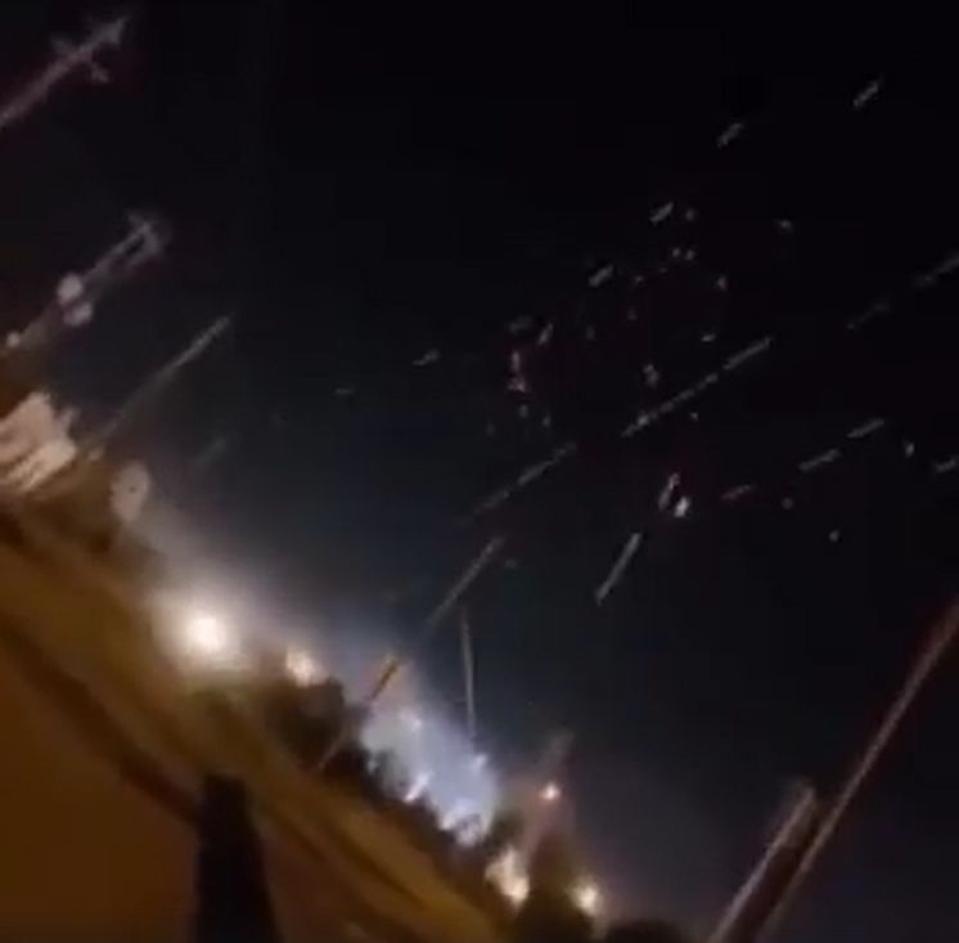
Incoming! How Iran’s Qiam Missile Destroyed a U.S. Military Base
Here's What You Need to Remember: Tehran employed its ballistic missiles for exactly the mission they were intended for—holding assets at U.S. airbases in the Middle East at risk. Though the operation was clearly foremost of political and symbolic importance to the Iranian regime, it demonstrated Iran’s willingness to use those weapons, and that at least some were capable of landing on target.Competition and Cooperation in the Maritime Domain

How the U.S. Navy’s Ghost Fleet of Drones Is the Future of Warfare