The Afghan Taliban recently promoted its “Special Forces Unit” that purportedly is operating in the eastern Afghan province of Laghman. Since 2015, the Taliban has advertised its so-called “Special Forces Unit” which is known to have operated in southern Afghan provinces. These six photos of the “Special Forces Unit” operating in Laghman province were released by the Taliban on its official Telegram account on Nov. 1. The Taliban special forces are seen wearing new uniforms and chest rigs, and are photographed with a captured Afghan Army HUMVEE. The images were captured during the daylight.
10 November 2017
NATO looks to seize momentum in Afghanistan conflict
By Damon Wake and Thomas Watkins
 Brussels (AFP) - Defence ministers from across the NATO alliance meet in Brussels on Thursday to review next steps in the Afghanistan conflict and brainstorm ways to deal with the 16-year-old security crisis. NATO this week announced it would be sending some 3,000 extra troops to the war-torn country, bringing the Western military footprint up to about 16,000 soldiers. The additional troops, most of them American, will help train and advise local Afghan forces who have struggled to hold the Taliban at bay while suffering heavy casualties.
NATO Sees Taliban Bases in Pakistan 'Big Challenge' to Afghan Peace
Ayaz Gul
 NATO Secretary-General Jens Stoltenberg said Taliban bases in Pakistan pose a “big challenge” to efforts aimed at bringing peace and stability to Afghanistan.
Stoltenberg told reporters Tuesday at the alliance’s headquarters in Brussels that he regularly raises the issue in meetings with Pakistani leaders and will continue to do so.
“We have to address the big challenge that [the] Taliban, the insurgents are working also out of bases in Pakistan. And we have raised that several times. It is extremely important that all countries in the region support efforts of the Afghan national unity government and that no country provide any kind of sanctuary for the terrorists,” said the NATO chief.
Afghanistan 2017 Witnesses the Power Tussle of Two New Strategic Trilaterals
By Dr Subhash Kapila
Strange and ironical are geopolitical histories of a region where within two decades geopolitical alignments have spun on their heads. This happens to be the case of Afghanistan’s turbulent last two decades where a new and serious power tussle is underway between two Strategic Trilaterals. In 2017, Afghanistan is engulfed in a serious power tussle not between two Superpowers of the pre 9/11 era but two diametrically opposite ‘Strategic Trilaterals’ of China-Pakistan-Russia, a newly emerged strategic convergent group facing the combination of the United States-Afghanistan-India Trilateral, which notably is interlinked by bilateral strategic partnerships amongst the three last named.
Bangladesh: The New Nexus for Transnational Terrorism
by Robert C. Hodges
Introduction
The increasing Islamic terrorism seen in Bangladesh is rarely covered via international news and has only recently been recognized by international security analysts. Bangladesh is a small country in South Asia about the same size as Iowa. It is almost completely bordered by India. It also shares a small border with Myanmar on the southeast and the Bay of Bengal on the south. “Bangladesh” literally translates to “Country of the Bengal”. The long name is the “People’s Republic of Bangladesh” (Central Intelligence Agency, 2011). It will be referred to as Bangladesh through the extent of the analysis. Bangladesh broke away from Pakistan in 1971 because of the issue of Bengali nationalism promoting tolerance and coexistence among religions and ethnicities (Khan 2016).
China’s New Aircraft Carrier to Use Advanced Jet Launch System
By Franz-Stefan Gady
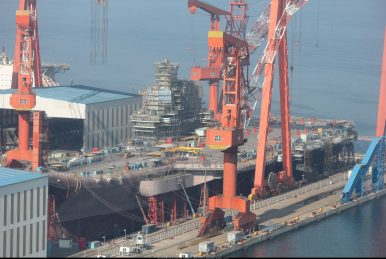 The People’s Liberation Army Navy’s (PLAN) next-generation aircraft carrier, designated Type 002, will likely be fitted with an advanced electromagnetic catapult system for launching aircraft, according to Chinese military experts. Chinese engineers have allegedly successfully developed a new integrated propulsion system (IPS)–“a medium-voltage, direct-current transmission network”—which would allow more power for a catapult assisted take-off but arrested recovery (CATOBAR) aircraft launch system similar to the U.S. Navy’s electromagnetic aircraft launch system (EMALS) without having to resort to nuclear power, the South China Morning Post (SCMP)reported on November 1.
China’s Fault Lines: Challenges, Instability, and Response
By Ian Burns McCaslin
 Chinese leaders have projected an image of the People’s Republic of China (PRC) as an inevitable regional and global leader. However, controls on information, assembly, and capital outflows suggest the Chinese government and the Chinese Communist Party (CCP) are paying closer attention to domestic concerns than the projected image would lead one to believe. The Congressional Executive Commission on China's (CECC) 2016 annual reportdetailed the anger and discontent felt by many Chinese citizens, who are increasingly calling for more government accountability, transparency, and justice. With the CCP’s 19th National Party Congress on the horizon, it is crucial to assess the CCP’s underlying instability and the key threats to the regime’s long-term resilience.
 A Strategy for the Post-ISIS Middle East
By Suzanne Maloney and Michael O’Hanlon
With Islamic State nearly vanquished in Syria and Iraq, it’s time for a serious debate about the broader U.S. security strategy in the Middle East. Leaving aside the Israeli-Palestinian peace process and its unpromising near-term prospects, this debate must address the array of issues affecting American interests in the region: violent conflict, alliances, political and economic reform, and the central challenge of dealing with Iran.
The U.S. currently leads a military coalition in support of the Iraqi government and moderate...
The cancer of Islamist extremism spreads around the world
By Fareed Zakaria
 This week’s tragic terrorist attack in New York was the kind of isolated incident by one troubled man that should not lead to generalizations. In the 16 years since 9/11, the city has proved astonishingly safe from jihadist groups and individuals. And yet, speaking about it to officials in this major global hub 10,000 miles away, the conclusions they reach are worrying. “The New York attack might be a way to remind us all that while ISIS is being defeated militarily, the ideological threat from radical Islam is spreading,” says Singaporean Home Minister K. Shanmugam. “The trend line is moving in the wrong direction.”
Shifting Sands: The Arab Spring Comes To The House Of Saud
As folk singer Bob Dylan once sang, “things, they are a’changing.” The Arab Spring which ushered in a wave of revolutionary uprisings in late 2010 across North Africa and Middle East — but, seemed to bypass the kingdom of Saudi Arabia. The death of Saudi King Abdullah bin Abdulaziz in January 2015 however, created a vacuum at the top of the House of Saud; and, the ingredients for the events that occurred this past weekend. I am referring of course, to the high-profile arrests of 11 princes, including the well-known Saudi billionaire, Prince Alwaleed bin Talal; as well as the former head of the Saudi National Guard — a very powerful position within the kingdom. The official charge was corruption. These arrests “sent shock-waves throughout the kingdom,” and across the globe, David Kirkpatrick wrote in the November 6, 2017 edition of the New York Times. He added, “the sweeping campaign of arrests, appears to be the latest move to consolidate the power of Crown Prince Mohammed bin Salman, the favorite son, and top adviser to King Salman. At 32, the crown prince is already the dominant voice in the Saudi military, foreign, economic, and social policies, stirring murmurs of discontent in the royal family [some 15K princes] that he has amassed too much power; and, at such a young age.”
The Real Risk to the Global Economy
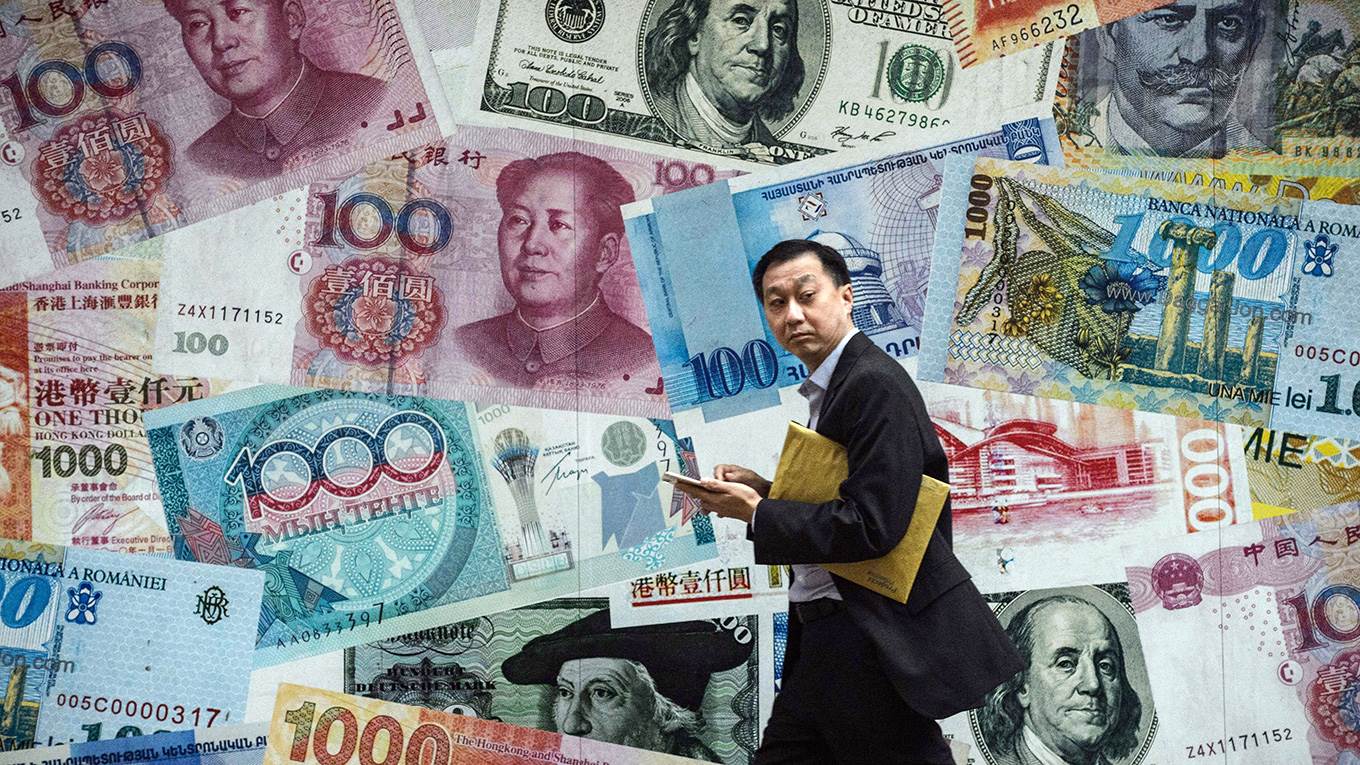 One of the great mysteries of today’s global markets is their irrepressible enthusiasm, even as the world around them appears on the verge of chaos or collapse. And yet, investors may be more rational than they appear when it comes to pricing in political risks. If investing is foremost about discounting future cash flows, it’s important to focus precisely on what will and will not affect those calculations. The potential crises that may be most dramatic or violent are, ironically, the ones that the market has the easiest time looking through.
The Future Germany Envisions
By Antonia Colibasanu
Since the 2008 financial crisis, Germany has been the de facto leader of the European Union. It has been a voice of calm, urging unity and coordination through the ensuing turbulence, from the financial troubles of Greece, Portugal, Ireland and Spain to the political troubles in the wake of last year’s Brexit vote. Behind the scenes, however, the German Ministry of Defense in February produced “Strategic Perspective 2040,” a federal defense policy document – the first of its kind in Germany since the end of World War II. Some details of the document were leaked recently to the German publication Der Spiegel. The document, and especially the planning scenarios in it, send a message to the world: The structure of Western Europe since World War II, and of all of Europe since 1991, is no more. And Germany intends to look out for itself.
Facing Russian threat, NATO boosts operations for the first time since the Cold War
 As the specter of conflict with Russia looms over Europe, NATO defense ministers decided Wednesday to expand the alliance’s operations for the first time since the Cold War, sharpen its focus on cyber operations, and boost its capability to respond to Kremlin aggression. The moves came as tensions with Russia remain the highest they have been in the nearly three decades since the end of the Cold War. U.S. Defense Secretary Jim Mattis briefed fellow defense ministers Wednesday morning about Russian violations of the Intermediate-Range Nuclear Forces Treaty, underlining the nuclear risk that is a worst-case consequence of the bitter back-and-forth.
The Messaging App Fueling Syria’s Insurgency
In rebel-held Syria, access to the weapons you need to wage an insurgency are just a tap away thanks to an encrypted messaging app. The Islamic State may be in retreat, but other militants in Syria have been trading thousands of weapons in publicly accessible black markets hosted on Telegram, including dozens of U.S. military assault rifles and parts for the same kind of anti-tank missile systems distributed by the CIA to anti-Bashar al-Assad rebels. Foreign Policy conducted an exclusive investigation to determine the scale of these arms markets, and where the weapons that ended up on them originated.
Two Sides of Europe’s Defense Coin
By Daniel Keohane
If Italy and Poland developed a strategic consensus and acted accordingly, it would be a revolution for European defense.
 Toward the end of 2015, a few defense experts raised their eyebrows at a Credit Suisse report on the future of globalization. This wide-ranging assessment contained a short analysis of global military power, ranking the top 20 countries in the world. Weighing six elements of conventional warfare, the Credit Suisse analysts considered Poland a stronger military power than Germany, and Italy came ahead of the United Kingdom.
OPEC and Strategic Questions in the Oil Market
By Severin Fischer for Center for Security Studies (CSS)
 The massive expansion of shale oil extraction in the US marked the beginning of a global glut in the petroleum markets. According to Severin Fischer, this is just one of many factors raising the pressure on OPEC and other oil producers. So, how has OPEC responded to the growing supply of relatively cheap oil? In this article, Fischer responds and identifies two possible future trajectories for the global oil market.
Health Security: The Global Context
By Ursula Jasper for Center for Security Studies (CSS)
 Due to global mobility and the deeply interconnected nature of the contemporary world, national efforts do not suffice to keep infectious disease such as Ebola, SARS or H1N1 from spreading across borders. As a result, states must coordinate their efforts to identify and contain outbreaks as quickly as possible. To that aim, Ursula Jaspers contends, the international community must do more to improve the implementation of the WHO’s International Health Regulations.
From Russia With Paranoia
Russia is delaying making repairs to a Russian nuclear sub India leased and the reason appears to be Russian suspicion that India is violating the lease agreement and allowing American naval personnel to get a close look at the Russian sub. This is prohibited by the lease agreement, which included a clause that called for a Russian naval officer to be aboard the leased sub at all times to prevent such snooping and to provide technical assistance. There is also a dispute over the extent of the damage. The sonar dome has a hole in it and this occurred while the sub was at sea last August. But it is believed the damage may have been made worse, or be entirely because of a collision while the sub was navigating the narrow channel it has to pass through to reach its southern India base at Vizag. If the damage is too extensive the sub would have to return to Russia for repairs and be out of action for a lot longer. The Indian inspection team has already delivered its report but Russia insisted on sending its own inspection team to examine the damaged sonar dome.
Shadowy cyber-espionage group ‘Sowbug’ has been hacking diplomatic secrets for years
Jason Murdock
A shadowy cyber-espionage group that has operated in secret since at least 2015 has been exposed by researchers from Symantec this week (7 November). Analysis shows how it uses a new form of malware dubbed “Felismus” to launch targeted attacks on governments. The hackers, codenamed 'Sowbug’, were spotted conducting clandestine attacks and document thefts from foreign policy institutions, government bodies and diplomatic targets in South America and south east Asia – including Argentina, Brazil, Ecuador, Peru and Malaysia.
Multi-Domain Battle's Impact on Civil Infrastructure
by Kyle Borne
The concept of Multi-Domain Battle (MDB) recognizes the fundamental shift in how potential adversaries of the United States engage in geostrategic means with which to achieve geopolitical goals via means below-armed-conflict. MDB employs all the warfighting domains to achieve these ends. There are numerous aspects to MDB and to be honest I’m still learning what they are and how they interrelate. While reading all of this preliminary, non-doctrinal, unofficial literature one key question can be identified: Given the nearly total reliance of the military on civilian infrastructure, how do we achieve the objectives of securing the Strategic and Operational Support Areas? Senior leaders and planners within the military have relied on unfettered access to the internet for the last 16 years to conduct operations, this assumption is no longer guaranteed in MDB.