This content was originally written for an undergraduate or Master's program. It is published as part of our mission to showcase peer-leading papers written by students during their studies. This work can be used for background reading and research, but should not be cited as an expert source or used in place of scholarly articles/books.The Profession of Arms: A Guide for Young Army Officers
It takes courage, especially for a young officer, to check a man met on the road for not saluting properly or for slovenly appearance, but, every time he does, it adds to his stock of moral courage, and whatever the soldier may say, he has respect for the officer who does pull him up.
Read Document →The Dragon's Teeth: Assessing China's Military Modernization
PLA has focused on modernising its capabilities across all warfare domains to achieve these goals. This includes land, air, and maritime operations, nuclear, space, counter-space, electronic warfare and cyberspace operations, aiming to become a fully integrated joint force.
Read Document →Transforming the PLA: A Decade of reorganisation from SSF to ISF
PRC has engaged in a sustained and broad effort to transform the PLA from an infantry-heavy, low-technology, ground forces-centric military into a high-technology, networked force with an increasing emphasis on joint operations and naval and air power projection.
Read Document →Eyes without Borders: Exploring the World of Open Source Intelligence (OSINT) in the Digital Age
Open Source Intelligence (OSINT) is gaining prominence with the rise of social media, the digital society and the vast growth of publicly and commercially available information (PAI and CAI).
Read Document →
The PLA’s Developing Cyber Warfare Capabilities and India's Options
Informationised warfare blurs the lines between peacetime and wartime. A nation in the information age cannot wait for the hostilities to break out to collect intelligence, carryout influence operations, develop antisatellite systems or design computer software weapons.
Read Document →
Galwan and After
Why did China did this when he is under tremendous pressure in all fronts, is this China's salami slice tactics being progressed rigorously, what will be new Rules of Engagement, what will be escalatory control mechanism, who has taken this decision, will there be some pressure put by China in India's North-East through insurgency.
Read Document →
India’s Joint Doctrine for Cyberspace Operations: A Critical Review
Chief of Defence Staff (CDS) General Anil Chauhan and Secretary, Department of Military Affairs, formally released declassified versions of the Joint Doctrines for Cyberspace Operations during the Chiefs of Staff Committee meeting in New Delhi.
Read Document →
Know your Enemy General(now Field Marshal) Syed Aseem Munir
Gen SA Munir's position in the hierarchy of Pakistan was not very comfortable. The state of economy, insurgency in Pakhtoonistan and Balochistan, attack on the Jaffar Express, constant protests by supporters of Imran Khan's supporters inside and outside of parliament.
Read Document →
Decoding Operation SINDOOR: Key Aspects and Implications
Precision strikes were carried out on nine sites—four in Pakistan and five in PoK—linked to anti-India terrorist groups such as the LeT, JeM and the Hizbul Mujahideen. The targeted sites included Muridke (LeT headquarters) and Bahawalpur (JeM headquarters).
Read Document →
Chinese Cyber Exploitation in India's Power Grid - Is There a linkage to Mumbai Power Outage?
The New York Times (NYT), based on analysis by a U.S. based private intelligence firm Recorded Future, reported that a Chinese entity penetrated India’s power grid at multiple load dispatch points. Chinese malware intruded into the control systems that manage electric supply across India, along with a high-voltage transmission substation and a coal-fired power plant
Read Document →13 August 2020
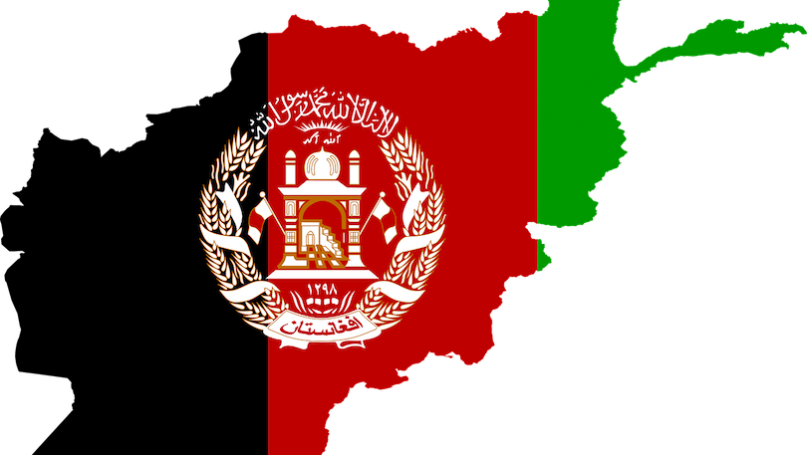
A See-Saw Relationship: An Overview of Afghanistan’s Ties with India and Pakistan
This content was originally written for an undergraduate or Master's program. It is published as part of our mission to showcase peer-leading papers written by students during their studies. This work can be used for background reading and research, but should not be cited as an expert source or used in place of scholarly articles/books.CONVERGING CHINESE AND RUSSIAN DISINFORMATION COMPOUNDS THREAT TO DEMOCRACY
In recent weeks the Chinese Communist Party’s (CCP) propaganda and disinformation blitz around COVID-19 has drawn increasing attention, and with good reason. In addition to promoting a narrative about Beijing’s global leadership around the pandemic, the Chinese government has adopted Russian disinformation tactics in promoting conspiracy theories purporting that COVID-19 originated in Europe, the United States, and beyond to distract from its failed initial response to contain the outbreak from spreading beyond Wuhan.Xi Jinping Is Not Stalin
What Is The Future Of Chinese Tech Companies In The U.S.?
When it comes to the Internet, Trump prefers the Chinese model
Opinion – Europe and China’s Growing Assertiveness
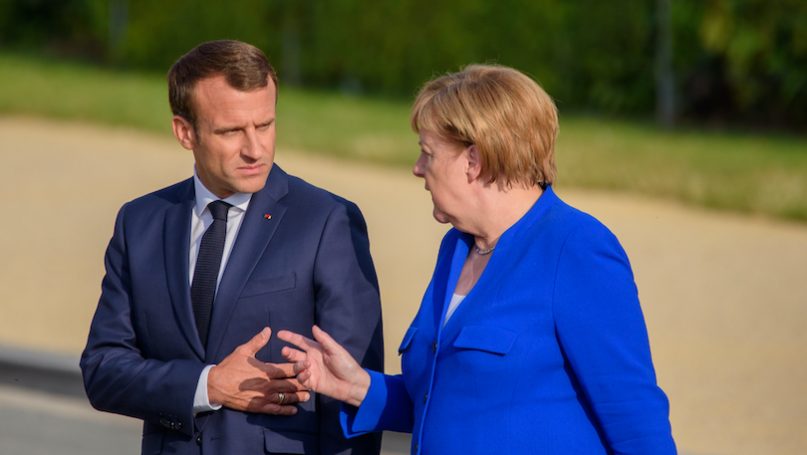
Mounting tensions between the United States and China is increasingly testing Europe’s resilience. Both powers are stepping up pressure on European countries on issues and policies they consider vital to their strategic interests. This is particularly noteworthy regarding the role of Chinese telecommunications giant Huawei in providing 5G networks to European countries. In July, US National Security Advisor Robert O’Brien, met with his European counterparts in Paris to urge the exclusion of Huawei from European 5G networks. Equally, the Chinese government has stepped up pressure on European countries, particularly Germany, not to exclude the Chinese operator from the development of the next generation of mobile internet. Earlier in the year, Chancellor Angela Merkel had resisted calls to exclude Huawei but is coming under increasing pressure within her cabinet to consider European suppliers.China And Iran Approach Massive $400 Billion Deal
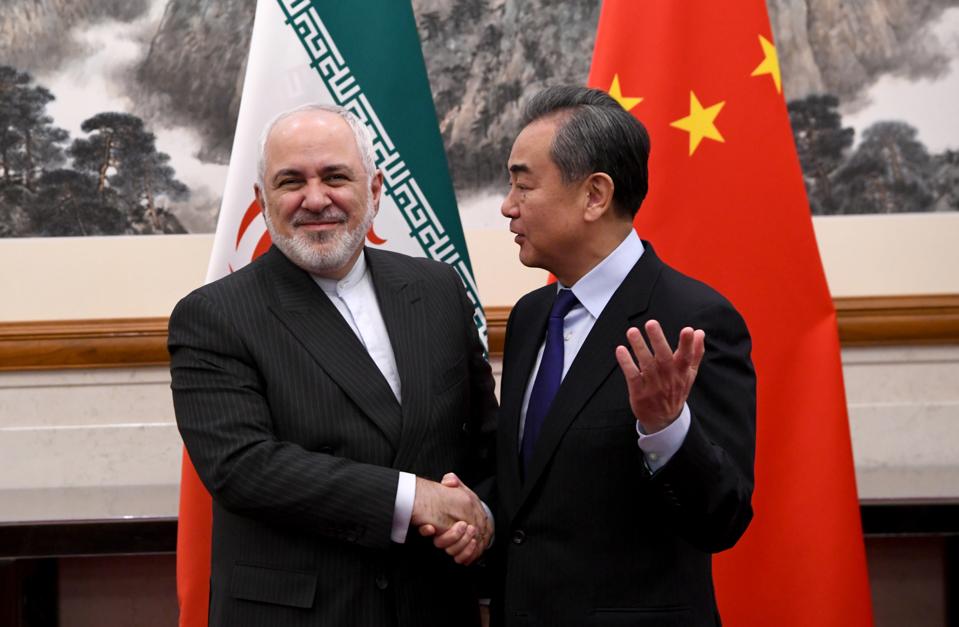
China, sensing America’s internal political difficulties amidst social justice protests and a poor COVID-19 response, is taking off the gloves: Beijing is said to be in the final stages of approving a $400 billion economic and security deal with Tehran. In addition to massive infrastructure investments, the agreement envisions closer cooperation on defense and intelligence sharing, and is rumored to include discounts for Iranian oil. If finalized, the PRC would gain massive influence in this geopolitically critical region, and simultaneously throw a lifeline to the embattled Mullah Regime."The Security of Our Citizens Is at Stake"
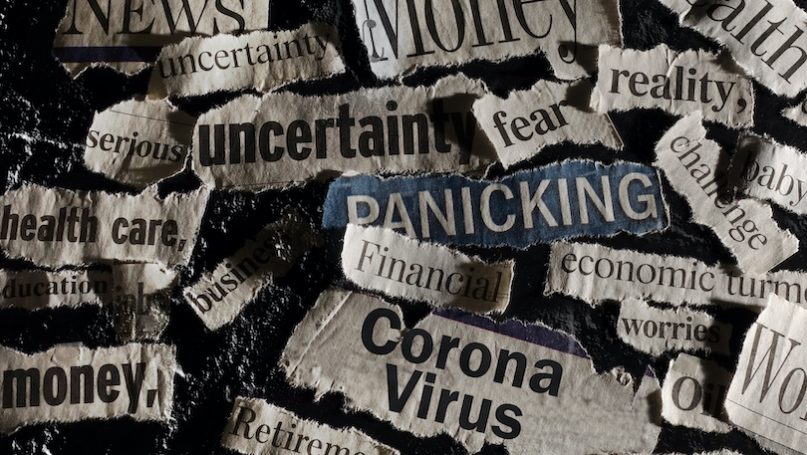
Coronavirus does not care about ideology or geopolitics, and yet the pandemic has long been a catalyst for the rivalry between the major powers, throwing the complex geopolitical situation into sharp relief. The U.S., already in retreat, is mainly preoccupied with itself. Meanwhile, China is taking a tougher stance and is driving its global agenda forward with determination. This has brought home all the more clearly the fact that Europe must become more resilient and that it urgently requires a clear compass, also in terms of its approach to China.Tech Crisis with China
Can America Successfully Repel a Chinese Invasion of Taiwan?
Slaughter in the East China Sea
China’s Great Wall of Water
The Rise of Twitter Diplomacy Is Making the World More Dangerous
In mid-July, 130 high-profile Twitter accounts were hijacked by a small group of hackers, apparently led by a teenager in central Florida. They were able to take over some of the social media service’s most prominent handles—including those of Kanye West, Jeff Bezos and Elon Musk—and use them to scam hundreds of people out of a combined $118,000 in bitcoin. It was the biggest security breach in Twitter’s history, and a stunning embarrassment for the company.The Fragile Republic
When the U.S. president used his power to target immigrants, the press, and his political opponents, the sheer overreach of his actions shocked many citizens. Tensions among the country’s political leaders had been escalating for years. Embroiled in one intense conflict after another, both sides had grown increasingly distrustful of each other. Every action by one camp provoked a greater counterreaction from the other, sometimes straining the limits of the Constitution. Fights and mob violence often followed.Wargaming the Department of Defense for Strategic Advantage
Re-Structuring American Foreign Policy Post-Trump
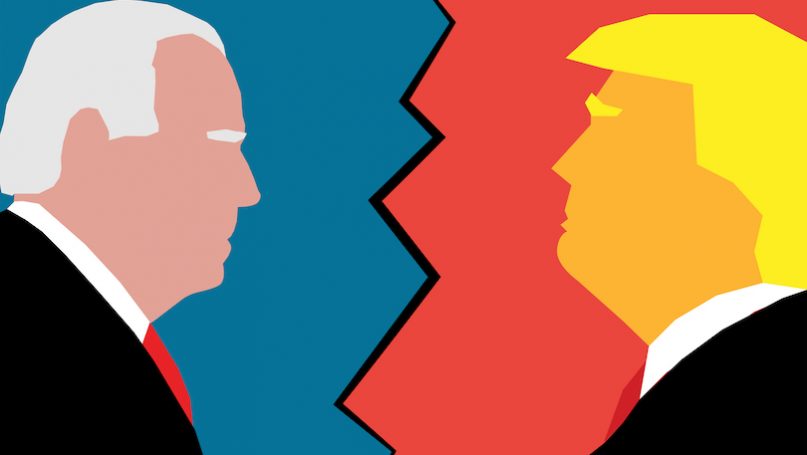
The foreign policy apparatus of the United States has a significant issue of hubris. It also has a structural problem. The two are deeply intertwined. While a lot can still happen in the next three months, it looks like Joe Biden’s team will win the presidency in November. Such a victory would signal not just consent for Biden and the Democratic party, but exhaustion at the last four years of endless dramas and politicization. That wellspring of exhaustion isn’t just from Trump, but from the American political system, and a key challenge for Biden will be to demonstrate at the outset he is different. One way to do that is to show that government actually works, and rely on careerists to fill a much larger portion of the foreign policy key positions at the Departments of State, Defense, and Treasury, both domestically and at embassies abroad. COVID-19: Conspiracy Theories and Lacklustre Global Responses
Known Unknowns: Covid-19 and Biological Warfare
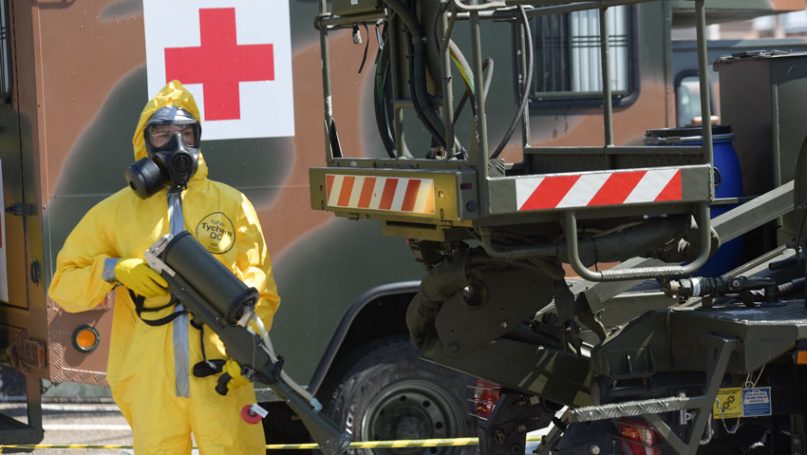
Covid-19 has shone a spotlight on another, potentially global, threat: biological warfare. By highlighting the dangers and consequences of pandemic disease, Covid-19 raises questions about what it would mean if a virus like this were used deliberately as a weapon. While there is a long-standing fear that actors would use bioweapons, biological warfare has frequently struggled to find a place on the political agenda. The reason for this lies in what we know about the threat – or rather, what we don’t.Bill Gates on Covid: Most US Tests Are ‘Completely Garbage’
Water: A human and business priority
Reframing Globalization: COVID-19 and 21st Century Institutional Retreat
On March 30, 2001, US President George W. Bush announced the United States was leaving the Kyoto Protocol on global warming. Eventually, this move signalized the regime’s end. On July 7, 2020, President Donald Trump notified the United Nations that the US was leaving the World Health Organization during the COVID-19 epidemic (by then, with more than 10 million infections worldwide, 3 million-plus in the US). The move could further weaken an organization under fire since the announcement of an international health emergency earlier that year on January 30. Within days, the WHO launched an independent investigation on its handling of the epidemic, after admitting delays in releasing critical data and reviewing the possibility of airborne contagion. Across the two decades that set apart Kyoto’s demise from a new disease from Wuhan, international relations experienced a steady institutional retreat. The zeitgeist of a new century shows a reversal of the late-1990s hopes spurred by the end of the Cold War and Berlin Wall’s fall. In this sense, COVID-19 was no game-changer. It built upon already established trends.