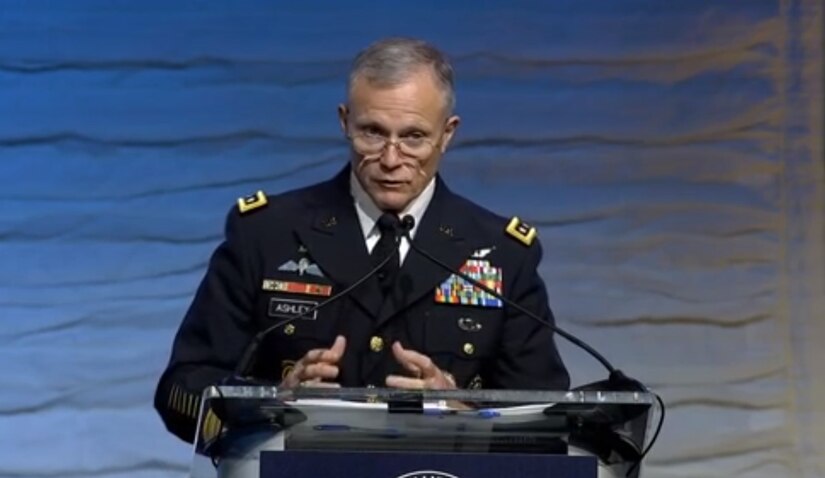
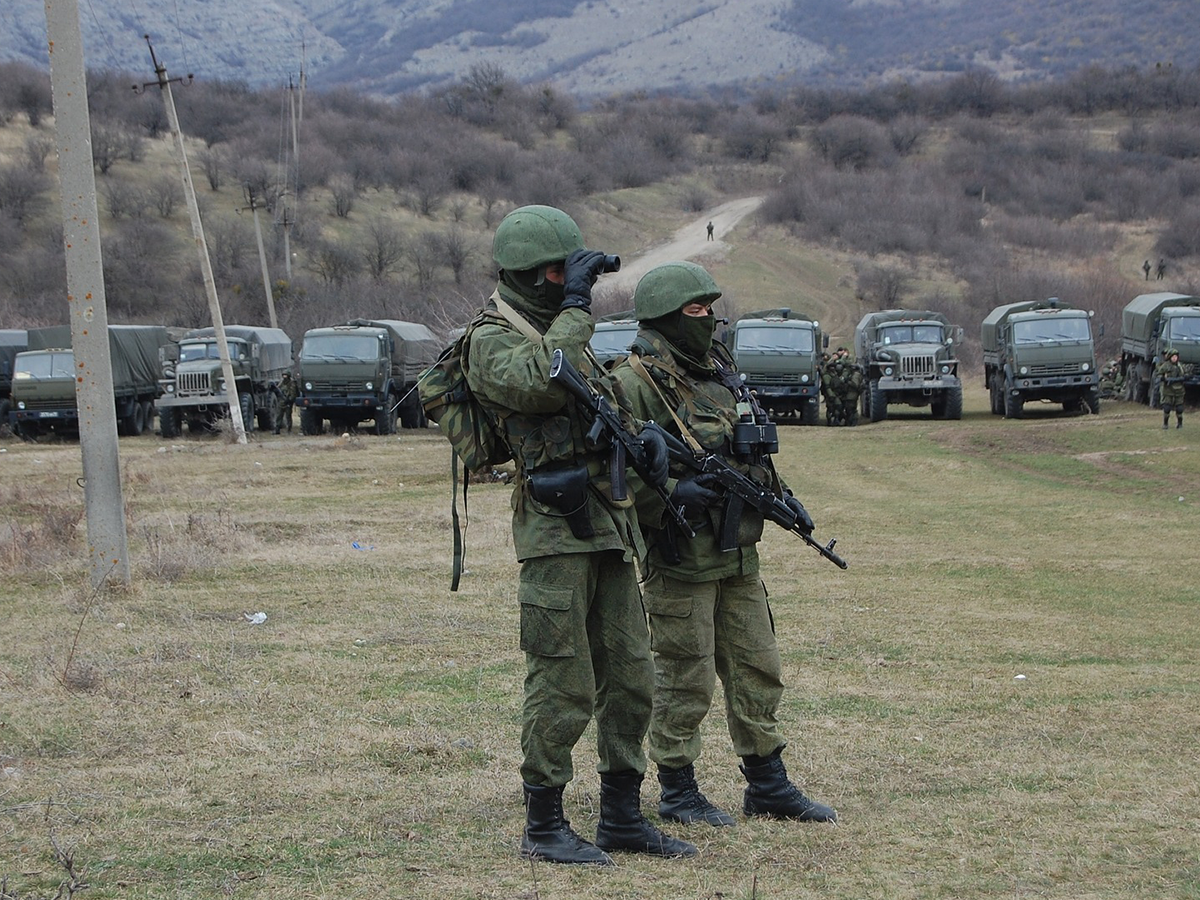
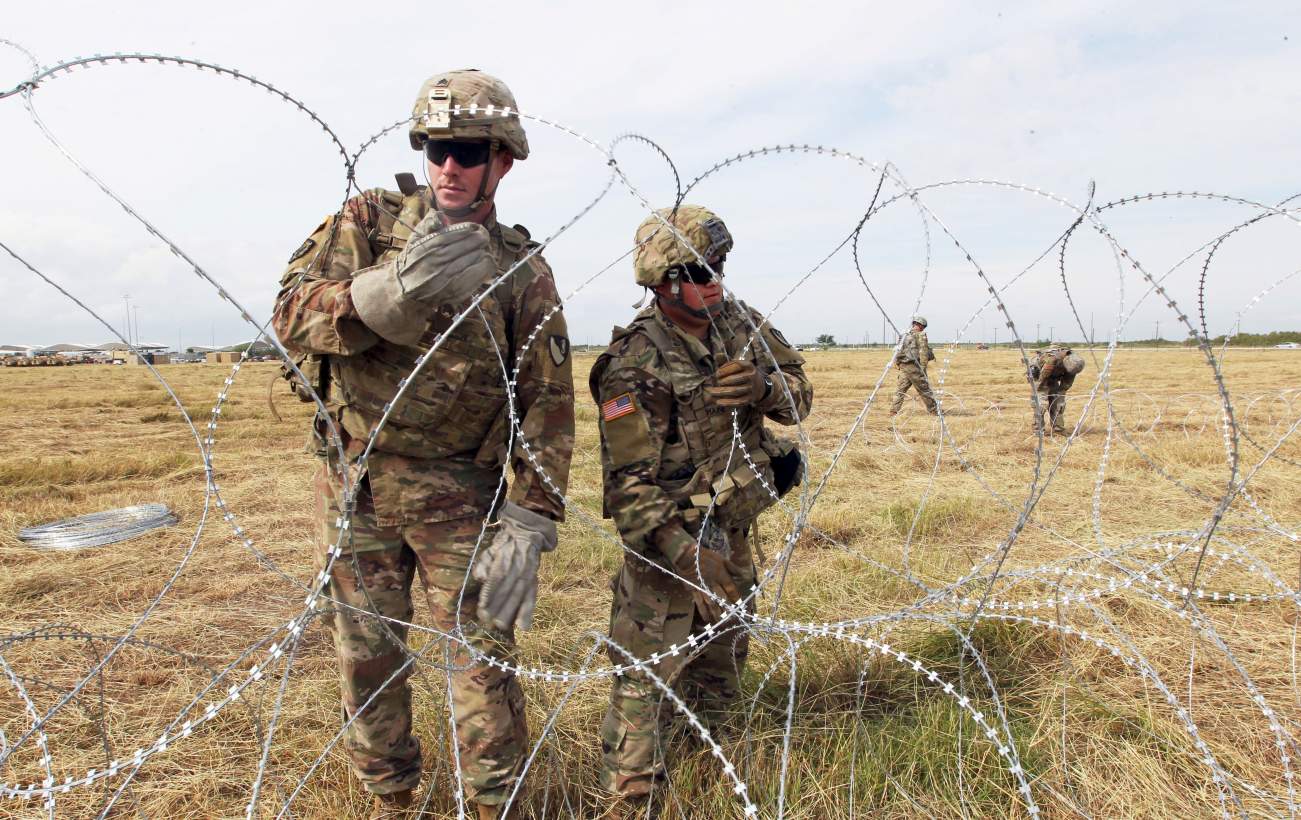
Data is the oil of today’s digital age, in which every individual, through Internet activity, leaves a footprint of personal information, which is controlled by others. In fact, just like oil in the past century, data is now the most valuable resource in the world — an engine of growth and change. Akin to uranium, data is a game changer. But like oil or uranium, data must be processed to create something of value.The Profession of Arms: A Guide for Young Army Officers
It takes courage, especially for a young officer, to check a man met on the road for not saluting properly or for slovenly appearance, but, every time he does, it adds to his stock of moral courage, and whatever the soldier may say, he has respect for the officer who does pull him up.
Read Document →The Dragon's Teeth: Assessing China's Military Modernization
PLA has focused on modernising its capabilities across all warfare domains to achieve these goals. This includes land, air, and maritime operations, nuclear, space, counter-space, electronic warfare and cyberspace operations, aiming to become a fully integrated joint force.
Read Document →Transforming the PLA: A Decade of reorganisation from SSF to ISF
PRC has engaged in a sustained and broad effort to transform the PLA from an infantry-heavy, low-technology, ground forces-centric military into a high-technology, networked force with an increasing emphasis on joint operations and naval and air power projection.
Read Document →Eyes without Borders: Exploring the World of Open Source Intelligence (OSINT) in the Digital Age
Open Source Intelligence (OSINT) is gaining prominence with the rise of social media, the digital society and the vast growth of publicly and commercially available information (PAI and CAI).
Read Document →
The PLA’s Developing Cyber Warfare Capabilities and India's Options
Informationised warfare blurs the lines between peacetime and wartime. A nation in the information age cannot wait for the hostilities to break out to collect intelligence, carryout influence operations, develop antisatellite systems or design computer software weapons.
Read Document →
Galwan and After
Why did China did this when he is under tremendous pressure in all fronts, is this China's salami slice tactics being progressed rigorously, what will be new Rules of Engagement, what will be escalatory control mechanism, who has taken this decision, will there be some pressure put by China in India's North-East through insurgency.
Read Document →
India’s Joint Doctrine for Cyberspace Operations: A Critical Review
Chief of Defence Staff (CDS) General Anil Chauhan and Secretary, Department of Military Affairs, formally released declassified versions of the Joint Doctrines for Cyberspace Operations during the Chiefs of Staff Committee meeting in New Delhi.
Read Document →
Know your Enemy General(now Field Marshal) Syed Aseem Munir
Gen SA Munir's position in the hierarchy of Pakistan was not very comfortable. The state of economy, insurgency in Pakhtoonistan and Balochistan, attack on the Jaffar Express, constant protests by supporters of Imran Khan's supporters inside and outside of parliament.
Read Document →
Decoding Operation SINDOOR: Key Aspects and Implications
Precision strikes were carried out on nine sites—four in Pakistan and five in PoK—linked to anti-India terrorist groups such as the LeT, JeM and the Hizbul Mujahideen. The targeted sites included Muridke (LeT headquarters) and Bahawalpur (JeM headquarters).
Read Document →
Chinese Cyber Exploitation in India's Power Grid - Is There a linkage to Mumbai Power Outage?
The New York Times (NYT), based on analysis by a U.S. based private intelligence firm Recorded Future, reported that a Chinese entity penetrated India’s power grid at multiple load dispatch points. Chinese malware intruded into the control systems that manage electric supply across India, along with a high-voltage transmission substation and a coal-fired power plant
Read Document →22 August 2019
Data is wealth. India must protect it
Data is the oil of today’s digital age, in which every individual, through Internet activity, leaves a footprint of personal information, which is controlled by others. In fact, just like oil in the past century, data is now the most valuable resource in the world — an engine of growth and change. Akin to uranium, data is a game changer. But like oil or uranium, data must be processed to create something of value.Sino-Indian Relations: Wuhan Spirit Under Growing Strain
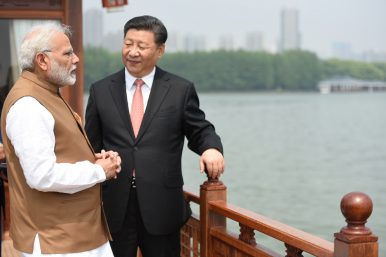
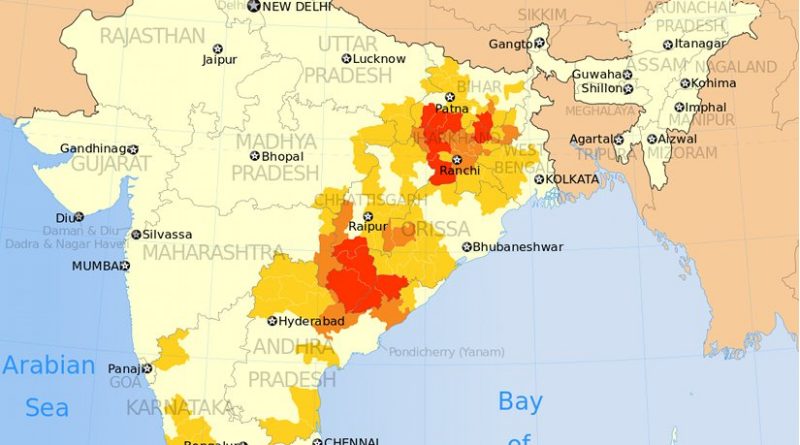
Last week, in his typically dramatic fashion, Prime Minister Narendra Modi announced India was changing its relationship with the State of Jammu and Kashmir, withdrawing the provisions of Article 370 of the Indian constitution that gave the state special rights in the Indian Union. The move included also splitting the state into two, making Ladakh, the eastern part of the state that abuts Tibet, a separate “Union Territory” that will be administered directly from New Delhi.Researching The Unresearched: Left-Wing Extremism And The Future Rules Of Governance – Analysis
Creating a National Electricity Market: India’s Most Important Power Sector Reform
A look at the Islamic State affiliate’s rise in Afghanistan
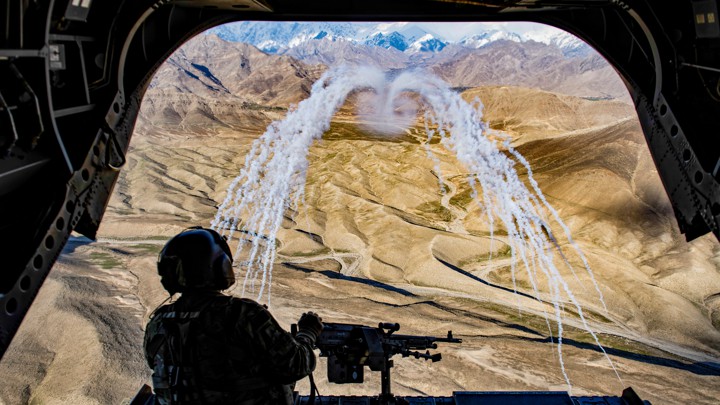
KABUL, Afghanistan — A suicide bombing at a wedding party in Kabul claimed by a local Islamic State affiliate has renewed fears about the growing threat posed by its thousands of fighters, as well as their ability to plot global attacks from a stronghold in the forbidding mountains of northeastern Afghanistan.AS US PRESSES NEGOTIATIONS, TALIBAN PROMOTES TRAINING OF FIGHTERS AND ATTACKS
Taliban Trolls Could Adopt New Terrorist Tactics in the Wake of America's Peace Plan
If the United States does negotiate a durable peace settlement in Afghanistan, then it is possible that some of the most hardcore Taliban elements that want to carry on fighting may be drawn to the transnational jihadism of ISIS-K.As US presses negotiations, Taliban promotes training of fighters and attacks
It Matters If Americans Call Afghanistan a Defeat
The Trump administration appears poised to announce, within days or weeks, a deal with the Taliban that will involve a withdrawal of U.S. troops from Afghanistan. If that happens, the administration may soon find itself in a new battle over public opinion. The question then would be: Did the United States win or lose?Afghanistan: Quetta Blast Slow Reverberations – Analysis
Hong Kong: Despite a Lull in Violence, the City Remains on a Knife-Edge
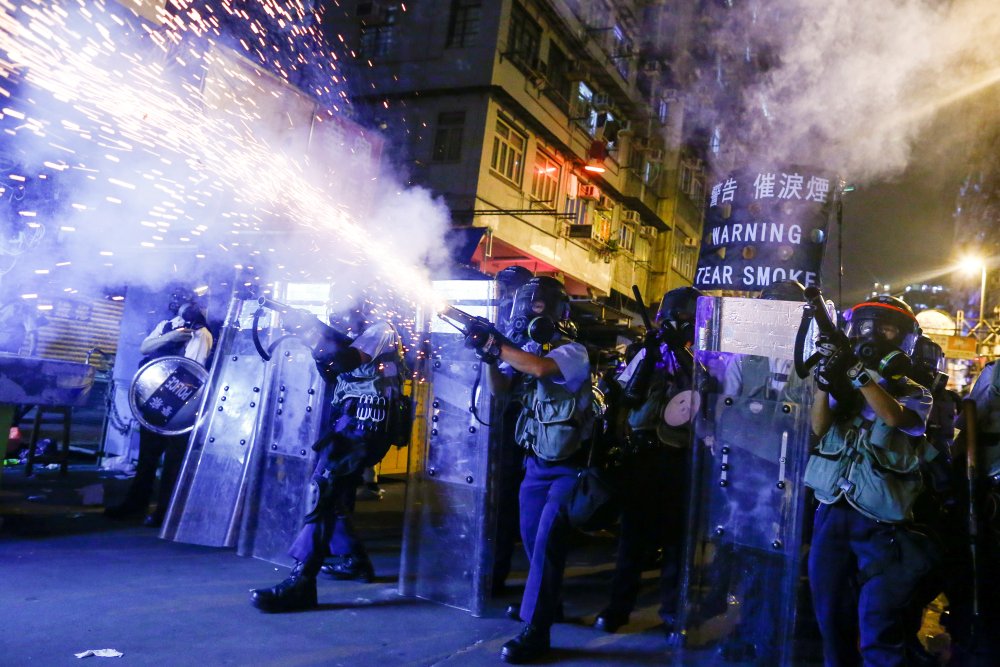
Anti-government protests in Hong Kong that erupted over a now-suspended extradition bill and escalated dramatically and violently over the past few weeks have put the city's all-important business and transport activities at risk and raised the prospect of direct intervention by Beijing. Protests over the weekend, although sizable, remained relatively peaceful. But given the general course of the protest movement and the demonstrators' deep — and unaddressed — grievances, the path to a resolution is far from certain.A Malaysian Rare Earth Processing Plant Looms Large in the U.S.-China Trade Spat
The extension of Lynas' mining permit removes a key threat to the global supply of rare earths from outside China — at least for now.Will Hong Kong Survive China's Crackdown?
Perhaps the greatest threat to liberty is disorder. Not because chaos necessarily begets violence. But because the fear of lawlessness often encourages repression.The game of chicken in Hong Kong
China Seeks Solutions For Economic Slump – Analysis
Tiananmen Option: Would China Use Military Force in Hong Kong?
If push comes to shove, then overwhelming force might yet be viewed by Beijing as necessary to avoid imperiling the regime as a whole.DIA Director Outlines Top 3 Priorities
U.S. Security Policy in the Trump Era Has Been Marked by Change—and Continuity
When President Donald Trump entered office under an “America First” banner, it seemed to herald a new era of U.S. isolationism. More than two years into his term, though, and the shifts in military strategy are minimal. Though their numbers are down, U.S. troops are still stationed in Afghanistan, and the Trump administration left unchanged the strategy against the Islamic State that it inherited from its predecessor. 1989-1992: A Global Pivot
When Populist Nationalists Tempt Geopolitical Fate
The Population Bust Demographic Decline and the End of Capitalism as We Know It
Climate Change To Shrink Economies Of Rich, Poor, Hot And Cold Countries Alike Unless Paris Agreement Holds
Prevailing economic research anticipates the burden of climate change falling on hot or poor nations. Some predict that cooler or wealthier economies will be unaffected or even see benefits from higher temperatures. US President Donald Trump. Photo Credit: DOD photo by U.S. Air Force Staff Sgt. Jette Carr
Deterring Hybrid Threats: The Need for a More Rational Debate
Michael Rรผhle writes that following Russia’s use of hybrid warfare in Ukraine, it wouldn’t take long before the Western strategic community would examine how to best deter hybrid threats. After all, deterrence was the central paradigm of Western security throughout the Cold War. However, Rรผhle contends that this examination is being held back by the West’s own debate on hybrid warfare, which is characterized by alarmism, fuzzy terminology and sweeping generalizations. In response, he here outlines five key factors hindering this debate and their implications for hybrid threats deterrence policy.Silicon Valley’s Crisis of Conscience
What’s the best way for the Pentagon to invest in artificial intelligence?
Drones like the Reaper are the backbone of the targeted killing program, but they also provide a valuable ISR capability when not on strike missions. AI tools, like Project Maven, are being built to help parse the information collected by drones like this, though the drone's use in targeted killing programs has led to some objects in the technology sector. (Michael Meredith, USAF)The Mark of a Terrorist Is Behavior, Not Ideology
Terrorism is a tactic used by radical extremists of many different ideologies, which means there is no fixed ethnic, religious or gender profile for what a "terrorist" looks like.Theory of Battlespace Technology – Introduction
War is nothing but a duel on an extensive scale. If we would conceive as a unit the countless number of duels which make up a war, we shall do so best by supposing to ourselves two wrestlers. Each strives by physical force to compel the other to submit to his will: his first object is to throw his adversary, and thus to render him incapable of further resistance. War therefore is an act of violence to compel our opponent to fulfill our will. Violence arms itself with the inventions of Art and Science in order to contend against violence. —Carl von Clausewitz, On War