The prospects of a U.S.-India trade war — which would be marked by U.S. tariffs on a wide range of Indian imports — will hinge on the outcome of a possible U.S. investigation into India's trade practices. India, which recognizes it's a lower priority in U.S. trade negotiations, will be more likely to negotiate a trade package once a new government is formed after its national elections conclude later this month. If India chooses to continue buying Iranian oil, it will buy a reduced amount under a rupee-based payment mechanism to avoid U.S. sanctions.The Profession of Arms: A Guide for Young Army Officers
It takes courage, especially for a young officer, to check a man met on the road for not saluting properly or for slovenly appearance, but, every time he does, it adds to his stock of moral courage, and whatever the soldier may say, he has respect for the officer who does pull him up.
Read Document →The Dragon's Teeth: Assessing China's Military Modernization
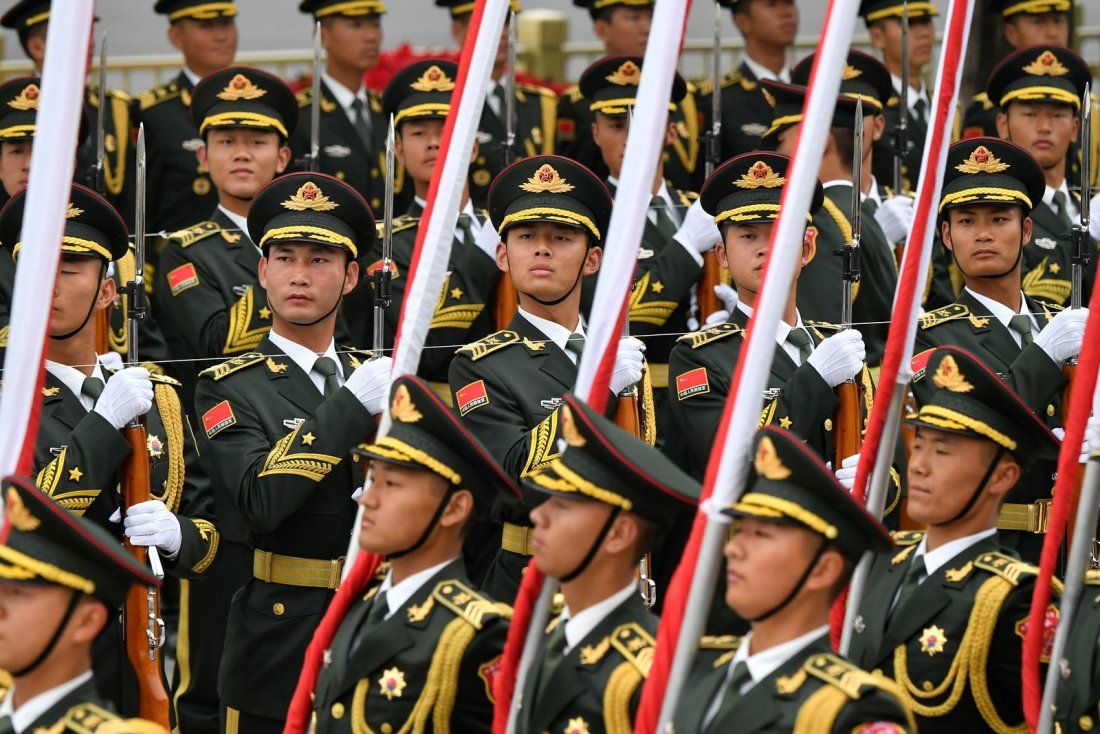
PLA has focused on modernising its capabilities across all warfare domains to achieve these goals. This includes land, air, and maritime operations, nuclear, space, counter-space, electronic warfare and cyberspace operations, aiming to become a fully integrated joint force.
Read Document →Transforming the PLA: A Decade of reorganisation from SSF to ISF
PRC has engaged in a sustained and broad effort to transform the PLA from an infantry-heavy, low-technology, ground forces-centric military into a high-technology, networked force with an increasing emphasis on joint operations and naval and air power projection.
Read Document →Eyes without Borders: Exploring the World of Open Source Intelligence (OSINT) in the Digital Age
Open Source Intelligence (OSINT) is gaining prominence with the rise of social media, the digital society and the vast growth of publicly and commercially available information (PAI and CAI).
Read Document →
The PLA’s Developing Cyber Warfare Capabilities and India's Options
Informationised warfare blurs the lines between peacetime and wartime. A nation in the information age cannot wait for the hostilities to break out to collect intelligence, carryout influence operations, develop antisatellite systems or design computer software weapons.
Read Document →
Galwan and After
Why did China did this when he is under tremendous pressure in all fronts, is this China's salami slice tactics being progressed rigorously, what will be new Rules of Engagement, what will be escalatory control mechanism, who has taken this decision, will there be some pressure put by China in India's North-East through insurgency.
Read Document →
India’s Joint Doctrine for Cyberspace Operations: A Critical Review
Chief of Defence Staff (CDS) General Anil Chauhan and Secretary, Department of Military Affairs, formally released declassified versions of the Joint Doctrines for Cyberspace Operations during the Chiefs of Staff Committee meeting in New Delhi.
Read Document →
Know your Enemy General(now Field Marshal) Syed Aseem Munir
Gen SA Munir's position in the hierarchy of Pakistan was not very comfortable. The state of economy, insurgency in Pakhtoonistan and Balochistan, attack on the Jaffar Express, constant protests by supporters of Imran Khan's supporters inside and outside of parliament.
Read Document →
Decoding Operation SINDOOR: Key Aspects and Implications
Precision strikes were carried out on nine sites—four in Pakistan and five in PoK—linked to anti-India terrorist groups such as the LeT, JeM and the Hizbul Mujahideen. The targeted sites included Muridke (LeT headquarters) and Bahawalpur (JeM headquarters).
Read Document →
Chinese Cyber Exploitation in India's Power Grid - Is There a linkage to Mumbai Power Outage?
The New York Times (NYT), based on analysis by a U.S. based private intelligence firm Recorded Future, reported that a Chinese entity penetrated India’s power grid at multiple load dispatch points. Chinese malware intruded into the control systems that manage electric supply across India, along with a high-voltage transmission substation and a coal-fired power plant
Read Document →23 May 2019
India Waits Warily for a U.S. Trade Salvo
The prospects of a U.S.-India trade war — which would be marked by U.S. tariffs on a wide range of Indian imports — will hinge on the outcome of a possible U.S. investigation into India's trade practices. India, which recognizes it's a lower priority in U.S. trade negotiations, will be more likely to negotiate a trade package once a new government is formed after its national elections conclude later this month. If India chooses to continue buying Iranian oil, it will buy a reduced amount under a rupee-based payment mechanism to avoid U.S. sanctions.The Nuts and Bolts of Leaving Afghanistan
Al-Qaeda and Islamic State Reinvigorating East Turkistan Jihad
Pakistan: Seven Implications Of IMF Program – Analysis
Ever since it has come into existence, Pakistan has been living off other people’s money. Over the last seven decades, Pakistan’s elite have become so used to other peoples’ paying their bills that there is now almost a sense on entitlement that every time they are on the brink of bankruptcy and about to default, the world will come to their rescue and bail them out. After all, Pakistan’s Unique Sales Proposition (USP) – a nuclear weapons state in which Islamism and jihadism is not just an article of faith but also a foreign policy instrument – has made it ‘a country too dangerous to fail’. Dreading the prospect of a failed Pakistan, the West and in particular the US, has always thrown a lifeline whenever Pakistan started to sink. But instead of crisis providing an impetus for reform and improve the living standards of its 210 million people, the bailouts given to Pakistan have only emboldened, encouraged, even incentivised, it to treat debt as disposable income, and when payback time comes, seek more handouts.No Longer a Trade Tiff: China Screams ‘People’s War’
Taiwan on (the) Edge
Huawei in the Trump Administration’s Crosshairs as US-China Economic Warfare Escalates
The Trump administration has served up a side-helping of serious economic decoupling alongside this month’s main course: the escalating trade war. On Wednesday, the administration announced that it would blacklist China’s Huawei Technologies Co. by blocking American firms from serving as suppliers for Huawei products. A long-rumored executive order signed by U.S. President Donald J. Trump was followed by a U.S. Commerce Department listing of Huawei and 70 affiliates to an “Entity List,” barring the company from sourcing U.S. components for its products and services.China Cracks Down on Foreign Firms Over Cyber Security, FT Says
How to escalate a trade war, Chinese Communist Party style
This Book Proves How Far China's Military Has Come (And How Far It Must Go)
In the days before the Internet, it was difficult to find detailed, timely information on foreign armed forces. Secretive, backward China was a particularly difficult country to assess.The U.S.-Iran Confrontation: How Did We Get Here?
Since 1979, the United States and Iran have been locked in varying degrees of confrontation. Since the U.S. withdrawal from the Iran nuclear deal in May 2018, Washington has taken an increasingly tough sanctions line. Now, Tehran and Washington's diplomatic confrontation is escalating, which increases the risk of a military conflict. Because a general regional war would have a devastating impact on global energy markets and the countries surrounding the Persian Gulf, Washington and Tehran are attempting to outmaneuver each other without resorting to open conflict. The United States is signaling to Iran that it must come to the negotiating table again for a new deal or face economic collapse, or worse. Meanwhile, Iran is trying to show the United States that the costs of imposing its power on Iran outweigh the benefits — and that Iranian forces are willing to retaliate against U.S. pressure, be it economic or military.A Path to War With Iran
The Iran Question – OpEd
Will there be war with Iran? Will there not be war with Iran? The questions are being asked repeatedly in the media even though a single carrier task force is steaming up there. The expression is old for the latest carriers are nuclear powered. Imagine the mess if it was blown up.Nuclear War Is Still Very Possible and Very Scary
One of the most striking facts of today’s world is that young people do not seem to worry very much about nuclear war. Climate change is by far the larger concern, while nuclear war is seen as a threat of the past. As Chapin Boyer, who is in his late 20s, wrote in the Bulletin of the Atomic Scientists a few years ago: “I cannot remember a time when the threat of nuclear weapons seemed real. … My generation grew up believing that the problem of nuclear weapons had been solved.”The Russian government-funded TV network’s hyperbolic campaign against US 5G
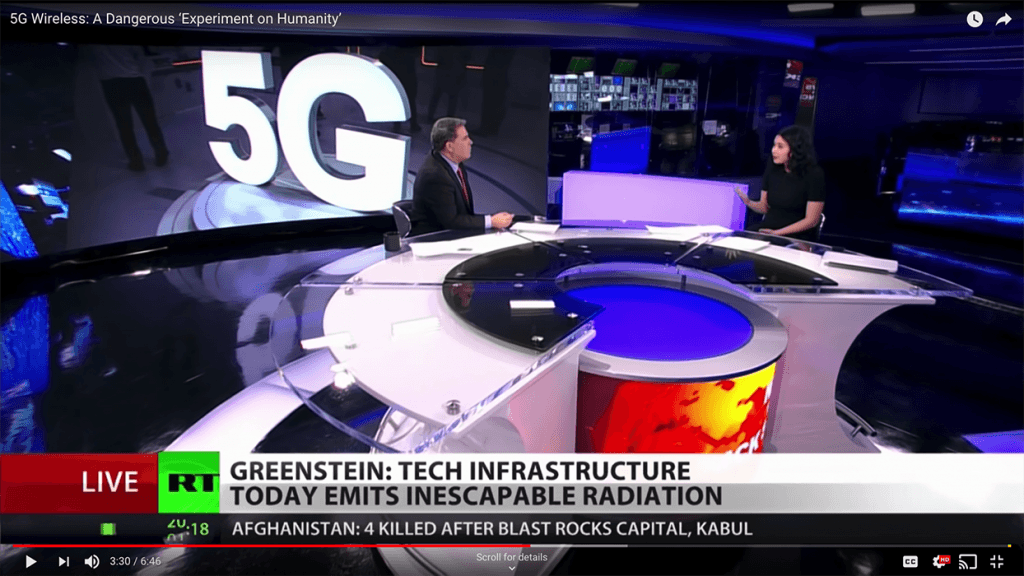
“All of our digital tech sends this data back and forth using these invisible microwave radiation signals, aka radiofrequency radiation,” Michele Greenstein, an RT America correspondent, told her viewers. “That’s today’s tech. We have every cell tower, every router, constantly pulsing with radiation, whether or not you’re using it.”Europe’s Only Decision
Twitter Diplomacy: Preventing Twitter Wars from Escalating into Real Wars
Just two weeks ago, a tweet cost the global stock markets roughly $1.36 trillion (or Australia’s annual GDP). With 280 characters on Twitter, the U.S. President Donald Trump threatened to raise tariffs on select Chinese imports, instilling lower market confidence, triggering significant volatility, and exacerbating existing political uncertainties. Using Twitter as a form of diplomacy, President Trump signalled U.S.-China’s deteriorating trade relations to the entire world.Bound to Fail: The Rise and Fall of the Liberal International Order
Peace and War: The View from Russia
How other countries are responding to Trump's Huawei threat
New research: How effective is basic account hygiene at preventing hijackin
When you can’t jam a UAV signal, drone-on-drone violence will do just fine
Jamming a signal is only effective if the signal is important. As militaries develop more autonomous machines, finding an answer in the kinetic, instead of the electromagnetic, spectrum will become the order of the day. That’s true for expensive flying machines and ground vehicles, and it’s also true for cheaper, commercial platforms, like autonomous quadcopters.Cybersecurity: Changing the Model
Deterring “Competition Short of War”
Energy And The Military: Leading By Example – Analysis
As the world demands more energy, nations face the often-competing pressures to increase energy access and affordability, protect the environment, and assure energy security. The military, long focused on energy issues related to mission delivery, has often been at the forefront of technological innovation and deployment. The quiet innovations in the defense sector could help solve energy challenges nations confront today.