The Profession of Arms: A Guide for Young Army Officers
It takes courage, especially for a young officer, to check a man met on the road for not saluting properly or for slovenly appearance, but, every time he does, it adds to his stock of moral courage, and whatever the soldier may say, he has respect for the officer who does pull him up.
Read Document →The Dragon's Teeth: Assessing China's Military Modernization
PLA has focused on modernising its capabilities across all warfare domains to achieve these goals. This includes land, air, and maritime operations, nuclear, space, counter-space, electronic warfare and cyberspace operations, aiming to become a fully integrated joint force.
Read Document →Transforming the PLA: A Decade of reorganisation from SSF to ISF
PRC has engaged in a sustained and broad effort to transform the PLA from an infantry-heavy, low-technology, ground forces-centric military into a high-technology, networked force with an increasing emphasis on joint operations and naval and air power projection.
Read Document →Eyes without Borders: Exploring the World of Open Source Intelligence (OSINT) in the Digital Age
Open Source Intelligence (OSINT) is gaining prominence with the rise of social media, the digital society and the vast growth of publicly and commercially available information (PAI and CAI).
Read Document →
The PLA’s Developing Cyber Warfare Capabilities and India's Options
Informationised warfare blurs the lines between peacetime and wartime. A nation in the information age cannot wait for the hostilities to break out to collect intelligence, carryout influence operations, develop antisatellite systems or design computer software weapons.
Read Document →
Galwan and After
Why did China did this when he is under tremendous pressure in all fronts, is this China's salami slice tactics being progressed rigorously, what will be new Rules of Engagement, what will be escalatory control mechanism, who has taken this decision, will there be some pressure put by China in India's North-East through insurgency.
Read Document →
India’s Joint Doctrine for Cyberspace Operations: A Critical Review
Chief of Defence Staff (CDS) General Anil Chauhan and Secretary, Department of Military Affairs, formally released declassified versions of the Joint Doctrines for Cyberspace Operations during the Chiefs of Staff Committee meeting in New Delhi.
Read Document →
Know your Enemy General(now Field Marshal) Syed Aseem Munir
Gen SA Munir's position in the hierarchy of Pakistan was not very comfortable. The state of economy, insurgency in Pakhtoonistan and Balochistan, attack on the Jaffar Express, constant protests by supporters of Imran Khan's supporters inside and outside of parliament.
Read Document →
Decoding Operation SINDOOR: Key Aspects and Implications
Precision strikes were carried out on nine sites—four in Pakistan and five in PoK—linked to anti-India terrorist groups such as the LeT, JeM and the Hizbul Mujahideen. The targeted sites included Muridke (LeT headquarters) and Bahawalpur (JeM headquarters).
Read Document →
Chinese Cyber Exploitation in India's Power Grid - Is There a linkage to Mumbai Power Outage?
The New York Times (NYT), based on analysis by a U.S. based private intelligence firm Recorded Future, reported that a Chinese entity penetrated India’s power grid at multiple load dispatch points. Chinese malware intruded into the control systems that manage electric supply across India, along with a high-voltage transmission substation and a coal-fired power plant
Read Document →6 October 2017
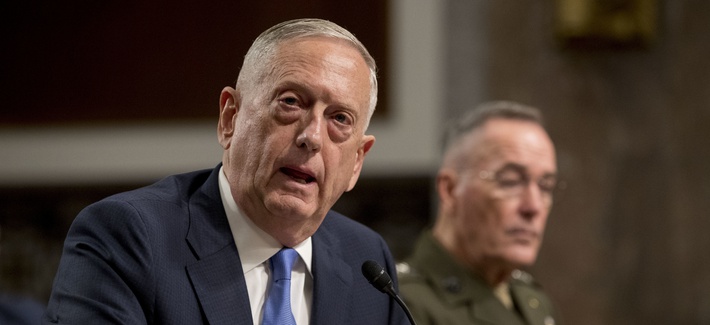
The House Armed Committee hearing.
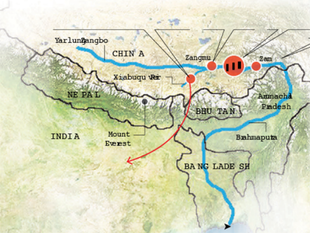
DID CHINA USE WATER AS A WEAPON IN THE DOKLAM STANDOFF?
Editor’s Note: This is the tenth installment of “Southern (Dis)Comfort,” a new series from War on the Rocks and the Stimson Center. The series seeks to unpack the dynamics of intensifying competition — military, economic, diplomatic — in Southern Asia, principally between China, India, Pakistan, and the United States. Catch up on the rest of the series. Why India is worried about China's dam projects on the Brahmaputra river
Modern Biotechnology and India’s Governance Imperatives
India's Rohingya Policy: Is it Legally Sound?
WHEN MARSHALL MET PERSHING
Beyond the call of duty!
The first-ever Param Vishisht Seva Medal of the Indian Army was awarded to Lt Gen B M Kaul in 1960, notably for the successful completion of Operation Amar – the construction of 1,450 barracks/family quarters for troops in Ambala – which was inaugurated by the Prime Minister on August 20, 1958. This project was the brainchild of the Defence Minister VK Krishna Menon. To save on cost, the project entailed using troops as labour for the construction. Gen Thimayya, the Chief of Army Staff, was opposed to the project, but during his absence for a visit to the USA, Maj Gen B M Kaul, then General Officer Commanding (GOC) of 4 Infantry Division at Ambala, directly approached the Defence Minister and got the necessary approvals. The famous Red Eagle division rose to the occasion under his dynamic command and successfully completed the projected in a record seven months.The US Will Be Dropping A Lot More Bombs on Afghanistan
A Water War in Asia?
The Chinese World Order
Sharing an article on India China relations.
IN SEARCH OF THE VIRTUAL CALIPHATE: CONVENIENT FALLACY, DANGEROUS DISTRACTION
At this crucial point in the war against the self-proclaimed Islamic State, as it hemorrhages territory across Syria and Iraq, the latest analytical fad in the study of this movement may be leading policymakers to repeat the mistakes of a mere decade ago. The term “virtual caliphate” has grown in popularity as a way to describe the future trajectory of the Islamic State. More than just a catchy sound bite, it has emerged as a way to conceptualize how the Islamic State will recalibrate its efforts in the wake of territorial losses. And so, the notion of a virtual caliphate appears to be shaping strategic-policy debate and development. For example, Gen. Joseph Votel, the commander of U.S. Central Command, co-authored the report #Virtual Caliphate: Defeating ISIL on the Physical Battlefield is Not Enough with Lt. Col. Christina Bembenek, Charles Hans, Jeffery Mouton, and Amanda Spencer. This is how the authors describe the virtual caliphate:The US-Russia Race to Beat ISIS in Eastern Syria
The race to rule eastern Syria after the defeat of Islamic State in Iraq and Syria (ISIS) is quickly and quietly escalating into a focal point of US-Russian tension and competition. The US-backed, Kurdish-majority Syrian Democratic Forces (SDF) and the Russian-backed Syrian regime are conducting separate, but competing, offensives in Deir al-Zour Province, ISIS’ last remaining territorial stronghold. The United States and Russia must not only jointly work toward de-confliction, but also recognize the dangerous fluidity and deep influence of local dynamics in shaping the post-ISIS future.REPORT Abandoning Iranian Nuclear Deal Could Lead to New Wave of Cyberattacks
Over the last two years, U.S. banks and government agencies have enjoyed a notable respite from malicious Iranian cyber activity. The timing of this drop-off happens to coincide with the signing of the nuclear deal with Iran in 2015.RUSSIA TARGETS SOLDIER SMARTPHONES, WESTERN OFFICIALS SAY
Stratfor Worldview’s 2017 Fourth Quarter Forecast for Geopolitical Developments
The Evolution of the Hybrid Threat, and Resilience as a Countermeasure
In this article, Uwe Hartmann explains that the hybrid warfare threat facing NATO is only going to become more complex, unpredictable and demanding. As a result, he contends that NATO and its member states must strengthen their resilience. So how can the Alliance make this happen? To find out, Hartmann looks at 1) the principles in strategy-making that help enhance resilience; 2) NATO’s strengths and weaknesses in such strategy-making, and more.TOWARDS TOTAL DEFENSE MANUFACTURING VISIBILITY
If we had to go to war tomorrow, could our defense manufacturing sector keep up? And are we willing to gamble our national future on the answer? The White House has wisely decided that these are questions better not left to chance. The Trump administration’s recent executive order directing a review of the defense industrial base is predicated on the insight that the health of the defense industrial base is as much a component of our national defense as any aircraft carrier or main battle tank. Gen. Joseph Dunford, the chairman of the Joint Chiefs of Staff, echoed this sentiment when he warned the Senate about our “increasingly brittle industrial base.” The administration’s ongoing review provides the best opportunity in decades to think holistically about the industrial base — from workforce education, to plant and shipyard capacity, to regulations, export controls, and beyond — to ensure continued American technological superiority and military dominance.Against North Korea, Deterrence Of A Different Kind
Russia Targets NATO Soldier Smartphones, Western Officials Say
Why The North Korean Artillery Factor Makes Military Action Extremely Risky
Trump signed presidential directive ordering actions to pressure North Korea
Secretary of State Rex Tillerson and U.S. officials met with Chinese State Councilor Yang Jiechi and other Chinese officials at the Great Hall of the People in Beijing where they discussed North Korea. (Lintao Zhang)

/arc-anglerfish-arc2-prod-mco.s3.amazonaws.com/public/FBXQXJRW3FBTDBOAGIG42NAA6M.jpg)