The Profession of Arms: A Guide for Young Army Officers
It takes courage, especially for a young officer, to check a man met on the road for not saluting properly or for slovenly appearance, but, every time he does, it adds to his stock of moral courage, and whatever the soldier may say, he has respect for the officer who does pull him up.
Read Document →The Dragon's Teeth: Assessing China's Military Modernization
PLA has focused on modernising its capabilities across all warfare domains to achieve these goals. This includes land, air, and maritime operations, nuclear, space, counter-space, electronic warfare and cyberspace operations, aiming to become a fully integrated joint force.
Read Document →Transforming the PLA: A Decade of reorganisation from SSF to ISF
PRC has engaged in a sustained and broad effort to transform the PLA from an infantry-heavy, low-technology, ground forces-centric military into a high-technology, networked force with an increasing emphasis on joint operations and naval and air power projection.
Read Document →Eyes without Borders: Exploring the World of Open Source Intelligence (OSINT) in the Digital Age
Open Source Intelligence (OSINT) is gaining prominence with the rise of social media, the digital society and the vast growth of publicly and commercially available information (PAI and CAI).
Read Document →
The PLA’s Developing Cyber Warfare Capabilities and India's Options
Informationised warfare blurs the lines between peacetime and wartime. A nation in the information age cannot wait for the hostilities to break out to collect intelligence, carryout influence operations, develop antisatellite systems or design computer software weapons.
Read Document →
Galwan and After
Why did China did this when he is under tremendous pressure in all fronts, is this China's salami slice tactics being progressed rigorously, what will be new Rules of Engagement, what will be escalatory control mechanism, who has taken this decision, will there be some pressure put by China in India's North-East through insurgency.
Read Document →
India’s Joint Doctrine for Cyberspace Operations: A Critical Review
Chief of Defence Staff (CDS) General Anil Chauhan and Secretary, Department of Military Affairs, formally released declassified versions of the Joint Doctrines for Cyberspace Operations during the Chiefs of Staff Committee meeting in New Delhi.
Read Document →
Know your Enemy General(now Field Marshal) Syed Aseem Munir
Gen SA Munir's position in the hierarchy of Pakistan was not very comfortable. The state of economy, insurgency in Pakhtoonistan and Balochistan, attack on the Jaffar Express, constant protests by supporters of Imran Khan's supporters inside and outside of parliament.
Read Document →
Decoding Operation SINDOOR: Key Aspects and Implications
Precision strikes were carried out on nine sites—four in Pakistan and five in PoK—linked to anti-India terrorist groups such as the LeT, JeM and the Hizbul Mujahideen. The targeted sites included Muridke (LeT headquarters) and Bahawalpur (JeM headquarters).
Read Document →
Chinese Cyber Exploitation in India's Power Grid - Is There a linkage to Mumbai Power Outage?
The New York Times (NYT), based on analysis by a U.S. based private intelligence firm Recorded Future, reported that a Chinese entity penetrated India’s power grid at multiple load dispatch points. Chinese malware intruded into the control systems that manage electric supply across India, along with a high-voltage transmission substation and a coal-fired power plant
Read Document →21 August 2020
The happy classroom: Insights from our study of schools in Delhi, India
Unlike 1962 War, China Will Use Drones, PGMs, Electronic Warfare To Rattle India – Top General
China Appears To Increase Foothold In Strategic Port In Pakistan
Why Doesn’t China Deploy Fighter Jets to the Spratly Islands?
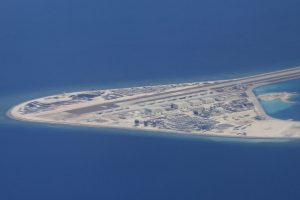
On August 4, China’s Global Times reported that SU-30MKK Flanker fighter jets belonging to the People’s Liberation Army Air Force (PLAAF) had conducted a 10-hour patrol over the South China Sea, breaking the air force’s previous record of 8.5 hours. Water Wars: Lines in the Great Wall of Sand
On July 13, the United States hardened its position against the People’s Republic of China (PRC) on the South China Sea. A statement from U.S. Secretary of State Mike Pompeo declared that “Beijing’s claims to offshore resources across most of the South China Sea” and “its campaign of bullying” are “completely unlawful.”New Chinese Air-Launched Glide Weapon Designed To Be An Airfield Killer
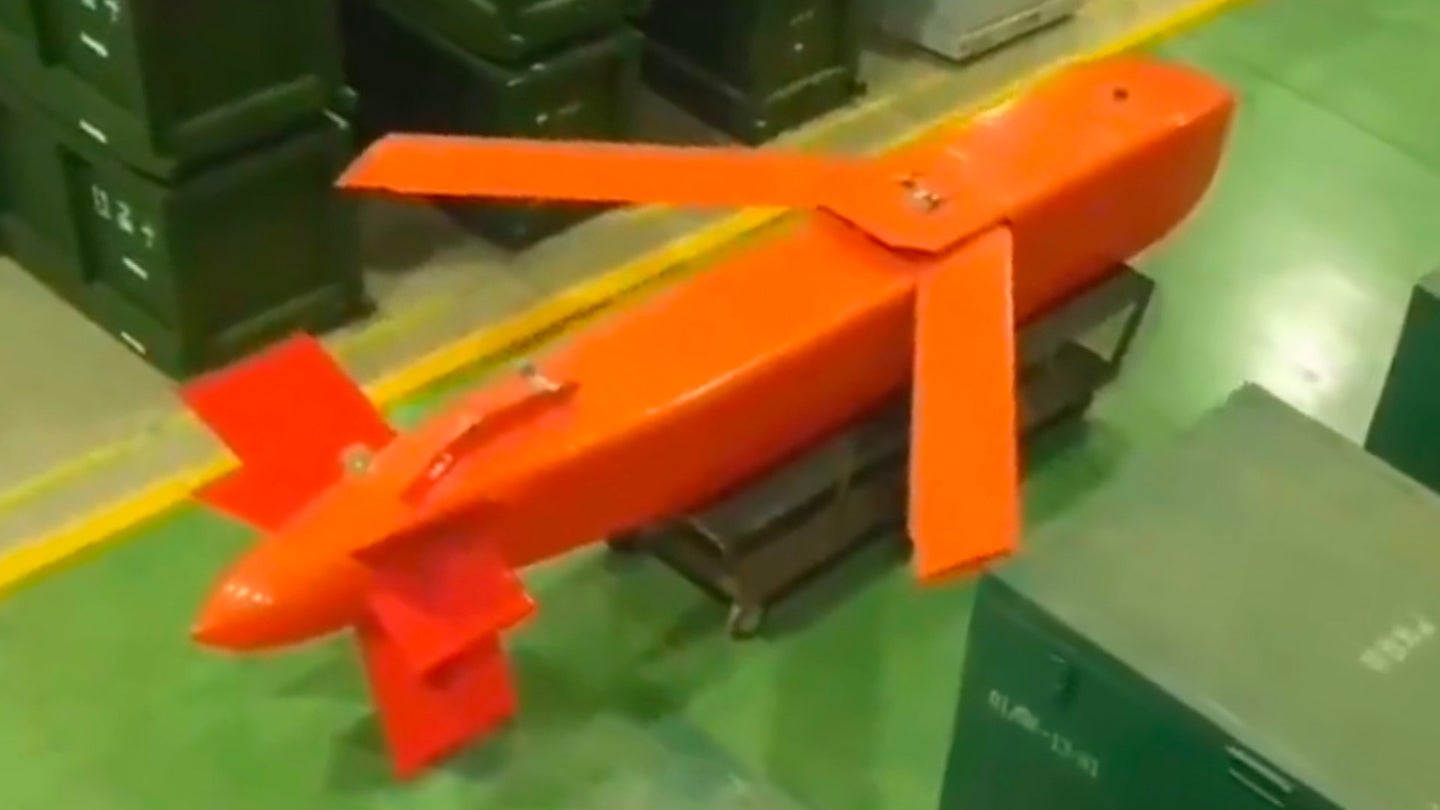
China has unveiled a new “smart” glide dispenser weapon that closely resembles the Raytheon AGM-154 Joint Stand-Off Weapon (JSOW). In a video posted by state-run China Central Television, or CCTV, this weekend, an orange-painted example of the weapon was shown, loaded on a trolley in what was reportedly a People’s Liberation Army Air Force storage facility. China and the United States Are in a Race to Lose Power
Back in the bad old days of the Cold War, I recall hearing a well-known academic (and former diplomat) remark that the United States and the Soviet Union were engaged in “a relentless competition to see which one could lose influence fastest.” Assuming my memory is accurate, he then added, “Fortunately, the Soviets are winning.”China’s ‘Never Again’ Mentality
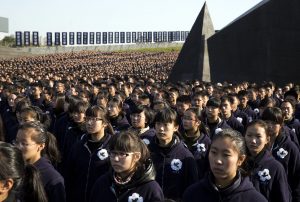
Chinese residents attend a ceremony to mark China’s first National Memorial Day at the Nanjing Massacre Memorial Hall in Nanjing in eastern China’s Jiangsu province Saturday, Dec. 13, 2014.Credit: AP Photo/Ng Han GuanThe Security Component of the BRI in Central Asia, Part Two: China’s (Para)Military Efforts to Promote Security in Tajikistan and Kyrgyzstan
Introduction
Mossad thinks Turkey is a bigger menace than Iran
Europe Can Preserve the Iran Nuclear Deal Until November
Israel and the UAE Formalize Their Normalized Relations
United States vs. Iran: The Failure to Extend the Arms Embargo
The rejection by the Security Council of a US draft resolution to extend the embargo on arms sales to Iran, scheduled to expire on October 18, 2020, is evidence of the administration's isolation, which is largely a result of the displeasure with its unilateral steps and the deep rift with its traditional allies in Europe. The administration now intends to demand that the Council invoke a clause for a snapback of all sanctions and curbs that were previously imposed on Iran and lifted after the nuclear agreement was reached. Implementation of the US demand would essentially be a political rather than a legal matter, as Russia and China, which contend that the United States does not have the authority to seek this measure once it quit the nuclear deal, are expected to continue – regardless of any discussion of the demand – to look out for their own interests vis-ร -vis Iran. For Iran, which has threatened a fierce response should the Security Council renew sanctions, the embargo’s removal marks a significant achievement, as it gains legitimacy for procuring weapons and transferring weapons to its allies in the Middle East. For Israel, the US failure is a blow to their common interests on Iran. In concrete terms, even if it is still unclear to what extent Russia and China will hasten to sell advanced weaponry to Iran, preparations should be made for direct dialogue with them in order to limit this eventuality as much as possible.The UN Security Council rejected a draft resolution submitted by the United States to extend the embargo on arms sales to Iran, scheduled to expire on October 18, 2020. Though it was known in advance that Russia and China would veto the resolution, the results of the vote – two in favor (the United States and Dominican Republic), 11 abstentions, and two opposed – is clear evidence of the US administration's isolation following its decision (May 2018) to withdraw from the nuclear deal (JCPOA) reached with Iran in 2015, ideally toward collapse of the deal.Distributed Sensing: The Key to Successful Air And Missile Defenses
8 Takeaways From the Senate Committee Report on Russian Interference
WASHINGTON — For more than three years, the Republican-led Senate Intelligence Committee investigated Russia’s operations to influence the 2016 election. The fifth and final volume of its report on the inquiry, released on Tuesday, runs for nearly 1,000 pages and is likely to stand as the definitive bipartisan government examination of Moscow’s interference. The report revealed new details about Russian links to the Trump campaign in 2016 and offered broad warnings for future elections.The Armenian Model for Belarus
Japan and the 'great power competition'
How Did the Eastern Mediterranean Become the Eye of a Geopolitical Storm?
In mid-August, a Turkish and a Greek warship collided in the Eastern Mediterranean, raising tensions in the most combustible naval stand-off the region has witnessed in 20 years. The crisis had started two days before, when Turkey deployed an energy exploration ship along with its naval escort to search for oil and natural gas in waters near the Greek island of Kastellorizo—waters Athens claims as its own maritime territory.Symposium: We Asked the World’s Top Experts What America’s North Korea Policy Would Look Like If Joe Biden Wins
With less than three months to go until Election Day and a potential change of presidential administration, the Center for the National Interest’s Korean Studies team decided to ask dozens of the world’s top experts a simple question: If Joe Biden wins come November, what do you expect his North Korea policy to look like?Why Americans Want a President Who Ends Endless Wars
Report: America Is No Longer Asia's Undisputed Superpower
The Sino-Russian Disinformation Axis During the COVID-19 Pandemic
You Can’t ‘Zoom’ Trust
DOD Leaders Provide Digital Modernization Updates
Boeing & Lockheed Vie For Cyber/EW/SIGINT System, TLS
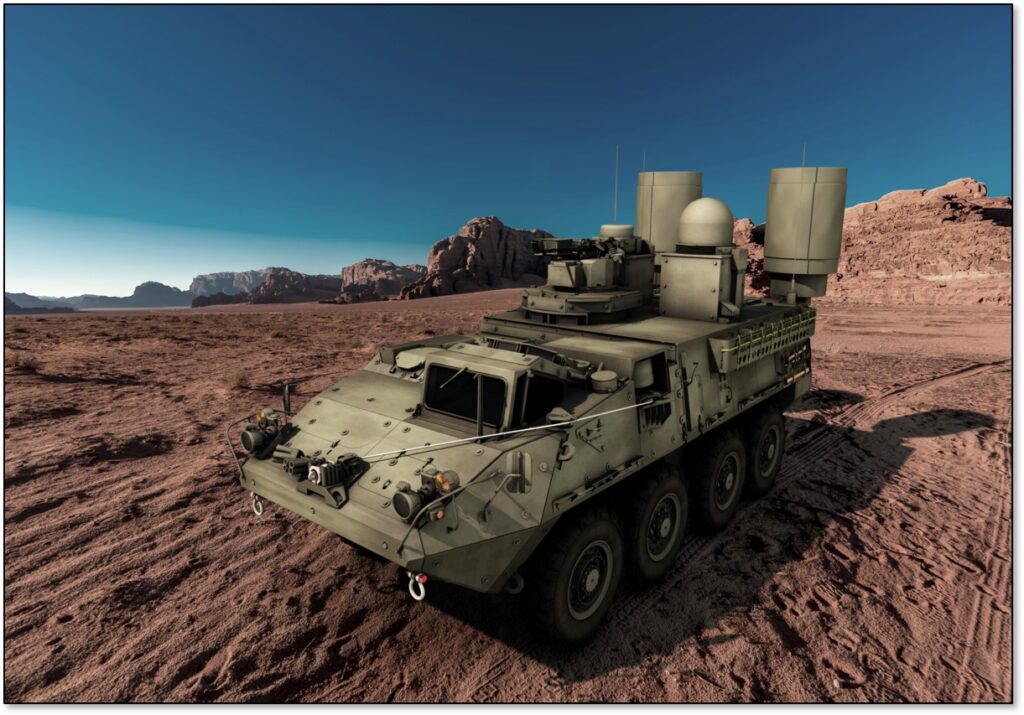
WASHINGTON: Army jargon can be notoriously bland, but Terrestrial Layer System may take the cake. Behind the nondescript name, however, is an ambitious program that will challenge the high-tech titans now competing to manufacture it: Boeing and Lockheed Martin.