The Profession of Arms: A Guide for Young Army Officers
It takes courage, especially for a young officer, to check a man met on the road for not saluting properly or for slovenly appearance, but, every time he does, it adds to his stock of moral courage, and whatever the soldier may say, he has respect for the officer who does pull him up.
Read Document →The Dragon's Teeth: Assessing China's Military Modernization
PLA has focused on modernising its capabilities across all warfare domains to achieve these goals. This includes land, air, and maritime operations, nuclear, space, counter-space, electronic warfare and cyberspace operations, aiming to become a fully integrated joint force.
Read Document →Transforming the PLA: A Decade of reorganisation from SSF to ISF
PRC has engaged in a sustained and broad effort to transform the PLA from an infantry-heavy, low-technology, ground forces-centric military into a high-technology, networked force with an increasing emphasis on joint operations and naval and air power projection.
Read Document →Eyes without Borders: Exploring the World of Open Source Intelligence (OSINT) in the Digital Age
Open Source Intelligence (OSINT) is gaining prominence with the rise of social media, the digital society and the vast growth of publicly and commercially available information (PAI and CAI).
Read Document →
The PLA’s Developing Cyber Warfare Capabilities and India's Options
Informationised warfare blurs the lines between peacetime and wartime. A nation in the information age cannot wait for the hostilities to break out to collect intelligence, carryout influence operations, develop antisatellite systems or design computer software weapons.
Read Document →
Galwan and After
Why did China did this when he is under tremendous pressure in all fronts, is this China's salami slice tactics being progressed rigorously, what will be new Rules of Engagement, what will be escalatory control mechanism, who has taken this decision, will there be some pressure put by China in India's North-East through insurgency.
Read Document →
India’s Joint Doctrine for Cyberspace Operations: A Critical Review
Chief of Defence Staff (CDS) General Anil Chauhan and Secretary, Department of Military Affairs, formally released declassified versions of the Joint Doctrines for Cyberspace Operations during the Chiefs of Staff Committee meeting in New Delhi.
Read Document →
Know your Enemy General(now Field Marshal) Syed Aseem Munir
Gen SA Munir's position in the hierarchy of Pakistan was not very comfortable. The state of economy, insurgency in Pakhtoonistan and Balochistan, attack on the Jaffar Express, constant protests by supporters of Imran Khan's supporters inside and outside of parliament.
Read Document →
Decoding Operation SINDOOR: Key Aspects and Implications
Precision strikes were carried out on nine sites—four in Pakistan and five in PoK—linked to anti-India terrorist groups such as the LeT, JeM and the Hizbul Mujahideen. The targeted sites included Muridke (LeT headquarters) and Bahawalpur (JeM headquarters).
Read Document →
Chinese Cyber Exploitation in India's Power Grid - Is There a linkage to Mumbai Power Outage?
The New York Times (NYT), based on analysis by a U.S. based private intelligence firm Recorded Future, reported that a Chinese entity penetrated India’s power grid at multiple load dispatch points. Chinese malware intruded into the control systems that manage electric supply across India, along with a high-voltage transmission substation and a coal-fired power plant
Read Document →31 December 2021
Indian Space Association (ISpA): India on the Move in Space Domain
The Andaman and Nicobar Islands: New Delhi’s Bulwark in the Indian Ocean

Critical Minerals for India: Assessing their Criticality and Projecting their Needs for Green Technologies
Pakistan revamps education at the point of a gun

Omicron Will Test China’s ‘Zero COVID’ Pandemic Strategy

Corridors of Power: How Beijing uses economic, social, and network ties to exert influence along the Silk Road

Americans must rally against the real threat to our democracy: China
Saving a Water-Stressed Middle East

Major Power Rivalry and Multilateral Conflict Management

U.S.-China technology competition
Here's the strategy to prevent China from taking Taiwan
Report on U.S.-China Competition in East, South China Sea
The Charles Lieber case reveals America’s scientific rivalry with China

It’s Biden’s Turn to Face Putin’s Ukraine Test
Why Is America Pushing Russia and China Together?

Combating Terrorism Center (CTC)
The Oath Keepers and Their Role in the January 6 InsurrectionA View from the CT Foxhole: Brigadier Rob Stephenson, Deputy Commander, NATO Special Operations HeadquartersThe Iron March Forum and the Evolution of the “Skull Mask” Neo-Fascist NetworkHolding Women Accountable: Prosecuting Female Returnees in Germany
A Roadmap for Managing Disasters: How Climate-Vulnerable Countries Can Access Tech

Terrorism Research Initiative (TRI)
A New Wave of Terrorism? A Comparative Analysis on the Rise of Far-Right ExtremismExtremist Exploitation of the Context Created by COVID-19 and the Implications for Australian SecurityCBRN Terrorism Interdictions (1990-2016) and Areas for Future InquiryMyanmar’s Arakan Rohingya Salvation Army (ARSA): An Analysis of a New Muslim Militant Group and its Strategic CommunicationsLinking the August 2017 Attacks in Barcelona and Cambrils to Islamic State External Security Apparatus Through Foreign FightersGranting Efficacy to the Religious Motives of Terrorists: A Reply to Schuurman’s Response to “Bringing Religiosity Back In, Parts I & II”Counter-Terrorism Bookshelf: 8 Books on Terrorism & Counter-Terrorism-Related SubjectsNina Kรคsehage (Ed.). Religious Fundamentalism in the Age of the COVID-19 Pandemic. Mรผnster: Transcript, 2021Bibliography: Hostage Takings and Extrajudicial Executions (Part 1)Recent Online Resources for the Analysis of Terrorism and Related Subjects
Can Latin America and the Caribbean Trust China as a Business Partner?

U.S. and Russia Agree to Talks Amid Growing Tensions Over Ukraine

Putin’s Asymmetric Blind Spot
The Geopolitics of Video Games
Now Is The Time For NATO To Stand Up To Russia

What Putin Really Wants in Ukraine
Prospective Mining Conflicts: Adopt Sustainable Development
Air University Press
Asymmetric Competition in the Arctic: Implications for North American Defense and SecurityThailand’s Maritime Strategy National Resilience and Regional CooperationThe US–Vietnam Comprehensive Partnership and the Key Role of Air Force RelationsBuilding Resilience: A New US Approach to East AsiaChallenges and Lessons Learned from the Projection of French Airpower in AfghanistanConfluence of a Free and Open Indo-Pacific : How Japan's Strengths Can Shore Up American Weakness in the PacificThe Coming of Quad and the Balance of Power in the Indo-PacificWhy China Cannot Challenge the US Military PrimacyAustralia's Role in the Quad and Its Crumbling Ties with ChinaSieze the Data InitiativeDirect Military Conflict with China May Not Happen - and Why There are Worse Outcomes
What Putin, Xi and Khamenei Want
Academic says Bitcoin is worse than a Ponzi scheme

Security and Privacy Risks in an Era of Hybrid Work
MOBILE PROTECTED FIREPOWER: AN OPPORTUNITY
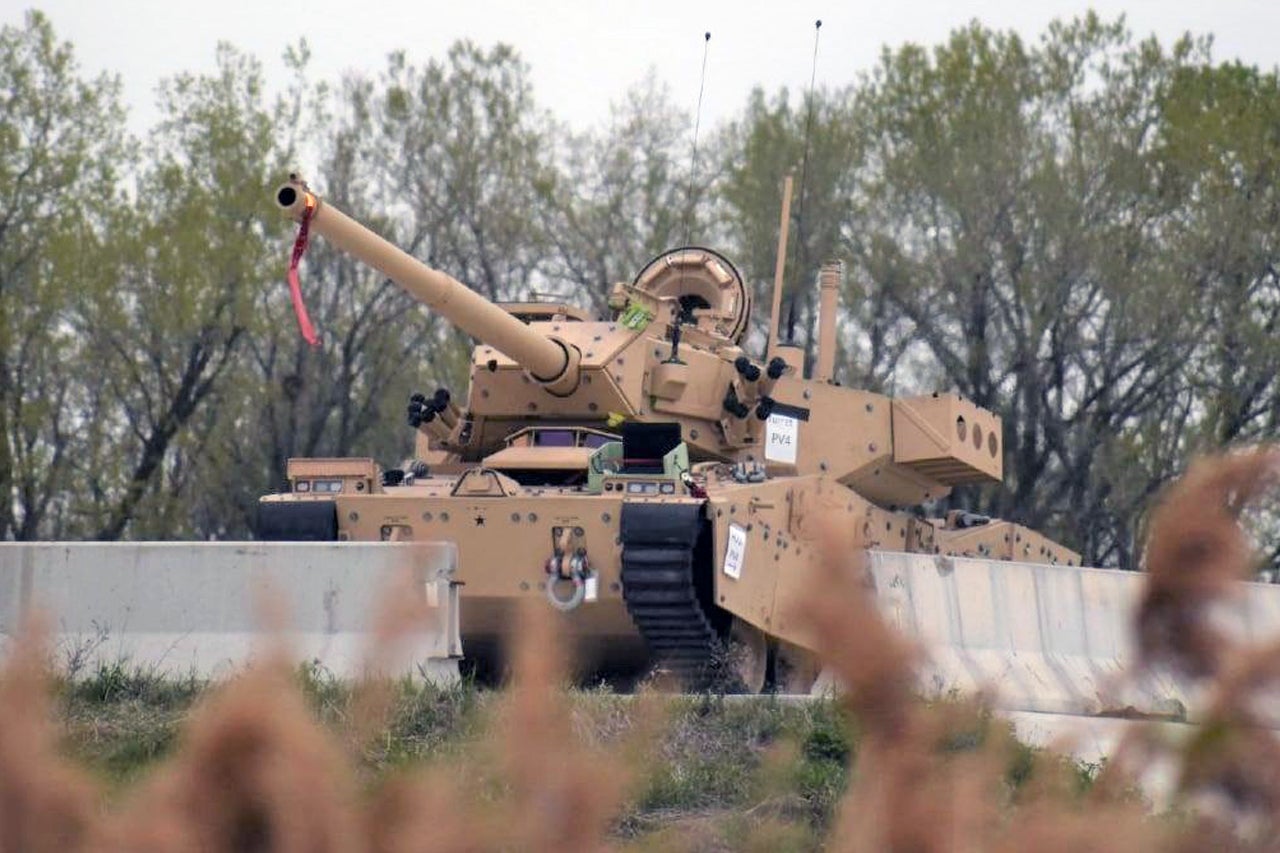
In 2016, defense news sources reported that the Army was interested in developing a lightweight ground combat vehicle to accompany Infantry Brigade Combat Teams (IBCTs) and keep them relevant in large-scale combat operations (LSCOs) against a near-peer threat.1 Originally referred to as a light tank, Army officials named the new concept the Mobile Protected Firepower (MPF); this approach was intended to dissuade servicemembers from viewing it as a tank-like vehicle and then employing it the same way as the M1 Abrams Main Battle Tank (MBT). The development of the MPF presents an opportunity to bridge a capability gap that was created when the M551 Sheridan Armored Reconnaissance/Airborne Assault Vehicle (AR/AAV) retired from service. The M551 had earned admiration for its effective operational capabilities—and disdain for its technical shortcomings. As the MPF meets testing milestones and prepares to integrate into IBCTs, commanders at the brigade level and below must ensure the know-how to employ the platform correctly, or they will face a steep learning curve against adversaries, at the cost of Soldiers’ lives.2 The MPF’s tactical and strategic potential can better enable the IBCT to execute its mission set while augmenting its ability to defeat a larger spectrum of enemy capabilities. This paper will exam the purpose, relevant history, utility and future for the MPF to improve its prospects of being used appropriately.2021: A Cyber Year To Remember
Engaging with Online Extremist Material: Experimental Evidence
The Online Extremist Ecosystem

Breaking Up Tech Is a Gift to China
Erik Prince calls for upgrade of US hybrid conflict capabilities

Changing Hearts and Brains: SOF Must Prepare Now for Neurowarfare
30 December 2021
Taiwan’s Turn – Deterring and Derailing an Existential Threat
Back to the Future: A Misguided Understanding of China’s Nuclear Intent
How Does China Aim to Use AI in Warfare?

Confronting China’s International Counterterror Regime: Pay Attention to the SCO

The continuing war against Islamic State - comment
Biden Should Not Embrace New Nuclear Policies