The Profession of Arms: A Guide for Young Army Officers
It takes courage, especially for a young officer, to check a man met on the road for not saluting properly or for slovenly appearance, but, every time he does, it adds to his stock of moral courage, and whatever the soldier may say, he has respect for the officer who does pull him up.
Read Document →The Dragon's Teeth: Assessing China's Military Modernization
PLA has focused on modernising its capabilities across all warfare domains to achieve these goals. This includes land, air, and maritime operations, nuclear, space, counter-space, electronic warfare and cyberspace operations, aiming to become a fully integrated joint force.
Read Document →Transforming the PLA: A Decade of reorganisation from SSF to ISF
PRC has engaged in a sustained and broad effort to transform the PLA from an infantry-heavy, low-technology, ground forces-centric military into a high-technology, networked force with an increasing emphasis on joint operations and naval and air power projection.
Read Document →Eyes without Borders: Exploring the World of Open Source Intelligence (OSINT) in the Digital Age
Open Source Intelligence (OSINT) is gaining prominence with the rise of social media, the digital society and the vast growth of publicly and commercially available information (PAI and CAI).
Read Document →
The PLA’s Developing Cyber Warfare Capabilities and India's Options
Informationised warfare blurs the lines between peacetime and wartime. A nation in the information age cannot wait for the hostilities to break out to collect intelligence, carryout influence operations, develop antisatellite systems or design computer software weapons.
Read Document →
Galwan and After
Why did China did this when he is under tremendous pressure in all fronts, is this China's salami slice tactics being progressed rigorously, what will be new Rules of Engagement, what will be escalatory control mechanism, who has taken this decision, will there be some pressure put by China in India's North-East through insurgency.
Read Document →
India’s Joint Doctrine for Cyberspace Operations: A Critical Review
Chief of Defence Staff (CDS) General Anil Chauhan and Secretary, Department of Military Affairs, formally released declassified versions of the Joint Doctrines for Cyberspace Operations during the Chiefs of Staff Committee meeting in New Delhi.
Read Document →
Know your Enemy General(now Field Marshal) Syed Aseem Munir
Gen SA Munir's position in the hierarchy of Pakistan was not very comfortable. The state of economy, insurgency in Pakhtoonistan and Balochistan, attack on the Jaffar Express, constant protests by supporters of Imran Khan's supporters inside and outside of parliament.
Read Document →
Decoding Operation SINDOOR: Key Aspects and Implications
Precision strikes were carried out on nine sites—four in Pakistan and five in PoK—linked to anti-India terrorist groups such as the LeT, JeM and the Hizbul Mujahideen. The targeted sites included Muridke (LeT headquarters) and Bahawalpur (JeM headquarters).
Read Document →
Chinese Cyber Exploitation in India's Power Grid - Is There a linkage to Mumbai Power Outage?
The New York Times (NYT), based on analysis by a U.S. based private intelligence firm Recorded Future, reported that a Chinese entity penetrated India’s power grid at multiple load dispatch points. Chinese malware intruded into the control systems that manage electric supply across India, along with a high-voltage transmission substation and a coal-fired power plant
Read Document →12 May 2018
GOING BACK TO THE FUTURE: IT IS TIME FOR CHANGE IN AFGHANISTAN
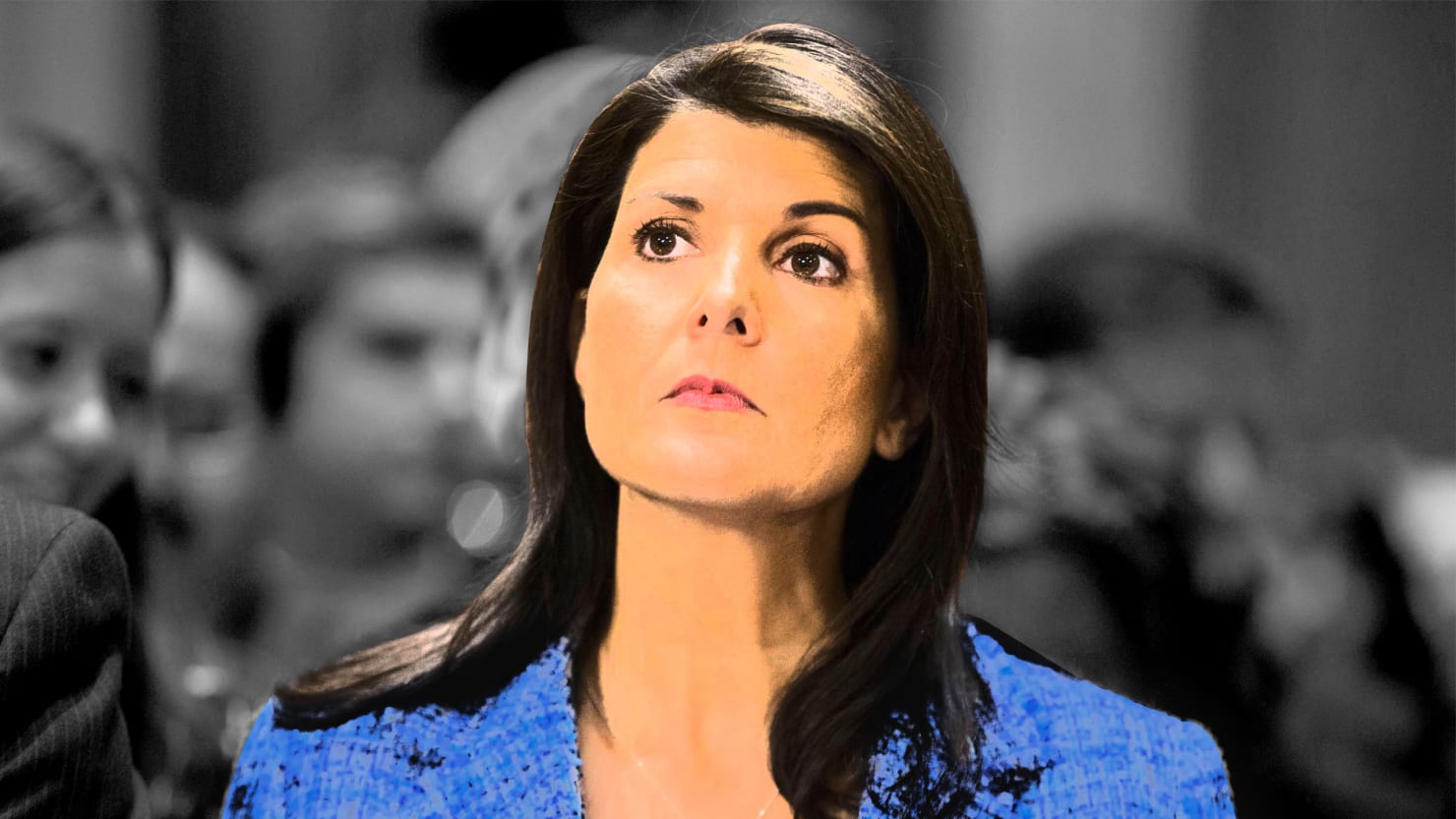
How Indians See Nikki Haley
India’s “hug, then repent” proclivity
Charles-Maurice de Talleyrand, Napoleon’s famous foreign minister, prescribed a basic rule for pragmatic foreign policy: “by no means show too much zeal”. In India’s case, oozing zealousness, gushy expectations and self-deluding hype have blighted foreign policy under successive leaders, except for a period under Indira Gandhi. Zeal has been to India’s male prime ministers what grand strategy is to great powers.Has India played into China’s hands in Wuhan?
Charles-Maurice de Talleyrand, Napoleon’s famous foreign minister, prescribed a basic rule for pragmatic foreign policy: “by no means show too much zeal”. In India’s case, oozing zealousness, gushy expectations and self-deluding hype have blighted foreign policy under successive leaders, except for a period under Indira Gandhi. Zeal has been to India’s male prime ministers what grand strategy is to great powers. India has rushed to believe what it wanted to believe. Consequently, India is the only known country to have repeatedly cried betrayal, not by friends, but by adversaries in whom it reposed trust. India’s foreign policy since Independence can actually be summed up in three words: hug, then repent.Reviewing Taliban Narratives
ISIS targets elections in Afghanistan, Iraq and Libya
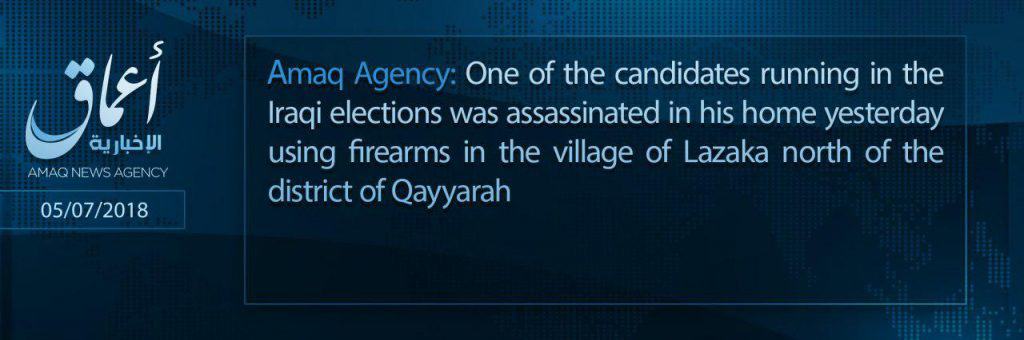
Abu Bakr al-Baghdadi’s goons are conducting a campaign of terror against elections in several countries. Thus far, they have claimed operations targeting election facilities, candidates and officials in Afghanistan, Iraq and Libya. On Apr. 22, Islamic State spokesman Abu al-Hasan al-Muhajir threatened anyone who participated in Iraq’s upcoming election on May 12. Upholding his organization’s longstanding condemnation of democratic elections, the ISIS spokesman argued that anyone who assists the voting process “assumes responsibility for” it and is going to be held accountable under the “same [religious] ruling” as those holding the votes. The “voting centers and those present within them are a target for our swords, so stay far away from them and avoid getting close to them,” al-Muhajir warned. [See FDD’s Long War Journalreport, Analysis: Islamic State spokesman says ‘new phase’ of jihad has begun.]Russia Learned Nothing in Afghanistan. Neither Did America.
Threat Report 2018: The Afghan Taliban’s Increasingly Lethal Insurgency
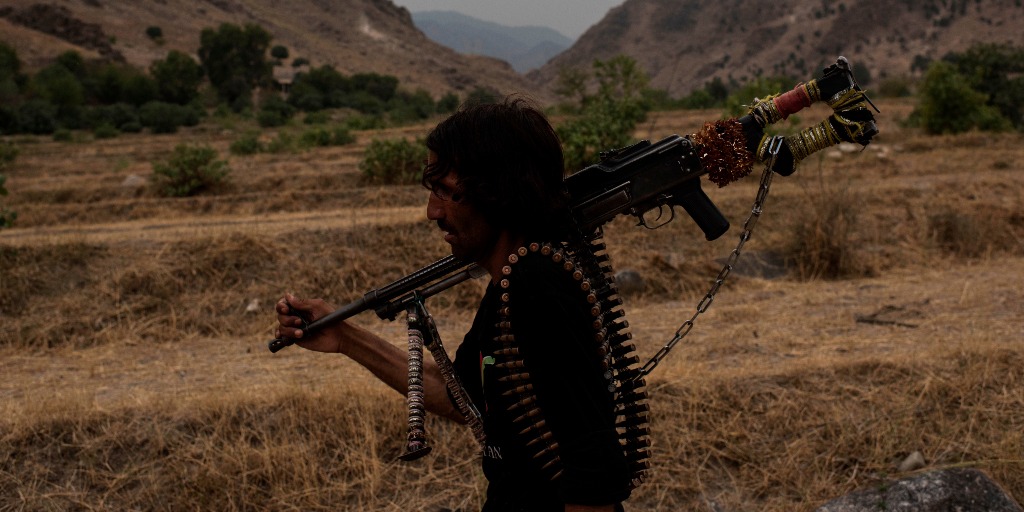
Violence once again grips Afghanistan, with the Taliban, the Islamic State and other terror groups carrying out deadly attacks and kidnappings across the country. Last month, the Taliban announced the beginning of its annual “spring offensive,” and this past weekend bombed a mosque that was being used as a voter registration center, killing 14 and injuring dozens more. What follows is a section of The Cipher Brief’s 2018 Annual Threat Report, which breaks down the greatest threats facing the United States and the world at this point in time. For more information on the full report, please click here. Bottom Line: The Afghan Taliban is mounting an increasingly lethal insurgency across Afghanistan, as both U.S. troops and Afghan Security Forces face near-everyday violence throughout the country. With the Taliban gaining momentum and reasserting control in remote, loosely governed parts of the country, the window for reaching a negotiated peace to end the ongoing conflict is rapidly closing.Hegemonic Designs in the Middle East Clash
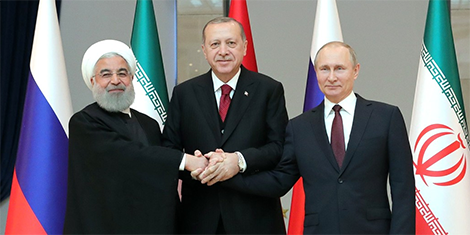
Western media are preoccupied by limited airstrikes from the United States, Britain and France in the Damascus area, in response to a chemical attack, as well as Russia’s “hybrid warfare” strategy against the West. Amidst many distractions, Vladimir Putin’s own fixation with his country’s emergence as a major player in the Middle East and its implications for regional stability do not receive ample attention. Russia is striving to increase its strategic visibility and sphere of influence in the Middle East, and US President Donald Trump, by pursuing his transactional foreign policy, is unwittingly presiding over the demise of traditional US strategic dominance in the Middle East and elsewhere in the world.Is China a Colonial Power?
In a lesser-known novel, “Claudius Bombarnac,” Jules Verne describes the adventures of the titular foreign correspondent as he rides the “Grand Transasiatic Railway” from the “European frontier” to “the capital of the Celestial Empire.” A cast of international characters, by turns comical, curious and shady, accompanies the French reporter by train from the Caspian Sea to Peking, narrowly escaping bandits and delivering a mysterious cargo. When first published in 1893, the book was futuristic fiction. There was no continuous rail link across Eurasia. There still isn’t, but 125 years later China now envisions financing and building multiple such overland routes (with much faster trains). That’s for the “belt” portion of what it calls the “One Belt, One Road” initiative: It is also developing a string of new ports, from the South China Sea through the Indian Ocean to Africa and the Mediterranean.Good President/Bad Emperor?
China’s Global Connectivity Politics: On Confidently Dealing with Chinese Initiatives
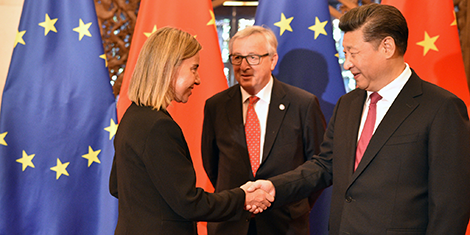
European attitudes towards China and its Belt and Road Initiative are changing. While the People’s Republic under Xi Jinping is the only country in the world pursuing a global vision, distrust of China’s expanding influence is growing. As a consequence, the European debate about China is becoming increasingly emotional with interpretations fluctuating between alarmism and reassurance. Ideas about the ‘essence of China’ and expectations that the country should fit into the liberal order according to Western standards, however, threaten to limit Europe’s scope of action in dealing with the People’s Republic. In order to develop strategies for a confident German and European policy, China’s current global political approach should be considered systematically. Based on the features of China’s ‘connectivity politics’ (Konnektivitรคtspolitik), Germany and the EU could formulate policy options that go far beyond the realm of infrastructure.Here's Who is Really Guiding China's Foreign Policy
Thousand years of Tibetan masterpieces revealed for first time
Avoiding Incidents at Sea between India and China
Editor’s note: This essay is part of an initiative launched by the Stimson Center’s South Asia Program which we call the Off Ramps Initiative. The nuclear competition among China, India, and Pakistan is accelerating with the introduction of new ballistic and cruise missiles. Counterforce capabilities are growing. China has begun to place multiple warheads on some of its ballistic missiles, Pakistan has advertised its ability to do so, and India has demonstrated this capacity in its space program. Diplomacy is dormant as these and other nuclear capabilities expand. What to do? Stimson has asked rising talent in this field, as well as a few veterans, to offer creative ideas that can help ameliorate and decelerate this dangerous triangular nuclear competition.CHINA'S PUSH INTO ARTIFICIAL INTELLIGENCE—HOW SHOULD THE UNITED STATES RESPOND?
Cooperation between AI sectors in China and the United States would yield substantial benefits, not only for both economies but worldwide. In the absence of constructive government leadership, it is up to global AI communities—in research institutions and companies—to establish alternative channels for international AI governance and other forms of cooperation.Policing Urban Conflict: Urban Siege, Terrorism and Insecurity
Cities have been the foci of culture, trade, and political life throughout history. When the social contract breaks or politics fail, they have been the focus of conflict and violence as well. In the vacuum of power, terrorists, rebels, and criminals time and again seek to reset the political, social, and economic equilibrium through violence. This violence has always occurred in cities but as the world becomes more urban, cities become inseparable from global conflict. This central role was recognized by Algerian separatists during the Battle of Algiers and its future importance forecast in Carlos Marighella’s Minimanual of the Urban Guerrilla. From the Casbah to urban Brazil, to the streets of Europe and alleys and hotels of Beirut, Aleppo, Jerusalem, Nairobi, and Mumbai, urban terrorism continues to evolve.The View From Olympus: Another Strategic Blunder
Trump Is Setting America on an Unpredictable Course in the Middle East
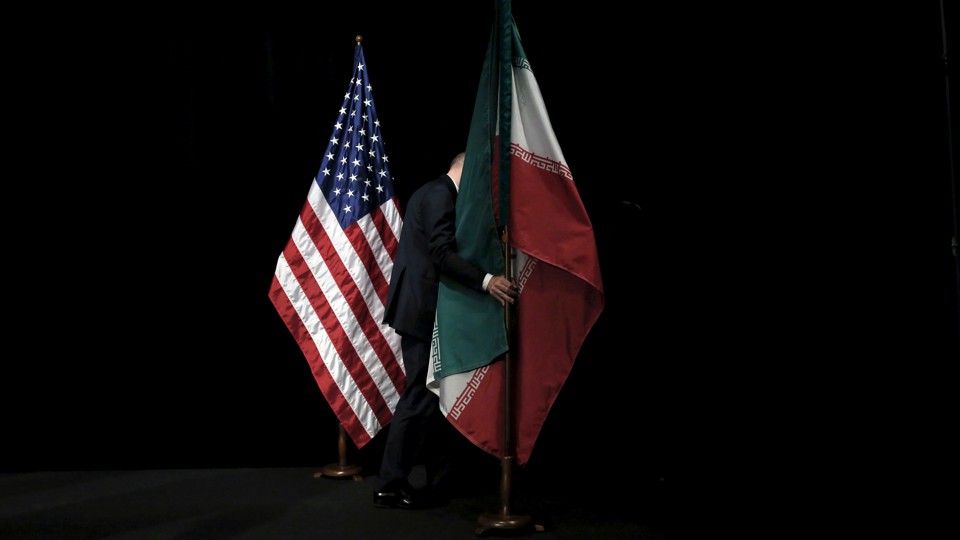
Iran hawks seem to be in pretty good spirits these days, with John Bolton having taken over as national-security adviser and Mike Pompeo as secretary of state. They are thrilled with the promotion of two high-ranking officials who want to tear up the nuclear deal, actively promote regime change in Tehran, and vigorously confront Iran throughout the region, just like many of them have been advocating for years—what’s not to like?Russia and the Kurds Could push the Middle East toward a Wider War
The demise of the nation state
The battle of the gas-sucking mega giants is set to begin
Off the coast of Western Australia, a battle between mega giants is unfolding. The combatants involve the world's biggest semi-submersible platform, the longest sub-sea pipeline in the southern hemisphere, and the largest floating facility ever built. They're all there for the same reason: natural gas - and they're hoping to start drawing it up this month. As several countries begin to move away from coal as an energy resource, this alternative fossil fuel, which produces 50% less carbon dioxide for every unit of energy generated, is increasingly in demand in our energy hungry world. Consumption is forecast to rise to 177 trillion cubic feet (tcf) or 5,012 billion cubic metres by 2040, up from 124tcf in 2015, says the US Energy Information Administration.RUSSIA'S INVINCIBLE WEAPONS: TODAY, TOMORROW, SOMETIME, NEVER?
Destination: Data NGA director showcases an agency in technological transition
Pentagon green lights Army network strategy — with caveats
A new report from the Pentagon’s chief cost analyst and weapons tester cautiously approves the Army’s plan for a new tactical network, one that is expected to follow the canceled $6 billion Warfighter Information Network-Tactical. In a report submitted to Congress April 24, the Department of Defense’s director of cost assessment and program evaluation and the director of operational test and evaluation declared some elements of the Army’s new network approach as “suitable” but said it was too early to assess the strategy as a whole. “The Army has made concerted efforts to change its path for modernization,” the officials wrote in the report. “The involvement of senior leadership, definition of overarching characteristics, and pivot to an acquisition strategy that includes experimentation represent a major shift from the traditional Army approach. This shift is still in progress and the results of experimentation will inform many of the decisions as to what programs or technology will meet the operational needs.”Civil-Military Fusion and the PLA’s Pursuit of Dominance in Emerging Technologies
Defence Against the ‘Drone’ Arts: Surviving the swarm & an eleventh principle of war
Scenario 1: A light infantry platoon advances cautiously without tank support[1] along a narrow rubble strewn street in a regional town, recently occupied by an extremist group.[2] Then with no warning a swarm of flying attack drones appears 100 meters forward of the lead rifle section. Each semi-autonomous quad-copter[3] carries a nanoexplosive device, which when detonated acts as an anti-personnel grenade. As two-dozen+ ‘flying nano-grenades’ hurtle towards the rifle platoon, a prescient Section Commander does not hesitate in ordering the rifle section to open fire. The drones are too close to call for indirect fire support, but accurate rifle and machine-gun fire destroys most of them. “What will make great generalship in 2030?”
One of the missions of LENS is to help to build the next generation of national security leaders, and part of doing that is giving them a voice in a variety of venues, including Lawfire. I urge you to seize this opportunity to get some insights about the future of military leadership from one of the Army’s most brilliant young thinkers. Some more context: The panel on which Matt served included USAWC Professor Chuck Allen and Dr. Sarah Sewall of the Johns Hopkins School of Advanced International Studies. It was asked to address the following questions: Question/Prompt: What will it mean to be a leader in the new environment? What does the MacArthur, Marshall, or Eisenhower of 2030 look like? Does the USAWC construct of strategic leaders, theorists, and practitioners still make sense? What will strategic leadership demand in a ‘post-truth’ environment saturated with autonomous systems, pervasive transparency, and artificial intelligence?How border protection software could help analyze battlefield videos
A U.S. Customs and Border Patrol officer conducts global observations of air traffic and trade activities at the National Targeting Center in Sterling, Va. New software tools promise to make it easier to spot high-risk activity at the border and on the battlefield. (U.S. Customs and Border Patrol) The problems of border control mirror the challenges faced by battlefield intel analysts. Both have a fundamental need to scan vast crowds of faces, to peer into containers and vehicles and make snap assessments about likely risk. Unisys recently unveiled a software product intended to enhance border agents’ ability to make the right call, even when faced with high volumes of information. Military experts at the company say the technology could form the basis for similar battlefield solutions.Not Fit to Fight? Rethinking Military Recruitment Standards
Contributor Perspectives offer insight, analysis and commentary from Stratfor’s Board of Contributors and guest contributors who are distinguished leaders in their fields of expertise. The state of physical fitness in the United States has long been a topic of concern among the nation's leaders. Declining fitness measures on the part of military draftees played an important role in prompting President Dwight Eisenhower in 1956 to establish the President's Council on Youth Fitness. In 1960, John Kennedy, then the president-elect, felt so strongly about the subject that he wrote a multipage article, "The Soft American," for Sports Illustrated.