The Profession of Arms: A Guide for Young Army Officers
It takes courage, especially for a young officer, to check a man met on the road for not saluting properly or for slovenly appearance, but, every time he does, it adds to his stock of moral courage, and whatever the soldier may say, he has respect for the officer who does pull him up.
Read Document →The Dragon's Teeth: Assessing China's Military Modernization
PLA has focused on modernising its capabilities across all warfare domains to achieve these goals. This includes land, air, and maritime operations, nuclear, space, counter-space, electronic warfare and cyberspace operations, aiming to become a fully integrated joint force.
Read Document →Transforming the PLA: A Decade of reorganisation from SSF to ISF
PRC has engaged in a sustained and broad effort to transform the PLA from an infantry-heavy, low-technology, ground forces-centric military into a high-technology, networked force with an increasing emphasis on joint operations and naval and air power projection.
Read Document →Eyes without Borders: Exploring the World of Open Source Intelligence (OSINT) in the Digital Age
Open Source Intelligence (OSINT) is gaining prominence with the rise of social media, the digital society and the vast growth of publicly and commercially available information (PAI and CAI).
Read Document →
The PLA’s Developing Cyber Warfare Capabilities and India's Options
Informationised warfare blurs the lines between peacetime and wartime. A nation in the information age cannot wait for the hostilities to break out to collect intelligence, carryout influence operations, develop antisatellite systems or design computer software weapons.
Read Document →
Galwan and After
Why did China did this when he is under tremendous pressure in all fronts, is this China's salami slice tactics being progressed rigorously, what will be new Rules of Engagement, what will be escalatory control mechanism, who has taken this decision, will there be some pressure put by China in India's North-East through insurgency.
Read Document →
India’s Joint Doctrine for Cyberspace Operations: A Critical Review
Chief of Defence Staff (CDS) General Anil Chauhan and Secretary, Department of Military Affairs, formally released declassified versions of the Joint Doctrines for Cyberspace Operations during the Chiefs of Staff Committee meeting in New Delhi.
Read Document →
Know your Enemy General(now Field Marshal) Syed Aseem Munir
Gen SA Munir's position in the hierarchy of Pakistan was not very comfortable. The state of economy, insurgency in Pakhtoonistan and Balochistan, attack on the Jaffar Express, constant protests by supporters of Imran Khan's supporters inside and outside of parliament.
Read Document →
Decoding Operation SINDOOR: Key Aspects and Implications
Precision strikes were carried out on nine sites—four in Pakistan and five in PoK—linked to anti-India terrorist groups such as the LeT, JeM and the Hizbul Mujahideen. The targeted sites included Muridke (LeT headquarters) and Bahawalpur (JeM headquarters).
Read Document →
Chinese Cyber Exploitation in India's Power Grid - Is There a linkage to Mumbai Power Outage?
The New York Times (NYT), based on analysis by a U.S. based private intelligence firm Recorded Future, reported that a Chinese entity penetrated India’s power grid at multiple load dispatch points. Chinese malware intruded into the control systems that manage electric supply across India, along with a high-voltage transmission substation and a coal-fired power plant
Read Document →7 May 2020
Why Is China’s Belt and Road Initiative Being Questioned by Japan and India?
Pakistan’s anti-India cyber warfare goes unchallenged
New Delhi:For almost the last two weeks, Pakistan-based groups, backed by its spy agency the ISI, have been carrying out a new wave of cyber warfare against India, where they are creating fake Twitter handles and impersonating members of the royal family from the Gulf countries to spread anti-India sentiments in the Gulf. What is more worrying is that these cyber attacks are going to increase and evolve even further in the coming times.Opinion – Is the Coronavirus War Narrative Helping Pakistan?
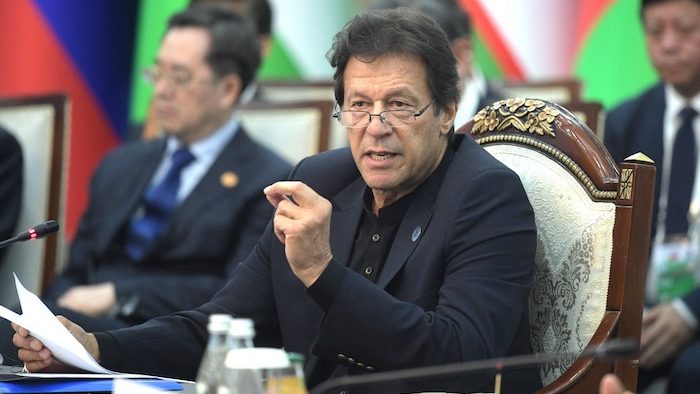
Since the spread of Covid-19 heads of states are declaring their response as ‘war’ against coronavirus. In early February 2020, Xi Jinping, the President and general-secretary of the Communist Party of China declared China’s response as ‘people’s war’. Then in mid-March the US President Trump termed himself ‘a wartime president’ and compared the response required to combat coronavirus with World War II. Following the same trend, on March 24, declaring 21 days lockdown in India, Indian Prime Minister, Narendra Modi compared it to the 18-day long historic Mahabharata battle. Pakistan’s Prime Minister, Imran Khan terms Pakistan’s response as the war against coronavirus. The catchy words corona se darna nahi larna hai (not to be frightened of the coronavirus, but to fight it) have become the slogan and narrative of the government as it appears in TV adds, songs, pamphlets and media campaigns. Yet, the war-narrative against coronavirus is proving to be counterproductive and rather harmful in Pakistan.Coronavirus antibody tests aren’t as accurate as they seem
The Coronavirus Is Creating a Crisis on Europe’s Borders
For Europe, the internal economic shock created by the coronavirus is set to be compounded by an external security shock triggered by the economic collapse of its neighborhood. For many reasons, Europe’s southern and eastern neighbors remain highly vulnerable to such a disaster scenario.Preventing violent extremism during and after the COVID-19 pandemic
Inside the Early Days of China’s Coronavirus Coverup
What International Relations Tells Us about COVID-19
Review – The History of Philosophy
Global Backlash Builds Against China Over Coronavirus
How Sound Science Will Help Us Create a Coronavirus Vaccine
How Coronavirus Will Change Our Working Environment
As lockdowns are relaxed around the world and people return to their workplaces, the next challenge will be adapting open office spaces to the new normal of strict personal hygiene and physical distancing.The Coronavirus Pandemic Has Taught the World the Importance of Reliable Energy
Beijing doubles down in EU propaganda battle
China is pushing ahead with a propaganda campaign critical of Western democracies and their handling of the coronavirus, even after protests from Paris and a high-profile diplomatic dispute between Beijing and the EU over Chinese disinformation.How to Deal With Iranian Speedboats
How the face mask became the world's most coveted commodity
Trump Is Dangerously Predictable With China
Noam Chomsky’s Views on Russian Foreign Policy: A Critical Analysis
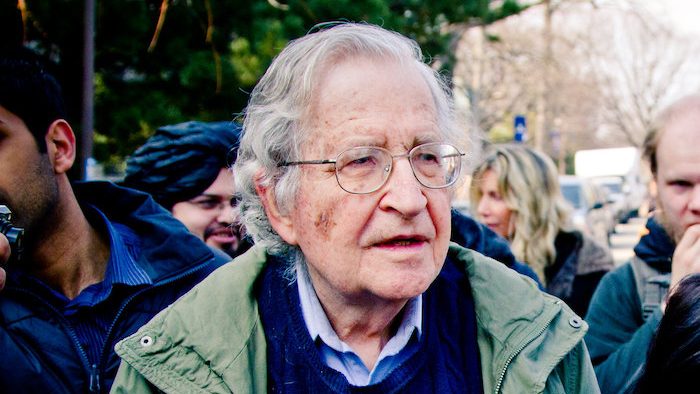
Among the Western critics of the West who frequently appear in and get quoted by the Kremlin-sponsored media, the left-wing thinker Noam Chomsky clearly stands out. An internationally acclaimed MIT professor, the winner of the 2005 Prospect/Foreign Policy Top 100 Public Intellectuals poll, a pundit whose foreign policy views are discussed in high-level academic IR journals, Chomsky is head and shoulders above the numerous extreme, marginal, ill-reputed activists who RT and Sputnik International present as ‘experts,’ – be it the editor of the German neo-Nazi Zuerst magazine Manuel Ochsenreiter or the infamous conspiracy theorists William Engdahl and Jeffrey Steinberg. Yet, the overwhelming majority of Chomsky’s comments, which appear in Kremlin-backed media, predominantly concern the US and its allies rather than Russia. Their topics embrace the typical issues which the left regularly criticizes as imperialist and inhumane: US military strategy and immigration policies, the Iraqi war, Turkey’s treatment of the Kurds, Israeli policies in Palestine etc. What, however, remains interesting—and infrequently discussed—is Chomsky’s view of the Putin regime itself.It Was Grand, But Was it Strategy? Revisiting the Origins Story of Grand Strategy
The Rest of the World Is Laughing at Trump
Trump’s New Marshall Plan
Aglobal power with global interests and responsibilities, the United States now finds itself battling a global pandemic, in the midst of great power competition. That’s a big agenda. The Decline of the Nation-State
Great Britain Hopes These Investments Can Save Its Dying Military
The Coronavirus Creates New National Security Problems for America
Opinion – The Rise of Mercenarism: Avoiding International Accountability
Libya can be considered the battleground of a Janus-faced perspective on outside intervention. After the NATO-led intervention in 2011, that took place in the broader regional context of the Arab Spring uprisings, the 42-year ruler of Colonel Qaddafi was brought to an end and the first test for the doctrine of the Responsibility to Protect (R2P) turned this intervention into a poster child of the doctrine; and, for a short time, into the UN darling. However, in a fairytale go bad twist of events, the country turned into a battlefield for a civil war with no (close) end in sight. Further adding to the imbroglio of local and foreign actors, as Turkey and Russia revive a practice that can be considered a relic of the past – mercenarism.