The Profession of Arms: A Guide for Young Army Officers
It takes courage, especially for a young officer, to check a man met on the road for not saluting properly or for slovenly appearance, but, every time he does, it adds to his stock of moral courage, and whatever the soldier may say, he has respect for the officer who does pull him up.
Read Document →The Dragon's Teeth: Assessing China's Military Modernization
PLA has focused on modernising its capabilities across all warfare domains to achieve these goals. This includes land, air, and maritime operations, nuclear, space, counter-space, electronic warfare and cyberspace operations, aiming to become a fully integrated joint force.
Read Document →Transforming the PLA: A Decade of reorganisation from SSF to ISF
PRC has engaged in a sustained and broad effort to transform the PLA from an infantry-heavy, low-technology, ground forces-centric military into a high-technology, networked force with an increasing emphasis on joint operations and naval and air power projection.
Read Document →Eyes without Borders: Exploring the World of Open Source Intelligence (OSINT) in the Digital Age
Open Source Intelligence (OSINT) is gaining prominence with the rise of social media, the digital society and the vast growth of publicly and commercially available information (PAI and CAI).
Read Document →
The PLA’s Developing Cyber Warfare Capabilities and India's Options
Informationised warfare blurs the lines between peacetime and wartime. A nation in the information age cannot wait for the hostilities to break out to collect intelligence, carryout influence operations, develop antisatellite systems or design computer software weapons.
Read Document →
Galwan and After
Why did China did this when he is under tremendous pressure in all fronts, is this China's salami slice tactics being progressed rigorously, what will be new Rules of Engagement, what will be escalatory control mechanism, who has taken this decision, will there be some pressure put by China in India's North-East through insurgency.
Read Document →
India’s Joint Doctrine for Cyberspace Operations: A Critical Review
Chief of Defence Staff (CDS) General Anil Chauhan and Secretary, Department of Military Affairs, formally released declassified versions of the Joint Doctrines for Cyberspace Operations during the Chiefs of Staff Committee meeting in New Delhi.
Read Document →
Know your Enemy General(now Field Marshal) Syed Aseem Munir
Gen SA Munir's position in the hierarchy of Pakistan was not very comfortable. The state of economy, insurgency in Pakhtoonistan and Balochistan, attack on the Jaffar Express, constant protests by supporters of Imran Khan's supporters inside and outside of parliament.
Read Document →
Decoding Operation SINDOOR: Key Aspects and Implications
Precision strikes were carried out on nine sites—four in Pakistan and five in PoK—linked to anti-India terrorist groups such as the LeT, JeM and the Hizbul Mujahideen. The targeted sites included Muridke (LeT headquarters) and Bahawalpur (JeM headquarters).
Read Document →
Chinese Cyber Exploitation in India's Power Grid - Is There a linkage to Mumbai Power Outage?
The New York Times (NYT), based on analysis by a U.S. based private intelligence firm Recorded Future, reported that a Chinese entity penetrated India’s power grid at multiple load dispatch points. Chinese malware intruded into the control systems that manage electric supply across India, along with a high-voltage transmission substation and a coal-fired power plant
Read Document →18 August 2020
Indian-American groups laud historic selection of Kamala Harris as Biden’s vice presidential candidate
Pakistan’s COVID-19 Crisis
What’s new? Hoping to mitigate COVID-19’s economic toll, Imran Khan’s Pakistan Tehreek-e-Insaf government lifted a countrywide lockdown in May, leading to a spike in cases. August could see another surge since the public, misled by the clergy and mixed messaging from the government itself, may disregard precautions during religious festivities and ceremonies.What does China’s growing engagement in Afghanistan mean for the US?
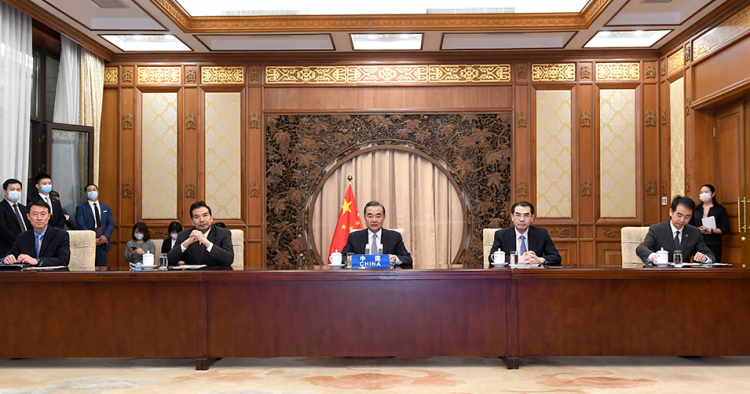
On July 27, Chinese Foreign Minister Wang Yi held a video conference with his counterparts from Afghanistan, Pakistan, and Nepal to suggest expanding their pandemic cooperation. Stressing the need to set up a logistics “green corridor” to expedite customs clearance between their countries, Wang also proposed the development of a multimodal trans-Himalayan corridor by extending the China-Pakistan Economic Corridor (CPEC) into Afghanistan, and he took the opportunity to call on Nepal and Afghanistan to follow the example of Sino-Pakistan cooperation.Biden’s China Policy Can’t Help but Be Incoherent
US-China Trade War: The Deal the US Asked For
On July 22, the United States’ (US) State Department announced that it had ordered the Chinese government to close its consulate in Houston, in what the Chinese government has deemed an “unprecedented escalation.” A State Department spokesperson cited the protection of American intellectual property and private information as the reason for this move. It has reportedly given the Chinese Consulate until July 24 to move out its employees. Local media has reported that Chinese Consulate employees have been burning documents in the building’s courtyard. The Chinese government has responded by announcing it had ordered the US consulate in Chengdu to be closed with one foreign ministry spokesperson suggesting that the outpost was being used for espionage purposes.U.S. Competition with China and Russia: The Crisis-Driven Need to Change U.S. Strategy
China’s PAFMM Grey Zone Maritime Challenge To The Philippines – Analysis
China’s People’s Armed Forces Maritime Militia (PAFMM) is key to understanding Beijing’s grey-zone operations in the South China Sea (SCS). The PAFMM is organised and linked to the People’s Liberation Army chain of command through the People’s Armed Forces Districts. PAFMM members are trained in maritime claims enforcement, logistics support, intelligence, surveillance and reconnaissance and sabotage. Operating about 84 large vessels with reinforced hulls and water cannons, the PAFMM serves as China’s third force in the SCS.To the Brink With China
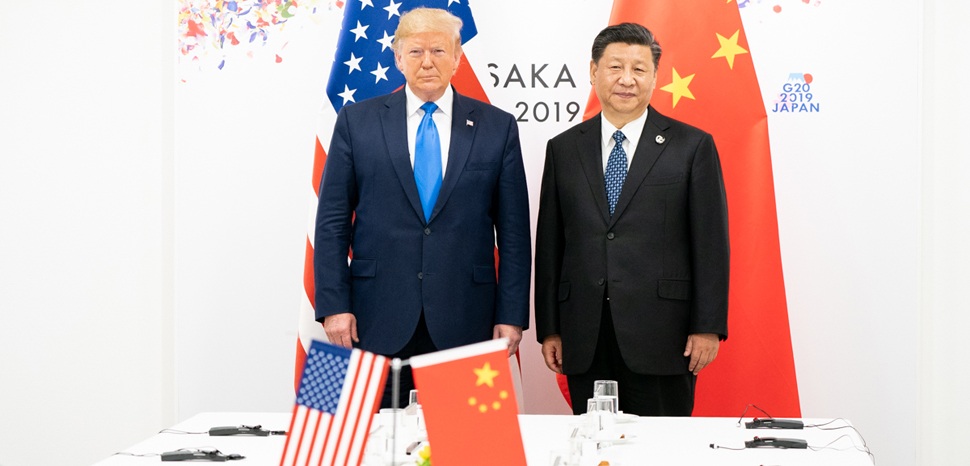
Observers of US-China relations increasingly talk of a new cold war. On top of a long-running trade war, the two countries now find themselves in a destructive cycle of mutual sanctions, consulate closings, and increasingly bellicose official speeches. Efforts to decouple the US economy from China’s are underway as tensions mount in both the South China Sea and the Taiwan Strait.Countering China’s Counter-Intervention Strategy
China has developed a robust counter-intervention capability centered on missiles, aircraft, and ships. While there is room for scholarly debate as to whether counter-intervention is an official Chinese military strategy, it is clear China can prevent U.S. intervention in any Western Pacific crisis. To counter this capability, the Commander of U.S. Indo-Pacific Command, Admiral Philip Davidson, plans to increase investment in integrated air and missile defense systems. This shift in priorities is at the heart of Admiral Davidson’s new Regain the Advantage concept, billed in Congress as the Pacific Deterrence Initiative.[1] As Relations With U.S. Sink, China Tones Down ‘Hotheaded’ Nationalism
What Comes Next in the Standoff Between the U.S. and Iran?
In this week’s editors’ discussion on Trend Lines, WPR’s Judah Grunstein and Freddy Deknatel talk about the latest developments in the standoff between the U.S. and Iran, following the U.S. assassination of Iranian Maj. Gen. Qassem Soleimani and Iran’s retaliatory ballistic missile strike against two military bases in Iraq where U.S. troops are stationed. Did the U.S. reestablish deterrence, as the Trump administration claims? Or will Iran take further covert action to avenge Soleimani’s death? And what impact will the U.S. political calendar have on how both sides manage tensions moving forward? Judah and Freddy discuss those topics and more on this week’s show.Why Belarus Is Not Ukraine
Scenes in Belarus of protesters erecting crude barricades while fending off the attacks of heavily armored riot police have evoked memories of another uprising in the borderlands between Russia and the European Union: the 2014 Ukrainian revolution that erupted in Kyiv’s Maidan square, an uprising that drove out the country’s kleptocrat president and ushered in a new, if complicated, era in Ukraine. Tulsi Gabbard's Time In Congress Is Almost Up: What's Next?
It Is Time to Abandon Dollar Hegemony
Weaker Dollar Means More Dollar Reserves
The Geopolitics of the Belarusian Election
A Geopolitical Earthquake Just Hit the Mideast
MANAGING THE SINO-AMERICAN DISPUTE OVER MISSILE DEFENSE
Is Spain’s Royal Family Finished?
On Aug. 3, 82-year-old Juan Carlos I, the king of Spain from 1975 to 2014, announced his decision to leave the country because of “public repercussions that certain past events in my life are causing.” In a letter published on the Spanish royal household’s website, he claimed his departure would also allow his son, King Felipe VI, to continue to perform his royal duties in “tranquility.”Young Army officers must be 'more unconventional' in warfare and master the 'new domains of cyber and space'
Get Ready For Deepfakes To Be Used In Financial Scams
Infographic Of The Day: Where Will The Next Billion Internet Users Come From?
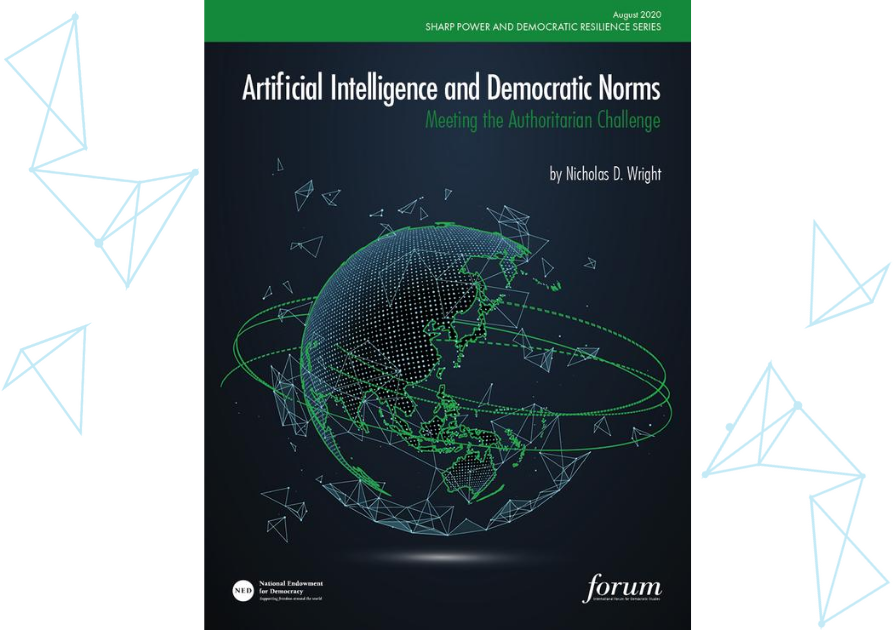
Artificial Intelligence and Democratic Norms
The Sharp Power and Democratic Resilience series aims to contextualize the nature of sharp power, inventory key authoritarian efforts and domains, and illuminate ideas for non-governmental action that are essential to strengthening democratic resilience.Here’s the Theme Driving the US Army’s New Communications Tech
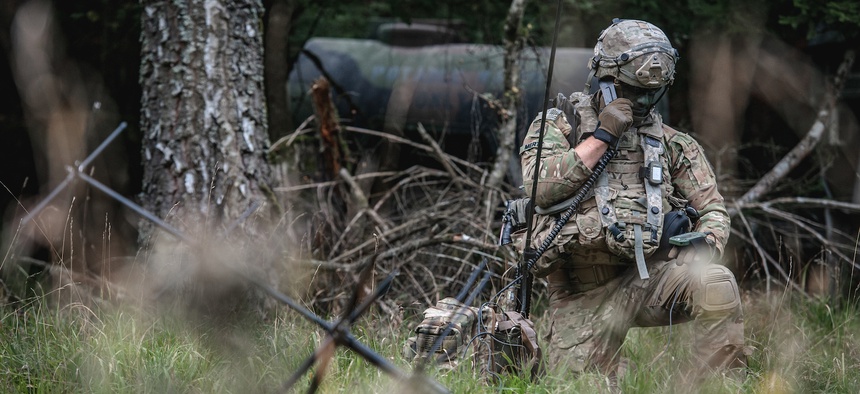
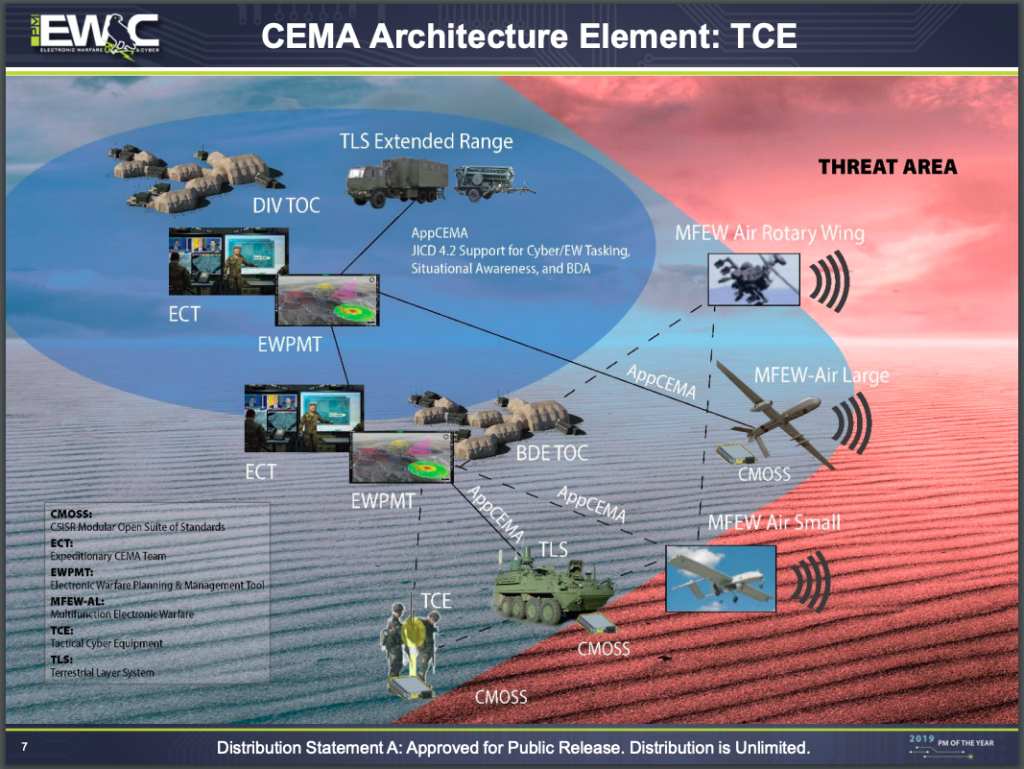
A common theme emerges from the U.S. Army's efforts to field several new communications technologies: for the foreseeable future, the service's comms programs are about pushing more data to and from the front lines in the face of increasingly aggressive electronic-warfare activities.