The Profession of Arms: A Guide for Young Army Officers
It takes courage, especially for a young officer, to check a man met on the road for not saluting properly or for slovenly appearance, but, every time he does, it adds to his stock of moral courage, and whatever the soldier may say, he has respect for the officer who does pull him up.
Read Document →The Dragon's Teeth: Assessing China's Military Modernization
PLA has focused on modernising its capabilities across all warfare domains to achieve these goals. This includes land, air, and maritime operations, nuclear, space, counter-space, electronic warfare and cyberspace operations, aiming to become a fully integrated joint force.
Read Document →Transforming the PLA: A Decade of reorganisation from SSF to ISF
PRC has engaged in a sustained and broad effort to transform the PLA from an infantry-heavy, low-technology, ground forces-centric military into a high-technology, networked force with an increasing emphasis on joint operations and naval and air power projection.
Read Document →Eyes without Borders: Exploring the World of Open Source Intelligence (OSINT) in the Digital Age
Open Source Intelligence (OSINT) is gaining prominence with the rise of social media, the digital society and the vast growth of publicly and commercially available information (PAI and CAI).
Read Document →
The PLA’s Developing Cyber Warfare Capabilities and India's Options
Informationised warfare blurs the lines between peacetime and wartime. A nation in the information age cannot wait for the hostilities to break out to collect intelligence, carryout influence operations, develop antisatellite systems or design computer software weapons.
Read Document →
Galwan and After
Why did China did this when he is under tremendous pressure in all fronts, is this China's salami slice tactics being progressed rigorously, what will be new Rules of Engagement, what will be escalatory control mechanism, who has taken this decision, will there be some pressure put by China in India's North-East through insurgency.
Read Document →
India’s Joint Doctrine for Cyberspace Operations: A Critical Review
Chief of Defence Staff (CDS) General Anil Chauhan and Secretary, Department of Military Affairs, formally released declassified versions of the Joint Doctrines for Cyberspace Operations during the Chiefs of Staff Committee meeting in New Delhi.
Read Document →
Know your Enemy General(now Field Marshal) Syed Aseem Munir
Gen SA Munir's position in the hierarchy of Pakistan was not very comfortable. The state of economy, insurgency in Pakhtoonistan and Balochistan, attack on the Jaffar Express, constant protests by supporters of Imran Khan's supporters inside and outside of parliament.
Read Document →
Decoding Operation SINDOOR: Key Aspects and Implications
Precision strikes were carried out on nine sites—four in Pakistan and five in PoK—linked to anti-India terrorist groups such as the LeT, JeM and the Hizbul Mujahideen. The targeted sites included Muridke (LeT headquarters) and Bahawalpur (JeM headquarters).
Read Document →
Chinese Cyber Exploitation in India's Power Grid - Is There a linkage to Mumbai Power Outage?
The New York Times (NYT), based on analysis by a U.S. based private intelligence firm Recorded Future, reported that a Chinese entity penetrated India’s power grid at multiple load dispatch points. Chinese malware intruded into the control systems that manage electric supply across India, along with a high-voltage transmission substation and a coal-fired power plant
Read Document →3 May 2018
Testimony of Admiral Michael S. Rogers and Implications for India
China-India border dispute
America has been afflicted by an ideology that doesn’t work, says Joseph Stiglitz
China Is Not Alone in Adding to the Indian Ocean Woes
RIP: Russia and India Had Big Plans to Build a Deadly Stealth Fighter. What Happened?
Why CPEC could be the end of China-Pakistan relationship
State Urges Taliban yet Again to 'Run for Office'
The Quad Needs Wind in its Sails
Xi Doubles Down on China’s Cyber Goals and Semiconductor Plans
Days after the United States announced a seven-year restriction on American companies doing business with the Chinese telecom giant ZTE, Chinese President Xi Jinping responded in defiance by laying out a broad vision to build China as a cyber and technology superpower. At a recent national Chinese conference on cyberspace, Xi declared that China will press ahead with plans to dominate cyberspace and emerging internet technologies. As a trade war with the United States escalates through tit-for-tat announcements, the speech reflected China’s yearning to end its reliance on foreign technologies. China still lags behind in key technology sectors and Xi urged officials to “keenly seize this historic opportunity” to master new internet technologies in the face of foreign pressures and growing technology demands.The role of BRI in developing trade corridors
China tries to enlist European allies in Trump's trade war
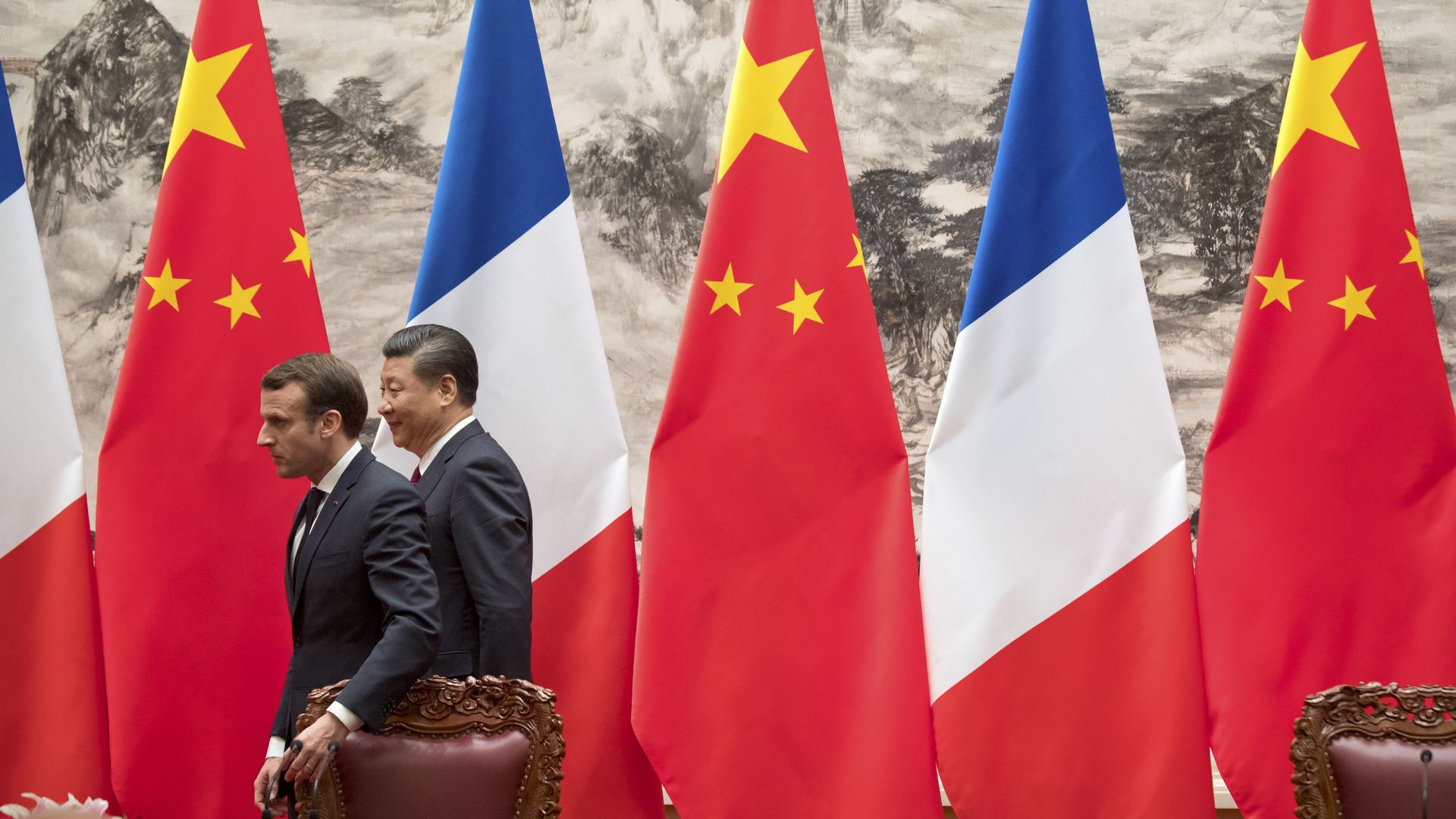
While Beijing is courting the European Union for support in a trade war, European officials are sounding the alarm on China's ambitions in their countries. Why it matters: If the U.S. starts closing off its market to the Chinese, Beijing needs the EU to remain neutral and stay open to business with China, but the Europeans are increasingly frustrated with China's behavior and wary of its ever-growing influence.China is going green. Here’s how
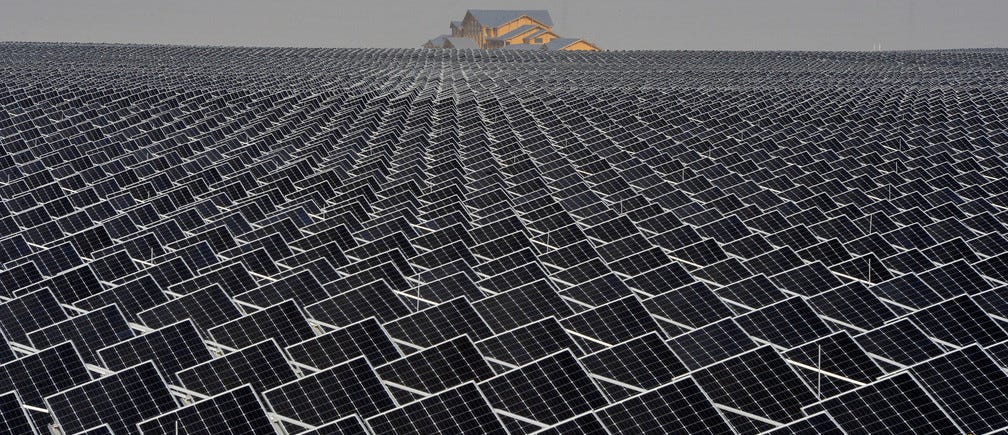
The factories and power plants that have driven its economic growth have also polluted its air, water and soil, to the point where environmental hazards could lead to a significant risk to China’s society and economy, if not corrected in a timely manner. In a bid to tackle these challenges, China’s government has declared a “war on pollution” and introduced a number of green initiatives.China Has a Plan to Turn Old Planes into Stealth Fighters
How Long Can the ‘Chinese Miracle’ Last?
How the UAE’s Chinese-Made Drone Is Changing the War in Yemen
An airstrike that killed a senior Houthi leader shows that the Emirates is growing more assertive in its military operations.Germany Is Pitching For A Seat On The UN Security Council - Here's Why
Can North Korea Really Give Up Its Nukes?
North Korea’s Secret Weapon: A Huge Electromagnetic Storm
The diplomatic circuit is awash in optimism as the proposed summitbetween North Korean dictator Kim Jong Un and President Donald Trump draws near. Indeed, Trump is right to go to the table with the North Koreans and negotiate for full denuclearization. Still, given the long history of North Korea’s double-dealing, outright lying, and surreptitious construction of weapons of mass destruction, the likelihood of Kim actually surrendering his nuclear weapons is extremely low, no matter what he says publicly.COULD AN ‘INSANE’ RUSSIAN NUCLEAR TORPEDO CAUSE 300-FOOT TIDAL WAVES?
It’s Not Really About the Nukes – Crisis Negotiation in North Korea
The United States may soon have a shot at talking directly to North Korea’s Kim Jong-un. Given this unique opportunity, what foreign policy tactics should US negotiators use in the effort to denuclearize the Korean peninsula? It may seem strange, but negotiators might consider taking a lesson from the FBI and the field of Crisis Negotiation to show us a better path to de-escalation. Over several decades and half a dozen administrations, many have weighed in on how to deal with North Korea’s aggression towards the region and its pursuit of nuclear technologies. Solutions from sanctions by the international community (which only really work when China is serious about them) to ways to game potential meetings with the Kim regime all have two things in common: they are tightly focused on North Korea’s nuclear program, and they are pretty solidly ineffective.Geo-Economics as Concept and Practice in International Relations: Surveying the State of the Art
Sรถren Scholvin and Mikael Wigell contend that China’s Belt and Road Initiative, Western sanctions against Iran and Russia, and much more demonstrate a clear trend: states are increasingly practicing power politics by economic means and military means appear to matter less. While this shift is captured by ‘geo-economics’, our authors contend there is no clear definition of the term. To help address this gap, Scholvin and Wigell here provide their conception of what ‘geo-economics’ means as an analytical approach as well as a foreign policy practice.AI and Machine Learning in Cyber Security
Zen monks have been using a tool called a ‘koan’ for hundreds of years to assist them in reaching enlightenment. These koans are like riddles or stories that can only be solved by letting go of ones narrowing believes and stories about how things should be. Zen students sit in silent meditation and observe how the koan is working on them, slowly transforming their way of looking at the world and revealing a tiny piece of the path to nirvana, that place of no suffering.No laptops in the lecture hall
The typical classroom experience used in high school and college is fundamentally broken, but there’s a simple solution. In a recent NY Times op-ed, Susan Dynarski, a professor of education, public policy and economics at the University of Michigan, describes why she has forbidden students from using laptops in her lectures. There’s now plenty of data that shows that in a lecture setting, students with laptops don’t do as well or learn as much as students without one. The reasons make sense, and I applaud her standards and her guts.