The Profession of Arms: A Guide for Young Army Officers
It takes courage, especially for a young officer, to check a man met on the road for not saluting properly or for slovenly appearance, but, every time he does, it adds to his stock of moral courage, and whatever the soldier may say, he has respect for the officer who does pull him up.
Read Document →The Dragon's Teeth: Assessing China's Military Modernization
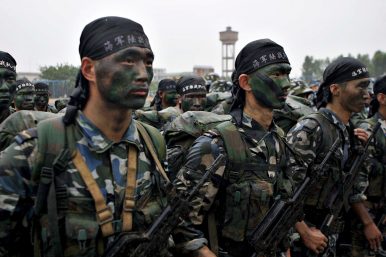
PLA has focused on modernising its capabilities across all warfare domains to achieve these goals. This includes land, air, and maritime operations, nuclear, space, counter-space, electronic warfare and cyberspace operations, aiming to become a fully integrated joint force.
Read Document →Transforming the PLA: A Decade of reorganisation from SSF to ISF
PRC has engaged in a sustained and broad effort to transform the PLA from an infantry-heavy, low-technology, ground forces-centric military into a high-technology, networked force with an increasing emphasis on joint operations and naval and air power projection.
Read Document →Eyes without Borders: Exploring the World of Open Source Intelligence (OSINT) in the Digital Age
Open Source Intelligence (OSINT) is gaining prominence with the rise of social media, the digital society and the vast growth of publicly and commercially available information (PAI and CAI).
Read Document →
The PLA’s Developing Cyber Warfare Capabilities and India's Options
Informationised warfare blurs the lines between peacetime and wartime. A nation in the information age cannot wait for the hostilities to break out to collect intelligence, carryout influence operations, develop antisatellite systems or design computer software weapons.
Read Document →
Galwan and After
Why did China did this when he is under tremendous pressure in all fronts, is this China's salami slice tactics being progressed rigorously, what will be new Rules of Engagement, what will be escalatory control mechanism, who has taken this decision, will there be some pressure put by China in India's North-East through insurgency.
Read Document →
India’s Joint Doctrine for Cyberspace Operations: A Critical Review
Chief of Defence Staff (CDS) General Anil Chauhan and Secretary, Department of Military Affairs, formally released declassified versions of the Joint Doctrines for Cyberspace Operations during the Chiefs of Staff Committee meeting in New Delhi.
Read Document →
Know your Enemy General(now Field Marshal) Syed Aseem Munir
Gen SA Munir's position in the hierarchy of Pakistan was not very comfortable. The state of economy, insurgency in Pakhtoonistan and Balochistan, attack on the Jaffar Express, constant protests by supporters of Imran Khan's supporters inside and outside of parliament.
Read Document →
Decoding Operation SINDOOR: Key Aspects and Implications
Precision strikes were carried out on nine sites—four in Pakistan and five in PoK—linked to anti-India terrorist groups such as the LeT, JeM and the Hizbul Mujahideen. The targeted sites included Muridke (LeT headquarters) and Bahawalpur (JeM headquarters).
Read Document →
Chinese Cyber Exploitation in India's Power Grid - Is There a linkage to Mumbai Power Outage?
The New York Times (NYT), based on analysis by a U.S. based private intelligence firm Recorded Future, reported that a Chinese entity penetrated India’s power grid at multiple load dispatch points. Chinese malware intruded into the control systems that manage electric supply across India, along with a high-voltage transmission substation and a coal-fired power plant
Read Document →25 July 2019
China's Chump: Why America Can't Trust Pakistan
Trump: US, Pakistan Cooperating to Try to End War in Afghanistan
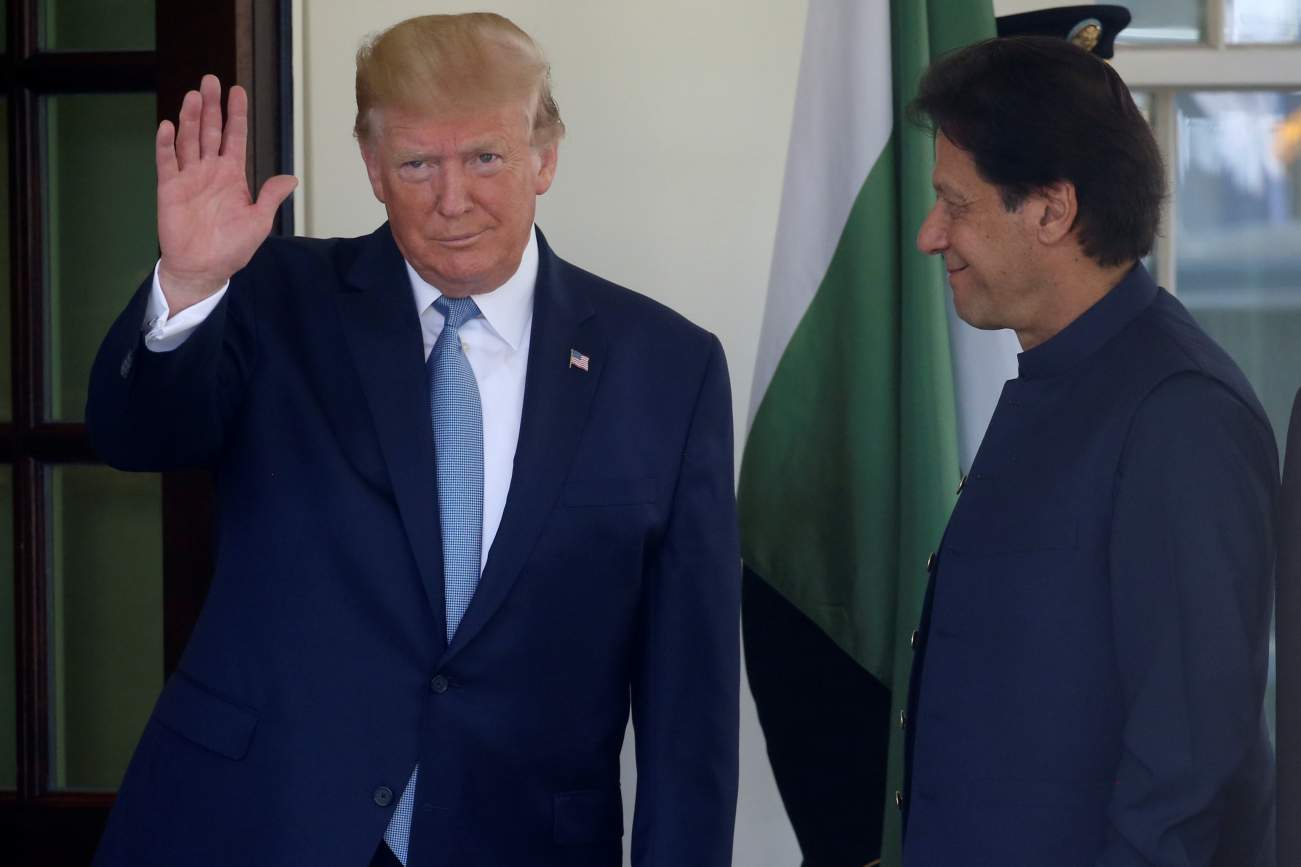
What's Behind the Pakistani Prime Minister's Public Address in Washington DC?
Just a day before his long sought-after meeting with President Donald Trump at the White House, Pakistani Prime Minister Imran Khan addressed a gathering of thousands in Washington, D.C., where he launched into his usual tirade against the opposition and their alleged corruption being the only reason for his country’s poverty and other problems.China to Release New White Paper on National Defense: What to Expect
China's Efforts To Control Their Technology Future And Its Far Reaching Impact
A MYSTERIOUS DRONE ATTACKED 'IRAN-BACKED MILITIA' IN IRAQ
Trump Says US Bracing for 'Absolute Worst' With Iran
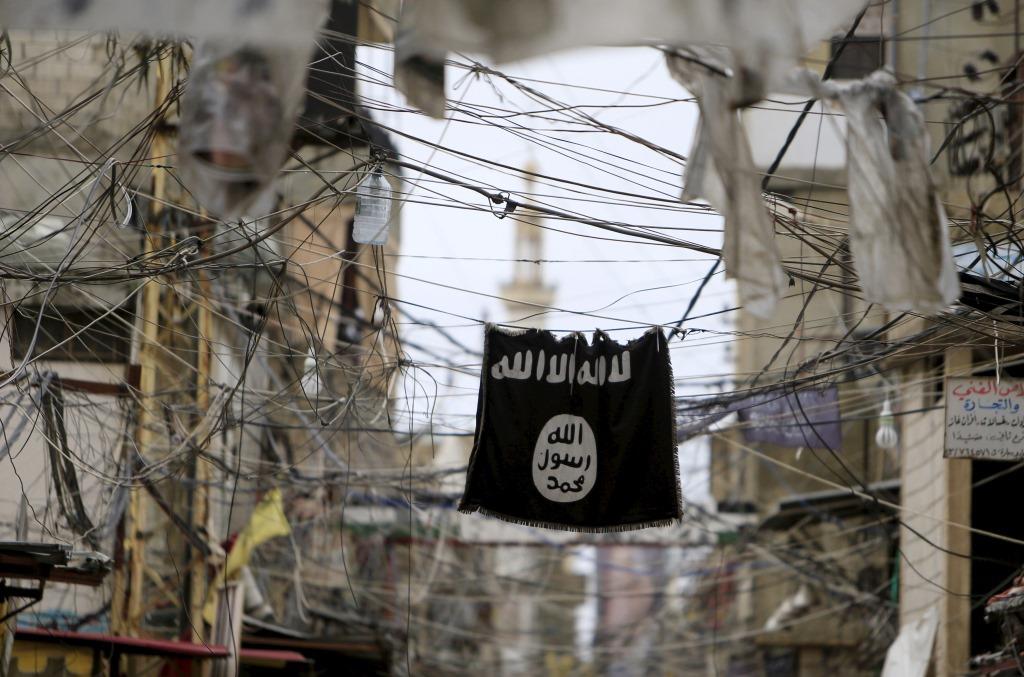
The Rise and Fall of the Islamic State: A Fifth-Year Assessment
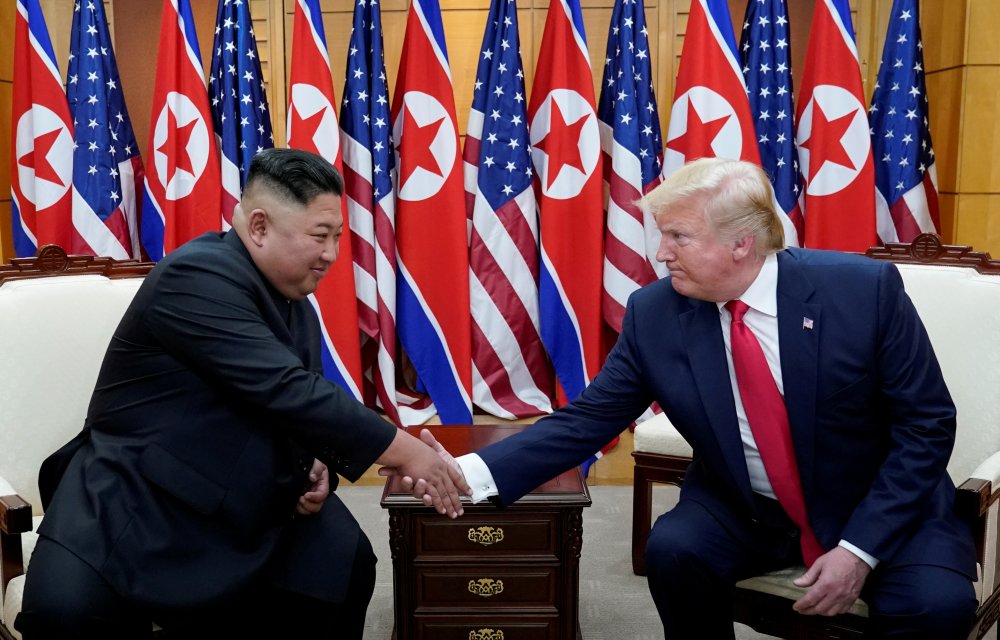
Why North Korea Won the Handshake Summit
ISRAEL EXPECTS TO ENCOUNTER URBAN WARFARE IN POSSIBLE FUTURE WAR IN SYRIA
Climate Change: An Omitted Security Threat in Central Asia
The new front of great power conflict: Russian gray-zone aggression
Lessons of the War in Ukraine for Western Military Strategy
When Russian intervention forces occupied the Crimean peninsula in February 2014 in a coup de main, NATO was still committed in Afghanistan. After more than ten years of counterinsurgency and stabilization operations, the crisis in Ukraine triggered a reorientation towards its original purposes of defense and deterrence. During the same year, at the NATO summit in Wales, it was decided to enhance the speed and capability with which NATO forces could respond to a crisis. The subsequent Warsaw summit in 2016 added rotating multinational contingents in its eastern member states in order to signal the entire alliance’s commitment to their defense. Below these adaptations at the level of NATO, national armed forces are being reformed and rearranged because of the shift in threat perception. This analysis focuses on the military forces of the United States, the United Kingdom and Germany. The tactics and capabilities Russia has brought to bear in eastern Ukraine in particular serve as the benchmark according to which these Western forces are being shaped. A People-Centered Approach to Conflict Resolution in Ukraine
Despite Looming U.S. Sanctions, the Nord Stream 2 Pipeline Will Likely Proceed
Competition over energy supplies in Europe has become a key component of the U.S.-Russia standoff, as evidenced by Washington's threats to derail the Nord Stream 2 pipeline by imposing harsh economic sanctions. However, the United States has yet to follow through on these threats, and it remains unlikely that it will for fear of irking Germany and the major European energy companies that have heavily invested in the project. Thus, the White House is more likely to pursue measures that result in delays in the pipeline's construction rather than a complete cancellation, while continuing to back diversification projects and efforts to increase its own energy supplies to Europe. Seoul and Tokyo Stare Each Other Down
Are Russia’s Mercenaries a Threat to U.S. Interests?
Japan and Australia Set the Stage for a Security Alliance Independent of the U.S.
Three Ways to Break the Stalemate With North Korea
Fighting Next to U.S. Commandos, but Without the Same Training and Gear
Ep. 49: Cyberwarfare tomorrow
Last week we reviewed how cyberwarfare has shifted from worry about other organizations and big companies to folks like you and me — to the stuff in our cell phones and our wallets, and how well we protect those things with a healthy dose of skepticism and discipline and patience. Don’t click on phishing links, or put random thumb drives into your computer, for example. We learned how nefarious hackers are pivoting from massive data breaches to more targeted leaks, down to specific individuals. And how some marketing companies are adopting some of those same tactics as well, strangely enough. Why the Strait of Hormuz Is Still the World’s Most Important Chokepoint
The Strait of Hormuz links the majority of the world’s people who live along the shores of Asia and East Africa to the heart of the Middle East. Long before the discovery of oil, it was the world’s carotid artery. Cut off the blood supply almost anywhere else and the world would adapt. Here, however, an interruption could be fatal: 90 percent of oil exported from the Gulf, about 20 percent of the world’s supply, passes through Hormuz. Shipping through the strait, which is a mere 21 nautical miles wide at its narrowest point, is concentrated and hazardous. In Musandam, the Omani exclave on the strait’s southern side, you can hear Persian radio from Iran as often as Arabic. Along the rocky shorelines, islets and peninsulas thrust precipitously into the sky. Heat, humidity, and a scorching wind make the climate inhospitable; many mountain ranges and valleys near Hormuz remain sparsely inhabited.A Look At The Vulnerabilities And Capabilities Of American Cybersecurity
PM CYBER 'FLOP'
BRITAIN’S defences have been eroded by the Government’s failure to keep pace with fast-changing threats to national security, a shock report reveals.What's Keeping Generals up at Night? Cyber Threats
The Pentagon is recruiting a new cadre of computer geeks to address a threat that the military's top intelligence officer says keeps him up at night.