The Singapore summit was mesmerizing political theater. In this latest installment of “diplotainment,” live from the Oval Office, U.S. President Donald Trump assured the American people that they could trust Kim Jong Un and that North Korea's supreme leader was sincere about denuclearization. Further adding to the spectacle was a faux film trailer that Trump had prepared for Kim. Claiming to have been produced by “Destiny Pictures,” the video featured footage of Trump and Kim as tense music played in the background; a male narrator spoke in overly dramatic tones: “A new story, a new beginning, one of peace. Two men, two leaders, one destiny. A story in a special moment in time. When a man is presented with one chance that may never be repeated, what will he choose?” The Profession of Arms: A Guide for Young Army Officers
It takes courage, especially for a young officer, to check a man met on the road for not saluting properly or for slovenly appearance, but, every time he does, it adds to his stock of moral courage, and whatever the soldier may say, he has respect for the officer who does pull him up.
Read Document →The Dragon's Teeth: Assessing China's Military Modernization
PLA has focused on modernising its capabilities across all warfare domains to achieve these goals. This includes land, air, and maritime operations, nuclear, space, counter-space, electronic warfare and cyberspace operations, aiming to become a fully integrated joint force.
Read Document →Transforming the PLA: A Decade of reorganisation from SSF to ISF
PRC has engaged in a sustained and broad effort to transform the PLA from an infantry-heavy, low-technology, ground forces-centric military into a high-technology, networked force with an increasing emphasis on joint operations and naval and air power projection.
Read Document →Eyes without Borders: Exploring the World of Open Source Intelligence (OSINT) in the Digital Age
Open Source Intelligence (OSINT) is gaining prominence with the rise of social media, the digital society and the vast growth of publicly and commercially available information (PAI and CAI).
Read Document →
The PLA’s Developing Cyber Warfare Capabilities and India's Options
Informationised warfare blurs the lines between peacetime and wartime. A nation in the information age cannot wait for the hostilities to break out to collect intelligence, carryout influence operations, develop antisatellite systems or design computer software weapons.
Read Document →
Galwan and After
Why did China did this when he is under tremendous pressure in all fronts, is this China's salami slice tactics being progressed rigorously, what will be new Rules of Engagement, what will be escalatory control mechanism, who has taken this decision, will there be some pressure put by China in India's North-East through insurgency.
Read Document →
India’s Joint Doctrine for Cyberspace Operations: A Critical Review
Chief of Defence Staff (CDS) General Anil Chauhan and Secretary, Department of Military Affairs, formally released declassified versions of the Joint Doctrines for Cyberspace Operations during the Chiefs of Staff Committee meeting in New Delhi.
Read Document →
Know your Enemy General(now Field Marshal) Syed Aseem Munir
Gen SA Munir's position in the hierarchy of Pakistan was not very comfortable. The state of economy, insurgency in Pakhtoonistan and Balochistan, attack on the Jaffar Express, constant protests by supporters of Imran Khan's supporters inside and outside of parliament.
Read Document →
Decoding Operation SINDOOR: Key Aspects and Implications
Precision strikes were carried out on nine sites—four in Pakistan and five in PoK—linked to anti-India terrorist groups such as the LeT, JeM and the Hizbul Mujahideen. The targeted sites included Muridke (LeT headquarters) and Bahawalpur (JeM headquarters).
Read Document →
Chinese Cyber Exploitation in India's Power Grid - Is There a linkage to Mumbai Power Outage?
The New York Times (NYT), based on analysis by a U.S. based private intelligence firm Recorded Future, reported that a Chinese entity penetrated India’s power grid at multiple load dispatch points. Chinese malware intruded into the control systems that manage electric supply across India, along with a high-voltage transmission substation and a coal-fired power plant
Read Document →14 June 2018
A Historic Breakthrough or a Historic Blunder in Singapore?
The Singapore summit was mesmerizing political theater. In this latest installment of “diplotainment,” live from the Oval Office, U.S. President Donald Trump assured the American people that they could trust Kim Jong Un and that North Korea's supreme leader was sincere about denuclearization. Further adding to the spectacle was a faux film trailer that Trump had prepared for Kim. Claiming to have been produced by “Destiny Pictures,” the video featured footage of Trump and Kim as tense music played in the background; a male narrator spoke in overly dramatic tones: “A new story, a new beginning, one of peace. Two men, two leaders, one destiny. A story in a special moment in time. When a man is presented with one chance that may never be repeated, what will he choose?” US to India: Buy American, Not Russian
Officials hope Delhi’s $15 billion in US arms deals over the past decade are just the beginning. Even as India prepares to buy advanced missiles from Russia — a potentially sanctionable action — a top U.S. diplomat touted the “strategic importance” of the relationship between Washington and New Delhi. Russia has long been India’s top weapons supplier, but the U.S. has been gaining. Since 2008, Delhi has bought about $15 billion in American arms. “If we want to see that continue and I think both we and our Indian friends want to do that, then it’s incumbent on us to give them the best case and hopefully that will engender a willingness on the part of the Indian government to think about our systems as they go forward in their procurement,” Tina Kaidanow, principal deputy assistant secretary of the State Department’s Political-Military Affairs Bureau, said Thursday in a call with reporters.The Taliban Made War. Are They Showing They Can Make Peace?
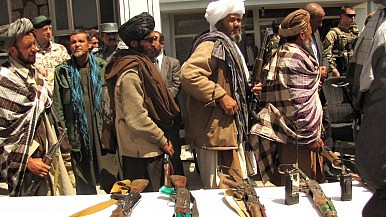
The Taliban’s announcement of a unilateral ceasefire is perhaps the most significant recent development in Afghanistan’s long-foundering peace efforts. Given the myriad spoilers and the potential of breakdown of discipline in the ranks, the significance of the ceasefire is not in whether it will hold; instead, it is in the politics of the move. The Taliban have long either declined to participate in peace talks or denied involvement in talks with the Afghan government when reports emerged. They deemed the Afghan government as not serious about peace and did not want their foot soldiers to see their leaders engaging with a government that they are fighting against.Modifying Situational Awareness: Perfect Knowledge and Precision Are Fantasy
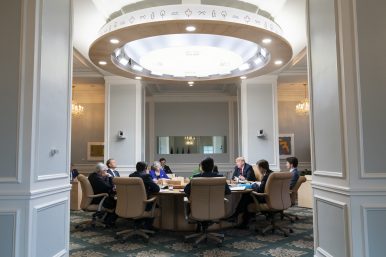
A West in Crisis, an East Rising? Comparing the G7 and the SCO Image Credit: White House A West in Crisis, an East Rising? Comparing the G7 and the SCO
While much of the world watched the tense G7 meeting in Charlevoix, Canada from June 8 to 9 and chattered about the rapidly approaching June 12 Singapore summit between U.S. President Donald Trump and North Korean leader Kim Jong-un, in Qingdao, China on June 9-10 the leaders of eight other nations also gathered in concert. The Shanghai Cooperation Organization (SCO) annual summit returned to China at the opening of a new chapter. Not only has the organization expanded — this summit was India and Pakistan’s first as full-fledged members — but the global order itself appears to be sliding from West to East. The slide may not be new, but the two summits side-by-side display the dissonance: a West breaking apart and an East consolidating.China’s Master Plan: A Global Military Threat
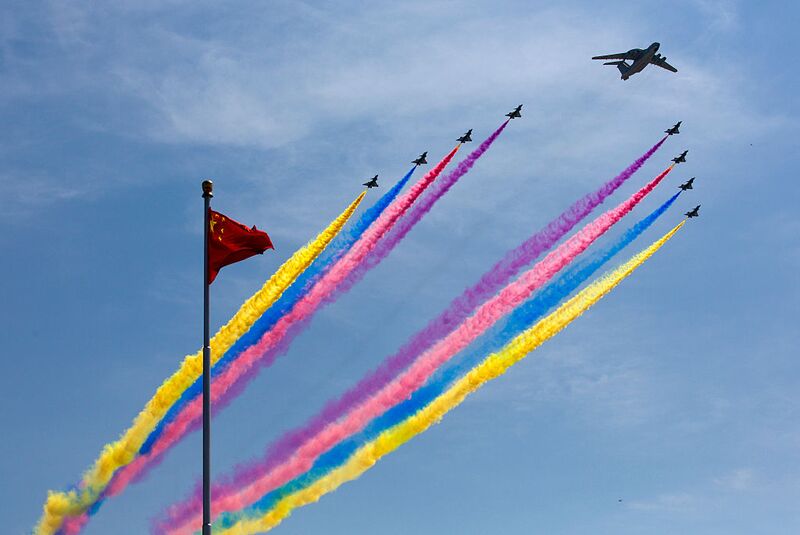
I wrote a column recently about how a longstanding assumption of America’s China policy -- that economic integration between the two countries is an unalloyed good -- has now been overtaken by events. But this isn’t the only area in which China’s rise is forcing a re-evaluation of old beliefs. Now, as the first in a series of columns on this phenomenon that Bloomberg Opinion will publish in the coming days, I'll delve into another issue with enormous implications for U.S.-China relations and American interests: the rise of China as a more globally oriented military power. For years, most experts believed that China’s military challenge to the U.S. was regional in nature -- that it was confined to the Western Pacific. After decades of tacitly free-riding on America’s global power-projection capabilities, however, Beijing now is seeking the capabilities that will allow it to project its own military power well outside its regional neighborhood.Why Xi and Putin think "the West is in free fall"
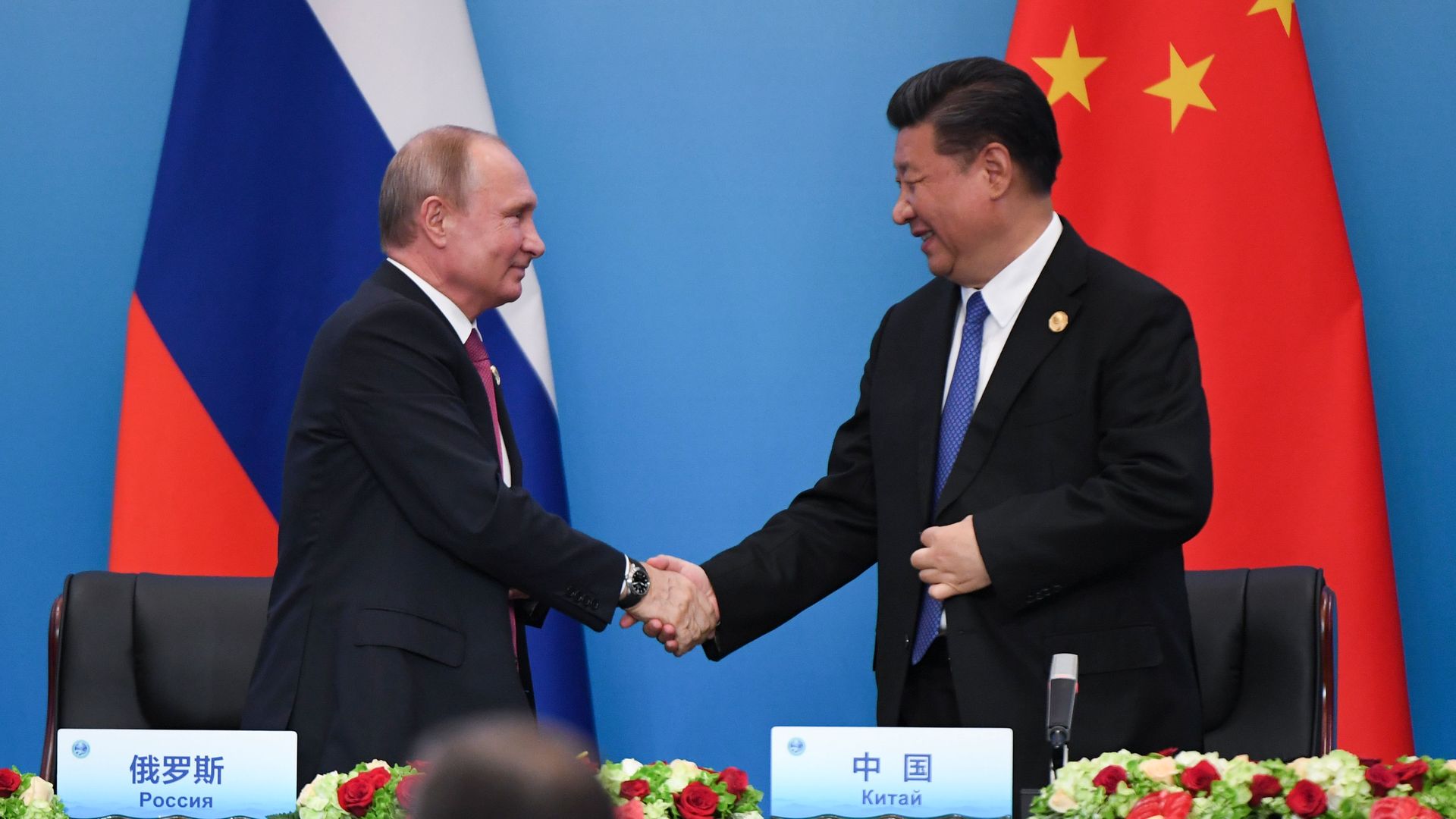
Chinese leader Xi Jinping and Russia's Vladimir Putin are strategizing how to reposition themselves for a new, more powerful future amid a rapid deterioration of the U.S.-led global order. What we're hearing: Xi and Putin, meeting Friday in Beijing and again yesterday in the city of Qingdao, don't appear to think they have the cachet — even combined — to create an entirely new system. Nor is it clear that at the moment they would want to trash the U.S.-led institutions that have anchored the global economy and political order since World War II.Red Flag River’ diversion project
China's Secret Story
Every year during the first week of June, the thoughts of millions turn towards China and more particularly the Tiananmen Square, where 29 years ago thousands of young students lost their lives …while China lost a chance to become a ‘normal’ State. Today the Middle Kingdom, under an ‘Emperor for life’, has become so powerful that very few dare to officially talk about ‘human rights’ and even less about the massacre of youngsters dreaming of freedom and democracy. A publication dealing with China, Global Voice recently explained: “At the time, the Chinese Red Cross estimated that 2,700 civilians were killed, but other sources point to a much higher toll. A confidential US government document, revealed in 2014, reported that a Chinese internal assessment estimated that 10,454 civilians had died. Recently, a different report written by the then-British ambassador to China was declassified; it quotes a source from China's State Council who said that the minimum estimation of civilians killed is 10,000.”Report describes Dubai real estate as money-laundering haven
Iran envisions currency arrangements with China
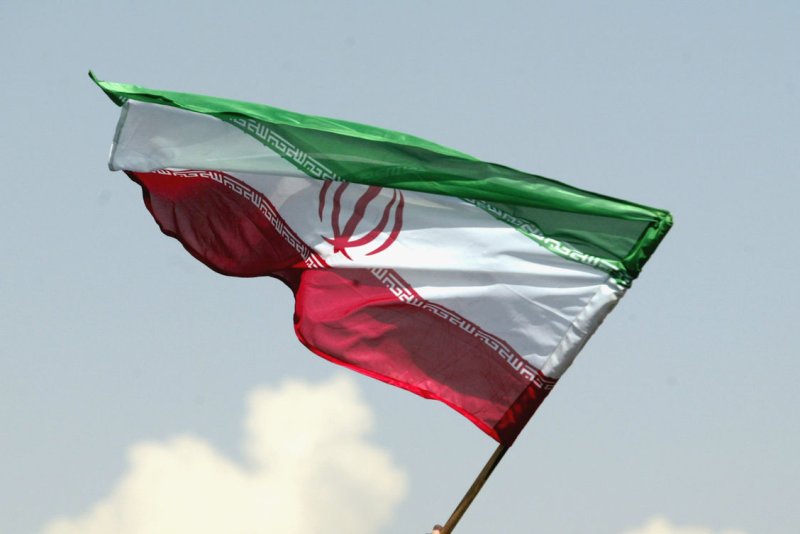
June 11 (UPI) -- Facing U.S. pressures on its banking channels, Iran's economic minister said agreements were made with China to use their national currencies for trade. Iran's banking channels could be impacted by the sanctions pressures that would leave the country "battling to keep its economy alive," U.S. Secretary of State Mike Pompeo has said. In an effort to facilitate economic openness, the Central Bank of Iran in Aprilopened a line of credit with Turkey that could give Iran a way to continue trading. And in late May, after U.S. President Donald Trump pulled his country out of the multilateral nuclear deal, the European Union introduced a blocking statute to protect companies from U.S. sanctions and opened the door to working directly with Iran's Central Bank.Hypersonic weapons race
Chinese researchers have been publishing technical papers at a blistering pace about their fundamental research into hypersonic flight, loosely defined as maneuvering in the atmosphere at speeds above 6,000 kph. Flying faster than Mach 5 could be a handy way to travel, but for the leaders in this field — China, Russia and the U.S. — the emphasis has shifted to weapons. At least some of China’s research appears to be headed in that direction, based on references to missiles in the published papers, although my inquiries to the Chinese Embassy’s press office about the purpose of this research went unreturned. The Pentagon reported to Congress earlier this year that China has conducted 20 times as many hypersonic flight tests as the U.S. The most noteworthy recent test was in November, when China flew a new hypersonic missile, the DF-17, capable of flying 1,800 to 2,500 kilometers, as first reported by The Diplomat website. What the US and North Korea Can Learn From Singapore
Back in November 2015, Chinese President Xi Jinping met with then-Taiwanese president Ma Ying-jeou in Singapore, the first meeting between Chinese and Taiwanese leaders since the end of China’s civil war in 1949. While Singapore was happy to facilitate the meeting, former head of the Singaporean Ministry of Foreign Affairs and veteran diplomat, Ambassador Bilahari Kausikan, was quick to remind his many followers on Facebook :“We only provide the venue. Do not ascribe any larger role to us.” The upcoming meeting between U.S. President Donald Trump and North Korean leader Kim Jong-un is no different.Trump Tries to Destroy the West
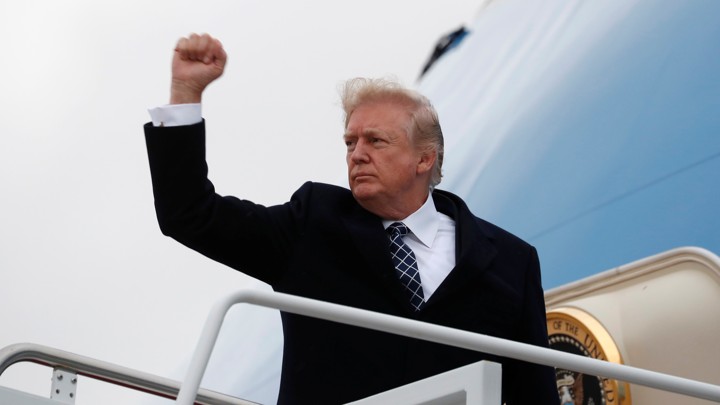
The alliance between the United States and Western Europe has accomplished great things. It won two world wars in the first half of the 20th century. Then it expanded to include its former enemies and went on to win the Cold War, help spread democracy and build the highest living standards the world has ever known. President Trump is trying to destroy that alliance. Is that how he thinks about it? Who knows. It’s impossible to get inside his head and divine his strategic goals, if he even has long-term goals. But put it this way: If a president of the United States were to sketch out a secret, detailed plan to break up the Atlantic alliance, that plan would bear a striking resemblance to Trump’s behavior.Berlin Worried about Losing Trump's Trade War
A Senior White House Official Defines the Trump Doctrine: ‘We’re America, Bitch’
Many of Donald Trump’s critics find it difficult to ascribe to a president they consider to be both subliterate and historically insensate a foreign-policy doctrine that approaches coherence. A Trump Doctrine would require evidence of Trump Thought, and proof of such thinking, the argument goes, is scant. This view is informed in part by feelings of condescension, but it is not meritless. Barack Obama, whose foreign-policy doctrine I studied in depth, was cerebral to a fault; the man who succeeded him is perhaps the most glandular president in American history. Unlike Obama, Trump possesses no ability to explain anything resembling a foreign-policy philosophy. But this does not mean that he is without ideas. 5 Things You Need To Know About The IMF And Climate Change
The Rise Of Corporate Giants
New Russian Media Venture Wants to Wage ‘Information War’ in Washington, D.C.
HOW NATO DEFENDS AGAINST THE DARK SIDE OF THE WEB
"OOPS, YOUR FILES have been encrypted!" This was the chilling message that greeted hundreds of thousands of computer users last summer. The WannaCry ransomwareattack brought production to a standstill at Renault factories across France, put lives at risk by attacking hospitals in the UK, and cost companies around the world billions of dollars in lost revenue. The digital revolution has transformed our lives for the better. But this revolution has a dark side: Cyberattacks are now a part of our daily lives. The very nature of these attacks poses a challenge. It is often difficult to know who has attacked you, or even whether you have been attacked at all. And the culprits vary from governments to criminal gangs to terrorist groups and lone individuals. Nowhere is the fog of war thicker than in cyberspace.Soldiers are being forced to recognize one of their greatest vulnerabilities on the battlefield
As Army soldiers in Europe await the expected arrival of a new electronic warfare planning tool known as Raven Claw, several other recent technology upgrades are forcing better awareness of one of their own, greatest vulnerabilities: spectrum. Certainly, soldiers understand the potential for EW. Raven Claw, for one will allow them to manage the electromagnetic environment on the move and without network connection. And its Versatile Radio Observation and Direction capability, or VROD, and related VMAX “search and attack” function mean warfighters can detect and target potential electromagnetic interference threats.THE DEATH OF THE CYBER GENERALIST
Net Neutrality: To Deal or Not to Deal
When Will Google Defend Democracy?
COUNTERING HYBRID THREATS IN THE MARITIME ENVIRONMENT
WHITHER THE HOVER TANK? WHY WE CAN’T PREDICT THE FUTURE OF WARFARE.
What’s the future of warfare? If you’re a science fiction fan (or just like thinking crazy thoughts) you’d say it’s robots, lasers, and hoverboards transponding through space and time to deliver lethal effects on behalf of a government. Or is it? There are often two schools of thought. One side looks at the possibilities based on current technologies and ways of war extrapolated to logical conclusions. The other side usually addresses the current and projected inhibitors to change, adhering more to what is probable than what is possible. As can be expected of two classically trained military officers, even of different nations, the authors acknowledge and do not disagree with the Clausewitzian thought that the enduring nature of war is a clash of wills between two of more groups of politically motivated human beings. What the authors address in this essay is the ever-shifting character of war—the changing tools and techniques employed on the battlefield to achieve success in that clash of wills.