A number of hydropower projects on the Chinese side of River Brahmaputra are a cause of concern for India. While some of these worries may be genuine, scholars argue that others stemming from the fear of a decline in water flow are unfounded.The Profession of Arms: A Guide for Young Army Officers
It takes courage, especially for a young officer, to check a man met on the road for not saluting properly or for slovenly appearance, but, every time he does, it adds to his stock of moral courage, and whatever the soldier may say, he has respect for the officer who does pull him up.
Read Document →The Dragon's Teeth: Assessing China's Military Modernization
PLA has focused on modernising its capabilities across all warfare domains to achieve these goals. This includes land, air, and maritime operations, nuclear, space, counter-space, electronic warfare and cyberspace operations, aiming to become a fully integrated joint force.
Read Document →Transforming the PLA: A Decade of reorganisation from SSF to ISF
PRC has engaged in a sustained and broad effort to transform the PLA from an infantry-heavy, low-technology, ground forces-centric military into a high-technology, networked force with an increasing emphasis on joint operations and naval and air power projection.
Read Document →Eyes without Borders: Exploring the World of Open Source Intelligence (OSINT) in the Digital Age
Open Source Intelligence (OSINT) is gaining prominence with the rise of social media, the digital society and the vast growth of publicly and commercially available information (PAI and CAI).
Read Document →
The PLA’s Developing Cyber Warfare Capabilities and India's Options
Informationised warfare blurs the lines between peacetime and wartime. A nation in the information age cannot wait for the hostilities to break out to collect intelligence, carryout influence operations, develop antisatellite systems or design computer software weapons.
Read Document →
Galwan and After
Why did China did this when he is under tremendous pressure in all fronts, is this China's salami slice tactics being progressed rigorously, what will be new Rules of Engagement, what will be escalatory control mechanism, who has taken this decision, will there be some pressure put by China in India's North-East through insurgency.
Read Document →
India’s Joint Doctrine for Cyberspace Operations: A Critical Review
Chief of Defence Staff (CDS) General Anil Chauhan and Secretary, Department of Military Affairs, formally released declassified versions of the Joint Doctrines for Cyberspace Operations during the Chiefs of Staff Committee meeting in New Delhi.
Read Document →
Know your Enemy General(now Field Marshal) Syed Aseem Munir
Gen SA Munir's position in the hierarchy of Pakistan was not very comfortable. The state of economy, insurgency in Pakhtoonistan and Balochistan, attack on the Jaffar Express, constant protests by supporters of Imran Khan's supporters inside and outside of parliament.
Read Document →
Decoding Operation SINDOOR: Key Aspects and Implications
Precision strikes were carried out on nine sites—four in Pakistan and five in PoK—linked to anti-India terrorist groups such as the LeT, JeM and the Hizbul Mujahideen. The targeted sites included Muridke (LeT headquarters) and Bahawalpur (JeM headquarters).
Read Document →
Chinese Cyber Exploitation in India's Power Grid - Is There a linkage to Mumbai Power Outage?
The New York Times (NYT), based on analysis by a U.S. based private intelligence firm Recorded Future, reported that a Chinese entity penetrated India’s power grid at multiple load dispatch points. Chinese malware intruded into the control systems that manage electric supply across India, along with a high-voltage transmission substation and a coal-fired power plant
Read Document →17 August 2020
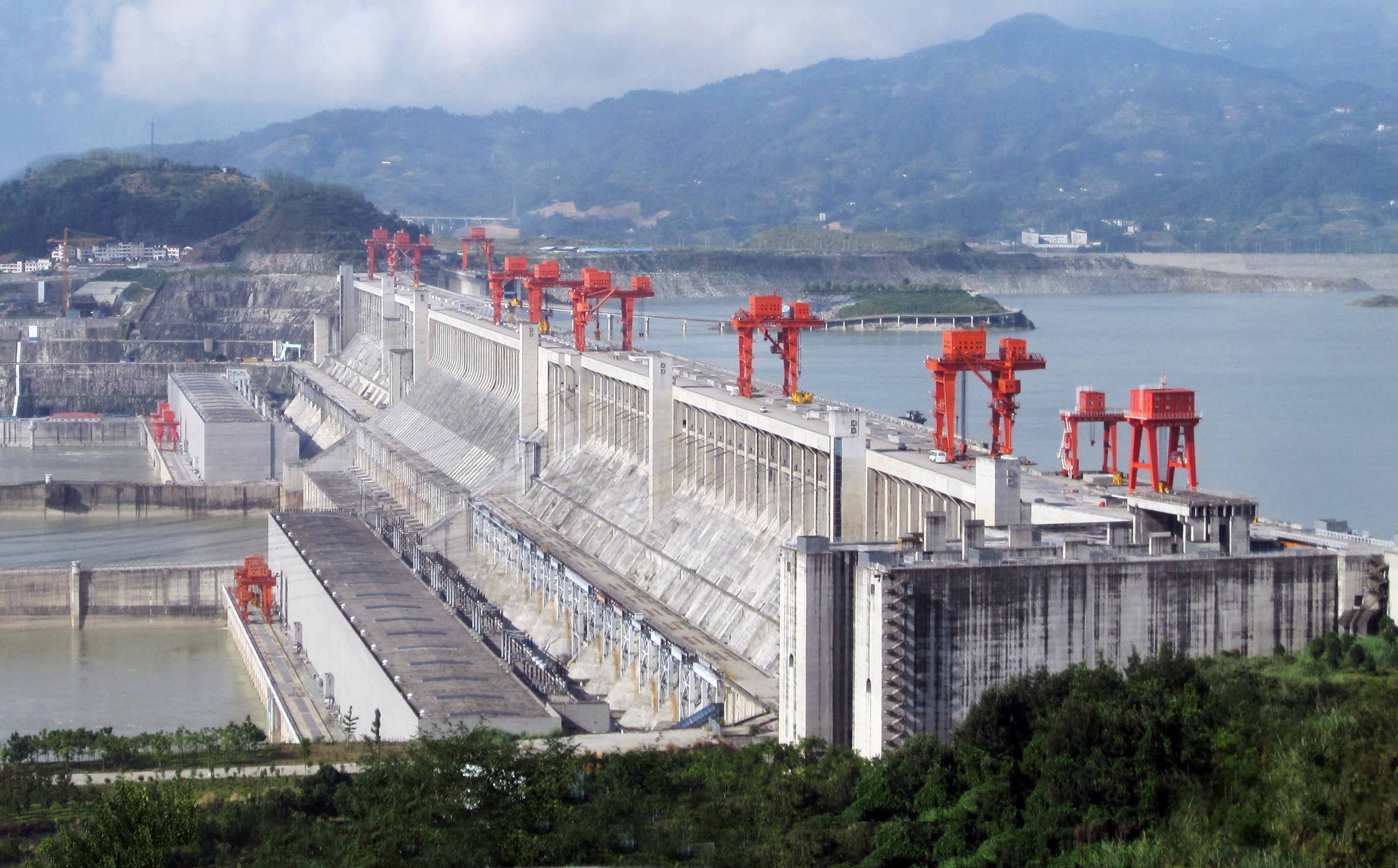
China’s Hydropower Projects on River Brahmaputra
A number of hydropower projects on the Chinese side of River Brahmaputra are a cause of concern for India. While some of these worries may be genuine, scholars argue that others stemming from the fear of a decline in water flow are unfounded.Exclusive: India data-curb plan 'anathema', U.S. tech giants plan pushback
Pakistan under the China Model of Governance
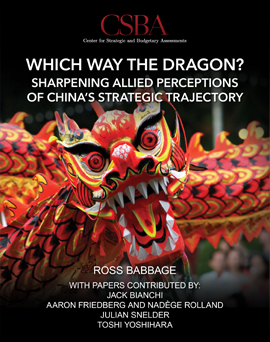
Which Way the Dragon? Sharpening Allied Perceptions of China’s Strategic Trajectory
Why is the Trump administration banning TikTok and WeChat?
FIVE CRISES AROUND EUROPE NOT TO BE FORGOTTEN DESPITE COVID-19
The New Silk Road and the Maghreb Region
Is China Beating the U.S. to AI Supremacy?
Chinese Hackers Have Pillaged Taiwan's Semiconductor Industry
Violence without Borders: The Internationalization of Crime and Conflict
Rise and Fall? The Rise and Fall of ISIS in Libya
This monograph places events in Libya since 2011 into their historical and social context and argues a form of radical Islamism, linked to long-standing national defiance of outside control, remains a factor even after the defeat of the Islamic State of Iraq and Syria (ISIS). This entrenched radicalism means extremist Islamist groups may still make a renewed bid for power until the current civil war is resolved. At the time of this writing, the military campaign by the Libyan National Army has stalled outside Tripoli. Now is the time for the United States and the wider international community to step up and help Libya transition to a unitary government with conventional elections. If this fails to happen and ISIS is able to exploit the current chaos, the hard-won victory over the group in Libya may yet turn out to have been illusory.Public-Private Collaboration to Counter the Use of the Internet for Terrorist Purposes
The Role of the Internet in Facilitating Violent Extremism: Insights from Former Right-Wing Extremists
The Integrated Review: Harnessing the UK’s Financial Capabilities in Support of National SecurityTom Keatinge
Which Way the Dragon? Sharpening Allied Perceptions of China’s Strategic Trajectory
Belarus beyond 2020: Implications for Russia and the West
STAND BY ME! THE SINO-RUSSIAN NORMATIVE PARTNERSHIP IN ACTION
It has become commonplace to describe the relationship between China and Russia as ‘a marriage of convenience’,1 in particular in the aftermath of the annexation of Crimea in 2014. However, this popular metaphor hides very different – even contradictory – interpretations of the nature and future of the relationship. Perhaps depending on one’s take on arranged marriages, the deepening relationship between these two states is seen as ‘stable and successful’2 and ‘durable’,3 or on the contrary, as a ‘mere’ convenient arrangement doomed to be a temporary solution.4 It seems that fuzzy and often misunderstood marriage allegories bring more confusion than clarity to understanding and explaining complex relations between states. Shared norms and worldview would certainly indicate a steady and long-term arrangement whatever the marriage metaphor used.Biden Plans to Make Harris as Powerful a Veep as He Was Under Obama
Why Belarus Is Not Ukraine
Scenes in Belarus of protesters erecting crude barricades while fending off the attacks of heavily armored riot police have evoked memories of another uprising in the borderlands between Russia and the European Union: the 2014 Ukrainian revolution that erupted in Kyiv’s Maidan square, an uprising that drove out the country’s kleptocrat president and ushered in a new, if complicated, era in Ukraine. The Internet of Bodies Is Here: Tackling new challenges of technology governance
Recent technological advancements have ushered in a new era of the “internet of bodies” (IoB), with an unprecedented number of connected devices and sensors being affixed to or even implanted and ingested into the human body.