by Tunku Varadarajan
The Profession of Arms: A Guide for Young Army Officers
It takes courage, especially for a young officer, to check a man met on the road for not saluting properly or for slovenly appearance, but, every time he does, it adds to his stock of moral courage, and whatever the soldier may say, he has respect for the officer who does pull him up.
Read Document →The Dragon's Teeth: Assessing China's Military Modernization
PLA has focused on modernising its capabilities across all warfare domains to achieve these goals. This includes land, air, and maritime operations, nuclear, space, counter-space, electronic warfare and cyberspace operations, aiming to become a fully integrated joint force.
Read Document →Transforming the PLA: A Decade of reorganisation from SSF to ISF
PRC has engaged in a sustained and broad effort to transform the PLA from an infantry-heavy, low-technology, ground forces-centric military into a high-technology, networked force with an increasing emphasis on joint operations and naval and air power projection.
Read Document →Eyes without Borders: Exploring the World of Open Source Intelligence (OSINT) in the Digital Age
Open Source Intelligence (OSINT) is gaining prominence with the rise of social media, the digital society and the vast growth of publicly and commercially available information (PAI and CAI).
Read Document →
The PLA’s Developing Cyber Warfare Capabilities and India's Options
Informationised warfare blurs the lines between peacetime and wartime. A nation in the information age cannot wait for the hostilities to break out to collect intelligence, carryout influence operations, develop antisatellite systems or design computer software weapons.
Read Document →
Galwan and After
Why did China did this when he is under tremendous pressure in all fronts, is this China's salami slice tactics being progressed rigorously, what will be new Rules of Engagement, what will be escalatory control mechanism, who has taken this decision, will there be some pressure put by China in India's North-East through insurgency.
Read Document →
India’s Joint Doctrine for Cyberspace Operations: A Critical Review
Chief of Defence Staff (CDS) General Anil Chauhan and Secretary, Department of Military Affairs, formally released declassified versions of the Joint Doctrines for Cyberspace Operations during the Chiefs of Staff Committee meeting in New Delhi.
Read Document →
Know your Enemy General(now Field Marshal) Syed Aseem Munir
Gen SA Munir's position in the hierarchy of Pakistan was not very comfortable. The state of economy, insurgency in Pakhtoonistan and Balochistan, attack on the Jaffar Express, constant protests by supporters of Imran Khan's supporters inside and outside of parliament.
Read Document →
Decoding Operation SINDOOR: Key Aspects and Implications
Precision strikes were carried out on nine sites—four in Pakistan and five in PoK—linked to anti-India terrorist groups such as the LeT, JeM and the Hizbul Mujahideen. The targeted sites included Muridke (LeT headquarters) and Bahawalpur (JeM headquarters).
Read Document →
Chinese Cyber Exploitation in India's Power Grid - Is There a linkage to Mumbai Power Outage?
The New York Times (NYT), based on analysis by a U.S. based private intelligence firm Recorded Future, reported that a Chinese entity penetrated India’s power grid at multiple load dispatch points. Chinese malware intruded into the control systems that manage electric supply across India, along with a high-voltage transmission substation and a coal-fired power plant
Read Document →8 June 2017
*** Modi is Pretty Impressive, says Francis Fukuyama
by Tunku Varadarajan
*** Sino-Indian Nuclear Rivalry: Glacially Declassified
** ‘Last Secret’ of 1967 War: Israel’s Doomsday Plan for Nuclear Display
Israeli armored forces advanced against Egyptian troops at the start of the Arab-Israeli war of 1967. ** CYBER TERRORISM AND BIOTECHNOLOGY WHEN ISIS MEETS CRISPR
Wrong man on watch and SPP
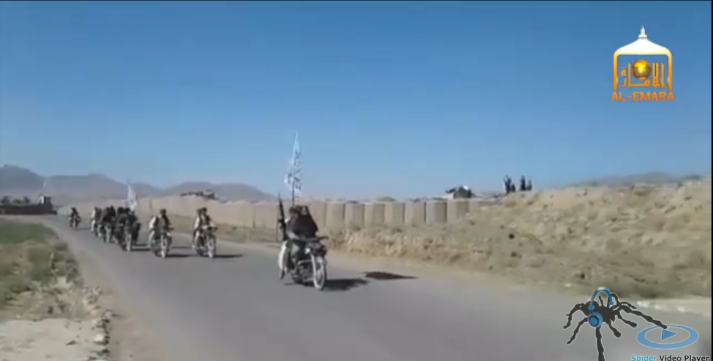
The Ministry of Defence is in desperately deep trouble for all sorts of reasons, including the most basic, namely, that the Government of India simply doesn’t have the financial resources to commit to large military acquisition and modernization programs. Especially at a time when the economic indices are slipping on all fronts from the GDP growth rate (down to 6.1%) to a stalled manufacturing sector. The general lethargy afflicting the economy means that, for want of funds, the Finance Minister Arun Jaitley has to nix the burgeoning demands of the Defence Minister, Arun Jaitley. One can see the dilemma Jaitley, holding clashing ministerial posts, finds himself in. He cannot create wealth out of stuttering economic progress and he can’t leave the requirements of the armed services hanging. And he can’t disappoint prime minister Narendra Modi for whom he is a harbinger of good times, and a mascot; Jaitley having crucially sided with Modi at the Goa meet when most of the BJP led by LK Advani was tilting towards Sushma Swaraj as the PM candidate heading into the 2014 elections.Afghan Taliban parades forces after capturing district in Ghazni
Nepal Joined the Belt and Road. What Does That Mean for India?
Rohingya and the ‘Paper Tiger’ Insurgency
Lessons From The East: Why Structural Reform Matters
China will need to find a balance between providing transitory protections to nonviable firms to maintain stability and liberalising entry into sectors in which the country has a comparative advantage.China Makes a Power Play in Brazil and Argentina
Does China Now Have a Viable Nuclear Triad?
What China’s Aircraft Carrier Means for its Naval Defence Capabilities
New Slick Road: Europe Doesn't Buy China's Free-Trade Claims
New Details on U.S. Strategy in Iraq and Syria
Meeting the Russian Hybrid Challenge: A Comprehensive Strategic Framework Main content
Israel Planned An Atomic Detonation In The Egyptian Sinai If Their Political/Military Leadership Felt The Arabs Might Prevail In The 1967 Six-Day War; Might North Korea’s Kim Jong-Un Plan A Similar Atomic Operation — Should He Believe U.S./South Korean Forces Were About To Defeat His Military?
Why do terrorist attacks succeed?
OBJECTIVE METROPOLIS: THE FUTURE OF DENSE URBAN OPERATIONAL ENVIRONMENTS
As the global population evolves toward a denser, more urban-centric environment, the battlefield landscape will likely follow suit. Where the US armed forces of the twenty-first century once militarily dominated the rural landscapes of Afghanistan and the deserts of Iraq, the fight for military objectives will increasingly focus on population centers in the decades to come. Of course, urban operations are not new to the US soldier or Marine. Brave Americans have fought valiantly from the Battle of Hue City in Vietnam to Mosul in the ongoing fight against ISIL. However, the cities of tomorrow will present new challenges where titanic populations and infrastructure density will combine with near-instantaneous flow of information to create a leviathan of complexity for the armed forces.Strategic Futures and Intelligence: The Head and Heart of ‘Hybrid Defence’ Providing Tangible Meaning and Ways Forward
Operational Planning as a State of Mind, Not a Starting Point
Private defense companies are here to stay – what does that mean for national security?
World heading towards 'permanent cyber war', France warns
Cyber Protection Teams Assigned To THAAD In South Korea
Our Analog Future: Experts Call for Preserving Copper, Pneumatic Systems as Hedge for Cyber Risk
The Power of an Exploit
Patching vulnerabilities is something everyone with a technology footprint deals with on one level or another whether they realize it or not. Consumers patch vulnerabilities all the time even if they don’t realize that’s what they are doing. Updating a phone to the latest version of Android or iOS, for instance, often includes fixes for some underlying vulnerabilities. Choosing to restart a smart TV or an Amazon FireTV to apply updates may also be applying patches to security vulnerabilities.