The Profession of Arms: A Guide for Young Army Officers
It takes courage, especially for a young officer, to check a man met on the road for not saluting properly or for slovenly appearance, but, every time he does, it adds to his stock of moral courage, and whatever the soldier may say, he has respect for the officer who does pull him up.
Read Document →The Dragon's Teeth: Assessing China's Military Modernization
PLA has focused on modernising its capabilities across all warfare domains to achieve these goals. This includes land, air, and maritime operations, nuclear, space, counter-space, electronic warfare and cyberspace operations, aiming to become a fully integrated joint force.
Read Document →Transforming the PLA: A Decade of reorganisation from SSF to ISF
PRC has engaged in a sustained and broad effort to transform the PLA from an infantry-heavy, low-technology, ground forces-centric military into a high-technology, networked force with an increasing emphasis on joint operations and naval and air power projection.
Read Document →Eyes without Borders: Exploring the World of Open Source Intelligence (OSINT) in the Digital Age
Open Source Intelligence (OSINT) is gaining prominence with the rise of social media, the digital society and the vast growth of publicly and commercially available information (PAI and CAI).
Read Document →
The PLA’s Developing Cyber Warfare Capabilities and India's Options
Informationised warfare blurs the lines between peacetime and wartime. A nation in the information age cannot wait for the hostilities to break out to collect intelligence, carryout influence operations, develop antisatellite systems or design computer software weapons.
Read Document →
Galwan and After
Why did China did this when he is under tremendous pressure in all fronts, is this China's salami slice tactics being progressed rigorously, what will be new Rules of Engagement, what will be escalatory control mechanism, who has taken this decision, will there be some pressure put by China in India's North-East through insurgency.
Read Document →
India’s Joint Doctrine for Cyberspace Operations: A Critical Review
Chief of Defence Staff (CDS) General Anil Chauhan and Secretary, Department of Military Affairs, formally released declassified versions of the Joint Doctrines for Cyberspace Operations during the Chiefs of Staff Committee meeting in New Delhi.
Read Document →
Know your Enemy General(now Field Marshal) Syed Aseem Munir
Gen SA Munir's position in the hierarchy of Pakistan was not very comfortable. The state of economy, insurgency in Pakhtoonistan and Balochistan, attack on the Jaffar Express, constant protests by supporters of Imran Khan's supporters inside and outside of parliament.
Read Document →
Decoding Operation SINDOOR: Key Aspects and Implications
Precision strikes were carried out on nine sites—four in Pakistan and five in PoK—linked to anti-India terrorist groups such as the LeT, JeM and the Hizbul Mujahideen. The targeted sites included Muridke (LeT headquarters) and Bahawalpur (JeM headquarters).
Read Document →
Chinese Cyber Exploitation in India's Power Grid - Is There a linkage to Mumbai Power Outage?
The New York Times (NYT), based on analysis by a U.S. based private intelligence firm Recorded Future, reported that a Chinese entity penetrated India’s power grid at multiple load dispatch points. Chinese malware intruded into the control systems that manage electric supply across India, along with a high-voltage transmission substation and a coal-fired power plant
Read Document →26 December 2019
CDS was needed. But Modi govt also creating Department of Military Affairs is a big bonus
Inside the Taliban’s Afghanistan, violence remains the path to power
Huawei releases report dispelling false claims against the embattled company
Why the US-China Trade War Could Re-escalate
WASHINGTON, DC – After nearly 18 months of tit-for-tat tariff increases, the United States and China have reached a “phase one” agreement to start de-escalating their trade war. As part of the deal, US President Donald Trump canceled further tariff increases on Chinese goods that had been scheduled to take effect on December 15, and halved a 15% tariff on $120 billion worth of imports from China. As for China, it shelved its planned retaliatory measures and committed to import some $50 billion worth of US agricultural products in each of the next two years.Power of Siberia or power of China?
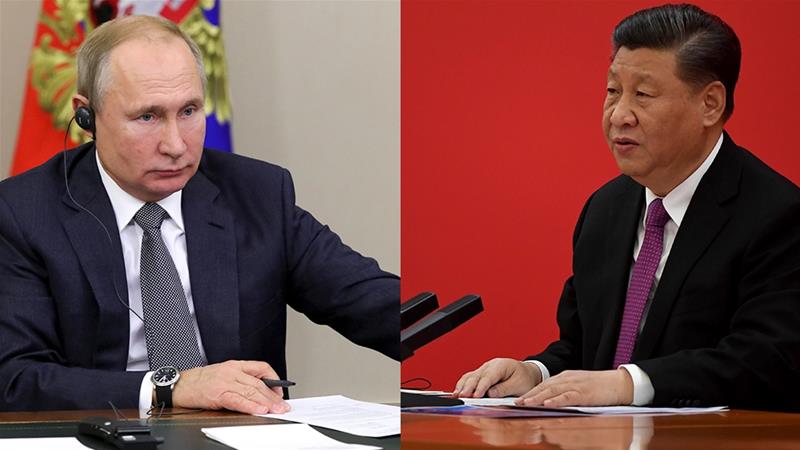
On December 2, China's Chairman Xi Jinping looked very pleased as he presided over an elaborate ceremony in Beijing inaugurating a new cross-border pipeline, the Power of Siberia, supplying natural gas from Russia.Trump Will Make China Great Again
We Asked a Military Expert to Fight a U.S.-China War. We Wished We Didn't.
Is China Beating America to AI Supremacy?
As the US, China, and Russia build new nuclear weapons systems, how will AI be built in?
What do we know (so far) about China’s second aircraft carrier?
A New Approach for the UN to Stabilise the DR Congo
The Security Council has an opening to rethink its approach to DR Congo with this month’s mandate renewal of the UN peacekeeping mission. The council should prioritise local conflict resolution and bolstering President Tshisekedi’s efforts to improve regional relations to combat over 100 armed groups ravaging the east.North Korea and the Threat of ICBMs
60 Years Later, a Cold War Scandal Still Holds Lessons for the United Nations
Like many classic mystery stories, the Povl Bang-Jensen affair involved an agitated dog. The name and breed of the animal are not recorded. But we know that at roughly 8 a.m. on Thanksgiving Day, Nov. 26, 1959, Paul Carahalios of Bayside, Queens, took his dog for its regular morning walk. Temperature records suggest that it was chilly but tolerable as they made their way as usual through Alley Pond Park, a stretch of reclaimed marshland on the north shore of Long Island where New York City meets the suburbs. Yet it soon became clear that something was amiss.The United States Needs a Strategy for Artificial Intelligence
In the coming years, artificial intelligence will dramatically affect every aspect of human life. AI—the technologies that simulate intelligent behavior in machines—will change how we process, understand, and analyze information; it will make some jobs obsolete, transform most others, and create whole new industries; it will change how we teach, grow our food, and treat our sick. The technology will also change how we wage war. For all of these reasons, leadership in AI, more than any other emerging technology, will confer economic, political, and military strength in this century—and that is why it is essential for the United States to get it right.The United States Can Offer the People of Lebanon and Iraq Something Tehran Can’t
Protests and upheaval are sweeping Iraq and Lebanon. The wrath of demonstrators in the streets is being directed against their own political classes and at Iran’s government. Citizens in Lebanon and Iraq are not only fed up with economic mismanagement, ineffective governance, and entrenched corruption of political elites at home, but they also directly link their dismal situation to Tehran’s corrupting influence and the Islamic Revolutionary Guard Corps’s exploitation of their countries to fund and arm militias unaccountable to their countries.The Syrian Civil War Might Be Ending, but the Crisis Will Live On
Toward a Privileged EU-UK Partnership
The Crisis of 2020
NEW HAVEN – Predicting the next crisis – financial or economic – is a fool’s game. Yes, every crisis has its hero who correctly warned of what was about to come. And, by definition, the hero was ignored (hence the crisis). But the record of modern forecasting contains a note of caution: those who correctly predict a crisis rarely get it right again.
King Boris’s First Test
Trump Created The Space Force. Here's What It Will Actually Do
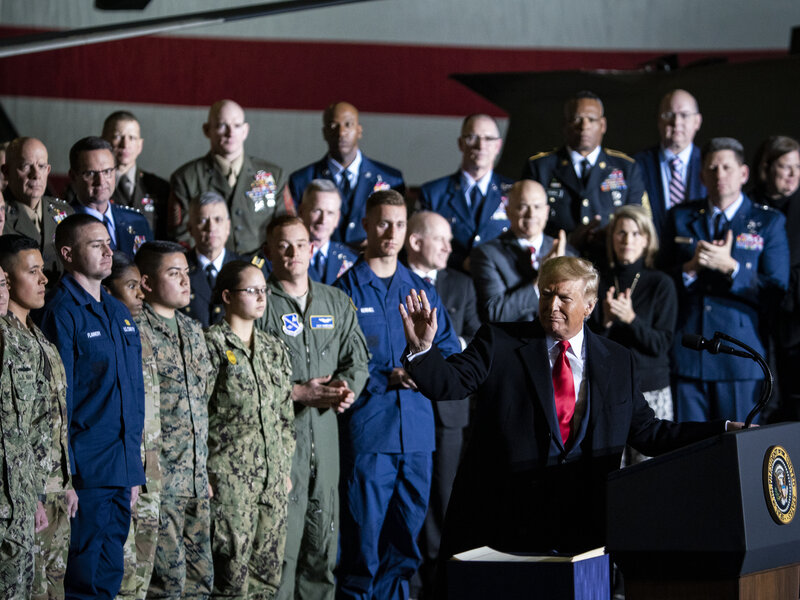
President Donald Trump signed the National Defense Authorization Act on Friday, notably creating the new Space Force.Bloomberg/Bloomberg via Getty ImagesThe Demolition of U.S. Diplomacy
Death of efforts to regulate autonomous weapons has been greatly exaggerated
Arms control has seen better days. In August, the United States formally withdrew from the Intermediate-Range Nuclear Forces Treaty. The Open Skies Treaty will likely soon follow suit. There are doubts as to whether the New Strategic Arms Reduction Treaty will be renewed before it expires in February 2021, as well as concerns over the future of the Nuclear Non-Proliferation Treaty. “The painstakingly constructed arms control regime is fraying,” argued UN Secretary-General, Antรณnio Guterres, in a recent statement.Infographic Of The Day: Mapping A Changing Arctic

2020: The Futility Of Predictions - Understanding The Risk
How Your Phone Betrays Democracy
Escaping the Inequality-Data Dark Ages
5G, AI, and big data: We’re building a new cognitive infrastructure and don’t even know it
Shaping a 21st Century C2/ISR Infrastructure: The Emergence of C312/22/2019
Sergeant Silicon: Lessons From An Army Cyber NCO
As old-school Sergeant Rock types give way to NCOs with advanced degrees, ARSOUTH Command Sgt. Maj. William Rinehart is helping build up both US and allied cyber forces.Who’ll Fix EW? Task Force Gropes For Answers
Russian and Chinese jammers could cripple US radio, radar, and GPS. The Pentagon's still wrestling with who should fix that, let alone how.