- He is a two-time Olympic champion, five-time World champion, as well as a six-time All England champion.
- He won Malaysia open in April, 2017 by defeating Lee Chong Wei in straight sets to complete winning all the major world titles available in the world of badminton.
- He is the first and only player to complete the “Super Grand Slam” by the age of 28, which includes all nine major titles in the international badminton.
- Dan was nicknamed “Super Dan” by his fans for his amazing achievements including 5 gold and a silver in World Championships, 2 gold medal in badminton World Cup, 5 gold and 2 bronze medal in Thomas Cup, 3 gold medal in Asian Games, 3 gold medal in Asian Championships and the title of Hong Kong East Asian Games in 2009.
- He is the only badminton player in history to win the Olympic gold medal twice consecutively in 2008 Beijing Olympics and 2012 London Olympics.
The Profession of Arms: A Guide for Young Army Officers
It takes courage, especially for a young officer, to check a man met on the road for not saluting properly or for slovenly appearance, but, every time he does, it adds to his stock of moral courage, and whatever the soldier may say, he has respect for the officer who does pull him up.
Read Document →The Dragon's Teeth: Assessing China's Military Modernization
PLA has focused on modernising its capabilities across all warfare domains to achieve these goals. This includes land, air, and maritime operations, nuclear, space, counter-space, electronic warfare and cyberspace operations, aiming to become a fully integrated joint force.
Read Document →Transforming the PLA: A Decade of reorganisation from SSF to ISF
PRC has engaged in a sustained and broad effort to transform the PLA from an infantry-heavy, low-technology, ground forces-centric military into a high-technology, networked force with an increasing emphasis on joint operations and naval and air power projection.
Read Document →Eyes without Borders: Exploring the World of Open Source Intelligence (OSINT) in the Digital Age
Open Source Intelligence (OSINT) is gaining prominence with the rise of social media, the digital society and the vast growth of publicly and commercially available information (PAI and CAI).
Read Document →
The PLA’s Developing Cyber Warfare Capabilities and India's Options
Informationised warfare blurs the lines between peacetime and wartime. A nation in the information age cannot wait for the hostilities to break out to collect intelligence, carryout influence operations, develop antisatellite systems or design computer software weapons.
Read Document →
Galwan and After
Why did China did this when he is under tremendous pressure in all fronts, is this China's salami slice tactics being progressed rigorously, what will be new Rules of Engagement, what will be escalatory control mechanism, who has taken this decision, will there be some pressure put by China in India's North-East through insurgency.
Read Document →
India’s Joint Doctrine for Cyberspace Operations: A Critical Review
Chief of Defence Staff (CDS) General Anil Chauhan and Secretary, Department of Military Affairs, formally released declassified versions of the Joint Doctrines for Cyberspace Operations during the Chiefs of Staff Committee meeting in New Delhi.
Read Document →
Know your Enemy General(now Field Marshal) Syed Aseem Munir
Gen SA Munir's position in the hierarchy of Pakistan was not very comfortable. The state of economy, insurgency in Pakhtoonistan and Balochistan, attack on the Jaffar Express, constant protests by supporters of Imran Khan's supporters inside and outside of parliament.
Read Document →
Decoding Operation SINDOOR: Key Aspects and Implications
Precision strikes were carried out on nine sites—four in Pakistan and five in PoK—linked to anti-India terrorist groups such as the LeT, JeM and the Hizbul Mujahideen. The targeted sites included Muridke (LeT headquarters) and Bahawalpur (JeM headquarters).
Read Document →
Chinese Cyber Exploitation in India's Power Grid - Is There a linkage to Mumbai Power Outage?
The New York Times (NYT), based on analysis by a U.S. based private intelligence firm Recorded Future, reported that a Chinese entity penetrated India’s power grid at multiple load dispatch points. Chinese malware intruded into the control systems that manage electric supply across India, along with a high-voltage transmission substation and a coal-fired power plant
Read Document →19 March 2018
Super Dan and Roger Federer
Blog has crossed six million visitors
| Entry | Pageviews |
|---|---|
United States
|
81677
|
Netherlands
|
73160
|
Ukraine
|
22461
|
France
|
8680
|
India
|
8148
|
Turkey
|
6420
|
Norway
|
4030
|
Poland
|
3119
|
Brazil
|
2851
|
Canada
|
2188
|
Indian banks with outdated software: Easy targets for fraud
The timing of the recent Punjab National Bank — Nirav Modi scam couldn’t have been worse. After just having committed to pay for a giant recapitalization package to bail out the banks’ for bad loans, the public trust in banking system is at its lowest. Some commentators have suggested big bang reforms like complete privatization of banking systems while others think we need better regulatory oversight. However, very few have focused on a crucial aspect that enabled the fraud: the bad, old tech used by the bank.Despite Four Major Exits, Telecom Is Still An Unstable Triopoly, Thanks To Jio
CENTCOM Confirms That Pakistan Is Still Covertly Supporting the Taliban in Afghanistan
U.S. Strategy in Afghanistan and Pakistan
Tell the Truth About Our Longest War
The nearly 17-year-old Afghanistan conflict, the longest war in United States history, will not end on the battlefield. It can be resolved only at the negotiating table. So, the bold offer last month from President Ashraf Ghani of Afghanistan to negotiate with the Taliban “without preconditions” is a welcome initiative. But it faces daunting obstacles. Mr. Ghani’s proposal envisions an outcome in which the Taliban would be recognized as a legitimate political party, prisoners would be released and United Nations sanctions against the group would be lifted. In exchange, the Taliban would have to recognize the Afghan government and respect the rule of law, including women’s rights.Mackinder and Mahan: The Chinese Geopolitics in South Asia
China’s Global Dreams Give Its Neighbors Nightmares
In 1904, Halford Mackinder theorized that whichever nation ruled the “World-Island” of Africa, Asia, and Europe would “command the world.” One hundred and nine years later, in Astana, Kazakhstan, Chinese Communist Party General Secretary Xi Jinping made his move, declaring himself the prophet and China the engine of Afro-Eurasian integration. The era of China’s Belt and Road Initiative (BRI) diplomacy had begun.Why China stopped making fissile material for nukes
How is China developing AI technology so much faster than the US?
China is rapidly developing and deploying technologies powered by artificial intelligence at a pace that will see the country soon eclipse the United States as the world’s leader in the technology. But how is China progressing so quickly? Speaking during a press briefing at the Center for a New American Security, announcing the organization’s new AI and national security Task Force, SparkCognition CEO Amir Husain explained that the pace of technological development is influenced by doctrine and governance, but also funding. “The Chinese are spending $150 billion [on AI] by 2030... hopefully we will spend more than the $1.2 billion we spend now,” Mr. Husain said.Chairman Xi, Chinese Idol
The Evolution of Chinese Nuclear Doctrine: Updating or Overhauling?
US accuses Russia of cyber-attack on energy sector and imposes new sanctions
In a first, U.S. blames Russia for cyber attacks on energy grid
Disarming the Weapons of Mass Distraction
Cold War Tactics Return to Britain
Trump has decided to remove national security adviser General H.R. McMaster - Washington Post
The U.K. Measures Its Response to the Poisoning of a Former Russian Spy
The poisoning of former Russian spy Sergey Skripal and his daughter Yulia has exacerbated the already tense relationship between the United Kingdom and Russia. As a result, British Prime Minister Theresa May said her government was reviewing a range of diplomatic, financial and economic responses to the likely Russia-backed poisoning, which took place in her country. And the United Kingdom requested that the Kremlin hand over materials and samples of its military grade nerve agent, Novichok, by the end of the day on March 13. Meanwhile, the Russian Foreign Ministry has denied receiving the request and in turn has asked for full access to the investigation and samples of the nerve agent, since Yulia is still a Russian citizen.Is DoD organized to combat Russian information operations?
Sen. Bill Nelson, D-Fla., noted how disorganized the Pentagon is when it comes to information warfare or information operations, during a March 13 Senate Armed Services Cyber Subcommittee hearing. He mentioned how cyber, electronic warfare and information operations are organized across different lines. “Why does this matter? Because Russia’s information operations troops conduct technical and cognitive operations in an integrated way,” he said. “We conduct information operations in support of commanders at the tactical level. Adversaries are coming at us at the strategic level in so-called peacetime.”Sweden’s plan to deter a Russian digital attack
This is the future of the internet
Since becoming commercially available, the internet has democratized information, enabled global communication and served as a platform for a variety of goods and services. In its infancy, policy-makers trod lightly in terms of regulating online activity to allow innovation and commerce to flourish. The overwhelming success of Google, Facebook, Amazon and other internet giants evolved in that unregulated space. But as the internet enters its adolescence, boundaries are being pushed and questions asked about the wide berth historically afforded to such companies. Policy-makers around the world, particularly in Europe and the US, are now waking up to the challenges posed by the internet giants. The allegations of Russian impropriety on platforms such as Facebook and Twitter during the 2016 US presidential election, for example, have ignited a global dialogue about the influence and power exercised by social media and other internet companies.Six Key Points from the EU Commission’s New Report on Disinformation
Today the EU Commission released the final report from the High Level Expert Group on Fake News, entitled “A Multi-Dimensional Approach to Disinformation”. The report, a document supported by a number of different stakeholders, including the largest technology companies, journalists, fact-checkers, academics and representatives from civil society has a number of important attributes including: important definitional work rejecting the use of the phrase ‘fake news’; an emphasis on freedom of expression as a fundamental right; a clear rejection of any attempt to censor content; a call for efforts to counter interference in elections; a commitment by tech platforms to share data; calls for investment in media and information literacy and comprehensive evaluations of these efforts; as well as cross-border research into the scale and impact of disinformation.Beware the Big Five
U.S. says Russia has mounted a campaign of cyber attacks over the past two years that targeted the U.S. power grid
There Are More and More Threats that Militaries Can’t Stop. People’s Forces Can Help
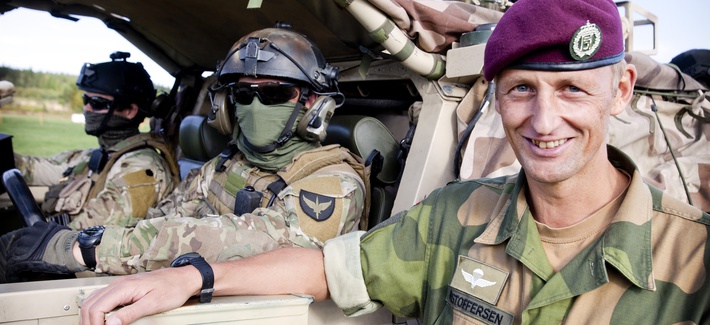
Populations are not fragile flowers – far from it. Treating them as a national-security resource can boost a society's resiliency, and even its deterrence. Major-General Eirik Kristoffersen of the Norwegian Army is the quintessential soldier, a special forces officer who has done several tours in Afghanistan and commanded Norway’s Special Forces Command. So his newest appointment — as commander of Norway’s home guard, the Heimevernet — shows how homeland defense is a rising concern for national security leaders. And Norwegian-style People Power is the answer. “All Heimevernet’s 40,000 members have completed military training, but they’re civilians,” Kristoffersen said in an interview. “Ordinarily, they do things like search-and-rescue and clean up after natural disasters, but they can also be used as a local response force in case of an attack. Because more than 90 percent are assigned to their home areas, they also notice subtle changes that most people wouldn’t see, and report it to the police.”