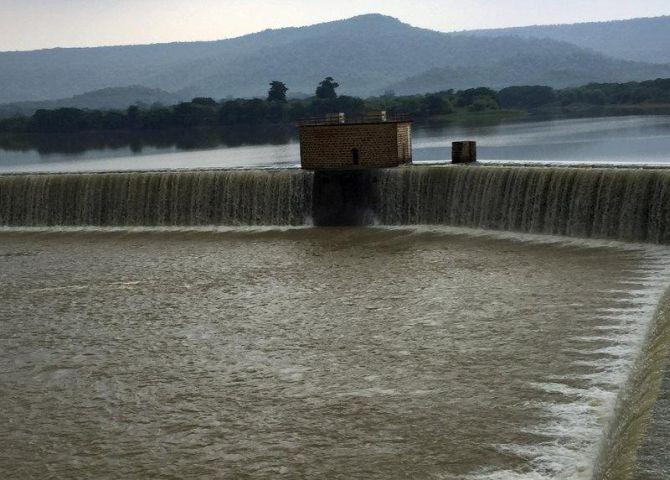
As the water crisis has deepened, so has our desperation and the extent we are prepared to go to violate the basic principles of both science and spirituality.The Profession of Arms: A Guide for Young Army Officers
It takes courage, especially for a young officer, to check a man met on the road for not saluting properly or for slovenly appearance, but, every time he does, it adds to his stock of moral courage, and whatever the soldier may say, he has respect for the officer who does pull him up.
Read Document →The Dragon's Teeth: Assessing China's Military Modernization
PLA has focused on modernising its capabilities across all warfare domains to achieve these goals. This includes land, air, and maritime operations, nuclear, space, counter-space, electronic warfare and cyberspace operations, aiming to become a fully integrated joint force.
Read Document →Transforming the PLA: A Decade of reorganisation from SSF to ISF
PRC has engaged in a sustained and broad effort to transform the PLA from an infantry-heavy, low-technology, ground forces-centric military into a high-technology, networked force with an increasing emphasis on joint operations and naval and air power projection.
Read Document →Eyes without Borders: Exploring the World of Open Source Intelligence (OSINT) in the Digital Age
Open Source Intelligence (OSINT) is gaining prominence with the rise of social media, the digital society and the vast growth of publicly and commercially available information (PAI and CAI).
Read Document →
The PLA’s Developing Cyber Warfare Capabilities and India's Options
Informationised warfare blurs the lines between peacetime and wartime. A nation in the information age cannot wait for the hostilities to break out to collect intelligence, carryout influence operations, develop antisatellite systems or design computer software weapons.
Read Document →
Galwan and After
Why did China did this when he is under tremendous pressure in all fronts, is this China's salami slice tactics being progressed rigorously, what will be new Rules of Engagement, what will be escalatory control mechanism, who has taken this decision, will there be some pressure put by China in India's North-East through insurgency.
Read Document →
India’s Joint Doctrine for Cyberspace Operations: A Critical Review
Chief of Defence Staff (CDS) General Anil Chauhan and Secretary, Department of Military Affairs, formally released declassified versions of the Joint Doctrines for Cyberspace Operations during the Chiefs of Staff Committee meeting in New Delhi.
Read Document →
Know your Enemy General(now Field Marshal) Syed Aseem Munir
Gen SA Munir's position in the hierarchy of Pakistan was not very comfortable. The state of economy, insurgency in Pakhtoonistan and Balochistan, attack on the Jaffar Express, constant protests by supporters of Imran Khan's supporters inside and outside of parliament.
Read Document →
Decoding Operation SINDOOR: Key Aspects and Implications
Precision strikes were carried out on nine sites—four in Pakistan and five in PoK—linked to anti-India terrorist groups such as the LeT, JeM and the Hizbul Mujahideen. The targeted sites included Muridke (LeT headquarters) and Bahawalpur (JeM headquarters).
Read Document →
Chinese Cyber Exploitation in India's Power Grid - Is There a linkage to Mumbai Power Outage?
The New York Times (NYT), based on analysis by a U.S. based private intelligence firm Recorded Future, reported that a Chinese entity penetrated India’s power grid at multiple load dispatch points. Chinese malware intruded into the control systems that manage electric supply across India, along with a high-voltage transmission substation and a coal-fired power plant
Read Document →23 August 2019
Why interlinking of rivers is a dangerous idea
As the water crisis has deepened, so has our desperation and the extent we are prepared to go to violate the basic principles of both science and spirituality.Overcoming Inertia: Why It’s Time to End the War in Afghanistan
Can Trump Make a Deal for Afghanistan?
What’s on tap: Afghans and U.S. national security aides have deep concerns about peace negotiations after new violence in Kabul, Trump’s idea for a naval blockade of Venezuela, and the Army’s challenges in staffing up new cyber and electronic warfare units. Afghanistan's Warlords Prepare for Civil War
US Army: No Afghanistan Withdrawal Plans Yet
Is the Afghanistan deal a good one?
It Matters Whether Americans Call Afghanistan a Defeat
The public’s judgment about whether the United States won or lost the war will affect civilian-military relations for years to come.Competition and Cooperation in the South Pacific
‘Desperate Need For Speed’ As Army Takes On Chinese, Russian, ISIS Info Ops
Hong Kong’s Summer of Rage
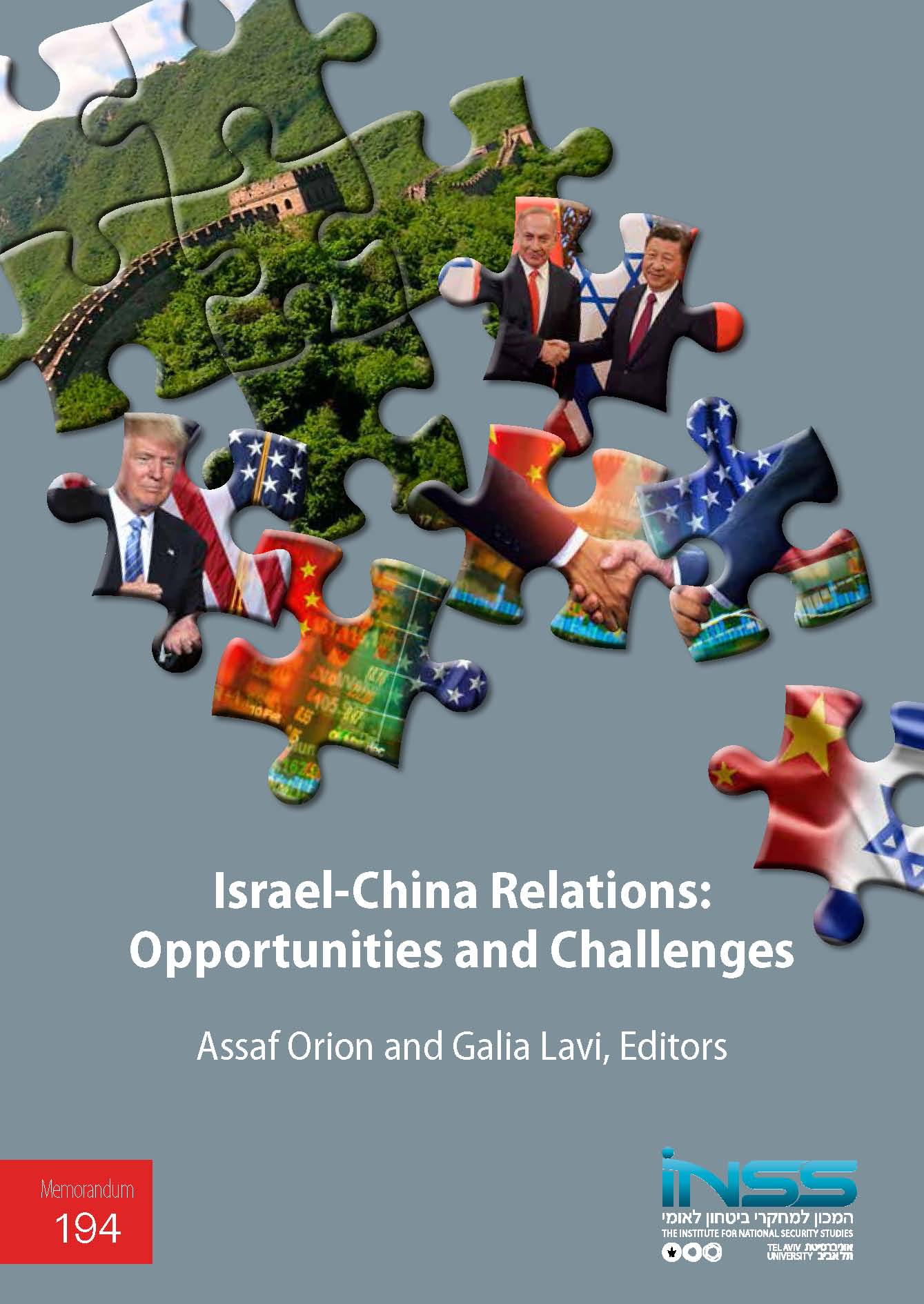
Israel-China Relations: Opportunities and Challenges
Selling to Huawei
ISIS'S SECOND COMEBACK: ASSESSING THE NEXT ISIS INSURGENCY
Insurgents and the Flip Side of Special Operations
Yemeni separatists extend control in south, Saudi-led forces strike capital
The Geopolitical Implications of Future Oil Demand
U.S. Security Policy in the Trump Era Has Been Marked by Change—and Continuity
Breaching Fortress Russia: The Uncertain Future of U.S. Expeditionary Warfare
Currently, the United States possesses unmatched military power projection capabilities, spending almost as much on its military as the next eight highest-spending countries combined, as well as possessing the greatest number of forward-deployed forces in the world.[I] However, as the U.S. pivots toward near-peer competition, its expeditionary capabilities are coming increasingly into doubt. Expeditionary warfare has been one of the defining characteristics of the U.S. military for the last 25 years when it enjoyed significant qualitative and quantitative advantages over regional aggressors. These assumptions no longer hold when facing future conflict with Russia, a markedly different challenge from the demands of fighting global terrorism, and one that requires a reevaluation of US policy. The costs and risks of defending allies in Eastern Europe have increased, with the U.S. now facing advanced anti-access, area denial (A2/AD) capabilities. These include long-range precision strike missiles (PrSM), sophisticated integrated air defense systems (IADS), an aggressive undersea domain, and a contested information environment all designed to push American forces outside of their effective combat ranges.[II]The United States Will Miss China’s Money
The rattled stock market gets all the trade war attention, but it’s the sharp decline in China’s U.S. investments that should alarm Americans.US Forms New Task Force to Combat ‘Russian Influence’
How Russian cyber-attack ‘could kill as many as a nuclear bomb’ – starving, poisoning and freezing us to death
Silicon Valley’s Crisis of Conscience
The G-7 Gathers in Biarritz for a Dysfunctional Family Reunion
This weekend, leaders from the G-7 will convene for their annual summit, this time in Biarritz, France. French President Emmanuel Macron, who is spearheading France’s G-7 presidency this year, bills the meeting as a chance to relaunch multilateralism, promote democracy and tame globalization to ensure it works for everyone. More likely, the gathering will expose the political, economic and ideological fault lines threatening Western solidarity and international cooperation. From Plaything to Player: How Europe Can Stand Up for Itself in the Next Five Years
Offensive Shifts, Offensive Policies: Cybersecurity Trends in the Government-Private Sector Relationship
Cyber-security is a key risk for decision-makers at both the state and corporate level. There is a relative lack of academic literature examining the impact of foreign cyber-attacks on business and the private sector. This paper examines foreign, state-sponsored threats facing the private sector, investigates the key shortcomings of recent Western government policies, and proposes a series of considerations for future policies that will help mitigate the impact of state-sponsored hostile activity toward the private sector.ICIT Bright Minds: Diversity in Cyber with Devon Bryan, CISO, Federal Reserve
Cyber threats to worsen with AI, IoT and other tech advances: Israeli expert
Cyber Command changed its approach. Is the difference noticeable?
Industry representatives in the threat intelligence space said it is too early to tell if Cyber Command's new assertive approach is having a direct effect on cyberspace.DARPA Wants AI to Help Make Weapons More Hacker-Proof
Artificial intelligence might speed up the design of arms and other network-connected platforms — and suggest improvement that humans haven’t yet conceived.Facebook’s New Tool Lets You See Which Apps and Websites Tracked You
SAN FRANCISCO — Facebook has built an extensive network of tracking technology outside of its core social network to bolster its targeted advertising business. That has allowed the company to collect information about its users’ browsing habits, even when they were not using the social network.