 This publication provides guidance on how to understand the religious dimensions of conflict and take them into consideration in peacebuilding. More specifically, the authors 1) examine key definitions and principles; 2) offer a systematic method for identifying and collecting data on how religion contributes to driving conflict and may assist in peacebuilding; and 3) provide case studies from Chad, Northern Ireland, Myanmar, Syria and Thailand to illustrate how each step of this method works.
31 August 2018
Religion in Conflict and Peacebuilding
This publication provides guidance on how to understand the religious dimensions of conflict and take them into consideration in peacebuilding. More specifically, the authors 1) examine key definitions and principles; 2) offer a systematic method for identifying and collecting data on how religion contributes to driving conflict and may assist in peacebuilding; and 3) provide case studies from Chad, Northern Ireland, Myanmar, Syria and Thailand to illustrate how each step of this method works.Opinion | A year after Doklam, lessons not fully learnt
 A full year has passed since the 73-day face-off between Indian and Chinese troops in Doklam ended. Last year, on 28 August, India agreed to withdraw its troops from the territory disputed between Bhutan and China in return for the latter stopping its road construction activity. A lot has happened in the last one year, including an attempt to “reset” India-China ties. This is a good moment to look at the learnings from the face-off and the subsequent course of events.
Russia Calls Off Planned Peace Talks on Afghanistan
By Syed Zabiullah Langari
The Presidential Palace said that Russia’s foreign minister stated Moscow was in support of an Afghan-owned peace process. Russian Foreign Minister Sergey Lavrov on Monday phoned Afghanistan’s President Ashraf Ghani and discussed issues of mutual interest, including the planned peace talks in Moscow – which the two officials agreed to postpone. The Presidential Palace (ARG) said in a statement that although Afghanistan strongly values the efforts by its regional and international partners towards restoring peace in the country, the Afghan government believes that any efforts for peace must be carried out in complete cooperation and harmony with the Afghan government and the Afghan people. According to the statement, Ghani hailed Moscow for its efforts for peace in Afghanistan, but he told Lavrov that any talks must be an Afghan-owned and Afghan-led process.
Building Dams with Donations
Arvind Gupta, Director, VIF
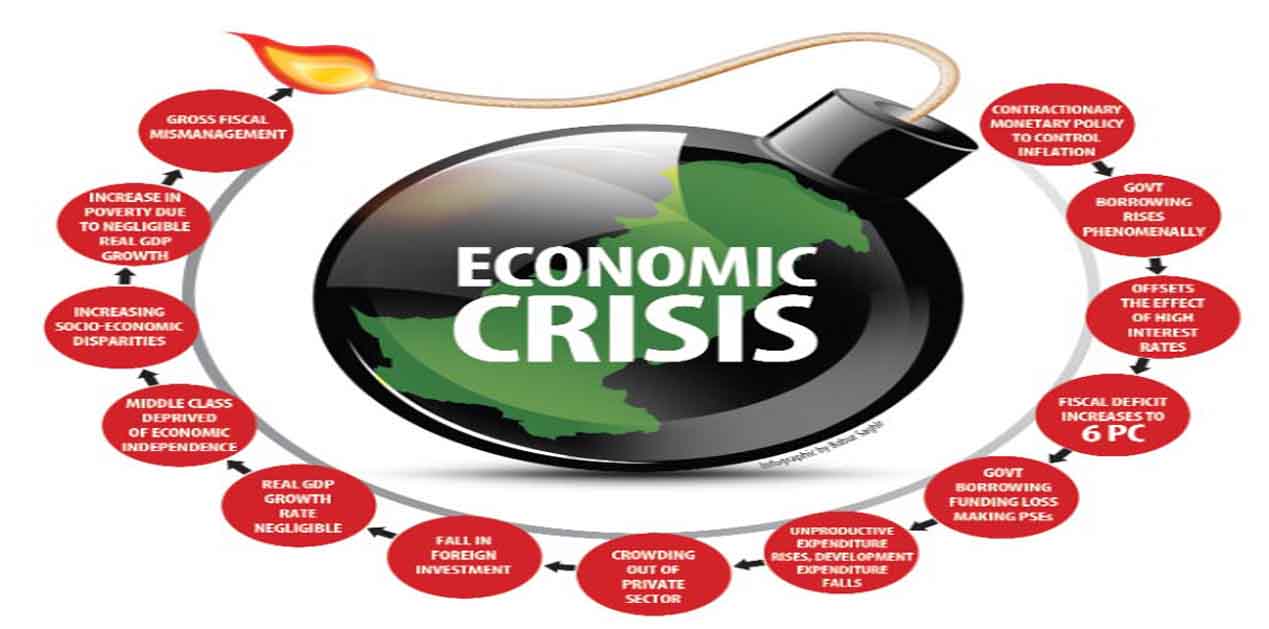 So dire is Pakistan’s financial health that it has been reduced to mobilise money from individual donors to build infrastructure projects which will cost hundreds of thousands of crores of rupees. In his first speech after becoming the Prime Minister, Imran Khan said that Diamer-Bhasha Dam was crucial for Pakistan and needed to be built. Acknowledging that Pakistan has no money, he said that the Dam will be built with donations from Pakistanis within the country and overseas.
Gunboats, and China’s Score to Settle
MINXIN PEI
The First Opium War (1839-1842) marks the official beginning of China’s so-called century of humiliation, a period in which the Celestial Empire lost a series of wars to technologically superior Western powers (including Japan). By the early nineteenth century, what was once the world’s largest economy had fallen woefully behind the West in terms of economic development and technological capabilities. During the Qing Empire, while the Industrial Revolution was transforming the United Kingdom into the world’s first global hegemon, China remained stuck in the agrarian age. Yet China’s Manchu rulers continued to consider their country the center of the world and label people from other countries “barbarians.” Then the British barbarians showed up at the door – first with opium irresistible to the dynasty’s subjects, then with gunboats for which the empire’s military was no match – and the obsolescence of Chinese rulers’ Sinocentric worldview became painfully clear.
The Economic Showdown in the South China Sea
by Richard Javad Heydarian
The Trump administration wants to mobilize private American capital for high-quality investments in the Asia-Pacific region. As China inches closer to imposing a de facto exclusion zone across the South China Sea, it has sought to box the United States out of Southeast Asia. Having deployed state-of-the-art weapons systems to artificially created islands in the area, a Chinese Air Defense Identification Zone is more a matter of “when” than “if.” The Asian powerhouse has forged ahead with negotiating a Code of Conduct (COC) in the contested areas that could, first, consolidate its gains on the ground and, more importantly, drive a wedge between Southeast Asian countries and Washington.
Rohingya Crisis Diminishes Aung San Suu Kyi – Analysis
By Azeem Ibrahim*
Over the past year, more than 700,000 people, more than 70 percent of the minority Rohingya population in Myanmar, have fled their homes and the country of their birth in the face of a sustained and coordinated military cleansing campaign directed by the state and aided by Burmese Buddhist-nationalist hardliners. The crisis is highly visible, with the Rohingya people largely living in hastily assembled refugee camps in southern Bangladesh. A UN report has accused the Myanmar military of genocide. Still, the international community is flummoxed – not wanting to threaten the little progress that has been made in opening Myanmar to the world and risk pushing the country back toward China. In the years when the military regime was isolated, China had emerged as the sole benefactor of the country.
With Ships and Missiles, China Is Ready to Challenge U.S. Navy in Pacific
By Steven Lee Myers
 DALIAN, China — In April, on the 69th anniversary of the founding of China’s Navy, the country’s first domestically built aircraft carrier stirred from its berth in the port city of Dalian on the Bohai Sea, tethered to tugboats for a test of its seaworthiness. “China’s first homegrown aircraft carrier just moved a bit, and the United States, Japan and India squirmed,” a military news website crowed, referring to the three nations China views as its main rivals. Not long ago, such boasts would have been dismissed as the bravado of a second-string military. No longer. A modernization program focused on naval and missile forces has shifted the balance of power in the Pacific in ways the United States and its allies are only beginning to digest.
How China Is Trying to Dominate the Middle East
by Owen Daniels
Tensions between the United States and China seem to be defining the bilateral relationship between the two countries these days. From a growing trade war to the Trump administration’s characterization of China as a “strategic competitor seeking to undermine U.S. power and influence” in its 2017National Security Strategy , political and economic relations appear to have settled at a recent nadir. But great power competition between the two most powerful militaries and economies is not geographically limited. China is indicating its intent to shape the Middle East’s regional and military landscape through trade relationships with regional states as well as through projection of its own military might. Below are three areas to watch where China’s more assertive Middle East engagement may lead to tensions with America.
Can China Free Africa from Dependency on the Mighty Dollar?
By Peter Fabricius
 Is China, aided and abetted by the other BRICS member countries – Brazil, Russia, India and South Africa – making a bid to dislodge the dollar from its global pedestal and replace it with the yuan? And if so, will it help African countries, in particular, to escape from the iron and often onerous grip of the greenback? One way China is expanding the reach and influence of the yuan is through currency swaps – many with African countries. The latest was with Nigeria, for the equivalent of US$2.4 billion. For Nigeria, the currency swap was a lifeline as its dollar reserves had largely drained away and the naira had plummeted against the dollar after the 2015 drop in oil price.
With Ships and Missiles, China Is Ready to Challenge U.S. Navy in Pacific
By Steven Lee Myers
DALIAN, China — In April, on the 69th anniversary of the founding of China’s Navy, the country’s first domestically built aircraft carrier stirred from its berth in the port city of Dalian on the Bohai Sea, tethered to tugboats for a test of its seaworthiness. “China’s first homegrown aircraft carrier just moved a bit, and the United States, Japan and India squirmed,” a military news website crowed, referring to the three nations China views as its main rivals. Not long ago, such boasts would have been dismissed as the bravado of a second-string military. No longer. A modernization program focused on naval and missile forces has shifted the balance of power in the Pacific in ways the United States and its allies are only beginning to digest.China building first modern military outpost in Afghanistan to fight terrorism
 China has started building a training camp for Afghan troops in a narrow corridor that connects the two countries – a project Beijing is fully funding to help its neighbour improve counterterrorism efforts, sources close to the military said. Once the camp is completed, the People’s Liberation Army is likely to send hundreds of military personnel – at least one battalion’s worth – to Afghanistan’s isolated Wakhan Corridor, one of the sources who is familiar with the matter told the South China Morning Post. A battalion usually has more than 500 troops. The corridor is a narrow strip of inhospitable and barely accessible land extending about 350km (220 miles) from the northern Afghan province of Badakhshan to China’s Muslim region of Xinjiang, where Chinese authorities have carried out sweeping crackdowns on the Uygur ethnic minority group in recent months.
A Global Environmental Threat Made in China
BRAHMA CHELLANEY
 Asia’s future is inextricably tied to the Himalayas, the world’s tallest mountain range and the source of the water-stressed continent’s major river systems. Yet reckless national projects are straining the region’s fragile ecosystems, resulting in a mounting security threat that extends beyond Asia. With elevations rising dramatically from less than 500 meters (1,640 feet) to over 8,000 meters, the Himalayas are home to ecosystems ranging from high-altitude alluvial grasslands and subtropical broadleaf forests to conifer forests and alpine meadows. Stretching from Myanmar to the Hindu-Kush watershed of Central Asia, the Himalayas play a central role in driving Asia’s hydrological cycle and weather and climate patterns, including triggering the annual summer monsoons. Its 18,000 high-altitude glaciers store massive amounts of freshwater and serve in winter as the world’s second-largest heat sink after Antarctica, thus helping to moderate the global climate. In summer, however, the Himalayas turn into a heat source that draws the monsoonal currents from the oceans into the Asian hinterland.
Asia’s future is inextricably tied to the Himalayas, the world’s tallest mountain range and the source of the water-stressed continent’s major river systems. Yet reckless national projects are straining the region’s fragile ecosystems, resulting in a mounting security threat that extends beyond Asia. With elevations rising dramatically from less than 500 meters (1,640 feet) to over 8,000 meters, the Himalayas are home to ecosystems ranging from high-altitude alluvial grasslands and subtropical broadleaf forests to conifer forests and alpine meadows. Stretching from Myanmar to the Hindu-Kush watershed of Central Asia, the Himalayas play a central role in driving Asia’s hydrological cycle and weather and climate patterns, including triggering the annual summer monsoons. Its 18,000 high-altitude glaciers store massive amounts of freshwater and serve in winter as the world’s second-largest heat sink after Antarctica, thus helping to moderate the global climate. In summer, however, the Himalayas turn into a heat source that draws the monsoonal currents from the oceans into the Asian hinterland.Geopolitics and Shipping: The 5 Biggest Ports in Saudi Arabia and the UAE
 Saudi Arabia and the United Arab Emirates are pursuing ambitious port projects as part of their economic diversification plans. The ports all have the potential to generate substantial income. Though they are ostensibly run independently, their success depends in part on government priorities. As the United Arab Emirates and Saudi Arabia move toward new socio-economic structures, each country's political imperatives could collide with the economic realities of large infrastructure projects.
 Understanding Terrorism Is More Than a Numbers Game
 Statistical measurements are crucial to assessing terrorist and militant threats, but they provide only a starting point. Beyond the numbers, it is essential to assess the ultimate objective of attacks, the specific threats of terrorists' tactics and even the novel tactics that can amplify the political impact of nonlethal attacks. Focusing on such qualitative aspects, rather than on merely the quantitative, can temper overreaction to deadly events and highlight emerging threats before an attack.
Elcano Global Presence Report 2018
Author Iliana Olivié, Manuel Garcia
 This edition of the Elcano Global Presence Report ranks 110 countries according to how involved they are in the globalization process, primarily through economic, military and soft power means. Key highlights include 1) that the top raking countries have maintained or strengthened their positions; 2) the extent of the gap between China and the US means Beijing is unlikely to take the top ranking spot away from Washington any time soon; 3) a slight decline in the overall level of global presence could suggest the globalization process is stagnating; and 4) Africa is lagging behind in global presence.
Download English (PDF, 59 pages, 748 KB)
Brazil Considers the Nuclear Option
Brazil will revive its nuclear energy program as part of a proposal that the government expects to present before Congress later this year. In the absence of any grave threats in South America, Brazil's nuclear program will largely focus on energy, medicine and agriculture, but the country will leave the door open to developing nuclear weapons by mastering atomic technology. The fate of Brasilia's nuclear plans could hinge on October's presidential elections, as one of the leading candidates, Marina Silva, vociferously opposes the atomic program. For four years, a corruption scandal has kept Brazil down for the count on some of its biggest projects, including a third nuclear energy plant. Now, however, things appear set to change as the country emerges from the graft probe and stalled construction work resumes on nuclear facilities — particularly the third nuclear plant. Boasting the world's sixth-largest uranium reserves, Brazil is also eager to attract investments to its uranium-mining industry, including the Caetite mine in the northeastern state of Bahia. In all, Brazil hopes to meet the demand for nuclear plants, construct a multipurpose nuclear reactor and further harness atomic energy for medicine and agriculture. But in turning its face once more to nuclear power, Brazil could also leave the door open to the production of nuclear weapons — a development that could elicit far more pushback at home and abroad.
What Higher U.S. Car Tariffs Could Mean for Europe
 As the main producer of cars in Europe and the main exporter to the United States, Germany would be the biggest loser if the White House imposed higher tariffs on automobiles made in the European Union. Complex supply chains in Europe mean that higher American tariffs would affect many other countries, particularly in Central and Eastern Europe. Should the United States pressure the European Union to include agriculture in their trade negotiations, the move would lead to friction between Germany and France and reduce the chances of reaching an agreement.
Why the U.S. Will Keep Russian Sanctions on Simmer, Not Boil
 The United States will almost certainly impose more sanctions against Russia in the coming months, but the extent of the measures will be a product of deliberation and compromise between the U.S. Congress and the Trump administration. Russia's efforts to strengthen financial stability and diversify its economic ties as part of its strategy to insulate itself from sanctions will enable Moscow to avoid any major economic disruptions — at least in the near term. Despite the increase in sanctions, the United States and Russia will nevertheless continue to conduct negotiations on issues of contention, including arms control and Syria.
Europe's Agriculture Sector Faces More Competition in the Future
 Agricultural lobbies have historically been very active in Europe, often able to influence policy at the national and supranational level. Yet the impact of European agricultural lobbies is dwindling, in no small part because of declining rural populations and the agricultural sector's declining contribution to the European Union's economy. In the coming years, Europe is likely to continue reducing farm subsidies and to become more open to including agriculture in free trade negotiations. This will force farmers to adapt to a more competitive environment.
Bitcoin: Boom Or Bust; The Good, The Bad, And The Ugly Side Of The Crypto-Currency World
Yesterday, August 27, 2018, the financial media outlet, CNBC, aired a one-hour special on Bitcoin, and the cyrpto-currency craze sweeping the globe. For those who believe in bitcoin and the move to digital currency — their devotion and enthusiasm resembles a religious movement — Bitcoin evangelists, if you will. They believe in the currency, with their ‘body and soul,’ and they are swift and brutal in their criticism of those who raise questions about its current architecture. Those who faithfully support Bitcoin include: off-the-grid types and privacy advocates, individuals who are in oppressed societies, and yes, the darker angels of our nature. Bitcoin and the digital currency movement found an early ‘home,’ on the Dark Web, since use of the ‘coin,’ allows the individual to make purchases, etc., all the while staying anonymous. They also believe that it is only a matter of time before digital currency will replace most, if not all hard-currencies. A global payment system that….is the future. And, companies such as Microsoft, Overstock.com, and many others — real estate, escort services, etc., have begun accepting Bitcoin as payment.
Is this the new wave of submerged communications?
By: Kelsey Atherton
/arc-anglerfish-arc2-prod-mco.s3.amazonaws.com/public/HCZFHNYSJBHY7CE6LSZYIAB2ZA.png) The ocean hides what it contains, and it is in that hiding that submarines have their power. Lurking under seas, at first with just enough capability for an attack run and now with the ability to lurk for months at a time, submarines remain power out of reach, unseen until engaged in combat or resupplying in a friendly port. That stealth comes at a cost, however, besides the simple perils of existing underwater. When submerged, submarines are more or less on their own until they resurface again, since radio waves do not travel well through seawater. Or they are for now. New research by MIT, presented at a conference in late August, devised a way for submerged submarines to communicate wirelessly with people on the surface by combining hydroacoustics and acoustic radars.
The ocean hides what it contains, and it is in that hiding that submarines have their power. Lurking under seas, at first with just enough capability for an attack run and now with the ability to lurk for months at a time, submarines remain power out of reach, unseen until engaged in combat or resupplying in a friendly port. That stealth comes at a cost, however, besides the simple perils of existing underwater. When submerged, submarines are more or less on their own until they resurface again, since radio waves do not travel well through seawater. Or they are for now. New research by MIT, presented at a conference in late August, devised a way for submerged submarines to communicate wirelessly with people on the surface by combining hydroacoustics and acoustic radars.Army announces winners of electronic warfare challenge
By: Kelsey Atherton
/arc-anglerfish-arc2-prod-mco.s3.amazonaws.com/public/RJHXWN4RAZA6BA4ZGWC4GWABRE.jpg) A platypus, several Australians and a thundering panda walk into an electromagnetic spectrum, then leave with $150,000. The result is, potentially, a technique and a tool that will allow soldiers to discover what signals in a war zone are relevant to their mission and what are merely noise. The Army Rapid Capabilities Office announced Aug. 27 the winners of the Army Signal Classification Challenge, a competition for artificial intelligence and machine learning with the goal of creating a thinking machine that can accurately classify signals on the fly. Platypus Aerospace, a team from the federally funded Aerospace Corporation, won the event, taking home $100,000. A group of data scientists from Australia competing as TeamAU won $30,000, and a team from Motorola Solutions named THUNDERING PANDA placed third, winning $20,000.
A platypus, several Australians and a thundering panda walk into an electromagnetic spectrum, then leave with $150,000. The result is, potentially, a technique and a tool that will allow soldiers to discover what signals in a war zone are relevant to their mission and what are merely noise. The Army Rapid Capabilities Office announced Aug. 27 the winners of the Army Signal Classification Challenge, a competition for artificial intelligence and machine learning with the goal of creating a thinking machine that can accurately classify signals on the fly. Platypus Aerospace, a team from the federally funded Aerospace Corporation, won the event, taking home $100,000. A group of data scientists from Australia competing as TeamAU won $30,000, and a team from Motorola Solutions named THUNDERING PANDA placed third, winning $20,000.Why reversible cyberattacks could become standard in digital warfare
By: Justin Lynch
/arc-anglerfish-arc2-prod-mco.s3.amazonaws.com/public/EB4BOAZMGVDA3EI6PO3RTBZGRM.jpg) The damage that most military weapons do is irreversible. When a gun fires and a bullet strikes a target, it’s impossible to bring a life back from the dead. But experts say that cyber weapons, which are reversible, can be even more effective precisely because their consequences can be mitigated. Navy and Air Force researchers predict that the use of reversible cyber weapons might become so standard that anything short might be considered a war crime. “Coercion is about sticks and carrots,” said Max Smeets, a cybersecurity postdoctoral fellow at Stanford University. Although cyber operations are usually thought of to punish or raise costs on an adversary, it is possible that some enemies can react as a reward if they are reversible, Smeets said.
The damage that most military weapons do is irreversible. When a gun fires and a bullet strikes a target, it’s impossible to bring a life back from the dead. But experts say that cyber weapons, which are reversible, can be even more effective precisely because their consequences can be mitigated. Navy and Air Force researchers predict that the use of reversible cyber weapons might become so standard that anything short might be considered a war crime. “Coercion is about sticks and carrots,” said Max Smeets, a cybersecurity postdoctoral fellow at Stanford University. Although cyber operations are usually thought of to punish or raise costs on an adversary, it is possible that some enemies can react as a reward if they are reversible, Smeets said.Can Army Futures Command Overcome Decades Of Dysfunction?
By SYDNEY J. FREEDBERG JR.
 ARMY S&T CONFERENCE: How broken is the procurement system the new Army Futures Command was created to fix? It’s not just the billions wasted on cancelled weapons programs. It’s also the months wasted because, until now, there has not been one commander who can crack feuding bureaucrats’ heads together and make them stop bickering over, literally, inches. “I have not always been an Army Futures Command fan,” retired Lt. Gen. Tom Spoehr told the National Defense Industrial Association conference here. But as he thought about his own decades in Army acquisition, he’s come around.
Lt. Gen. (ret.) Thomas Spoehr
The Link Between More Internet Access and Frequent Internet Shutdowns
Source Link
 Conor Sanchez is a graduate student at The Fletcher School of Law and Diplomacy at Tufts University. You can follow him @ConorSanchez. As internet connectivity has spread dramatically throughout the world in the past decade, so has the propensity of governments to disrupt or completely block it. Access Now, a digital rights group, reports that the number of state-imposed internet shutdowns jumped from 75 in 2016 to 108 in 2017. Interestingly, many of the countries where shutdowns occur include places where the internet is growing fastest, especially ones that saw the number of users double between 2010 and 2016. Countries such as the Philippines, Bangladesh, and Cameroon recognize that expanding access is essential to compete in the digital economy and yet, they also seek to control it when it challenges authority. The idea that internet usage and censorship are expanding in tandem is nothing new. But the economic and human rights costs of such corresponding trends are growing as the global economy becomes increasingly tied to digital platforms. A lack of internet access represses freedom of expression and also threatens livelihoods that depend on network connectivity.
Conor Sanchez is a graduate student at The Fletcher School of Law and Diplomacy at Tufts University. You can follow him @ConorSanchez. As internet connectivity has spread dramatically throughout the world in the past decade, so has the propensity of governments to disrupt or completely block it. Access Now, a digital rights group, reports that the number of state-imposed internet shutdowns jumped from 75 in 2016 to 108 in 2017. Interestingly, many of the countries where shutdowns occur include places where the internet is growing fastest, especially ones that saw the number of users double between 2010 and 2016. Countries such as the Philippines, Bangladesh, and Cameroon recognize that expanding access is essential to compete in the digital economy and yet, they also seek to control it when it challenges authority. The idea that internet usage and censorship are expanding in tandem is nothing new. But the economic and human rights costs of such corresponding trends are growing as the global economy becomes increasingly tied to digital platforms. A lack of internet access represses freedom of expression and also threatens livelihoods that depend on network connectivity.Cyber Proxies and Their Implications for Liberal Democracies
by Tim Maurer

Non-liberal democracies are delegating, orchestrating, or passively supporting cyber proxies to conduct offensive cyber actions, affecting international peace and security. Developing a more robust and comprehensive strategy, particularly in international law enforcement among other approaches, is needed to more effectively address cyber proxies in the long term.
Toward a smaller, smarter force posture in the Middle East
Melissa Dalton and Mara Karlin
If Defense Secretary James Mattis wants to fulfill the National Defense Strategy mandate to focus on China and Russia, the U.S. military’s posture in the Middle East must get smaller and smarter, write Melissa Dalton and Mara Karlin. This piece originally appeared in Defense One. We explored why in the first article in our series for Defense One, noting challenges with Iran, competition with Russia and China, counterterrorism imperatives, and domestic political and budgetary realities. This assessment has only been reinforced by the subsequent release of the Trump administration’s National Defense Strategy, or NDS, with its focus on strategic competition with China and Russia, as well as the administration’s hard-line approach to Iran.
Aircraft Carriers, Stealth Fighters and Lots of Missiles: China's Military Has Arrived
by Kris Osborn
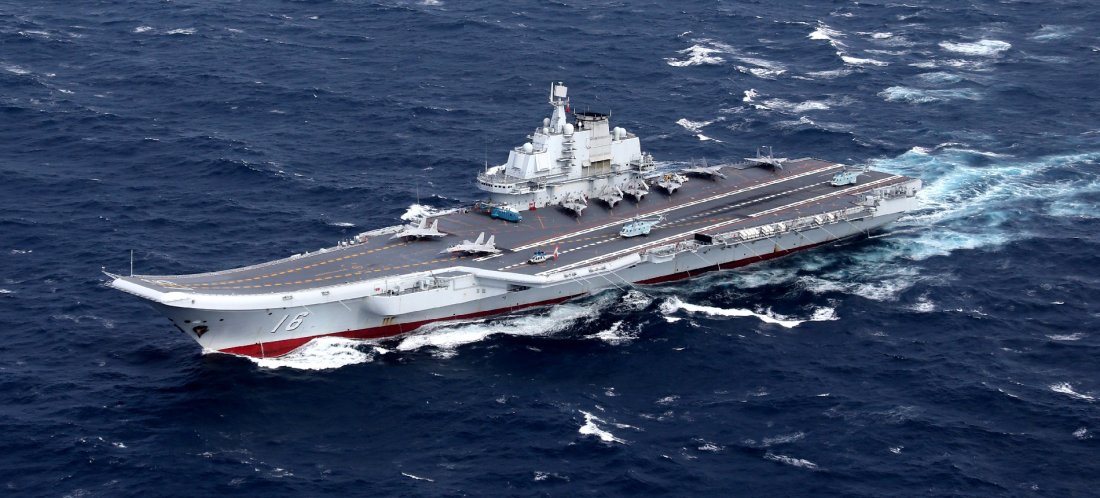 The Pentagon 2018 report, called “Military and Security Developments Involving the People’s Republic of China,” details a broad spectrum of risks to include global economic expansion, massive military modernization and breakthrough weapons technology able to threaten U.S. superiority. Aircraft carriers, stealth fighters, anti-satellite weapons, drones, cyber attack technology and a growing arsenal of ballistic missiles are all among a series of Chinese weapons said to present serious concerns for Pentagon leaders and weapons developers, according to DoD’s annual China report. The Pentagon 2018 report, called “Military and Security Developments Involving the People’s Republic of China,” details a broad spectrum of risks to include global economic expansion, massive military modernization and breakthrough weapons technology able to threaten US superiority.
An Army aerial electronic attack platform prepares to fly
/arc-anglerfish-arc2-prod-mco.s3.amazonaws.com/public/KLEHOICG65CQ7GFHY3FI7RLIOE.jpg) One of the Army’s major electronic warfare program will fly next year, according to one top official. Maj. Gen. John Morrison, commander of the Cyber Center of Excellence, told C4ISRNET in a Aug. 22 interview at TechNet Augusta that the Multi-Function Electronic Warfare Air, an electronic attack capability that will be mounted to MQ-1C Gray Eagle drones, is in prototyping and will fly next year. The Army expects to award a contract this year for its multi-function electronic warfare air large program.
One of the Army’s major electronic warfare program will fly next year, according to one top official. Maj. Gen. John Morrison, commander of the Cyber Center of Excellence, told C4ISRNET in a Aug. 22 interview at TechNet Augusta that the Multi-Function Electronic Warfare Air, an electronic attack capability that will be mounted to MQ-1C Gray Eagle drones, is in prototyping and will fly next year. The Army expects to award a contract this year for its multi-function electronic warfare air large program.30 August 2018
Japan-India Special Strategic Partnership Needs Added Special Robustness
By Dr Subhash Kapila
Perceptively missing and noticeable in the last one year is that the Japan-India Special Strategic & Global Partnership is progressing routinely without the fizz that should be attendant on it by two powerful Asian giants and pillars of Asian stability. This perceptiion arises from India positioning this ‘Vital Partnership’ in Indian prism of relations with China and Chinese sensitivities on India’s proximate strategic relations with Japan. Global and Asian geopolitics dictate that India should accord highest priority to add geopolitical robustness and strategic weight to solidify strategic linkages with Japan –a nation that noticeably stood by India during the Dokalam Standoff with China, in stark contrast to China which even till 2017 was indulging in military adventurism against India.
India and the geoeconomics of climate change: Global responsibility as strategic interest
 Is a first version of a text that will be developed into a larger publication of an academic or policy-relevant character. The series includes publications aimed at larger audiences as well as expert audiences. As climate change progresses, it will have impacts on global politics, creating both new vulnerabilities and opportunities. Geoeconomics provides a useful analytical framework for the political implications of climate change as it shifts the focus from military force to economic means of exerting power. This working paper looks at the geoeconomics of climate change in the case of India. It examines the ways in which India has used climate policies to gain leverage and contain threats regionally and globally. Due to its emerging power status and high vulnerability to climate impacts, India holds a key position in the global fight against climate change.
 India-Pakistan: Unclaimed Victories
August 28, 2018: The United States continues to cut military ties with Pakistan because of Pakistani refusal to shut down its support of Islamic terror groups that, in effect, do the bidding of the Pakistani military. The latest cuts include training for Pakistani officers in American military schools (alongside American and other foreign officers). Russia immediately stepped in and offered to replace the American training with equivalent Russian training. This is a major loss for Pakistan as their officers gained more useful instruction and more useful contacts (with American and other foreign officers) at the American senior schools.
Trump battles a sense of inertia in Afghanistan
BY REBECCA KHEEL
 A year after reversing course on a key campaign pledge and announcing that U.S. troops would stay in Afghanistan with a tweaked strategy, President Trump is faced with a war that has seen little progress since. Pentagon officials insist the strategy adopted by the Trump administration last summer is working, pointing to a three-day ceasefire earlier this year and backchannel talks with elements of the Taliban. But insurgents continue to be able to stage high-profile attacks, territorial control has remained largely unchanged and civilian deaths are hitting all-time highs 17 years into what has sometimes been called the “forever war” or “forgotten war.”
As Russia plans Afghan peace talks, Kabul questions Taliban's motives
By Pamela Constable
 Kabul: Just over a week ago, Afghan and US officials hoped that after 17 years of war, the Taliban was starting down a road to peace. Despite a deadly four-day attack on the city of Ghazni, President Ashraf Ghani had offered the insurgents a second cease-fire since June, and Taliban leaders had hinted that they wanted to continue private talks held with US officials in July. Now, that optimism has all but collapsed. With the Taliban ignoring Ghani's truce offer and accepting an invitation for talks in Moscow instead, analysts said the momentum for direct negotiations has been derailed by international politics. And the intentions of insurgent leaders - who spout constant propaganda but remain invisible to the public - seem more inscrutable than ever.
Kabul: Just over a week ago, Afghan and US officials hoped that after 17 years of war, the Taliban was starting down a road to peace. Despite a deadly four-day attack on the city of Ghazni, President Ashraf Ghani had offered the insurgents a second cease-fire since June, and Taliban leaders had hinted that they wanted to continue private talks held with US officials in July. Now, that optimism has all but collapsed. With the Taliban ignoring Ghani's truce offer and accepting an invitation for talks in Moscow instead, analysts said the momentum for direct negotiations has been derailed by international politics. And the intentions of insurgent leaders - who spout constant propaganda but remain invisible to the public - seem more inscrutable than ever.Back in Power, Malaysia's Prime Minister Moves Away From China
Malaysian Prime Minister Mahathir Mohamad will work to end his country's economic overreliance on China without leaning on the West as part of his Malay nationalist agenda. The government in Kuala Lumpur will look for alternative foreign partners to insulate itself from the intensifying competition between China and the United States. Japan will probably take on a more prominent role in Malaysia's economy and security as a result. Malaysian Prime Minister Mahathir Mohamad's first state visit to China since returning to office in May went a lot like the seven state visits he made there during his first stint in power. On the trip, which ended Aug. 21, Mahathir reaffirmed his policy toward China and agreed with Beijing on several important issues, such as accelerating regional free trade and advancing multilateral negotiations over the South China Sea. He also toured the eastern city of Hangzhou and clinched a deal with Chinese automaker Geely to allow Malaysia's national car brand, Proton, a legacy of his time as prime minister in the 1980s, to assemble and market its cars in China.
When Freedom of Expression Isn't Free: Journalism, Facebook, and Censorship in Bhutan
By Namgay Zam
 On August 6, a Bhutanese journalist was sentenced to three months in prison for libel. The journalist had written a post on her personal Facebook account about a woman mistreating her 6-year-old stepdaughter. The post went viral, the police and other related agencies became involved. There were testimonies made in defense of the journalist by several parties, but the court found them to be “inadmissible.” The court verdict, besides meting out this punishment, asked the journalist to post an “apology statement” addressed to the “victim” – not the child, but the stepmother – on Facebook and to keep it for a month.
China—Not Russia—Elected Trump
by James Walker
 While media and political attention are focused on Russian “meddling” in the 2016 election, attention should be sharply focused instead on the role of China in electing Trump. It is that concern that should inform American action today. China’s long-standing predatory trading policies have eaten America’s lunch, impacting most severely those who carry lunch buckets to work in America’s heartland. These predatory policies have included most prominently currency manipulation, unfair trading practices and, most damaging of all, intellectual property theft. The combination of these policies have hit the American manufacturing worker the hardest. Unemployment, decades of declining incomes and loss of dignity are the prices many of these workers have paid.
Chinese Communist Party Funds Washington Think Tanks
BY: Bill Gertz
 China's Communist Party is intensifying covert influence operations in the United States that include funding Washington think tanks and coercing Chinese Americans, according to a congressional commission report. The influence operations are conducted by the United Front Work Department, a Central Committee organ that employs tens of thousands of operatives who seek to use both overt and covert operations to promote Communist Party policies. The Party's United Front strategy includes paying several Washington think tanks with the goal influencing their actions and adopting positions that support Beijing's policies.
China ‘developing electromagnetic rocket with greater fire range’
Liu Zhen
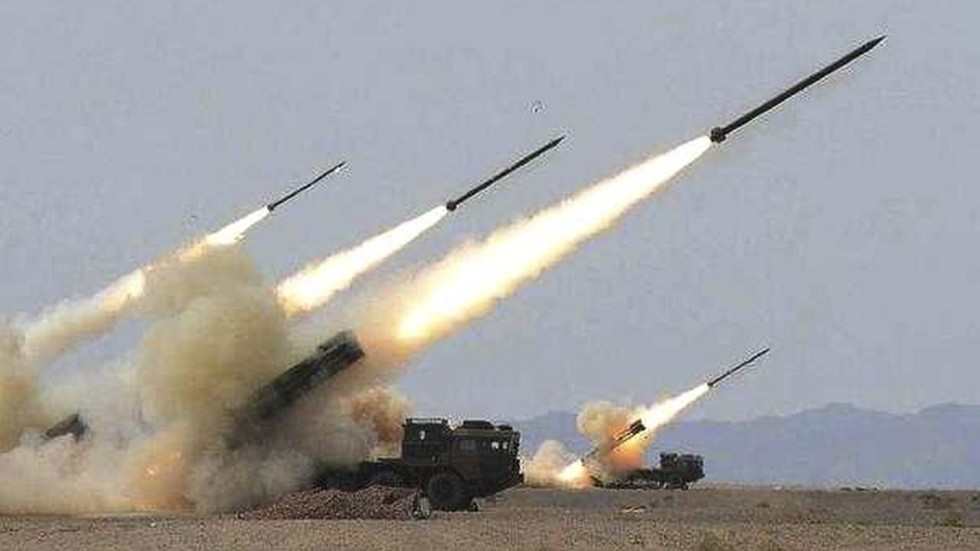 Programme’s lead scientist speaks of ‘substantial progress’ in devising a high-velocity rocket that can fly further from Tibet China is developing the world’s first electromagnetic surface-to-surface rocket that offers greater fire range and could give its military an advantage in high-altitude regions like the Himalayas and Tibetan plateau, according to state media. Details of the rocket system – such as its precise range and deployment schedule – remain unclear. But the programme’s lead scientist Han Junli told the state-run Science and Technology Daily that “substantial progress” had been made on the rocket. Conventional rockets rely on explosive powder for the initial push, but the new rockets will be launched using additional electromagnetic force, similar to the catapult launchers that China and the United States are developing for their next-generation aircraft carriers. The same technology is also used to develop rail guns.
Japan, Taiwan must re-evaluate how they’re intercepting Chinese threats
By: Dennis Blair
/arc-anglerfish-arc2-prod-mco.s3.amazonaws.com/public/XO2JRTMCHFAK7PUGJEJHDGKL2Q.jpg) On a recent trip to East Asia, the subject of steadily increasing Chinese maritime and air activityin the waters and airspace of Japan and Taiwan came up often. China’s navy and air force are growing in number and sophistication of platforms, and China has been sending ships and aircraft in increasing numbers through international waters around both Taiwan and Japan, through their Exclusive Economic Zones, Air Defense Identification Zones, contiguous zones, and even territorial waters and airspace. Both Japan and Taiwan interpret this Chinese activity as a threat, intercept every Chinese airplane or ship as it approaches these zones, and escort them throughout their flight or voyage. Both Taiwan and Japan publish the number and location of these Chinese activities as they occur and in statistical accounts every year.
On a recent trip to East Asia, the subject of steadily increasing Chinese maritime and air activityin the waters and airspace of Japan and Taiwan came up often. China’s navy and air force are growing in number and sophistication of platforms, and China has been sending ships and aircraft in increasing numbers through international waters around both Taiwan and Japan, through their Exclusive Economic Zones, Air Defense Identification Zones, contiguous zones, and even territorial waters and airspace. Both Japan and Taiwan interpret this Chinese activity as a threat, intercept every Chinese airplane or ship as it approaches these zones, and escort them throughout their flight or voyage. Both Taiwan and Japan publish the number and location of these Chinese activities as they occur and in statistical accounts every year.The Problem With China's Powerful Air Force
By J. Tyler Lovell, Robert Farley
The Chinese defense industrial base is infamous for its tendency to “borrow” from foreign designs, particularly in the aerospace industry. Almost the entirety of China’s modern fighter fleet has either borrowed liberally from or directly copied foreign models. The J-10 was reputedly based on the Israeli IAI Lavi and by extension the United States’ General Dynamics F-16; the J-11 is a clone of the Russian Su-27; the JF-17 is a modern development of the Soviet MiG-21; the J-20 bears an uncanny resemblance to the F-22, and finally, the J-31 is widely believed to rely heavily on technology appropriated from the F-35 Joint Strike Fighter. Appropriation saves China time and money on research and development, allowing it to modernize the PLAAF at a fraction of the cost of its competitors. However, the appropriation strategy remains constrained by bottleneck technologies due to lack of testing data and industrial ecology. This problem is starkly illustrated by China’s ongoing difficulty in producing a high-quality indigenous jet engine.
China’s Expansion Demands Bold Actions
By Pierce MacConaghy

U.S. strategy in the South China Sea is failing. Weak and ineffective policy has permitted Beijing to achieve near-complete dominance over the region—all without firing a single shot. When China dredged sand from the ocean and claimed 3,200 acres from the sea, the United States issued carefully worded statements. When Beijing transformed its reefs into military outposts complete with runways, underground bunkers, and missile shelters, the U.S. Navy conducted Freedom of Navigation Operations (FONOPs)—sailing one or two ships by the islands. When China deployed electronic jammers, surface-to-air, and anti-ship missiles, the United States disinvited China from a naval exercise. Washington’s symbolic actions have done nothing to stem Beijing’s expansion.
China steps up courting of Africa ahead of summit
TETSUSHI TAKAHASHI
 BEIJING -- China is expanding its influence campaign in Africa as it prepares to host a summit with leaders from the continent, ready to offer economic assistance as part of its Belt and Road infrastructure initiative. The Forum on China-Africa Cooperation is scheduled for Sept. 3 and Sept. 4 in Beijing, with leaders from more than 50 African countries expected to attend. The summit is aimed at bringing China and Africa closer and building a shared destiny, Chinese Foreign Minister Wang Yi said at a press briefing on Aug. 22. The forum will serve to create a new chapter connecting the Belt and Road initiative with Africa's development, Wang added, revealing plans to announce economic assistance.
How China Got Sri Lanka to Cough Up a Port
By Maria Abi-Habib
 HAMBANTOTA, Sri Lanka — Every time Sri Lanka’s president, Mahinda Rajapaksa, turned to his Chinese allies for loans and assistance with an ambitious port project, the answer was yes. Yes, though feasibility studies said the port wouldn’t work. Yes, though other frequent lenders like India had refused. Yes, though Sri Lanka’s debt was ballooning rapidly under Mr. Rajapaksa. Over years of construction and renegotiation with China Harbor Engineering Company, one of Beijing’s largest state-owned enterprises, the Hambantota Port Development Project distinguished itself mostly by failing, as predicted. With tens of thousands of ships passing by along one of the world’s busiest shipping lanes, the port drew only 34 ships in 2012.
Burden-Sharing within NATO: Facts from Germany for the Current Debate
By Rachel Epstein, Donald Abenheim and Marc-André Walther
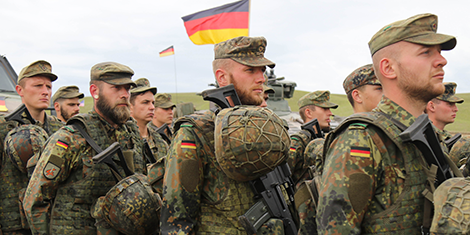 Professor Rachel Epstein’s interview with Professor Donald Abenheim of the Naval Postgraduate School and Lieutenant Colonel (General Staff) Marc-André Walther of the German Armed Forces Command and Staff College in Hamburg. 1. The President of the United States had some tough words for America’s NATO’s allies at the recent summit in Brussels. Is this sort of brinkmanship normal in the history of the Alliance? Burden sharing is often described by experts as the problem older than the alliance itself. The tasks of mutual aid and self-help for collective defense in Article III of the Washington Treaty lie entangled in the domestic politics among allies. In the present case, the 2% of GDP spending goal pivots on US and German internal policymaking. The last time alliance cohesion manifested itself with this vitriol was in the 2011 NATO air campaign in Libya, to say nothing of the Rumsfeld/Wolfowitz “New Europe/Old Europe” episode in 2002-2003 prelude to the Iraq War, where a divergence of policy and strategy tore open the wound in allied ministries and editorial pages left over from the 1999 NATO Kosovo campaign.
How Will ‘Defense Reform 2.0’ Change South Korea’s Defense?
By Sungyoung Jang
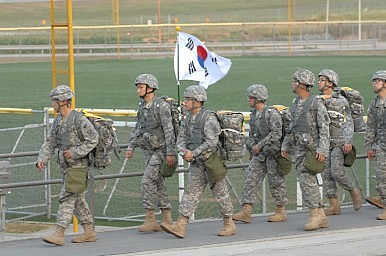 On July 27, South Korea’s Defense Minister Song Young-moo briefed President Moon Jae-in on “Defense Reform 2.0,” an expansive initiative to restructure and modernize Korea’s defense. The Ministry of National Defense (MND) has released seven proposals on specific agendas, most recently announcing plans to renovate military housing and facilities on August 16. The government is highly invested in military reform, but the array of modernization plans and restructuring raises questions about its financial feasibility and efficacy in improving Korea’s defense posture.
Russia’s Favorite Mercenaries
by Neil Hauer
 In Russia, journalism is far from the safest profession—even more so when the subject of investigation happens to be a private mercenary army engaged in multiple active conflicts abroad. On July 30, three Russian journalists were killedin the Central African Republic (CAR) while investigating a particularly dangerous topic: the Russian private military company Wagner, a mercenary outfit highly active in the Syrian and Ukrainian conflicts. At least two other Russian journalists have also suffered while researching Wagner, including Maxim Borodin, who suddenly fell to his death from a balcony in Yekaterinburg in April, and Denis Korotkov, a Saint Petersburg journalist forced into hiding after receiving death threats owing to his work on Wagner. There are now indications that Wagner forces may be present with both rebels and government forces in CAR. A unit of the group, filmed by the recently deceased journalists, was operating in rebel-held territory—contrary to Moscow’s assertions that Russian forces were present only to assist CAR authorities.