The Profession of Arms: A Guide for Young Army Officers
It takes courage, especially for a young officer, to check a man met on the road for not saluting properly or for slovenly appearance, but, every time he does, it adds to his stock of moral courage, and whatever the soldier may say, he has respect for the officer who does pull him up.
Read Document →The Dragon's Teeth: Assessing China's Military Modernization
PLA has focused on modernising its capabilities across all warfare domains to achieve these goals. This includes land, air, and maritime operations, nuclear, space, counter-space, electronic warfare and cyberspace operations, aiming to become a fully integrated joint force.
Read Document →Transforming the PLA: A Decade of reorganisation from SSF to ISF
PRC has engaged in a sustained and broad effort to transform the PLA from an infantry-heavy, low-technology, ground forces-centric military into a high-technology, networked force with an increasing emphasis on joint operations and naval and air power projection.
Read Document →Eyes without Borders: Exploring the World of Open Source Intelligence (OSINT) in the Digital Age
Open Source Intelligence (OSINT) is gaining prominence with the rise of social media, the digital society and the vast growth of publicly and commercially available information (PAI and CAI).
Read Document →
The PLA’s Developing Cyber Warfare Capabilities and India's Options
Informationised warfare blurs the lines between peacetime and wartime. A nation in the information age cannot wait for the hostilities to break out to collect intelligence, carryout influence operations, develop antisatellite systems or design computer software weapons.
Read Document →
Galwan and After
Why did China did this when he is under tremendous pressure in all fronts, is this China's salami slice tactics being progressed rigorously, what will be new Rules of Engagement, what will be escalatory control mechanism, who has taken this decision, will there be some pressure put by China in India's North-East through insurgency.
Read Document →
India’s Joint Doctrine for Cyberspace Operations: A Critical Review
Chief of Defence Staff (CDS) General Anil Chauhan and Secretary, Department of Military Affairs, formally released declassified versions of the Joint Doctrines for Cyberspace Operations during the Chiefs of Staff Committee meeting in New Delhi.
Read Document →
Know your Enemy General(now Field Marshal) Syed Aseem Munir
Gen SA Munir's position in the hierarchy of Pakistan was not very comfortable. The state of economy, insurgency in Pakhtoonistan and Balochistan, attack on the Jaffar Express, constant protests by supporters of Imran Khan's supporters inside and outside of parliament.
Read Document →
Decoding Operation SINDOOR: Key Aspects and Implications
Precision strikes were carried out on nine sites—four in Pakistan and five in PoK—linked to anti-India terrorist groups such as the LeT, JeM and the Hizbul Mujahideen. The targeted sites included Muridke (LeT headquarters) and Bahawalpur (JeM headquarters).
Read Document →
Chinese Cyber Exploitation in India's Power Grid - Is There a linkage to Mumbai Power Outage?
The New York Times (NYT), based on analysis by a U.S. based private intelligence firm Recorded Future, reported that a Chinese entity penetrated India’s power grid at multiple load dispatch points. Chinese malware intruded into the control systems that manage electric supply across India, along with a high-voltage transmission substation and a coal-fired power plant
Read Document →10 April 2016
*** France Confronts Germany on Defense
Pakistan is not the core of India’s foreign policy
http://www.dailypioneer.com/columnists/edit/pakistan-is-not-the-core-of-indias-foreign-policy.html
Instead of getting all worked up over loose allegations that opposition parties are levelling against the Modi Government on engaging with Pakistan, it makes sense to understand India’s broader neighbourhood policy
Rather than jump at every loose comment and respond to every new prime-time provocation, it makes sense to place India’s Pakistan conundrum in the context of a broader neighbourhood policy. This indicates the challenges that successive Governments have wrestled with, and point to a trend that all parties deny in opposition but all Governments in some manner endorse.
Economic reform and liberalisation in 1991 had an immediate impact on India’s external outlook. However, its effect on neighbourhood policy was not instant. The initial outreach was to stronger economies and investment sources in Southeast Asia (‘Look East’) and in the West, encompassing early efforts at a post-Cold War rapprochement with the United States. However, the insurgency in Kashmir valley, the dispersal of pan-Islamist jihadis from Afghanistan and the final chapter in Punjab’s decade of terror meant no meaningful engagement with Pakistan, and by extension no meaningful South Asian compact, was possible.
It was only by the late 1990s that the impetus to improve India’s relations with the neighbourhood was felt. As the economy gradually became more integrated with the global system, there was the realisation that India couldn’t really bypass South Asia, and that its ability to reach its potential as an economic actor, a safe and credible business destination and a regional and Asian power was to a substantial extent dependent on establishing a certain equanimity in its near neighbourhood. Of course, this had to be done without compromising the ability to anticipate and deter terrorism resulting from growing religious radicalism in Pakistan and Afghanistan and to a degree Bangladesh as well.
Most important, both India and Pakistan had crossed a critical nuclear threshold and even before the Pokhran and Chagai tests of 1998, it was clear that the autonomy of action (or inaction) that India had enjoyed in its bilateral relationship with Pakistan would be circumscribed by global concerns about the arrival of two putative nuclear powers in the subcontinent. India needed to take the initiative, because that was expected of it as the region’s obvious leader.
How exactly would such an initiative be packaged? The first response came in 1996-98, in the two years of the United Front Government, with IK Gujral as External Affairs Minister and then Prime Minister. His ‘Gujral doctrine’, as it came to be known, saw India make a series of unilateral concessions to its neighbours without any expectation of reciprocity. Generous as this was, it was not viable as it did not have an adequate domestic political constituency.
Major India-US defence deals to be signed next week
April 09, 2016 1
Members of his team and industry were right now in India, US Defence Secretary Ash Carter disclosed, 'looking at the potential co-production of fighter aircraft.'
Aziz Haniffa/Rediff.com reports from Washington, DC.
United States Defence Secretary Ash Carter Friday, a day before emplaning for India, strongly indicated that some significant defence and military agreements on US-India co-production and or co-development, may be on the cards during his three-day visit.
In his remarks to the Council on Foreign Relations, Dr Carter, who conceived and pushed through the US-India Defence Technology and Trade Initiative during his earlier incarnations at the Pentagon, said, "While I am in India, I will meet with Prime Minister (Narendra) Modi and Defence Minister (Manohar) Parrikar to discuss the progress we have made together in aircraft carrier, jet fighter, and jet engine collaboration."
"And we will talk about exciting new projects, the details of which I cannot got into this afternoon, but stay tuned for when I'm with Minister Parrikar," he added, to chuckles from the audience.
"Last year, the Modi government reached out to the United States to discuss the possibility of launching joint production on a new platform -- to build on the work Lockheed Martin and Indian industry achieved on the C-130J project and what Boeing and the Indian industry will achieve on the production of Apache and Chinook helicopters India recently purchased," Dr Carter noted.
Members of his team and industry were right now in India, Dr Carter disclosed, "looking at the potential co-production of fighter aircraft."
"These conversations represent the growing enthusiasm of the US-India partnership,' he added, "and even more than that, its promise."
Wile acknowledging that "these negotiations can be difficult and global competition is high," Dr Carter declared that he had "no doubt that in the coming years, the United States and India will embark on a landmark co-production agreement that will bring our two countries closer together and make our militaries stronger."
US Defence Secretary Carter Visit: A Test of India’s Multi-Alignment Foreign Policy
kraine competes with Russia to service Soviet military tech
** Will Russia and China Become Allies?
By Jacob Shapiro
Summary: The idea that Russia and China are going to become close allies fails to account for the constraints and geopolitical imperatives of both countries. Neither can be content in a situation where the U.S. has untrammeled power in the world. But that does not change the geography that makes the interests of Beijing and Moscow so different. In this case, the enemy of my enemy is not necessarily my friend.
The United States is the world's dominant power, and is without peer. But Russia and China are arguably the next two most significant world powers on the list. Russia's economy may be in shambles, and it is in the process of updating its military and rearming for 21st century conflict - but even so, Moscow boasts a formidable arsenal of nuclear weapons and just demonstrated in Syria how effective a limited deployment of Russian troops can be. China now has the second largest GDP in the world, and convulsions in the Chinese economy have global ramifications, as the crisis of the exporters has demonstrated.
U.S. relations with Russia and China have become tense in recent years. The American "reset" of relations with Russia froze with the Ukrainian revolution of February 2014. The U.S.-China relationship is less hostile: there has been ostensible progress on economic issues, on isolating North Korea and levying sanctions against Pyongyang, and even on issues related to climate change. But China's saber rattling in the South China Sea is a challenge for America's Asian allies and a nuisance to the U.S. Nor can the U.S. be comfortable with Chinese President Xi Jinping's moves to affirm his status as Chinese dictator. On the surface, it would make sense for China and Russia to marry their fortunes together. An alliance would create exactly the type of Eurasian force that U.S. policy is designed to thwart. But here, geopolitics asserts itself.
Areas of Increased Cooperation
That Russia and China might seek to increase cooperation to the point of becoming allies is not a red herring argument. On both a macro and a micro level, relations between Russia and China are arguably better today than they have been at any point since World War II. Since the fall of the Soviet Union in 1991, Sino-Russian relations have improved markedly. The 1991 Sino-Soviet Border Agreement settled many territorial disputes between the two countries - the last of these disputes was addressed in a 2004 agreement that dealt with the eastern section of the border. In 2001, China and Russia signed a Treaty of Friendship, a 20-year agreement that not only provides the basis for peaceful relations, but also has been interpreted as an implicit defense pact.
The countries' ties have accelerated in recent years in three areas: energy, finance and infrastructure/technology. Russia and China flirted with energy cooperation in the past, but in 2013 the two sides signed a number of deals, including a $270 billion oil deal and a joint venture between Rosneft and China National Petroleum Corporation that constituted Russia's first attempt to break into China's gasoline market. Overall, according to the Bank of Russia, Chinese foreign direct investment into Russia increased by a factor of five from 2009 to 2014.
The 2008 financial crisis hit Russia hard and would turn out to be a harbinger for more serious problems to come. Russia once bragged it could survive if oil prices dipped as low as $70 a barrel, which now seems like wishful thinking. The recent March "rally" in oil prices to $40 then just made a catastrophic situation a little easier to swallow. Meanwhile, Moscow's underestimation of the crisis in Ukraine and the subsequent sanctions tacked on after Russia formalized its rule of Crimea drove Russia to look east more than it had in the past. In May 2014, Putin signed a bevy of agreements, though many of these have not moved forward at the anticipated pace. More important for Russia is financing - and this also has picked up. Just last month, Gazprom secured a $2.17 billion loan from the Bank of China, and according to the Bank of Russia, new Chinese loans to the non-financial sector and households in Russia in 2014 totaled $11.6 billion - almost four times as much as Russia's next biggest lender.
To the Future President of the United States
By Reva Goujon
Dear candidates of the 2016 U.S. presidential race,
Five of you remain with less than 31 weeks until Election Day. Three of you won't even make it out of the primaries. And yet, American voters and foreign observers all search for substance in your stump speeches, trying to imagine their lives and the world at large under your leaderships. Those of us who view the world through the prism of geopolitics remind ourselves that campaign rhetoric tends to diverge from post-election policy. The constraints built into the presidency as well as those shaping the international system will inevitably blur personal distinctions and mold policy decisions, whether the winning candidate carries anti-establishment credentials to Washington or is working to create or uphold a political dynasty. We understand that perspective is hard to come by at this stage of the race, and you are obsessively watching the polls and attempting to shape your image to a media ready to pounce on every slip. But the world is watching at a time of great uncertainty. Candidates will require dispassionate analysis and a deep understanding of history to navigate the challenges that lie beyond our borders. Whoever enters the White House come January, this briefing attempts to frame the geopolitical state of the world awaiting you.
Back to Growth Fundamentals
While it is easy to blame presidents for breaking the economy or credit them for fixing it, they will ultimately be judged by how well they manage the phase of the country's economic cycle that overlaps their time in office. It just so happens that the current phase of the cycle - the great global deleveraging - is comparable to that of the 1930s. Eight years ago, central banks reluctantly became the first responders to a world that had seized up after overindulging in credit-fueled growth enabled in large part by China's record rise. As debt repayments soared and global depression loomed, governments and central banks had no choice but to intervene. The painkillers came in the form of liquidity injections, large-scale purchases of market securities and a discomforting world of zero and negative interest rates, all in the hope of stimulating consumer spending to drive sustainable growth. As governments became more wary of their debt burdens and voters, they backed off, and the central banks were largely left to manage the crisis. And while central banks have lulled markets back into complacency and have bought political leaders time, growth engines are still sputtering, and income inequality has reached a point of political severity.
The United States, less exposed to trade fluctuations than its peers, has been the first to recover and begin the process of normalizing its economy through a gradual rise in interest rates. But that strategy is sensitive to economic headwinds from abroad. The U.S. economy cannot operate in a vacuum, and the global dominance of the dollar stretches U.S. influence into nearly every corner of the world. And so while the U.S. president does not influence the Federal Reserve's monetary policy, the consequences of that policy reach around the globe. For example, a dovish Fed policy in raising rates will limit the damage inflicted on the Chinese yuan by a strong dollar, but that move simultaneously creates more problems for the euro and yen by pushing them higher in relative terms at a time when both the European Central Bank and the Bank of Japan are running out of ammunition. The more unorthodox measures that central banks must undertake to stimulate growth, the more political scrutiny they will face as their efforts decline in utility with time. If central banks cannot carry sick economies through the deleveraging process, then the more burden politicians will have to shoulder to find the right blend of spending cuts, wealth transfers and debt restructuring to pave the path toward rising incomes, productivity growth and inclusive employment.
Panama Papers Reveals Lots of Chinese Communist Elite Are Hiding Money in Offshore Bank Accounts
David Werteim
Foreign Policy, April 6, 2015
The global image of Capitalism with Chinese characteristics took yet another hit on April 6, when the International Consortium of Investigative Journalists (ICIJ), in conjunction with German outlet Sรผddeutsche Zeitung, published a China-focused report that peels back further the curtain that usually shields the financial machinations of China’s elite and well-connected from public view. The report, authored by former Foreign Policy reporter Alexa Olesen, reflects the author’s access to the trove of 11.5 million underlying documents leaked from Panama-based law firm Mossack Fonseca, which has specialized in the formation of offshore entities in jurisdictions like the Cayman Islands and the British Virgin Islands (BVI), a leak first exposed on April 3 and dubbed the “Panama Papers.”
While the latest findings are unlikely to surprise Chinese palace-watchers, they cement the country’s reputation as a place whose leadership, despite its Communist provenance, is both willing and able to use the levers of international finance to obfuscate asset ownership and to utilize positions of power to benefit friends and family. The results include a dizzying array of shell companies with meaningless monikers like Glory Top, Ultra Time, Keen Best, Dragon Stream, and Purple Mystery.
For the first time, the April 6 report names each of the eight current and former members of China’s elite, Politburo Standing Committee (PSC) with a family member implicated in the leaked papers. The list reaches surprisingly far back into China’s history, touching even Mao Zedong, the founder of the People’s Republic of China. It includes:
Mao Zedong (deceased), who led the country with an iron fist from 1949 to his death in 1976: Mao’s grandson-in-law incorporated a BVI company in 2011.
Hu Yaobang (deceased), who headed the Communist Party from 1982 to 1987: Hu’s son, Hu Dehua, was shareholder, director, and beneficial owner of a BVI company incorporated in 2003.
Li Peng, former Premier: Li’s daughter, Li Xiaolin, owns a BVI company incorporated in 1994. She and her husband previously owned the entity via bearer shares, which obfuscate ownership.
Zeng Qinghong, former Vice President: Zeng’s brother, Zeng Qinghuai, was director of a company incorporated in Niue, later shifted to Samoa.
Jia Qinglin, former PSC member: Jia’s granddaughter Jasmine Li Zidan (no relation to Li Xiaolin) became the owner of an offshore company in 2010 and later came to own two BVI shell companies with total registered capital of $300,000.
Xi Jinping, current President: Xi’s brother-in-law, Deng Jiagui, acquired three offshore firms over several years.
Zhang Gaoli, current PSC member: Zhang’s son-in law, Lee Shing Put, owned shares in three BVI companies.
Liu Yunshan, current PSC member: Liu’s daughter-in-law, Jia Liqing, was director and shareholder of a BVI company in 2009.
Other notable Chinese clients of Mossack Fonseca who have not held high office include Shen Guojun, founder of a Chinese shopping mall chain, and Jackie Chan, the kung-fu star notable for his worldwide appeal and his full-throated expressions of fealty to the ruling party, including a 2009 statement that the people of China “need to be managed.” Shen and Chan, together with others, owned a BVI company incorporated in 2008. The report states neither Shen nor Chan responded to repeated ICIJ requests for comment.
How the Middle East and North Africa can benefit from low oil prices
Dysfunctional Afghan Government Harming Counterinsurgency Fight Against Taliban and ISIS
Associated Press, April 8, 2016
KABUL, Afghanistan (AP) — When the spokesman for an Afghan government ministry was asked why he wasn’t answering his phone, he said he was on strike as he hadn’t been paid for nine months.
One official responsible for monitoring corruption resigned after a year, saying he was being ordered to bend the rules for the associates of senior politicians.
Some officials have resorted to social media to embarrass the government of President Ashraf Ghani. The former head of Afghanistan’s spy agency, Rahmatullah Nabil, announced his resignation via a Facebook post in December. Weeks earlier, an official in Helmand warned on the social networking site that Taliban militants were poised to overrun part of the province. He said that he had failed to get a response when he tried to contact authorities through conventional channels.
Afghanistan’s government is in disarray. Following bitterly fought and inconclusive presidential elections in 2014, Ghani and Chief Executive Abdullah Abdullah are sharing power under a deal brokered by U.S. Secretary of State John Kerry. But the country’s so-called unity government is proving anything but unified.
Under the deal, Abdullah’s role as chief executive was to segue into a prime ministerial role, a first for the young democracy. The smooth transition of power from former President Hamid Karzai to Ghani was hailed as a sign of Afghanistan’s acceptance of the international community’s democratic project that followed the U.S. invasion and toppling of the Taliban.
While some predict the government could collapse due to widespread corruption and administrative incompetence, officials and diplomats say there is simply no alternative.
“There is no plan B, they have to make it work,” said a European diplomat in the Afghan capital, Kabul, speaking on condition of anonymity as he was not authorized to speak publicly.
The national unity government agreement expires in October, when parliamentary elections are due to take place, though many observers believe the vote will be postponed until next spring because promised electoral reforms have not been implemented.
The head of the United Nations’ assistance mission in Afghanistan, Nicholas Haysom, recently told the U.N. Security Council that “for 2016, survival will be an achievement for the national unity government.”
Explainer: What Are 'Tax Havens'?
-- this post authored by Tommaso Faccio, University of Nottingham
The Panama Papers leak sheds some light on the intricate ways in which the wealthy can exploit secretive offshore tax regimes. As well as charging minimal or no tax to residents and non-residents, the main characteristics of tax havens are their lack of transparency and effective information exchange.
As the leaked files of Panama-based law firm Mossack Fonseca show, these havens are used by individuals and companies to stash their cash, away from the prying eyes of civilians or investigators. This is not necessarily because their money has been obtained illegally. In the case of public figures such as politicians, for example, they may want to keep the size of their wealth a secret or hide from their electorates that they or their relatives are legally minimising their tax. To do so, they hide their identity using a number of complex legal mechanisms.
Whether it is a wealthy entrepreneur or a drug trafficker, the tricks used to make their affairs hard to trace are pretty similar. It all starts by incorporating a "shell company" (or a "letterbox company") in an offshore tax jurisdiction, using the services of a law firm such as Mossack Fonseca. These companies have the outward appearance of being a legitimate business but in reality are just empty shells. They manage the money they receive and hide who owns it. The management is made up of lawyers and accountants, whose only role is to sign documents and allow their names to appear on the company's letterhead.
MARSHAL ISLANDS CASES BEFORE INTERNATIONAL COURT
Is the TAPI Pipeline ‘Doable’? The Asian Development Bank thinks so.
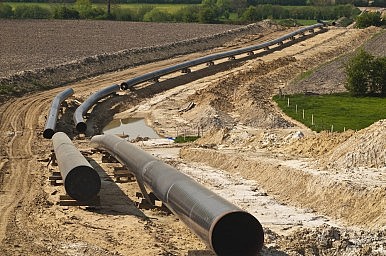
The Asian Development Bank this week oversaw the signing of an investment agreement among the four partners in the much-discussed Turkmenistan-Afghanistan-India-Pakistan pipeline. The four agreed to invest an initial budget of more than $200 million.
As has been frequently discussed in these pixels, the TAPI project is impressive in its ambitions and massive in its mysteries. Last December, Turkmenistan hosted a groundbreaking ceremony and in February regional media reported that Turkmen President Gurbanguly Berdimuhamedov had told a gathering of his ministers that “topographic, engineering and survey works have been completed for the construction of TAPI.”
The recent ADB press release, however, implies otherwise:
This [the $200 million investment] includes funding for detailed engineering and route surveys, environmental and social safeguard studies, and procurement and financing activities, to enable a final investment decision, after which construction can begin. Construction is estimated to take up to 3 years.
For years TAPI has been spinning its wheels, with the partners making periodic updates and statements which are a simple simulacrum of progress.
In an interview with Reuters, Sean O’Sullivan, the Central and West Asia director general of the ADB, said that present timetables peg 2020 for completion of the pipeline, which will carry 33 billion cubic meters (bcm) of gas annually from the Galkynysh field in Turkmenistan to markets in Afghanistan, Pakistan, and India. According to Reuters, the current plans for the pipeline include an underground pipe through some of the most volatile regions in Afghanistan:
“I agree … we’re going through some of the toughest territory in Afghanistan,” said [O'Sullivan], a transaction adviser for the project.
“The challenge is there. There’s no doubt about it, but I am sure it’s doable.”
He added, “I think if it happens, it will be quite an unprecedented example of regional cooperation, particularly in a region that finds it difficult to cooperate.”
Anti-ISIS-Propaganda Czar’s Ninja War Plan: We Were Never Here.
http://www.thedailybeast.com/articles/2016/03/15/obama-s-new-anti-isis-czar-wants-to-use-algorithms-to-target-jihadis.html
03.15.16
Forget Twitter wars with hard-core extremists—the U.S. is going after jihadis the same way Amazon targets your shopping habits.
The Obama administration is launching a stealth anti-Islamic State messaging campaign, delivered by proxies and targeted to individual would-be extremists, the same way Amazon or Google sends you shopping suggestions based on your online browsing history.
At least that’s the plan, revealed Monday, of new anti-ISIS message czar Michael Lumpkin, now that the White House has put the ink to the final legal measures establishing the Center for Global Engagement, which replaces previous less-than-successful efforts. The new executive order (PDF) expands what Lumpkin can spend, who he can hire, and which parts of the U.S. government he can pull into the new campaign.
“I intend to do what we have done in special operations” to hunt ISIS terrorists, Lumpkin told The Daily Beast. “You need a network to defeat a network, so we’re going to take a network approach to our messaging.”
Those messages won’t say “made in the U.S.A.”
The new center “is not going to be focused on U.S. messages with a government stamp on them, but rather amplifying moderate credible voices in the region and throughout civil society,” said Lisa Monaco, speaking at the Council on Foreign Relations last week. “Recognizing who is going to have the most legitimate voice and doing everything we can to lift that up and not have it be a U.S. message.”
The idea is to give local nonprofits, regional leaders, or activists invisible financial support and technical expertise to make their videos or websites or radio programs look and sound professional—and let them own and distribute the message.
The center will also employ data analysts who will work with private industry partners to sift through the public information any user leaves on social media, to determine who might be leaning toward radicalism and message them directly—though how isn’t clear yet.
“This is uncharted territory,” Lumpkin said. “The U.S. government has not done this type of discrete scalpel-like messaging before.”
Lumpkin is a former Navy SEAL who has political capital to spend after running special operations at the Pentagon since December 2013 and managing successful Joint Special Operations Command raids and the occasional drone strike in Syria and Libya, among other tasks.
He has been blunt in his critique of the previous messaging efforts by the much-maligned and now defunct Center for Strategic Counterterrorism Communications.
Russian Military Modernization
April 8, 2016 | Will Edwards
Check the most recent RT (Russian TV) news coverage from Syria and you will see Moscow’s latest military hardware on display. Russia’s top of the line attack helicopters—the Ka-52 and MI 28N—remain a fixture on the battlefield even after President Vladimir Putin’s nominal declaration of a Russian pullout. Beneath the ostentatious display of shiny new hardware there are questions U.S. policymakers want answers to in order to understand Russian intent. How has the price of oil affected Putin’s string of 16 years of military budget increases? What is the state of Russia’s conventional and nuclear forces in light of recently announced military budget cuts?
The recent drop in oil prices and the subsequent affect on Russia’s state revenue suggests a reexamination of Moscow’s modernization ambitions. Dmitry Orenburg, a senior research scientist at CNA, told the Cipher Brief that the Kremlin has largely insulated the military from deep budget cuts. The recently announced five percent cut to the military’s budget is expected to affect procurement of new weapons and systems rather than Russia’s ability to conduct foreign operations or military exercises. However, the Kremlin has set strict deficit restrictions on how much debt it is willing to incur. The fat left to trim has its limits, therefore, any further decrease in oil prices could force the military to start making capability cuts rather than just ones to procurement.
Not all consequences from the recession are negative. Orenburg points out an interesting side effect of the Russian recession: recruitment rates for the military have increased dramatically as the economy continues to shed jobs.
The budget cuts have yet to put serious restrictions on Russia’s strategic nuclear forces. New ballistic missile submarines are entering service and a replacement strategic bomber is on the drawing table. While both have suffered budget-related delays, other platforms will step in to take up the slack. A new order for updated Tu-160 Black Jacks, a supersonic bomber capable of carrying nuclear missiles, will pick up the slack until the replacement bomber becomes a reality. Russia is replacing nuclear weapons in these systems, some with multiple warheads known as MIRVs. Strategically, MIRVs are most useful as a first strike weapon than as a deterrent. Strategists contend that the concentration of several warheads on one missile fosters a “use it or lose it” mentality in the event of nuclear war. While the U.S. has removed MIRVs from all of its land-based intercontinental ballistic missiles (ICBMs), Russia has not.
Included in the Russian modernization plan (and the U.S.’s) are upgrades to tactical nuclear weapons, that is shorter range, lower yield, battlefield weapons. These devices blur the line between conventional and nuclear armed forces, and could diminish the symbolic power of nuclear weapons as an existential last resort. Further complications stem from the fact that the U.S. is not clear about how Russia intends to use these weapons or even how many they may have.
The Soviet Union Is Falling Apart Again
http://www.bloombergview.com/articles/2016-04-05/the-soviet-union-is-falling-apart-again
April 5, 2016By
Leonid Bershidsky
Armenia and Azerbaijan have announced a truce after three days of fierce fighting in the secessionist region of Nagorno-Karabakh, but the flare-up is proof that the post-Soviet frozen conflicts are not really frozen. At any moment, they can be ignited by the realignment of international alliances and loyalties, and people will start dying again.There are four post-Soviet frozen conflicts. Three smolder around the Black Sea: Transnistria, a separatist region of Moldova, the Georgian regions of Abkhazia and South Ossetia, and, since last year, eastern Ukraine. The first two started in the early 1990s, the third one in 2014, as Russia attempted to destabilize an anti-Moscow government in Kiev. The Nagorno-Karabakh conflict, a territory disputed by Armenia and Azerbaijan, is the oldest.
In 1988, the legislature of this region of Azerbaijan, populated mostly by ethnic Armenians, voted to secede and join Armenia. That country's current president, Serzh Sargsyan, was among the local activists pushing for such a move. Azerbaijan objected and fought a bloody war against Armenia, marked by massacres as both sides attempted ethnic cleansing, the interference of Soviet troops on the Azeri side and the participation of ferocious volunteers from the Russian part of the Caucasus. Armenia won the war, and by the time an internationally brokered cease-fire came into effect in 1994, Nagorno-Karabakh had an almost exclusively Armenian population and was run by a pro-Yerevan government. About 1 million people were displaced.The cease-fire has held for more than two decades despite intermittent border clashes. It's not clear who started the hostilities last weekend that caused dozens of casualties on either side: Armenia and Azerbaijan blame each other. Last fall, Azerbaijan's foreign minister, Elmar Mammadyarov, threatened to attack Nagorno-Karabakh unless Armenia unconditionally withdrew its troops.
Azerbaijan's new decisiveness may stem from the open backing the Muslim country receives from Turkey. Recep Tayyip Erdogan, the Turkish president, has vowed to "support Azerbaijan to the end." This isn't just words: Since turning into a bitter enemy of Russian President Vladimir Putin of Russia after Turkey downed a Russian warplane on the Syrian border last year, Erdogan is eager to let Putin know that he's not afraid. Armenia is a close ally of Russia, part of its flailing Eurasian Economic Union with several other post-Soviet countries, but it's not Russia itself, making it a tempting target for Erdogan. Putin hasn't come out unequivocally in support of Armenia, instead calling on both sides to respect the cease-fire.Azerbaijan, however, cannot afford to break away completely from Russia and join Turkey's orbit. Its traditional economic ties with Moscow have weakened, and it does more trade with the U.S. and major EU countries, but Russia could be a fearsome enemy. So Azerbaijan is hoping for a negotiated solution to the conflict that would curb Armenia's gains.
Lessons Not Being Learned From Belgium’s Dysfunctional Counterterrorism System
Counter-Terrorism: The Lessons Of Belgium Ignored
strategypage.com
The recent ISIL (Islamic State in Iraq and the Levant) attacks in Belgium were a wakeup call for security forces and intelligence agencies throughout Europe. Belgium was shaken and went on high alert in the wake of the November 2016 Paris attacks when it was discovered that the source of the planners and attackers were in Belgium. This was not surprising as many had long criticized Belgium for a dysfunctional counter-terrorism policy that created a de-facto sanctuary for Islamic terrorists.
The recent Belgium attacks were also organized in Belgium and now Belgium is under even more pressure to clean up its mess. But other countries have checked and found that, despite their own energetic counter-terrorism efforts it often wasn’t enough. France, for example found that in the last year the number of suspected Islamic terrorists had risen 50 percent to 8,250. Worse, the French admitted they had problems with some Moslems in their own security forces. France had identified 17 M0slem policemen who had been radicalized since 2012. It was already public knowledge that by early 2015 at least ten Moslem French soldiers had deserted and joined ISIL in Syria. Some of these deserters have since been identified as training other terrorists in skills they learned in the French military. One of these deserters had risen to a leadership position in ISIL. The problems with radicalized police were worse because police have access to police databases containing information about terrorism suspects, counter-terrorism tactics and ongoing counter-terrorism operations. Not all the details of this Islamic terrorists infiltration of the security forces has become public and it is believed there is more of it and the French are, for obvious reasons, not revealing exactly what they are doing about it.
Britain and Germany have similar problems and at one point it was noted in the British media that more Moslem men of military age were joining Islamic terrorist organizations than were joining the British military. In the wake of the 2005 Islamic terrorist bombings in Britain a survey of British Moslems was conducted. Not surprisingly 88 percent of the million Moslems in Britain were either hostile or unsympathetic to Islamic terrorism. But 24 percent has some sympathy for the motives of the terrorists (“defending Islam” and all that) while six percent believed the Islamic terrorist violence was justified. More troubling was the 18 percent of British Moslems who felt little loyalty towards Britain and instead believed “Islam” was where their main loyalty was. Islam stresses this in its scripture.
* Rogers’ nightmare: weaponization of cyber by terrorists
As GAO Finds DoD Wobbly On Cyber Policies, Carter Launches HackerOne
Tactical Cloudlets: Mobile Computing Readies for Battle
by William Matthews
During 14 years of war in the Middle East, Marines and soldiers came to rely on having ready access to computers. And the more capability they had, the more they wanted.
“What that evolved into was a tremendous demand for power and cooling that drove a need for fuel for generators,” said Kenneth Bible, the Marine Corps deputy director of C4 [command, control, communications and computers] and deputy chief information officer.
Fuel trucks became targets for insurgents, and defending them became an extra burden for troops. Clearly, a more efficient solution was needed.
Meet the “tactical cloudlet.” It brings the same concepts of distributed cloud computing to a remote and mobile battlefield scenario. The Marine Corps, Army, and university researchers are all working on the concept.
“We started to look at how we can start to lighten that load, particularly recognizing that the Marine Corps is heading back to more traditional roles” now that the heavy ground combat of Iraq and Afghanistan have come to an end. The Marines anticipate operating lighter expeditionary units that can respond to crises – from embassy evacuations to earthquake relief – in a matter of hours, Bible said.
Those units need computing power as soon as they land. But in order to maintain maneuverability, they need to keep light.
“If I can’t carry it, eat it, or shoot it, then I probably don’t want it,” Bible said. Except that the Marines do want forward deployed computing power, and “cloud computing looked like a great opportunity to lighten the load.”
But computing at the tactical edge is challenging even for the smartest of smart mobile devices. Connectivity there is often intermittent, and computers that are small enough to be highly portable lack the computing power and battery life needed for intensive data crunching.
Cloud computing relies on applications, storage, and computing power that resides not on limited local machines, but on networks of much more capable servers. Clouds enable “thin clients,” such as handheld devices with limited computing power, to tap into much greater computing capabilities via the Internet or other networks.
The Tactical Edge
Clouds work wonderfully well – until you get close to the tactical edge. In hostile environments such as battlefields and disaster zones, mission requirements change rapidly and the need for computing power is great, but communication is likely limited and access to a cloud is problematic.
Not so with cloudlets – they deploy with the troops. They’re just what their name implies – little clouds. They’re comprised of servers and communications gear engineered into small enough packages to be carried to the tactical edge.
To be most useful in combat, cloudlet components should be able to fit into a backpack, Bible said.
When deployed, a cloudlet would create a “communications dome” that stretches out 20 kilometers to 30 kilometers to provide cloud computing capability for “a company-level team” of up to nearly 200 troops, he said.