The Profession of Arms: A Guide for Young Army Officers
It takes courage, especially for a young officer, to check a man met on the road for not saluting properly or for slovenly appearance, but, every time he does, it adds to his stock of moral courage, and whatever the soldier may say, he has respect for the officer who does pull him up.
Read Document →The Dragon's Teeth: Assessing China's Military Modernization
PLA has focused on modernising its capabilities across all warfare domains to achieve these goals. This includes land, air, and maritime operations, nuclear, space, counter-space, electronic warfare and cyberspace operations, aiming to become a fully integrated joint force.
Read Document →Transforming the PLA: A Decade of reorganisation from SSF to ISF
PRC has engaged in a sustained and broad effort to transform the PLA from an infantry-heavy, low-technology, ground forces-centric military into a high-technology, networked force with an increasing emphasis on joint operations and naval and air power projection.
Read Document →Eyes without Borders: Exploring the World of Open Source Intelligence (OSINT) in the Digital Age
Open Source Intelligence (OSINT) is gaining prominence with the rise of social media, the digital society and the vast growth of publicly and commercially available information (PAI and CAI).
Read Document →
The PLA’s Developing Cyber Warfare Capabilities and India's Options
Informationised warfare blurs the lines between peacetime and wartime. A nation in the information age cannot wait for the hostilities to break out to collect intelligence, carryout influence operations, develop antisatellite systems or design computer software weapons.
Read Document →
Galwan and After
Why did China did this when he is under tremendous pressure in all fronts, is this China's salami slice tactics being progressed rigorously, what will be new Rules of Engagement, what will be escalatory control mechanism, who has taken this decision, will there be some pressure put by China in India's North-East through insurgency.
Read Document →
India’s Joint Doctrine for Cyberspace Operations: A Critical Review
Chief of Defence Staff (CDS) General Anil Chauhan and Secretary, Department of Military Affairs, formally released declassified versions of the Joint Doctrines for Cyberspace Operations during the Chiefs of Staff Committee meeting in New Delhi.
Read Document →
Know your Enemy General(now Field Marshal) Syed Aseem Munir
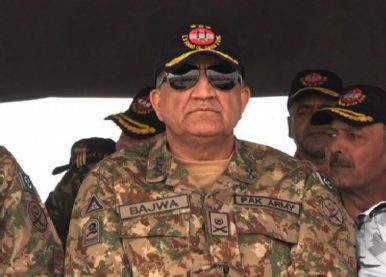
Gen SA Munir's position in the hierarchy of Pakistan was not very comfortable. The state of economy, insurgency in Pakhtoonistan and Balochistan, attack on the Jaffar Express, constant protests by supporters of Imran Khan's supporters inside and outside of parliament.
Read Document →
Decoding Operation SINDOOR: Key Aspects and Implications
Precision strikes were carried out on nine sites—four in Pakistan and five in PoK—linked to anti-India terrorist groups such as the LeT, JeM and the Hizbul Mujahideen. The targeted sites included Muridke (LeT headquarters) and Bahawalpur (JeM headquarters).
Read Document →
Chinese Cyber Exploitation in India's Power Grid - Is There a linkage to Mumbai Power Outage?
The New York Times (NYT), based on analysis by a U.S. based private intelligence firm Recorded Future, reported that a Chinese entity penetrated India’s power grid at multiple load dispatch points. Chinese malware intruded into the control systems that manage electric supply across India, along with a high-voltage transmission substation and a coal-fired power plant
Read Document →4 January 2018
A Breakdown of US Aid to Pakistan
Inner Peace Vital
These days, when I wake up in the morning and start my meditation, I often wonder how many people have been killed and how many children have starved to death while I peacefully slept. Violence in the name of religion is unthinkable. The 20th century was an era of violence that resulted from lack of far-sightedness—giving in to destructive emotions, and lack of moral principles. This was made worse by a belief in the use of force to solve problems.India’s Advanced Air Defense Interceptor Destroys Incoming Ballistic Missile in Test
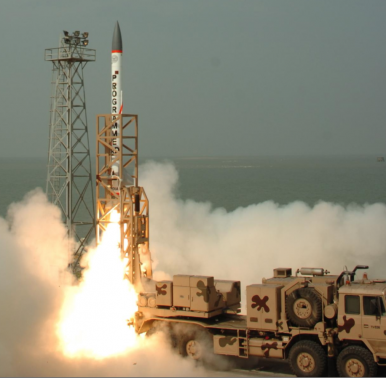
India has successfully test fired its indigenously designed and built Advanced Air Defense (AAD)/ Ashvin Advanced Defense interceptor missile on Abdul Kalam Island, home to the Indian military’s principle missile test facility, the Integrated Test Range, off the coast of Odisha in the Bay of Bengal on December 28, according to local media reports. This was the third supersonic interceptor test carried out in 2017. Other tests were conducted on March 1 and February 11. The last successful AAD interception test took place in May 2016. According to sources within the Defence Research Development Organisation (DRDO), the Indian Ministry of Defense’s (MoD) research and development wing which oversaw the December 28 test, the AAD interceptor destroyed an incoming Prithvi ballistic missile within 30 kilometers of the earth atmosphere.Grading India's Neighborhood Diplomacy
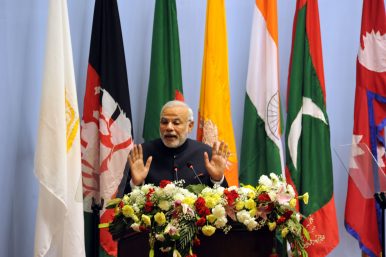
Indian Prime Minister Narendra Modi’s charismatic personality and determined push for India’s economic development have made him immensely popular at home. Modi’s foreign policy initiatives are driven as much by his government’s domestic political strength as by India’s rising concern over rapid expansion of China’s economic clout and military might in Asia.India’s rise is taking place in the shadow of China’s even more dramatic rise. China’s assertive, and often aggressive, behavior has been viewed as a huge challenge for India because it opens up the likelihood of China dominating India’s immediate neighborhood. By focusing a great deal of energy in the neighborhood, the Modi government is demonstrating that India has the capability to promote regional peace and economic integration. Rather than merely complaining about external intervention in South Asia, New Delhi is developing a regional strategy based on India’s natural geographical advantages, economic complementarities, shared cultural heritage, and preeminent strategic position. Modi is perfectly aware that New Delhi’s ability to deal with Washington and Beijing can be significantly enhanced if India achieves greater strategic confidence in South Asian geopolitics.Raja Mandala: Where geography is destiny
Seize the Asian century: why India and China must take the lead
Afghan, Chinese Ministers of Defense Meet in Beijing
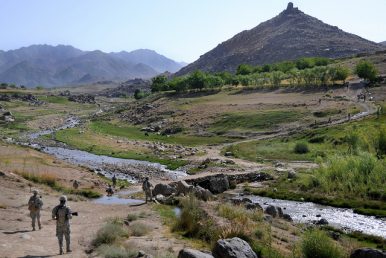
Last week, Xu Qiliang, the vice chairman of China’s powerful Central Military Commission, hosted Afghanistan’s minister of defense, Tariq Shah Bahrami, in Beijing. The meeting underlined the increasingly close military-to-military ties between the two countries. According to Chinese state media, Xu undelined Afghanistan’s friendship with China and noted that “in recent years, bilateral relations have maintained a good momentum of development with increasingly close high-level exchanges and continuously enhanced strategic communication.”Has the Pakistan Army Changed Its India Policy?
The history of India-Pakistan relations show that, every time an attempt is made to build relations, Pakistan’s army sabotages the peace talks by either escalating tensions at the Line of Control (LoC) or sending trained militants to India to launch attacks. On January 2, 2016, for example, a heavily armed group from Pakistan attacked the Indian Air Force base in Pathankot. This attack came immediately after Indian Prime Minister Narendra Modi’s impromptu visit to Lahore to meet his counterpart, Nawaz Sharif. This was followed by another attack carried out on September 18, 2016, where four heavily armed militants, belonging to Jaish-e-Mohammed, managed to cross the porous border and launch a surprise attack on an army camp in Uri in Jammu and Kashmir, resulting in the deaths of 17 soldiers.C. Christine Fair on US-Pakistan Relations
The Trump era in the United States may mark a turning point in the U.S.-Pakistan relationship. Top officials like Secretary of State Rex Tillerson have been upfront about the new U.S. preference for India and frustration with what Washington sees as Pakistan’s continued inaction on terrorism. Meanwhile, Pakistan seems increasingly willing to defy the United States thanks to a newly-deepened partnership with China. These trends were underway during the Obama administration, but seem set to come to a head under Trump.Seize the Asian century: why India and China must take the lead
Beijing is pursuing a complex strategy to corner natural resources
While international attention remains on China’s expansionist activities in the South China Sea’s disputed waters, Beijing is quietly focusing on other waters also — of rivers that originate in Chinese-controlled territory like Tibet and flow to other countries. This shows that China’s new obsession is freshwater, a life-supporting resource whose growing shortages are casting a cloud over Asia’s economic future.Maldives: Free Trade Agreement with China: Regional Impact:
Can China Internationalize the RMB?
What Caused China’s Squeeze on Natural Gas?
Air quality has improved significantly in Beijing this year but an overzealous program to ban coal heating and switch to gas ran into trouble earlier in December. Severe shortages of natural gas – estimates vary from 4.8 billion to 11.3 billion cubic meters – left thousands of rural people shuddering in the cold.This included students in a Hebei primary school, who were forced to study outdoors in the sunshine to keep warm. And in another report, construction workers in Shanxi were detained for burning coal to keep warm.Islamic State Returns to Guerrilla Warfare in Iraq and Syria
Korean War, a ‘Forgotten’ Conflict That Shaped the Modern World
The Korean War has been called “the Forgotten War” in the United States, where coverage of the 1950s conflict was censored and its memory decades later is often overshadowed by World War II and the Vietnam War. But the three-year conflict in Korea, which pitted communist and capitalist forces against each other, set the stage for decades of tension among North Korea, South Korea and the United States. It also helped set the tone for Soviet-American rivalry during the Cold War, profoundly shaping the world we live in today, historians said.The American empire is crumbling
U.S. NATURAL GAS IN THE GLOBAL ECONOMY
Whither nationalism?
JAN PIETRZAK has just one demand. He’s not fussy about the design of the centennial arch with which he wants to mark the Polish victory over the Bolshevik armies in 1920. But he does insist that it must be taller than the 237-metre (778-foot) Palace of Culture and Science, given to the Polish nation by Stalin. Mr Pietrzak is a gruff old man with white hair and a fine, bushy moustache, a popular entertainer best known for a patriotic song that became an anthem for Solidarity in the 1980s. Although the Warsaw authorities have balked at his dream of a triumphal arch, he has the backing of the Law and Justice party, which forms the national government. It will be a symbol, he says: “Young people …will know that Poland was victorious—like Trafalgar Square.”2017 Was the Year of False Promise in the Fight Against Populism
An AI-Powered Network Could Save the US Navy Billions of Dollars
Pandora’s Bot: How Cyber Weapons Can Wreak Havoc
Bottom Line: U.S. cyber defenders know how to take down botnets – networks of computers that have been hacked to act as one – but not how to keep them from coming back, nor necessarily how to determine who is behind them and hold them accountable. These networks under the remote control of hacktivist, criminal or state-sponsored hackers are able to wreak havoc on modern society by enabling theft, espionage, information warfare and disruption at an unprecedented scale.Cybersecurity in the 2017 National Security Strategy
Today, the Trump administration released its National Security Strategy. This piece will address one narrow element of the document: cybersecurity. It’s a hot topic, but compared to North Korea’s nuclear-tipped missile program, Iran’s destabilizing activities in the Middle East, China’s muscle-flexing across almost all domains of statecraft, and Russia’s growing role as a spoiler around the world, I thought the National Security Strategy wouldn’t have much to say about cybersecurity. I was wrong.Infographic Of The Day: The Most Overhyped Sectors In Tech
Nobody's Ready for the Killer Robot
It was another busy year for everybody's favorite automotive-industry disruptor, space-travel visionary and potential James Bond villain Elon Musk. Tesla surpassed Ford and General Motors in market capitalization; the Gigafactory began churning out lithium-ion batteries; his neighborhood roofing company began installing solar panels that aren't crimes against architecture; he's sending two rockets to Mars; he started digging a giant tunnel under Los Angeles; and he dissed President Donald Trump over the Paris Climate Accord. (OK, he had a few misses too; just ask anybody on the Model 3 waiting list.)