The Profession of Arms: A Guide for Young Army Officers
It takes courage, especially for a young officer, to check a man met on the road for not saluting properly or for slovenly appearance, but, every time he does, it adds to his stock of moral courage, and whatever the soldier may say, he has respect for the officer who does pull him up.
Read Document →The Dragon's Teeth: Assessing China's Military Modernization
PLA has focused on modernising its capabilities across all warfare domains to achieve these goals. This includes land, air, and maritime operations, nuclear, space, counter-space, electronic warfare and cyberspace operations, aiming to become a fully integrated joint force.
Read Document →Transforming the PLA: A Decade of reorganisation from SSF to ISF
PRC has engaged in a sustained and broad effort to transform the PLA from an infantry-heavy, low-technology, ground forces-centric military into a high-technology, networked force with an increasing emphasis on joint operations and naval and air power projection.
Read Document →Eyes without Borders: Exploring the World of Open Source Intelligence (OSINT) in the Digital Age
Open Source Intelligence (OSINT) is gaining prominence with the rise of social media, the digital society and the vast growth of publicly and commercially available information (PAI and CAI).
Read Document →
The PLA’s Developing Cyber Warfare Capabilities and India's Options
Informationised warfare blurs the lines between peacetime and wartime. A nation in the information age cannot wait for the hostilities to break out to collect intelligence, carryout influence operations, develop antisatellite systems or design computer software weapons.
Read Document →
Galwan and After
Why did China did this when he is under tremendous pressure in all fronts, is this China's salami slice tactics being progressed rigorously, what will be new Rules of Engagement, what will be escalatory control mechanism, who has taken this decision, will there be some pressure put by China in India's North-East through insurgency.
Read Document →
India’s Joint Doctrine for Cyberspace Operations: A Critical Review
Chief of Defence Staff (CDS) General Anil Chauhan and Secretary, Department of Military Affairs, formally released declassified versions of the Joint Doctrines for Cyberspace Operations during the Chiefs of Staff Committee meeting in New Delhi.
Read Document →
Know your Enemy General(now Field Marshal) Syed Aseem Munir
Gen SA Munir's position in the hierarchy of Pakistan was not very comfortable. The state of economy, insurgency in Pakhtoonistan and Balochistan, attack on the Jaffar Express, constant protests by supporters of Imran Khan's supporters inside and outside of parliament.
Read Document →
Decoding Operation SINDOOR: Key Aspects and Implications
Precision strikes were carried out on nine sites—four in Pakistan and five in PoK—linked to anti-India terrorist groups such as the LeT, JeM and the Hizbul Mujahideen. The targeted sites included Muridke (LeT headquarters) and Bahawalpur (JeM headquarters).
Read Document →
Chinese Cyber Exploitation in India's Power Grid - Is There a linkage to Mumbai Power Outage?
The New York Times (NYT), based on analysis by a U.S. based private intelligence firm Recorded Future, reported that a Chinese entity penetrated India’s power grid at multiple load dispatch points. Chinese malware intruded into the control systems that manage electric supply across India, along with a high-voltage transmission substation and a coal-fired power plant
Read Document →29 October 2014
Melting glaciers, changing climate
5% Army officers still ‘come from Sainik Schools’
Tribune News Service
Shimla, October 28
Even today Sainik Schools and Rashtriya Indian Military College (RIMC) contribute five to six per cent of the officers to Indian army, says head of Doctrine branch at Army Training Command (ARTRAC), Shimla Major General Sukesh Rakshit.
While grooming of students at Sainik Schools, focus is on overall development of students, including academics, co-curricular activities, physical fitness and discipline, besides inculcating in them a spirit of staunch nationalism.
The curriculum is continuously upgraded to keep the students abreast of the latest trends and developments. The students not joining the army do well in other fields. The focus on physical fitness and sports makes the students bold, tough and capable of facing challenges. This helps them during examinations for entry into the Indian Army.
Not only a large number of pass-outs from Sainik Schools enter the Army, but they also hold high positions in the Air force and Navy. The number of Generals coming out of Sainik schools is in three digits, he added.
At present, there are 27 Sainik Schools in the country. These are managed by Sainik Schools Society.
The objective of the Sainik Schools is to prepare students to lead as officers in the defence services of the country. The schools select promising students through entrance examination. After that the focus is on moulding their overall personality with emphasis on extracurricular activities.
The Army, which was a leading career choice of youth, had been relegated to lower positions in recent years and brilliant students were not joining the Army. However, after the Sixth Pay Commission and improved service conditions in the Army, the trend has reversed and shortage of officers at middle level has been reduced drastically, says another General.
The concept of Sainik Schools came into being in 1961 to rectify regional and class imbalance among the officer cadre of the Indian military and to prepare students for entry into the National Defence Academy (NDA) Khadakwasla and Pune and Indian Naval Academy.
http://www.tribuneindia.com/2014/20141029/nation.htm#19
Sound & fury
PULLING THE TRIGGER IS NOT THE ONLY OPTION
China tells Nepal what to do
Control of Terrain in Iraq: October 26, 2014
THE DISHONOUR OF BEING SLIGHTED BY HISTORY
Nobel Peace Prize: For less than noble reasons.
Procurement: Indian Mirage Upgrade Is A Mirage
Kill funding to kill terrorism
**** Principle, Rigor and Execution Matter in U.S. Foreign Policy
Iran, Pakistan Exchange Mortar Fire
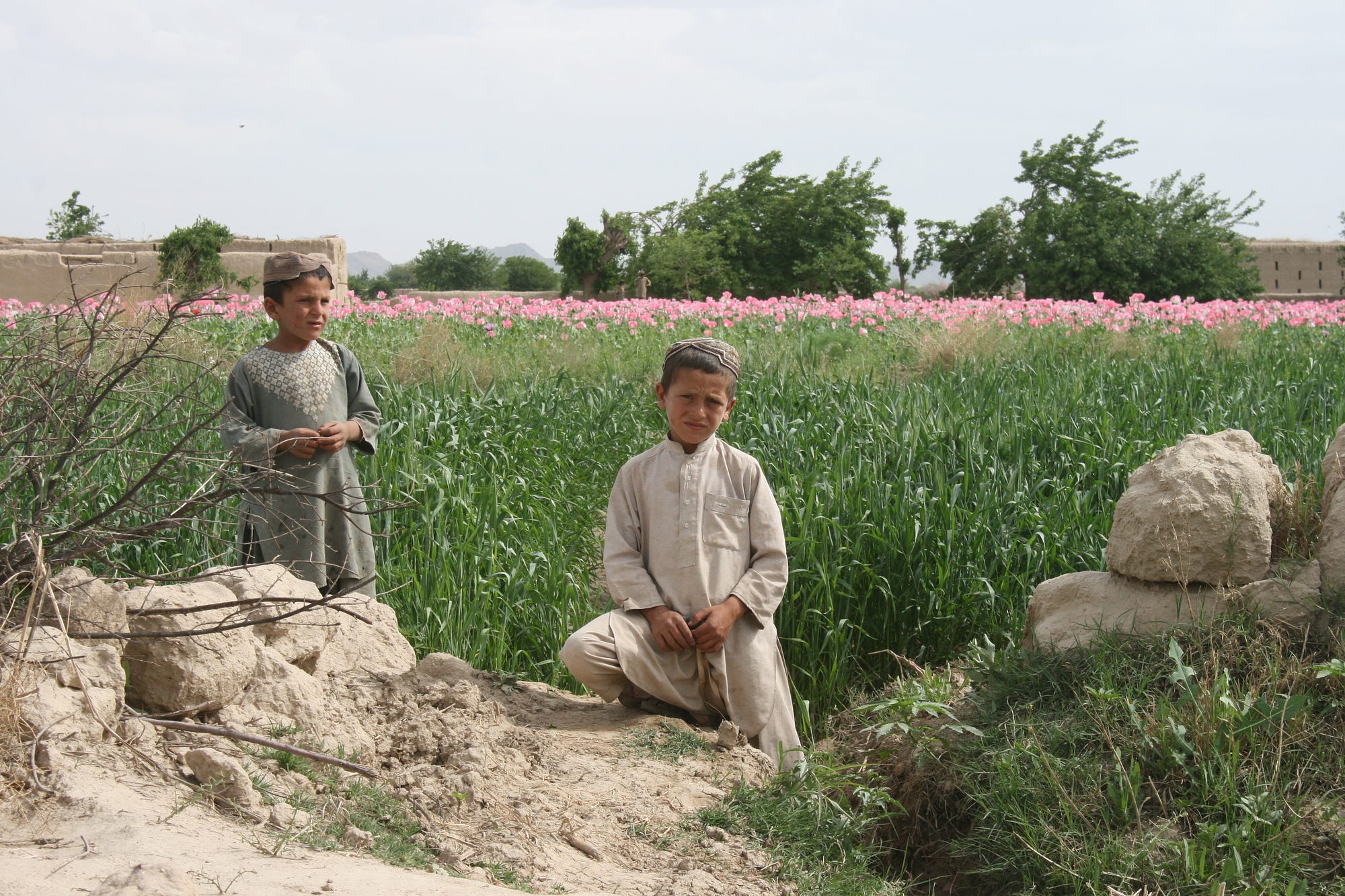
One Easy Way to Blow $7.6 Billion Try eradicating Afghanistan’s poppies
And here’s SIGAR’s kicker. Despite the nearly $8 billion America has spent on eradication efforts, today the Afghan opium trade is booming. At 400,000 acres, the poppy crop in 2013 was the biggest ever.The truth emerges about Afghanistan, an indictment of our war. Now comes the hard part: learning from failure.
Summary: Today’s must read is a retrospective on our expedition to Afghanistan, now that the cloud of lies slowly dissipates. Since Vietnam we’ve masked our failures by myths, short-circuiting our ability to learn. A hegemonic power can substitute power for smarts. The coming multi-polar world will prove more challenging, so that weaknesses become terminal flaws.