The Profession of Arms: A Guide for Young Army Officers
It takes courage, especially for a young officer, to check a man met on the road for not saluting properly or for slovenly appearance, but, every time he does, it adds to his stock of moral courage, and whatever the soldier may say, he has respect for the officer who does pull him up.
Read Document →The Dragon's Teeth: Assessing China's Military Modernization
PLA has focused on modernising its capabilities across all warfare domains to achieve these goals. This includes land, air, and maritime operations, nuclear, space, counter-space, electronic warfare and cyberspace operations, aiming to become a fully integrated joint force.
Read Document →Transforming the PLA: A Decade of reorganisation from SSF to ISF
PRC has engaged in a sustained and broad effort to transform the PLA from an infantry-heavy, low-technology, ground forces-centric military into a high-technology, networked force with an increasing emphasis on joint operations and naval and air power projection.
Read Document →Eyes without Borders: Exploring the World of Open Source Intelligence (OSINT) in the Digital Age
Open Source Intelligence (OSINT) is gaining prominence with the rise of social media, the digital society and the vast growth of publicly and commercially available information (PAI and CAI).
Read Document →
The PLA’s Developing Cyber Warfare Capabilities and India's Options
Informationised warfare blurs the lines between peacetime and wartime. A nation in the information age cannot wait for the hostilities to break out to collect intelligence, carryout influence operations, develop antisatellite systems or design computer software weapons.
Read Document →
Galwan and After
Why did China did this when he is under tremendous pressure in all fronts, is this China's salami slice tactics being progressed rigorously, what will be new Rules of Engagement, what will be escalatory control mechanism, who has taken this decision, will there be some pressure put by China in India's North-East through insurgency.
Read Document →
India’s Joint Doctrine for Cyberspace Operations: A Critical Review
Chief of Defence Staff (CDS) General Anil Chauhan and Secretary, Department of Military Affairs, formally released declassified versions of the Joint Doctrines for Cyberspace Operations during the Chiefs of Staff Committee meeting in New Delhi.
Read Document →
Know your Enemy General(now Field Marshal) Syed Aseem Munir
Gen SA Munir's position in the hierarchy of Pakistan was not very comfortable. The state of economy, insurgency in Pakhtoonistan and Balochistan, attack on the Jaffar Express, constant protests by supporters of Imran Khan's supporters inside and outside of parliament.
Read Document →
Decoding Operation SINDOOR: Key Aspects and Implications
Precision strikes were carried out on nine sites—four in Pakistan and five in PoK—linked to anti-India terrorist groups such as the LeT, JeM and the Hizbul Mujahideen. The targeted sites included Muridke (LeT headquarters) and Bahawalpur (JeM headquarters).
Read Document →
Chinese Cyber Exploitation in India's Power Grid - Is There a linkage to Mumbai Power Outage?
The New York Times (NYT), based on analysis by a U.S. based private intelligence firm Recorded Future, reported that a Chinese entity penetrated India’s power grid at multiple load dispatch points. Chinese malware intruded into the control systems that manage electric supply across India, along with a high-voltage transmission substation and a coal-fired power plant
Read Document →17 October 2019
India’s National Security Challenges: The Growing Chinese Footprint in Sri Lanka and the Maldives
Modi-Xi meet: China will not de-hyphenate India and Pakistan for now, courtesy Sun Tzu
Is Democracy Dying in Afghanistan?
The latest presidential election in Afghanistan on September 28, witnessed only 26 percent turnout, the lowest since 2001. Aside from serious questions about whether such a dismal turnout can grant enough legitimacy to the forthcoming president elect, it reminds Afghans of a crucial fact that they direly need to rethink the democratization process in the country. Chinese Investments in Nepal in the Context of BRI
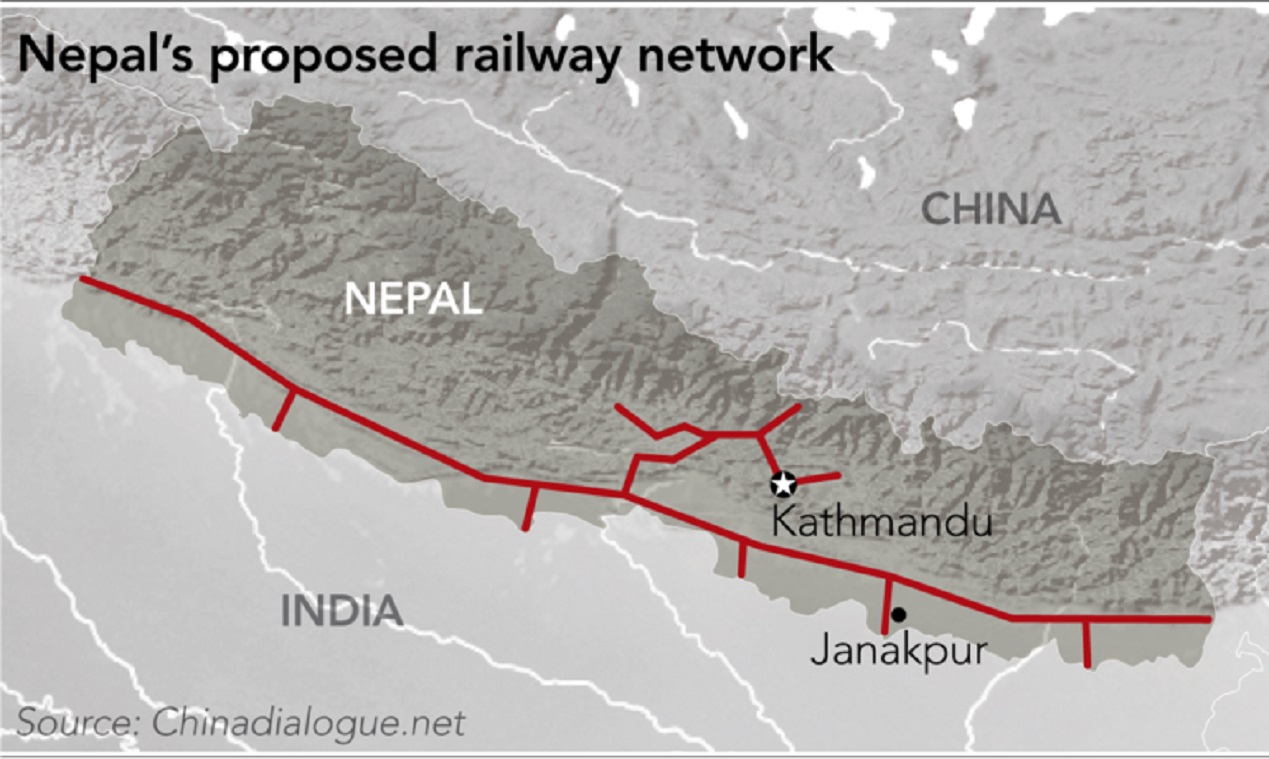
All countries, big or small, promote investment as it plays a crucial role in capital formation and in increasing production, generating employment opportunities and boosting exports. Foreign investment is required when the domestic investment proves inadequate in meeting the requirements. In Nepal, a number of policies have been formulated to attract foreign investment. To promote the industries to be set up in the Special Economic Zone (SEZ), the SEZ Act was passed in 2016. It offers various incentives to the industries on the use of domestic raw materials as well as on the imports of raw materials from outside. Industries to be established in the SEZ were required to export up to 75 percent of their products to other countries.China, Nepal sign trade, infrastructure and security deals
What’s Pushing China’s Tech Sector So Far Ahead?
China’s technology sector has grown so rapidly in the last two decades that it is pushing the United States out of its long-held position at the top of the digital food chain. Advancements by companies like Huawei, WeChat, Baidu, Tencent and others are helping the Chinese economy grow at an unprecedented rate and influencing the global economy. China and the U.S. are battling to be the leader in 5G technology, a fight it seems that Chinese tech companies are winning. A new book by journalist Rebecca Fannin looks at how China has come to dominate areas ranging from telecommunications to artificial intelligence to e-commerce. It is titled Tech Titans of China: How China’s Tech Sector is Challenging the World by Innovating Faster, Working Harder and Going Global. Fannin, who is also the founder of media platform Silicon Dragon Ventures, joined the K@W radio show on SiriusXM channel 132 to talk about her book. (Listen to the full podcast at the top of this page.)The Free World at 30
China's Missiles Could be a New 21st Century Kamikaze Weapon
Defining and Understanding the Next Generation of Salafi-Jihadis
The Origins of New US-Turkish Relations
Iran Is Winning Trump's Foreign Policy Gamble
The U.S. Military Has a Lot of Firepower in the Middle East to Deter Iran
In response to continued threats from Iran and a request from Riyadh, the Pentagon announced Friday the deployment of additional U.S. forces to Saudi Arabia. Washington is seeking to strengthen U.S. combat power in the Middle East as a means to deter additional Iranian aggression and avoid a wider conflict.US policy changes leave Israel alone against Iran
The Kurdish Awakening
A BETTER IDEA CAN WIN THE NEXT BIG WAR FOR THE GROUND SERVICES
For old Cold Warriors like me, it’s Groundhog Day. For the first time since the Sept. 11, 2001, attacks, the ground services are beginning to emerge from two decades of fighting insurgents to refocus on fighting a big war against Russia or China. The Army in particular has been successful in founding an institution, Army Futures Command, specifically tailored to the task of future-gazing. The command is beginning to resurrect an empirical process by which the military looks into the future. This process has a provenance that goes back 30 years to the collapse of the Soviet Union and the onset of the Gulf War.Turkey-Syria offensive: Kurds reach deal with Syrian army
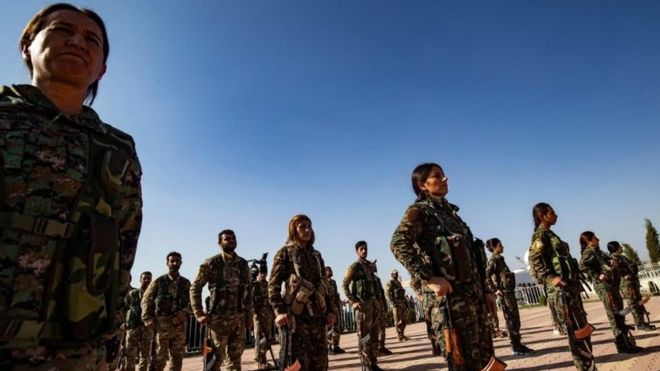
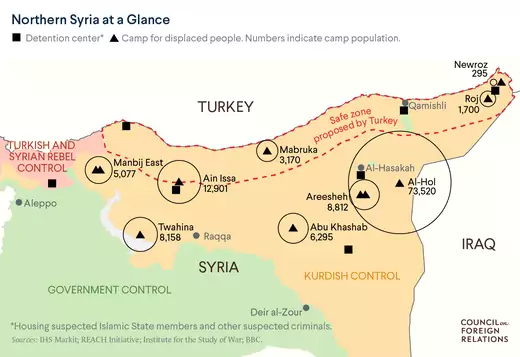
The Kurds in Syria say the Syrian government has agreed to send its army to the northern border to try to halt Turkey's offensive against them.A Hyper-Mobile Defense: Iran’s Novel Strategy to Sustain Proxy Conflicts in the Middle East
Disaster in the Desert
In July 2019, Jason Greenblatt, then U.S. President Donald Trump’s envoy for Israeli-Palestinian negotiations, attended a routine quarterly UN Security Council meeting about the Middle East. Providing an update on the Trump administration’s thinking about the peace process, he pointedly told the surprised audience that the United States no longer respected the “fiction” of an international consensus on the Israeli-Palestinian issue.Climate Change and Food Security: A Test of U.S. Leadership in a Fragile World
Missing the Bigger Picture in Kurdish Syria
An Innovation Challenge for the United States
Dry Hills, Full Ponds: Climate Change, Resilience, and Agriculture in Nepal
Who’s Who in Northern Syria?
AN UNSEEN BUT OUTSIZED INFLUENCE: A HISTORY OF THE NATIONAL SECURITY COUNCIL WITH JOHN GANS
In this episode of Horns of a Dilemma, John Gans, director of communications and research at Perry World House at the University of Pennsylvania, sits down with several members of the University of Texas faculty to discuss his new book, White House Warriors: How the National Security Council Transformed the American Way of War. The discussion is led by William Inboden, editor-in-chief of the Texas National Security Review and director of the Clements Center, Steve Slick, director of the Intelligence Studies Project and former director and senior director for intelligence programs at the National Security Council, and Aaron O’Connell, a veteran of the National Sescurity Council staff and faculty fellow at the Clements Center. The discussion dives into the role of the National Security Council and the challenges it faces. They also discuss Gans’ process in researching and writing White House Warriors.The Return of Geoeconomics
Abandoned by U.S. in Syria, Kurds Find New Ally in American Foe
Inside the Race to Break the Two-Hour Marathon
America’s Slipping Edge—Cyber Saturday
The Aspen Cyber Group, a nonprofit organization that convenes a security-focused partnership between the public and private sectors in the U.S., released a report this week warning that the conditions that led to American prosperity—and supremacy—in the post-World War II era “no longer exist and are unlikely to be seen again.”