A popular US news website reported on Tuesday that the Indian government had forced Twitter to take action against a number of handles that disseminate 'open source' intelligence (OSINT).The Profession of Arms: A Guide for Young Army Officers
It takes courage, especially for a young officer, to check a man met on the road for not saluting properly or for slovenly appearance, but, every time he does, it adds to his stock of moral courage, and whatever the soldier may say, he has respect for the officer who does pull him up.
Read Document →The Dragon's Teeth: Assessing China's Military Modernization
PLA has focused on modernising its capabilities across all warfare domains to achieve these goals. This includes land, air, and maritime operations, nuclear, space, counter-space, electronic warfare and cyberspace operations, aiming to become a fully integrated joint force.
Read Document →Transforming the PLA: A Decade of reorganisation from SSF to ISF
PRC has engaged in a sustained and broad effort to transform the PLA from an infantry-heavy, low-technology, ground forces-centric military into a high-technology, networked force with an increasing emphasis on joint operations and naval and air power projection.
Read Document →Eyes without Borders: Exploring the World of Open Source Intelligence (OSINT) in the Digital Age
Open Source Intelligence (OSINT) is gaining prominence with the rise of social media, the digital society and the vast growth of publicly and commercially available information (PAI and CAI).
Read Document →
The PLA’s Developing Cyber Warfare Capabilities and India's Options
Informationised warfare blurs the lines between peacetime and wartime. A nation in the information age cannot wait for the hostilities to break out to collect intelligence, carryout influence operations, develop antisatellite systems or design computer software weapons.
Read Document →
Galwan and After
Why did China did this when he is under tremendous pressure in all fronts, is this China's salami slice tactics being progressed rigorously, what will be new Rules of Engagement, what will be escalatory control mechanism, who has taken this decision, will there be some pressure put by China in India's North-East through insurgency.
Read Document →
India’s Joint Doctrine for Cyberspace Operations: A Critical Review
Chief of Defence Staff (CDS) General Anil Chauhan and Secretary, Department of Military Affairs, formally released declassified versions of the Joint Doctrines for Cyberspace Operations during the Chiefs of Staff Committee meeting in New Delhi.
Read Document →
Know your Enemy General(now Field Marshal) Syed Aseem Munir
Gen SA Munir's position in the hierarchy of Pakistan was not very comfortable. The state of economy, insurgency in Pakhtoonistan and Balochistan, attack on the Jaffar Express, constant protests by supporters of Imran Khan's supporters inside and outside of parliament.
Read Document →
Decoding Operation SINDOOR: Key Aspects and Implications
Precision strikes were carried out on nine sites—four in Pakistan and five in PoK—linked to anti-India terrorist groups such as the LeT, JeM and the Hizbul Mujahideen. The targeted sites included Muridke (LeT headquarters) and Bahawalpur (JeM headquarters).
Read Document →
Chinese Cyber Exploitation in India's Power Grid - Is There a linkage to Mumbai Power Outage?
The New York Times (NYT), based on analysis by a U.S. based private intelligence firm Recorded Future, reported that a Chinese entity penetrated India’s power grid at multiple load dispatch points. Chinese malware intruded into the control systems that manage electric supply across India, along with a high-voltage transmission substation and a coal-fired power plant
Read Document →24 June 2019
India forced Twitter to suspend open source intelligence handles: Report
A popular US news website reported on Tuesday that the Indian government had forced Twitter to take action against a number of handles that disseminate 'open source' intelligence (OSINT).A War in Crisis! Afghanistan in Mid-2019
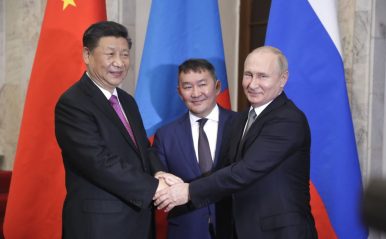
Mongolia: Bridge or Buffer in Northeast Asia?
China's Rare Earth Monopoly Is Diminishing
A Mid-2019 Guide to Chinese Aircraft Carriers
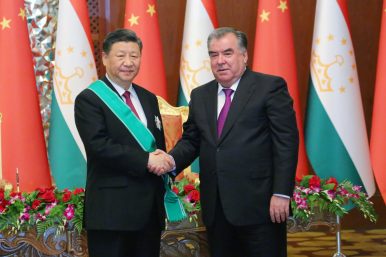
China in Tajikistan: New Report Claims Chinese Troops Patrol Large Swaths of the Afghan-Tajik Border
It's Time for America to Break with Beijing
Xi Jinping has rejected the concept of comparative advantage, the very notion underpinning the system of international commerce. Why should America sign a trade agreement with a country that does not believe in trade?Comfortably Reelected, Indonesia’s Jokowi Opens the Door to China’s Belt and Road
The ballots hadn’t even been counted yet when the deals were announced. On April 26, just two days after Election Day, Indonesia signed 23 memorandums of understanding with China, worth $14.2 billion in all, for several major infrastructure projects. They came after months of silence about Chinese investment in Indonesia—by design, as President Joko Widodo feared attempts by the opposition to paint him as being too pro-China. It worked, as, in the end, the issue of Chinese investment did not play the same divisive role in Indonesia that it did in elections in Malaysia, the Maldives and Sri Lanka. Instead, Jokowi, as Widodo is widely known, easily won reelection.Did Iran Just Invite a U.S. Attack?
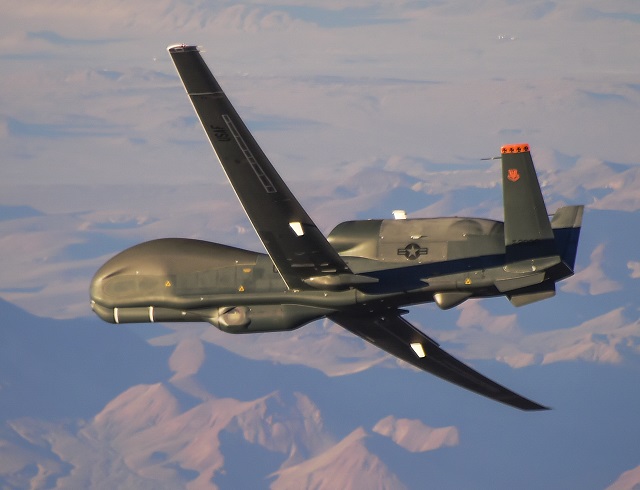
A U.S. Navy RQ-4 Global Hawk drone, an example of which is seen here on June 11, 2012, was shot down by Iranian IRGC surface-to-air missiles near the Strait of Hormuz. Erik Hildebrandt/U.S. Navy via Northrup GrummanGulf Of Oman Attacks: How Merchant Ships Can Keep Safe In Dangerous Waters
Saudi Arabia vs. Iran: The Washington Factor
Dealing with Iran Will Not Be Enough to Restore Regional Stability
US: Iran Shoots Down Global Hawk; Second Drone Down This Month
The Global Hawk was downed after two earlier shots at US drones in the region, and attacks on commercial shipping.
How to Reset U.S.-Russian Relations Today
Good Ends, Bad Means? The EU’s Struggle To Protect Copyright and Freedom of Speech
In its controversial copyright overhaul, the EU struggles to balance intellectual property protection with the free use of the internet. America Can Face Down a Fragile Iran
Seizing Core Technologies: China Responds to U.S. Technology Competition
There is an off-ramp in the U.S.-Iran crisis
Piracy, collisions and missiles: Tankers in troubled waters
China's Changing Role in the Middle East
The New Red Line on Iran Will Fail
2019 Third-Quarter Forecast
The U.S.-China Trade War Will Drag On. While there is a small window for a truce between U.S. President Donald Trump and Chinese President Xi Jinping, there is a stronger likelihood that the White House will follow through on its threat to impose tariffs on remaining Chinese imports. Nearly every move China makes to push back and cope with tariff pressure, including ramping up state backing for strategic industries and retaliating against U.S. businesses, will drive the two economic giants further apart as the trade war continues to damage the global economy.5G just part of technology's 'new Cold War frontline'
We Must Prepare for the Next Pandemic
Reimagining Investing in Frontier Technology
Harvard Kennedy School’s Belfer Center for Science and International Affairs’ Technology and Public Purpose Project (TAPP) and Harvard Business School’s Arthur Rock Center for Entrepreneurship co-hosted Reimagining Investing in Frontier Technology on May 15, 2019. This workshop convened over 70 investors (Limited Partners and General Partners), entrepreneurs, technologists, and others investing in and building frontier technologies in areas including artificial intelligence, genome engineering, advanced computing technologies, and more. The workshop explored the challenges investors and entrepreneurs face in bringing products to market in ways that maximize their benefits to society while minimizing harms.Moscow Pursues Artificial Intelligence for Military Application
New AI Generates Horrifyingly Plausible Fake News
The Legality of Waging War in Cyberspace
The Overlooked Military Implications of the 5G Debate
Much attention has been paid to the economic and espionage implications of a Chinese lead in developing and operating 5G infrastructure, but the military implications remain largely overlooked.Notes from RSA: Time for Cyber B Corps?
The cybersecurity industry always emphasizes the values of community and cooperation and continued dedication to the mission, but its actions does not always match the rhetoric.