The Profession of Arms: A Guide for Young Army Officers
It takes courage, especially for a young officer, to check a man met on the road for not saluting properly or for slovenly appearance, but, every time he does, it adds to his stock of moral courage, and whatever the soldier may say, he has respect for the officer who does pull him up.
Read Document →The Dragon's Teeth: Assessing China's Military Modernization
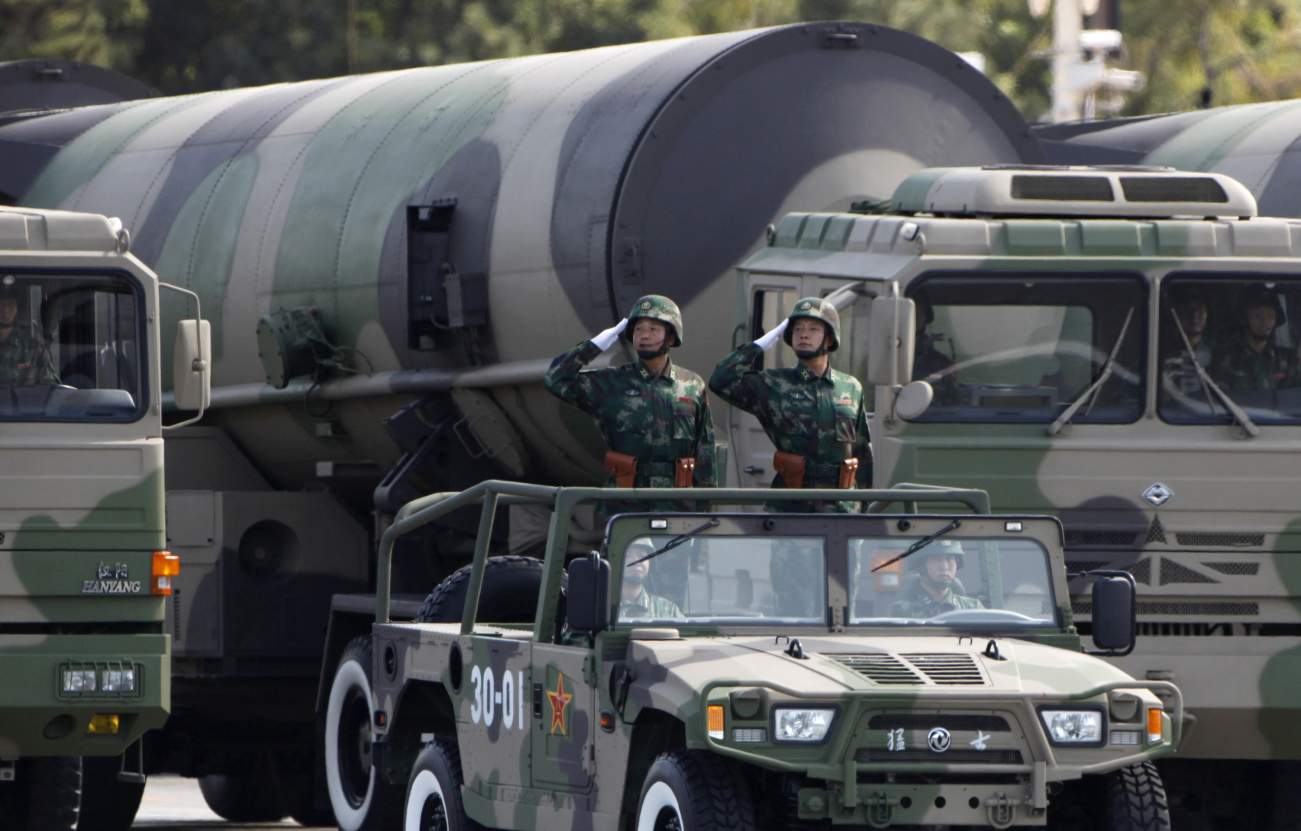
PLA has focused on modernising its capabilities across all warfare domains to achieve these goals. This includes land, air, and maritime operations, nuclear, space, counter-space, electronic warfare and cyberspace operations, aiming to become a fully integrated joint force.
Read Document →Transforming the PLA: A Decade of reorganisation from SSF to ISF
PRC has engaged in a sustained and broad effort to transform the PLA from an infantry-heavy, low-technology, ground forces-centric military into a high-technology, networked force with an increasing emphasis on joint operations and naval and air power projection.
Read Document →Eyes without Borders: Exploring the World of Open Source Intelligence (OSINT) in the Digital Age
Open Source Intelligence (OSINT) is gaining prominence with the rise of social media, the digital society and the vast growth of publicly and commercially available information (PAI and CAI).
Read Document →
The PLA’s Developing Cyber Warfare Capabilities and India's Options
Informationised warfare blurs the lines between peacetime and wartime. A nation in the information age cannot wait for the hostilities to break out to collect intelligence, carryout influence operations, develop antisatellite systems or design computer software weapons.
Read Document →
Galwan and After
Why did China did this when he is under tremendous pressure in all fronts, is this China's salami slice tactics being progressed rigorously, what will be new Rules of Engagement, what will be escalatory control mechanism, who has taken this decision, will there be some pressure put by China in India's North-East through insurgency.
Read Document →
India’s Joint Doctrine for Cyberspace Operations: A Critical Review
Chief of Defence Staff (CDS) General Anil Chauhan and Secretary, Department of Military Affairs, formally released declassified versions of the Joint Doctrines for Cyberspace Operations during the Chiefs of Staff Committee meeting in New Delhi.
Read Document →
Know your Enemy General(now Field Marshal) Syed Aseem Munir
Gen SA Munir's position in the hierarchy of Pakistan was not very comfortable. The state of economy, insurgency in Pakhtoonistan and Balochistan, attack on the Jaffar Express, constant protests by supporters of Imran Khan's supporters inside and outside of parliament.
Read Document →
Decoding Operation SINDOOR: Key Aspects and Implications
Precision strikes were carried out on nine sites—four in Pakistan and five in PoK—linked to anti-India terrorist groups such as the LeT, JeM and the Hizbul Mujahideen. The targeted sites included Muridke (LeT headquarters) and Bahawalpur (JeM headquarters).
Read Document →
Chinese Cyber Exploitation in India's Power Grid - Is There a linkage to Mumbai Power Outage?
The New York Times (NYT), based on analysis by a U.S. based private intelligence firm Recorded Future, reported that a Chinese entity penetrated India’s power grid at multiple load dispatch points. Chinese malware intruded into the control systems that manage electric supply across India, along with a high-voltage transmission substation and a coal-fired power plant
Read Document →10 July 2019
As India extends preschool education to all, incorporate gender sensitivity from the start
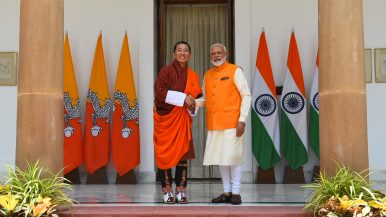
Is India Losing Its Grip on Bhutan?
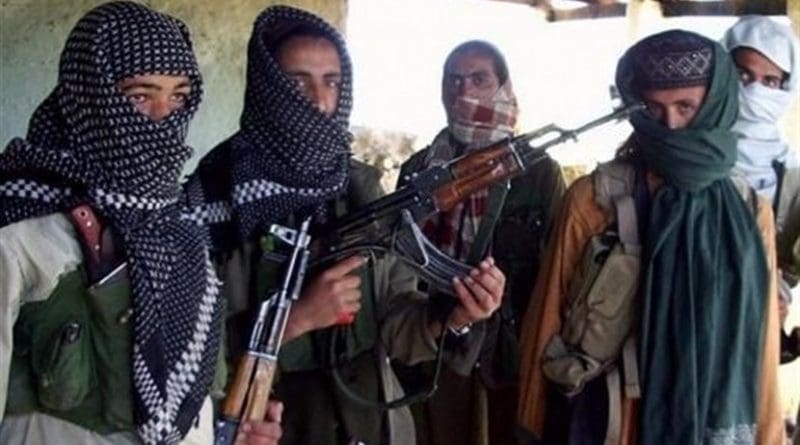
Taliban-Pakistan Nexus An Obstacle To Afghan Peace – Analysis
The increasing spate of attacks in Afghanistan by the Taliban once again highlights the grim security situation and extremist group’s true intentions, amid the seventh round of peace talks between the United States and the Taliban in Qatar. Weaponized AI in Southeast Asia: In Sight Yet out of Mind
What Really Happened to Malaysia’s Missing Airplane
at 12:42 a.m. on the quiet, moonlit night of March 8, 2014, a Boeing 777-200ER operated by Malaysia Airlines took off from Kuala Lumpur and turned toward Beijing, climbing to its assigned cruising altitude of 35,000 feet. The designator for Malaysia Airlines is MH. The flight number was 370. Fariq Hamid, the first officer, was flying the airplane. He was 27 years old. This was a training flight for him, the last one; he would soon be fully certified. His trainer was the pilot in command, a man named Zaharie Ahmad Shah, who at 53 was one of the most senior captains at Malaysia Airlines. In Malaysian style, he was known by his first name, Zaharie. He was married and had three adult children. He lived in a gated development. He owned two houses. In his first house he had installed an elaborate Microsoft flight simulator. He flew it frequently, and often posted to online forums about his hobby. In the cockpit, Fariq would have been deferential to him, but Zaharie was not known for being overbearing.Keeping the Cold War with China from Turning Hot
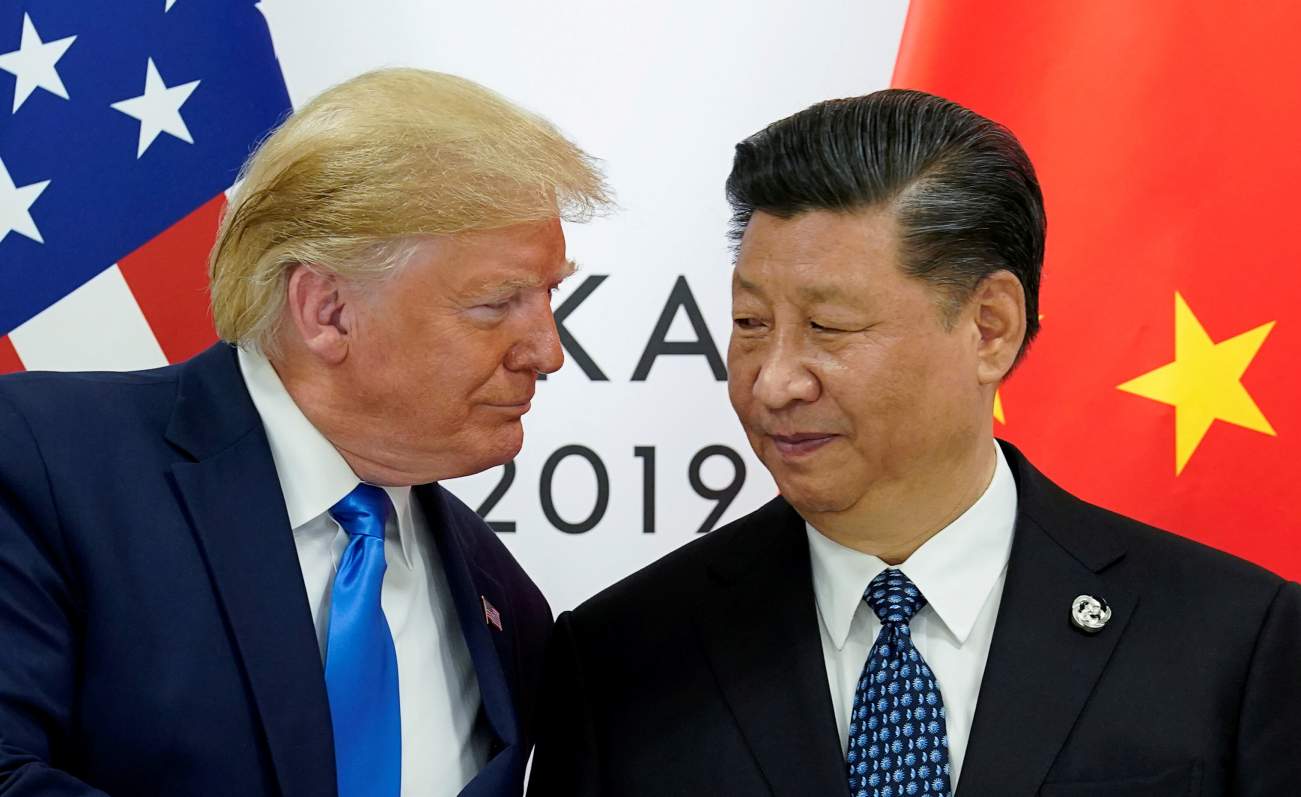
As a hot summer of Iran debate heats up the nation’s capital, one may be at least slightly reassured that President Donald Trump has exercised some measure of restraint—albeit belatedly. Yet, the President’s reasoning, that the proposed strikes would have cost an estimated 150 casualties, implies amisunderstanding regarding the uncertain nature of war and its inherent risks.Could the United States and China be Rivalry Partners?
Ep. 47: Mosul, revisited (part two) with Mike Giglio and Dan Gabriel
Tense U.S.-Iran Relations Have Put the Middle East on the Brink
In May 2018, when U.S. President Donald Trump followed through on a campaign promise to withdraw the U.S. from the 2015 multilateral deal limiting Iran’s uranium enrichment program, Tehran initially reacted by adopting a posture of strategic patience. But after European attempts to keep the deal afloat failed to deliver any respite from the U.S. campaign of “maximum pressure,” and amid increasingly bellicose rhetoric out of Washington, Iran has shifted gears in recent months.Is this the Beginning of the End for Turkey's Erdogan?
A U.S.-Iran War Will Not Be Fought Only in Iran
Romania’s Most Powerful Politician Is in Jail, but Its Corruption Fight Isn’t Over
Some protesters mockingly waved handcuffs in Liviu Dragnea’s face as he left the courtroom in Bucharest to start a three-and-a-half-year prison sentence on May 27. Many others celebrated less publically, seeing the fall of Romania’s most powerful man as proof that the country’s embattled institutions, though under more and more political pressure, still function independently.The Department of Defense needs Mark Esper — and a few policy changes
What Has Become of Abdul-Salaam Ojeili's Syria
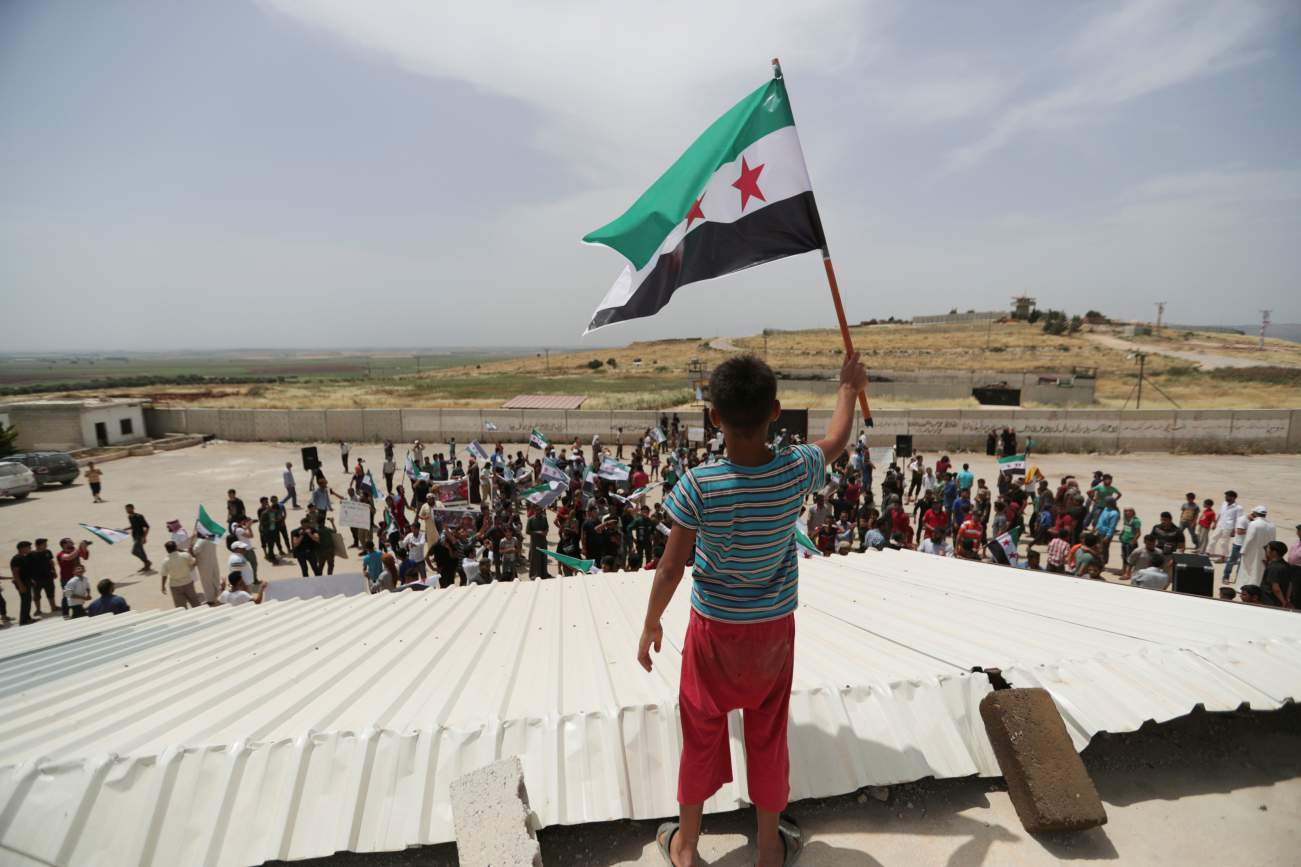
Following a stalemate that had lasted, imperfectly, from September 2018, the Syrian government and their Russian allies launched a campaign in early May against opposition-held territory in Syria’s northwest. If a larger campaign against Idlib province is coming, then it could be the death knell for the Syrian opposition as a force within the country’s borders. Aside from the significant territory east of the Euphrates controlled by the Kurdish-led Syrian Democratic Forces (SDF), and pockets of Turkish-occupied territory in the north, the Syrian government will have reclaimed the country following eight years of war. While this may still be some time away from becoming a reality, it is a fitting time to assess how the Syrian opposition failed in its objective to overthrow Bashar al-Assad and end the regime his father began in 1970.South Korea and the US Indo-Pacific Strategy: At an Arm’s Length?
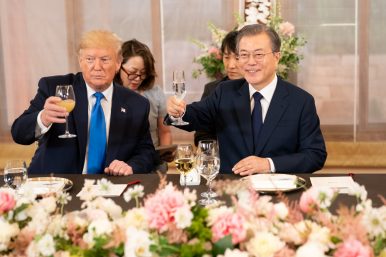
The bilateral outcomes of U.S. President Donald J. Trump’s visit to South Korea at the end of June were largely overshadowed by the headline-grabbing sudden U.S.-North Korea summit meeting at the inter-Korean Demilitarized Zone.Europe Alone
Donald Trump might have found the art of a deal with North Korea
It’s the Institutions, Stupid
American democracy, most observers seem to agree, is in crisis. Some pin the blame on President Donald Trump, citing his assaults on the country’s democratic norms and institutions—the electoral system, the independent judiciary, the rule of law, and the media. “This is not normal,” former President Barack Obama declared in a September 2018 speech rebuking his successor. Others see Trump as merely the culmination of a long decline in American democracy, a story that began decades ago with growing political polarization, congressional infighting, and economic and social inequality. Whatever the precise cause, however, there is a consensus about the effect: a broken system.As Honduran Unrest Flares, So Will Immigration to the United States
Mexico has promised the United States it will reduce the surge in migration across their shared border under threat of U.S. tariffs. The number of Hondurans seeking asylum or employment in the United States will likely remain stubbornly high amid persistent political and economic instability there. The United States will use any continued migrant surge fueled by Honduran unrest to try to extract concessions from the Mexican government, which will, in turn, try to delay making them — if it can.U.S., Vietnam: With a Small Salvo, the U.S. Brings the Trade War to Vietnam
Over the past decade, Vietnam has become one of Southeast Asia's most vibrant emerging economies. The country's large and inexpensive labor pool, stable political environment, favorable investment policy and strong foreign relations has helped escalate Hanoi's move up the industrial value chain. The trade war between the United States and China has also so far served to Vietnam's benefit, with many companies moving to the country to escape its fallout. U.S. unhappiness with Vietnam, however, has grown due to Washington's ongoing trade frictions with Hanoi.Closing Off America From Its Neighbors Isn’t Keeping It Great
As the 17th-century poet John Donne wrote in those immortal lines, “No man is an island, entire of itself; every man is a piece of the continent, a part of the main.”What to Expect From Israel’s Election Re-Run
At the end of May, Prime Minister Benjamin Netanyahu shocked Israel by calling for new national elections after he failed to form a governing coalition. Commentators dubbed the unprecedented new poll “Mo’ed B,” literally, a second scheduled date. The term also implies a second chance at success.Restoring Forests Could Help Put a Brake on Global Warming, Study Finds
What if we stopped cutting down forests to produce palm oil and cattle? What if we grew new forests on vacant city lots, old industrial buildings — even golf courses?