 Hawa, a Hindi word for wind or air, carries a subtler meaning in Indian politics. A politician’s hawa is the tailwind that propels him to victory; it is the superior momentum that comes with being on a roll. For the past five years in the world’s biggest democracy, one man, one party, and one ideological current have pretty much cornered all the hawa. A puffing guardian spirit tangibly energizes Narendra Modi, India’s prime minister; despite his modest stature, the bearded sixty-seven-year-old can fill a room with a swirling air of quiet purpose or, some would say, menace. All across the country hawa can be felt ruffling the ubiquitous orange flags of his Bharatiya Janata, or Indian People’s Party (BJP), and stirring the long-suppressed ambitions of the Sangh Parivar, the “family” of Hindu nationalist groups that is the party’s ideological home.
22 May 2018
A Mighty Wind
Hawa, a Hindi word for wind or air, carries a subtler meaning in Indian politics. A politician’s hawa is the tailwind that propels him to victory; it is the superior momentum that comes with being on a roll. For the past five years in the world’s biggest democracy, one man, one party, and one ideological current have pretty much cornered all the hawa. A puffing guardian spirit tangibly energizes Narendra Modi, India’s prime minister; despite his modest stature, the bearded sixty-seven-year-old can fill a room with a swirling air of quiet purpose or, some would say, menace. All across the country hawa can be felt ruffling the ubiquitous orange flags of his Bharatiya Janata, or Indian People’s Party (BJP), and stirring the long-suppressed ambitions of the Sangh Parivar, the “family” of Hindu nationalist groups that is the party’s ideological home.Now is the best time to create solutions for Bharat
 Vidyaviniyogadvikasah, meaning “development through the application of knowledge,” is the motto of the Indian Institute of Management Ahmedabad (IIMA). This motto has served as an apt rudder throughout the course of its history, as the institute, alumni, staff and faculty played change-makers to address the various developmental needs of India. The impact of these initiatives is incalculable and unreported. The Jawaja Experiment is one such initiative. In the mid-70s, assisted by several volunteers and the National Institute of Design, Ravi J. Matthai, IIMA’s first full-time director, set out to help communities in drought-prone Jawaja in Rajasthan. The goals were education, empowerment and better livelihoods.
Diplomatic manoeuvrings
 May 18, 2018-The United States, the sole global power, has lately brought out four documents: National Security Strategy, National Defence Strategy, Nuclear Posture Review and US South Asia Policy articulating the shift in US policy to great power strategic competition, primarily with China and Russia, and prioritising military options and an arms race over diplomacy and arms control. US President Donald Trump’s policy shows that globalisation and interdependence are not perceptible for global peace and stability, and that they have been replaced by great power competition and conflict with investments in new technologies.
Is Pakistani Agriculture Ready for CPEC?
By Andrew McCormick
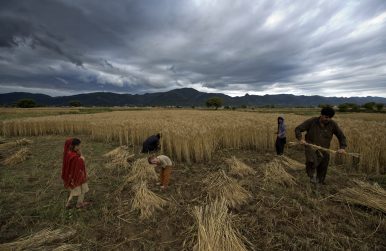 The basmati rice grown in Pakistan’s Punjab province is long and slender-grained. It is aromatic, fluffy when cooked and, in classic Pakistani dishes, pairs well with lentil and gravies made from chickpea flour and spices. At market, it draws double the price, if not more, of non-basmati, long-grain rice varieties. In recent years, however, basmati revenues have slumped in Pakistan amid low-yield harvests and uneven quality. At the Sino-Pakistan Hybrid Rice Research Center in Karachi, Chinese and Pakistani scientists are working to reverse this trend. Using state-of-the-art genetic technologies, they are developing high-yield, high-quality, and pest-resistant rice varieties, for both domestic sale and export.
On The U.S. War In Afghanistan
by Constantin Gurdgiev,
 On and off, I have written occasionally about the complete lack of value-for-money accounting in the U.S. military spending and its imaginary successes. This is just another one of such occasions. Here is a summary of the Special Report by the U.S. military watchdog, filed by the neoconservative in it is geopolitical positioning Foreign Policy magazine (the folks who support wars, like the one conducted in the Afghanistan): http://foreignpolicy.com/2018/05/01/the-afghan-war-isnt-being-won-says-new-pentagon-audit/.
I have summed the main findings in a series of tweets reproduced here:
War with Taiwan would risk China’s place in the global community
By GRANT NEWSHAM
It is an anxious time for Taiwan. China’s People’s Liberation Army is flying bombers around the island, openly simulating attacks on Taiwanese targets, and threatening that it won’t wait for reunification forever; it hopes to scare the island into submission beforehand. The worrisome thing is that Beijing’s Warrior President Xi Jinping seems to be talking himself into a fight. And PLA generals – flush with new weapons and hardware – might be egging him on. If it came to a cross-strait showdown, China could certainly hammer Taiwan, and probably seize the island. But it would come at massive costs in lives, gold and goodwill.
CHINA ‘DREAM’ IS GLOBAL HEGEMONY: U.S. URGED TO COUNTER BEIJING’S MILITARY, ECONOMIC EXPANSION
BY: Bill Gertz
China’s large-scale military buildup, regional coercion, and economic aggression are part of plan for global domination, experts told Congress on Thursday. The nuclear and conventional weapons buildup, militarization of islets in the South China Sea and global infrastructure investments aimed at controlling nations are signs Beijing has emerged as America’s most significant national security challenge, a panel of specialists told a hearing of the House Permanent Select Committee on Intelligence. “The Chinese Communist Party is engaged in a total, protracted struggle for regional and global supremacy,” retired Navy Capt. Jim Fanell, a former Pacific Fleet intelligence chief told the committee.
Impact of Qualcomm and ZTE Cases on US-China Trade War
By Mercy A. Kuo
 Trans-Pacific View author Mercy Kuo regularly engages subject-matter experts, policy practitioners, and strategic thinkers across the globe for their diverse insights into U.S. Asia policy. This conversation with Andrew Gilholm – director of China and North Asia analysis at Control Risks – is the 139th in “The Trans-Pacific View Insight Series.” Explain how geopolitics affects national regulators’ role in cross-border mergers and acquisitions (M&A), and how this may be changing.
Working with Vietnam, Russia's Rosneft Draws China’s Ire
By Nicholas Trickett
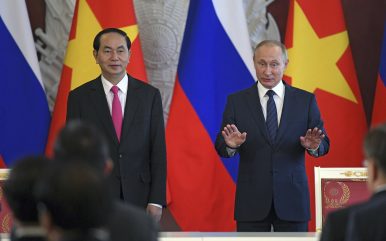 China has been the driving force behind Russia’s “Pivot to Asia,” becoming the largest individual consumer of Russian oil among its energy trade partners. Early this month, it was reported that Russia had completed the delivery of its first S-400 regiment – the country’s most advanced air defense system for export – to China. Beijing’s Ministry of Commerce is signaling that trade turnover with Russia may reach $100 billion this year Russia and that investment under the aegis of the Belt and Road Initiative (BRI) is growing fastest in percentage terms in Russia. Trade is up because oil prices are up, not necessarily because of an economic breakthrough, but the messaging is part of a broader commitment to making it appear as though all is well between the two countries.
The China-Japan Infrastructure Nexus: Competition or Collaboration?
By Ravi Prasad
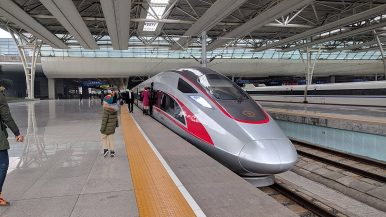 China and Japan are fueling intensified efforts to build infrastructure in Southeast Asia. Both countries have placed infrastructure at the heart of their regional strategies in a new era of infrastructure diplomacy. China launched its flagship Belt and Road Initiative (BRI) in 2013, while Japan initiated its “Partnership for Quality Infrastructure” in 2015. At the same time, ASEAN countries are reorienting their growth strategies toward prioritizing infrastructure. China and Japan are facilitating this shift through offering large amounts of financing and seeking to increase their infrastructure exports.
Do Indonesia’s Surabaya Attacks Signal a Rising Terrorism Threat?
By Erin Cook

Houthi Missiles: The Iran Connection; Scuds Are Not Dead Yet
By RALPH SAVELSBERG
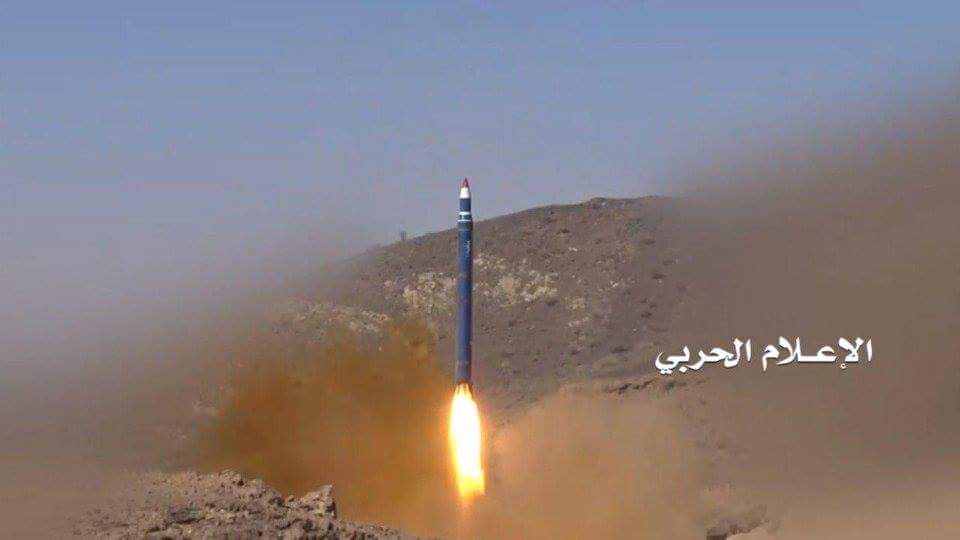 DEN HELDER, Netherlands: The Saudi and US governments have accused Iran of manufacturing ballistic missile used in attacks by Houthis against targets in Saudi Arabia. The longest-ranged flights reached Riyadh, a distance of roughly 950 km, with a missile called the Burkan 2-H (Figure 1 above). In terms of the physical damage they can cause, these missiles with their 500 kg payload make for a relatively poor weapon. However, their speed makes them difficult to intercept (the flight time is only about nine minutes). The fact the launches are continuing a few years after the start of the conflict, shows that the Saudi-led coalition has not succeeded in interdicting Houthi missiles or destroying them on the ground. Consequently, Saudi civilians as far away from the conflict as Riyadh are not completely safe from Houthi attacks. In a broader context, it is a disturbing development that this sort of weapon is in the hands of a rebel movement fighting a war in the Middle East and aligned with Iran. The Scud is not dead yet.
Trump's Strategy for the Middle East Is Working
Leon Hadar
 Remember the days when any sign of growing tensions in the Middle East, not to mention a new act of violence involving Arabs and Israelis, would have immediately triggered pressure on Washington to “do something” as soon as possible. Doing nothing, U.S. officials were warned, could risk a full-blown regional war, outside intervention by global adversaries, oil embargoes, the collapse of pro-American Arab regimes, the survival of Israel, and perhaps even the end of the world as we know it. As the rest of the nation’s international and domestic problems would be placed on the policy backburner, the U.S. president would make urgent phone calls to Middle Eastern leaders, as he and the rest of Washington would consider sending the Marines, dispatching American envoys to the Middle East, launching another “peace process” and perhaps even convening another “peace conference.”
The Gaza Challenge: Social Warfare Strategy in Action
With hundreds of Palestinian casualties and many acres of burned Israeli wheat fields, the week of May 15 is witnessing the predictably tragic climax of several weeks of Palestinian protests along the Gaza border fence in confrontation with the Israel Defense Forces (IDF). These events have pitted the IDF against tens of thousands of protesting Gaza residents, inspired and organized by Hamas, who have managed to set fire to Israeli fields and have aimed to topple the fence and cross into Israel while some are engaging in acts of terrorism under the cover of mass nonviolent protest. Much attention has been given to these events from a current affairs perspective; this short piece offers a more fundamental explanation of the dynamics and their policy implications.
The East-West Divide in Europe’s History Wars
Diverging narratives about history and about World War II in particular are causing a widening rift between the post-Communist countries of Central and Eastern Europe and the older Western European nations of the EU. More than a decade after the former Communist countries of Central and Eastern Europe joined the European Union, there is a widespread belief that deeper European integration has got stuck. Most of the analysis explaining why this is so focuses on issues of economics, political institutions, and corruption. But a big reason why this is so comes from different narratives of history. From Poland to Bulgaria, this is a region that, as Winston Churchill once reputedly said of the Balkans, “produces more history than it consumes.” Recent amendments to Poland’s law on the Institute of National Remembrance are a prime example. The amended law now outlaws any public claim that the Polish nation bears responsibility for and participated in the Holocaust. It puts the actions of “Ukrainian nationalists” on a par with those of Nazi and Communist regimes. This change has caused a strong backlash in the United States, Ukraine, and Israel.
Can the U.S.-Europe Alliance Survive Trump?
 Fifteen years ago, it was the Iraq War that divided Europe and the United States. Five years ago, it was the awkward revelation that the U.S. had been eavesdropping on the German chancellor’s cellphone. The two powers, pillars of the postwar world order, don’t always see eye-to-eye on policies and practices. But U.S. President Donald Trump’s decision to pull out of the Iran nuclear deal and his embrace of a protectionist approach to trade even with close allies have blown a hole in their trans-Atlantic alliance, a breach so big that it could jeopardize decades of stability and prosperity for the West and end up benefiting two other global powers: Russia and China.
Society needs a reboot for the Fourth Industrial Revolution
 Society’s operating system needs an upgrade. The model we have been using is simply not up to the challenges of the Fourth Industrial Revolution. A new era is unfolding at breakneck speed. It has huge potential to address some of the world’s most critical challenges, from food security, to reducing congestion in big cities, to increasing energy efficiency, to accelerating cures to the most intractable diseases. But it also raises a host of social and governance issues that need addressing.
What the Gaza Protests Portend
 The battle against infiltration in the border areas at all times of day and night will be carried out mainly by opening fire, without giving warning, on any individual or group that cannot be identified from afar by our troops as Israeli citizens and who are, at the moment they are spotted, [infiltrating] into Israeli territory. This was the order issued in 1953 by Israel’s Fifth Giv’ati Brigade in response to the hundreds of Palestinian refugees who sought to return to homes and lands from which they had been expelled in 1948. For years after the war, the recently displaced braved mines and bullets from border kibbutzim and risked harsh reprisals from Israel’s army to reclaim their property. The reprisals included raids on refugee camps and villages that often killed civilians, as the Israeli historian Benny Morris and others have laid out. Still, refugees persisted in their attempts to return, and Israel persisted in viewing these attempts as “infiltration.”
HOW THE ENLIGHTENMENT ENDS: PHILOSOPHICALLY, INTELLECTUALLY — IN EVERY WAY — HUMAN SOCIETY IS UNPREPARED FOR THE RISE OF ARTIFICIAL INTELLIGENCE
Henry A. Kissinger
 The speaker described the workings of a computer program that would soon challenge international champions in the game Go. I was amazed that a computer could master Go, which is more complex than chess. In it, each player deploys 180 or 181 pieces (depending on which color he or she chooses), placed alternately on an initially empty board; victory goes to the side that, by making better strategic decisions, immobilizes his or her opponent by more effectively controlling territory.
HYPERSONIC GLIDER: U.S. INTELLIGENCE IN PANIC MODE OVER RUSSIA GETTING INVINCIBLE WEAPON ‘BY 2020’
Russia’s state-of-the-art hypersonic glide vehicle, which analysts say is capable of easily cutting through the existing US missile shield, will become operational by 2020, reports citing US intelligence have warned. Speaking to CNBC on the condition of anonymity, sources aware of US intelligence reports, said the Russian military successfully tested the weapon twice in 2016. The third known test of the weapon was allegedly carried out in October 2017, and allegedly failed when the device crashed seconds before hitting its target.
CYBER SECURITY PROFESSIONAL WARNS OF 5TH AND 6TH GENERATION MALWARE THREAT; POLYMORPHIC, ADAPTIVE, AND HARDER TO DETECT
Gil Shwed, CEO and Founder of the cyber security firm , CheckPoint Technologies, was interviewed on CNBC’s Squawk Box this morning/May 18, 2018, regarding his outlook on the cyber threat. Mr. Shwed said it was imperative that governments and the private sector “develop innovative, sixth generation defenses. Mr. Shwed added that “fifth-generation cyber attacks, excel at identification theft, as well as in targeting cloud services, and mobile devices.”
Italy — what happens next?
 Brussels’ nightmare — a Euroskeptic government in one of the EU’s largest countries — could become reality as soon as next week. The leaders of Italy’s anti-establishment 5Stars and far-right League are putting the final touches on a coalition agreement they have pledged to deliver to Italian President Sergio Mattarella “by Monday.” 5Star leader Luigi Di Maio emerged from a meeting with League leader Matteo Salvini Thursday to say there were still a few “minor details” to be hammered out. Among those: Who will be the country’s next prime minister.
The ironies of George Soros’s foundation leaving Budapest
 Imagine you want to do something nice for the world. Let’s say you believe in the virtues of democracy, freedom of speech and association, government transparency and that sort of thing. Perhaps you have personal experience with how awful life can be in countries that lack these civic features. How about starting an organisation to promote them? Of course, it’s hard to build such an organisation without money. But what if, by fortunate coincidence, you are a canny trader who has made a vast fortune on the currency markets? If you were to launch such an organisation and donate hundreds of millions of dollars over several decades to promoting democracy and freedom all over the world, what sort of reaction might you expect?
How democracy dies
BY JOHN GRAY
“Democracy is no longer the only game in town.” In this short sentence, David Runciman states the most important political fact of our time. When Winston Churchill wrote in 1947 that “democracy is the worst form of government except for all those other forms that have been tried from time to time”, he did so in a context in which the alternatives were Nazism and fascism, which had recently been defeated, and the Soviet Union, which was consolidating its tyrannical hold over half of Europe. Seventy years later, it is no longer obvious that democracy is always the least bad form of government. Runciman explains:
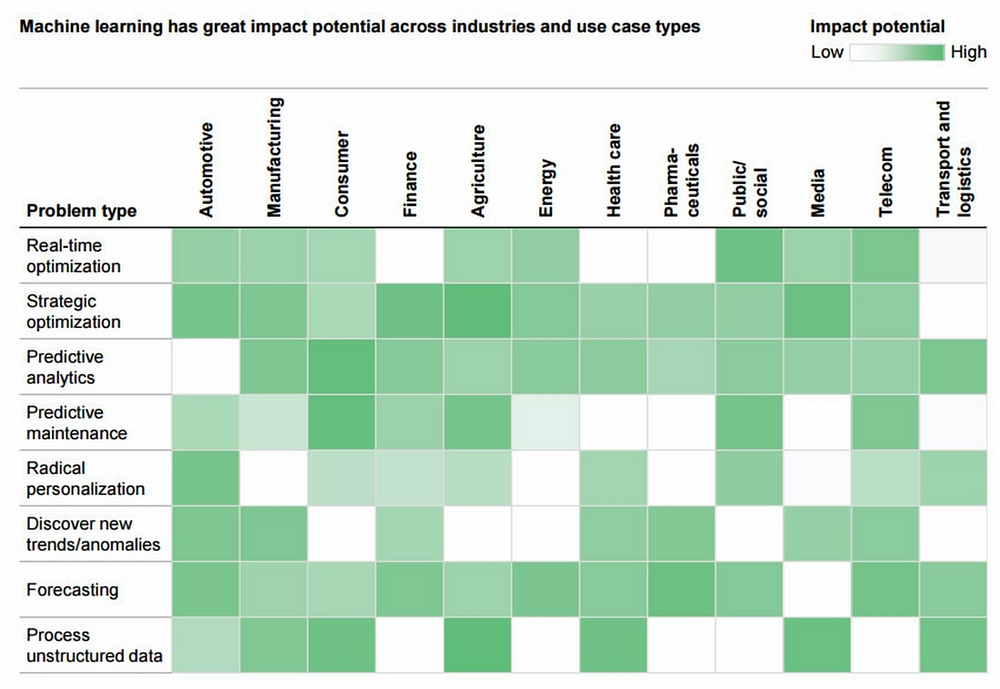 “Heat map” of automation
What Third-country Role is Open to the UK in Defence?
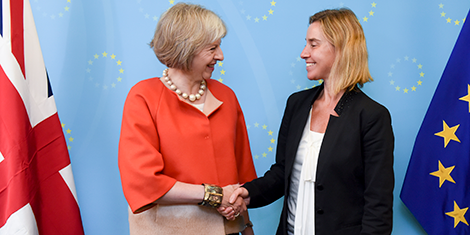 What expectations should the EU harbour with respect to Britain’s continued contribution to EU defence activities after Brexit and can the former member state expect special treatment? With Brexit, the UK will become a ‘third state’ vis-à-vis the European Union. In the defence domain, this means that the UK will no longer take part in EU decision-making or operational (planning) bodies, will not command or be the framework nation of an EU-led force, and any British contribution to an EU operation will be subject to the rules that apply to third countries.