“…in no other democracy do generalists so comprehensively corner the top jobs at the higher levels of the administration. In no other modern society does a person, who got a high rank in an examination 35 years ago, automatically go on and be allotted a high-status, high-impact, and vastly important government job, based only or largely on that exam rank.”The Profession of Arms: A Guide for Young Army Officers
It takes courage, especially for a young officer, to check a man met on the road for not saluting properly or for slovenly appearance, but, every time he does, it adds to his stock of moral courage, and whatever the soldier may say, he has respect for the officer who does pull him up.
Read Document →The Dragon's Teeth: Assessing China's Military Modernization
PLA has focused on modernising its capabilities across all warfare domains to achieve these goals. This includes land, air, and maritime operations, nuclear, space, counter-space, electronic warfare and cyberspace operations, aiming to become a fully integrated joint force.
Read Document →Transforming the PLA: A Decade of reorganisation from SSF to ISF
PRC has engaged in a sustained and broad effort to transform the PLA from an infantry-heavy, low-technology, ground forces-centric military into a high-technology, networked force with an increasing emphasis on joint operations and naval and air power projection.
Read Document →Eyes without Borders: Exploring the World of Open Source Intelligence (OSINT) in the Digital Age
Open Source Intelligence (OSINT) is gaining prominence with the rise of social media, the digital society and the vast growth of publicly and commercially available information (PAI and CAI).
Read Document →
The PLA’s Developing Cyber Warfare Capabilities and India's Options
Informationised warfare blurs the lines between peacetime and wartime. A nation in the information age cannot wait for the hostilities to break out to collect intelligence, carryout influence operations, develop antisatellite systems or design computer software weapons.
Read Document →
Galwan and After
Why did China did this when he is under tremendous pressure in all fronts, is this China's salami slice tactics being progressed rigorously, what will be new Rules of Engagement, what will be escalatory control mechanism, who has taken this decision, will there be some pressure put by China in India's North-East through insurgency.
Read Document →
India’s Joint Doctrine for Cyberspace Operations: A Critical Review
Chief of Defence Staff (CDS) General Anil Chauhan and Secretary, Department of Military Affairs, formally released declassified versions of the Joint Doctrines for Cyberspace Operations during the Chiefs of Staff Committee meeting in New Delhi.
Read Document →
Know your Enemy General(now Field Marshal) Syed Aseem Munir
Gen SA Munir's position in the hierarchy of Pakistan was not very comfortable. The state of economy, insurgency in Pakhtoonistan and Balochistan, attack on the Jaffar Express, constant protests by supporters of Imran Khan's supporters inside and outside of parliament.
Read Document →
Decoding Operation SINDOOR: Key Aspects and Implications
Precision strikes were carried out on nine sites—four in Pakistan and five in PoK—linked to anti-India terrorist groups such as the LeT, JeM and the Hizbul Mujahideen. The targeted sites included Muridke (LeT headquarters) and Bahawalpur (JeM headquarters).
Read Document →
Chinese Cyber Exploitation in India's Power Grid - Is There a linkage to Mumbai Power Outage?
The New York Times (NYT), based on analysis by a U.S. based private intelligence firm Recorded Future, reported that a Chinese entity penetrated India’s power grid at multiple load dispatch points. Chinese malware intruded into the control systems that manage electric supply across India, along with a high-voltage transmission substation and a coal-fired power plant
Read Document →19 June 2018
How Can India Reform Its Civil Service?
“…in no other democracy do generalists so comprehensively corner the top jobs at the higher levels of the administration. In no other modern society does a person, who got a high rank in an examination 35 years ago, automatically go on and be allotted a high-status, high-impact, and vastly important government job, based only or largely on that exam rank.”Mobile App Developers in India Are Always Fighting Losing Battles
Android, the most popular mobile operating system today, is free and open source. So are almost all libraries and toolchains related to Android application development. Given these facts, one would assume that developers all over the world, no matter how poor a country they come from, have an equal chance at making it big on Google Play, the official marketplace for Android apps. Yet, developers living in India, despite their numbers, rarely manage to develop apps or games that go on to achieve wide international acclaim.‘Britain Would Collapse If It Tried to Pay Back the Money it Drained From India’
Britain would collapse if it tried to pay back the money it drained from India, eminent economist Utsa Patnaik said at a conference at Jawaharlal Nehru University, New Delhi on Wednesday. Delivering the inaugural lecture at the three-day Sam Moyo Memorial Conference on “Land and Labour Questions in the Global South”, Utsa Patnaik said that the estimated drain from India to Britain over the period from 1765 to 1938 was a whopping 9.184 trillion pounds, several times the size of the UK’s GDP today.Are We Finally Seeing a Breakthrough in Afghanistan-Pakistan Relations?
Nothing can be more reassuring, if taken at face value, than a tweet in Pashto, one of the two official languages of Afghanistan, by the director-general of the Pakistan military’s media wing congratulating the Afghan cricket squad for its victory against Bangladesh. “We congratulate the Afghan cricket team winning the series against Bangladesh, which also played well,” said the tweet, from Major-General Asif Ghafoor’s personal Twitter account on June 7. Another tweet, again both in English and Pashto, from his official twitter account on June 12 stated that “Pakistan wishes to see National Unity Government and US/NATO succeeding to bring peace in Afghanistan.”China’s New Missiles in the Spratlys May be a Turning Point
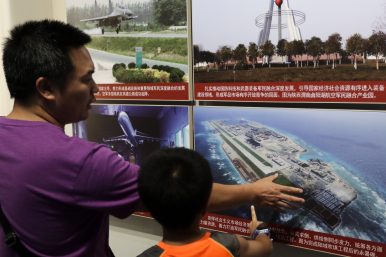
In April, Chinese President Xi Jinping oversaw the PLA Navy’s largest-ever display of warships, submarines, and aircraft in a massive naval review in the South China Sea. Last month, U.S. intelligence sources revealed that around the same time as that show of overt might, China quietly deployed advanced anti-ship cruise missiles and anti-air missiles to bases on three disputed features in the Spratly Islands. In contrast to China’s earlier incremental moves in the South China Sea, this deployment motivated the United States and an expanding coalition of partners to impose new consequences on China and commit to a greater military presence in the region.Here Come the US-China Tariffs
It’s official: the U.S.-China trade war will kick off on July 6. That’s the date U.S. tariffs on a lengthy list of Chinese imports will take effect, with China’s retaliatory tariffs are expected to launch the same day. Back in April, the U.S. Commerce Department had announced that $50 billion worth of Chinese goods would be hit with 25 percent tariffs “in response to China’s policies that coerce American companies into transferring their technology and intellectual property to domestic Chinese enterprises.” June 15 marked the deadline for the United States to release its list of products to be targeted for tariffs, after a public comment process concluded. In that sense, today was also an important drop-dead date for calling off the trade war without any “casualties” (ie actual sanctions being levied).A West in Crisis, an East Rising? Comparing the G7 and the SCO
While much of the world watched the tense G7 meeting in Charlevoix, Canada from June 8 to 9 and chattered about the rapidly approaching June 12 Singapore summit between U.S. President Donald Trump and North Korean leader Kim Jong-un, in Qingdao, China on June 9-10 the leaders of eight other nations also gathered in concert. The Shanghai Cooperation Organization (SCO) annual summit returned to China at the opening of a new chapter. Not only has the organization expanded — this summit was India and Pakistan’s first as full-fledged members — but the global order itself appears to be sliding from West to East. The slide may not be new, but the two summits side-by-side display the dissonance: a West breaking apart and an East consolidating.China Adds Advanced Missiles to South China Sea Islands
China’s military has stepped up militarizing disputed islands in the South China Sea by deploying advanced missile systems on the Spratly islands, according to the Pentagon. Defense officials disclosed to the Washington Free Beacon that the militarization has raised alarm bells about China’s creeping takeover of the strategic waterway used for some $5 trillion annually in international trade. The officials previewed Defense Department concerns detailed in the forthcoming China military power report. The annual report to Congress is expected to be made public in the near future. “China is continuing its gradual deployment of military equipment to its Spratly Islands outposts in the disputed South China Sea,” said one senior official.Iran, Russia: What’s at Stake in the Syrian Civil War
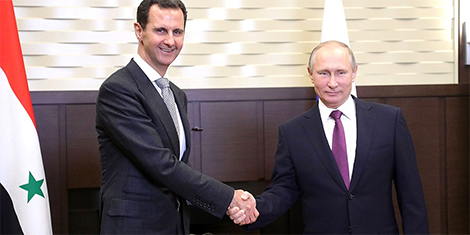
The era of foreign intervention in Syria is coming to an end – at least that’s what Russian President Vladimir Putin said when Bashar Assad, Syria’s president, visited Sochi last week. Granted, Putin’s statement was ambiguous – “in connection with the significant victories … of the Syrian army … foreign armed forces will be withdrawn from the territory of the Syrian Arab Republic” – but Russia’s Syria envoy clarified the next day that Putin was, in fact, calling on all militaries to vacate the country.Grading the Singapore Summit: Compared to What?
Is NATO Pushing Russia Towards Retaliation?
No War But Trade War
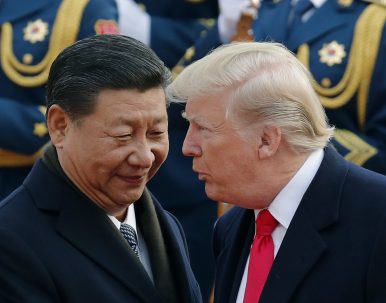
Trade war has been joined. This morning, the United States Trade Representative released a list of sanctions against Chinese goods. China immediately replied with a promise of counter-sanctions against U.S. goods. The reasoning behind the sanctions mostly revolves around the threat posed by China to American intellectual property, manifest in Chinese industrial policy, technology transfer policy, and industrial espionage. This action represents an abrupt reversal of the May 20 declaration that the United States and China would “put the trade war on hold.” But then unpredictability is a hallmark of the Trump administration; indeed, there is good reason to believe that Trump thinks unpredictability is an asset in international negotiations. But it’s worth wondering precisely how the United States is thinking about this trade war. Wars should have a point; it makes it so much more interesting for the participants. And there’s some question as to whether the goal of this war is to make trade with China more fair, or simply to inflict pain on the PRC.Russia’s Electronic Warfare Advances Offers Stealth Capability for Fighter Aircraft
An underlying driver in the reform of the Russian Armed Forces, first initiated in the fall of 2009, has proved to be the adoption and adaption of “command, control, communications, computers, intelligence, surveillance and reconnaissance” (C4ISR) capabilities to offer conventional options against a high-technology adversary. A key factor in the introduction of a Russian variant of the concept of network-centric warfare is the complete overhaul and modernization of its Electronic Warfare (Radioelektronnaya Borba—EW) inventory (see EDM, April 17, May 17). While considerable progress was made in this effort during 2009–2014, advances in Russian C4ISR and EW were exponentially boosted following Russia’s interventions in Ukraine and Syria. Not only have Russian pilots and various specialists benefitted from the combat experience in Syria, but research and development (R&D) into EW has reaped massive rewards from the opportunity to trial and test an array of advanced systems in a complex operational warfighting environment. In this process, one of the chief benefactors has been the Aerospace Forces (Vozdushno Kosmicheskikh Sil—VKS), similarly tried and tested in combat over the past three years in operations over Syria. And now, evidence has emerged of a technological breakthrough for Russian EW capability that, when applied to airpower, offers a de facto stealth capability for some of its most modern fighter platforms (Pravda-tv.ru, June 9; see EDM, December 12, 2017).Training Cyberspace Maneuver
Has the FBI Created a Constitutional Crisis?
Stalin Falsified the Data, Then Killed the Statisticians
The painful history between Russia and Ukraine did not begin with Moscow’s invasion of Crimea in 2014. In the 1930s, the Soviet Union’s policies led to a famine that killed more than 3 million Ukrainians. Joseph Stalin, who directed his paranoia and brutality particularly at Ukrainians, sent his henchmen to confiscate food and block roads. Later, he falsified documents to keep the famine from being written into history. The story is told in Anne Applebaum’s recent book, Red Famine: Stalin’s War on Ukraine. Applebaum, who has won a Pulitzer Prize, joins us this week on our podcast, The ER.BLOCKCHAIN ALL THE RAGE — BUT, IT COMES WITH NUMEROUS RISKS
BAE to develop first-of-its-kind war gaming software for DARPA to model conflicts
The Wounds of the Drone Warrior
The 12 Critical Areas That Require Addressing: An Army General Officer’s (Retired) Perspective
Installations of the Future: A Soldier’s Letter from the Garrison
Questioning the Case for War
Changing change while it changes: The rise of disruptive military thinking (Part 3)
Editor’s Note: Mr. John Sarubbi, Product Marketing Management Leader at IBM, sat down to interview Ben about his upcoming keynote speaking engagement at IBM’s Stream Processing Application Declarative Engine (SPADE) Conference in Copenhagen, Denmark on June 18-21, 2018. SPADE is IBM’s invite-only, signature event fordefense and intelligence. This year’s theme is Re-Thinking Defense and Security in the Digital Age. This interview is broken into a 3-part series. Part one, published last week, focused on the definition and utility of military design. In part two, published earlier this week, Ben explains the evolution and application of military design as well as how it relates to other forms of design such as industry design and civilian design. In this final part of the interview Ben further dives into the vitality of military design for planning military operations that enable a commander to achieve a decisive advantage over an adversary.It’s A Big Deal: An Officer Grades The Army Staff College And Its Leadership
Congratulations to the Graduates of CGSC Class of 2018
Congratulations to the graduates of the 2017-18 GCSC class. In a few weeks, you will depart Fort Leavenworth and starburst outward to new assignments across the world. But before you move to the next part of your career, I would like to offer you one piece of advice. Almost two decades ago, I was in your shoes and I dealt with many of the same struggles that you are about to face. Since that time, I have witnessed the annual arrival of new Majors to our Army units. Through these experiences, I have come to believe that there is one leadership quality that separates a Major who makes a positive difference and those that fall victim to what I call the Angry Iron Major Syndrome. The pattern begins early, with your experience in prior units or during your year at Fort Leavenworth. The symptoms start with seemingly innocent conversations, such as when peers gather and every conversation devolves into raging against the ‘Army’ machine. Some of this venting and discussion is cathartic, but much of it becomes poisonous. Be mindful that, when you introduce and perpetuate this perspective, negativity can lead to cynicism and emotional frustration. If not controlled, this pessimism can become your defining characteristic. I believe that the attitude that you bring to your next series of assignments will determine your effectiveness and your legacy.