The Profession of Arms: A Guide for Young Army Officers
It takes courage, especially for a young officer, to check a man met on the road for not saluting properly or for slovenly appearance, but, every time he does, it adds to his stock of moral courage, and whatever the soldier may say, he has respect for the officer who does pull him up.
Read Document →The Dragon's Teeth: Assessing China's Military Modernization
PLA has focused on modernising its capabilities across all warfare domains to achieve these goals. This includes land, air, and maritime operations, nuclear, space, counter-space, electronic warfare and cyberspace operations, aiming to become a fully integrated joint force.
Read Document →Transforming the PLA: A Decade of reorganisation from SSF to ISF
PRC has engaged in a sustained and broad effort to transform the PLA from an infantry-heavy, low-technology, ground forces-centric military into a high-technology, networked force with an increasing emphasis on joint operations and naval and air power projection.
Read Document →Eyes without Borders: Exploring the World of Open Source Intelligence (OSINT) in the Digital Age
Open Source Intelligence (OSINT) is gaining prominence with the rise of social media, the digital society and the vast growth of publicly and commercially available information (PAI and CAI).
Read Document →
The PLA’s Developing Cyber Warfare Capabilities and India's Options
Informationised warfare blurs the lines between peacetime and wartime. A nation in the information age cannot wait for the hostilities to break out to collect intelligence, carryout influence operations, develop antisatellite systems or design computer software weapons.
Read Document →
Galwan and After
Why did China did this when he is under tremendous pressure in all fronts, is this China's salami slice tactics being progressed rigorously, what will be new Rules of Engagement, what will be escalatory control mechanism, who has taken this decision, will there be some pressure put by China in India's North-East through insurgency.
Read Document →
India’s Joint Doctrine for Cyberspace Operations: A Critical Review
Chief of Defence Staff (CDS) General Anil Chauhan and Secretary, Department of Military Affairs, formally released declassified versions of the Joint Doctrines for Cyberspace Operations during the Chiefs of Staff Committee meeting in New Delhi.
Read Document →
Know your Enemy General(now Field Marshal) Syed Aseem Munir
Gen SA Munir's position in the hierarchy of Pakistan was not very comfortable. The state of economy, insurgency in Pakhtoonistan and Balochistan, attack on the Jaffar Express, constant protests by supporters of Imran Khan's supporters inside and outside of parliament.
Read Document →
Decoding Operation SINDOOR: Key Aspects and Implications
Precision strikes were carried out on nine sites—four in Pakistan and five in PoK—linked to anti-India terrorist groups such as the LeT, JeM and the Hizbul Mujahideen. The targeted sites included Muridke (LeT headquarters) and Bahawalpur (JeM headquarters).
Read Document →
Chinese Cyber Exploitation in India's Power Grid - Is There a linkage to Mumbai Power Outage?
The New York Times (NYT), based on analysis by a U.S. based private intelligence firm Recorded Future, reported that a Chinese entity penetrated India’s power grid at multiple load dispatch points. Chinese malware intruded into the control systems that manage electric supply across India, along with a high-voltage transmission substation and a coal-fired power plant
Read Document →1 May 2019
Trump tightens sanctions on Iran’s oil exports—How India will respond
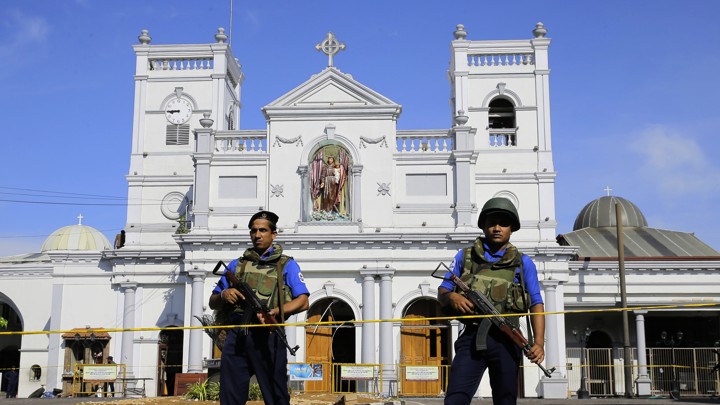
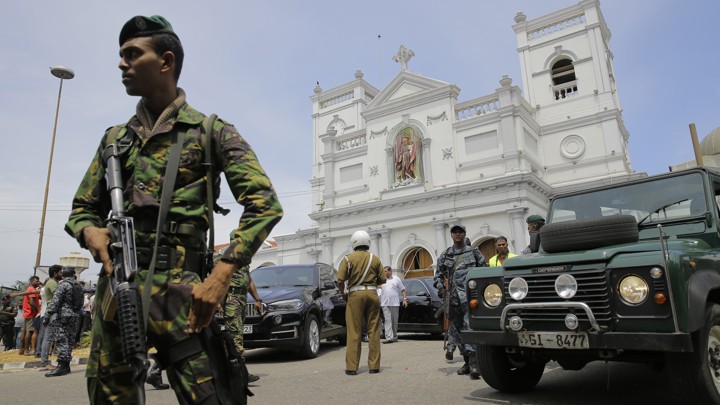
How Sri Lanka’s Christians Became a Target
The deadly bombings in Sri Lanka over the weekend follow a pattern of religious terror that has become grimly familiar around the world. The attackers targeted churches on Easter Sunday, when Christians would be gathered in large numbers and vulnerable during worship. They also chose crowded and exposed public spaces, including hotels likely to be hosting foreign tourists.Sri Lanka Is Already Drawing the Wrong Lessons From the Attacks
Within 72 hours of last Sunday’s Easter attacks in Sri Lanka, Colombo had passed a 30-day Emergency Regulations act. The measure gives the military carte blanche to enforce the already draconian strictures of Sri Lanka’s Prevention of Terrorism Act, which has been in place since the late 1970s.The attacks in Sri Lanka and the threat of foreign fighters
China Retools Vast Global Building Push Criticized as Bloated and Predator
BEIJING — It took only a week for China’s all-powerful President Xi Jinping to yield. Malaysia had publicly slammed China for vastly overcharging on a showcase rail project, canceling the deal.China’s Debt Diplomacy
This week, leaders from around the world are descending on Beijing for China’s second Belt and Road Forum, a conference to showcase China’s signature diplomatic initiative. But these leaders should be clear-eyed that China’s efforts to use its Belt and Road Initiative (BRI) to broaden its geopolitical and economic clout risk saddling developing countries with unsustainable debt while increasing their dependency on China.China Gets a British Bedfellow
The United Kingdom is starting to get on board China’s signature, trillion-dollar Belt and Road Initiative, a departure from the more confrontational line toward Beijing that’s taken hold in Washington and Brussels.A dash of stimulus helps stabilize China’s wobbly economy
Is a U.S.-China War Really Possible?
ISIS’s Newest Recruiting Tool: Regional Languages
When ISIS claimed responsibility for the coordinated bombings in Sri Lanka that killed more than 350 people, it did so, as one would expect, in Arabic and English. But it also issued statements in other languages—including Tamil.The End of Hubris And the New Age of American Restraint
Overextending and Unbalancing Russia
Iran Faces Bleak Options as the U.S. Turns the Screws
Despite the United States' move to end exemption waivers for Iran's oil exports — the country's economic lifeline — Tehran will continue to make some shipments. Nevertheless, the robust measures will exacerbate Iran's economic, currency and financial crises as the country struggles to import much-needed food. Iran's lower and lower middle class will begin to feel economic pain as a result of the sanctions, raising the risk of a humanitarian crisis that would compound the one Iran is already facing because of record flooding. Hard-liners are calling for a strong retaliation, including Iran's departure from the nuclear deal, but such action would come at a high cost for Tehran. As part of its campaign of maximum pressure, the United States is likely to allow other waivers to expire without extension and impose even more sanctions on Iran.In a Search for Options, North Korea Turns to Russia
With relations between the United States and North Korea still in disarray after an abrupt ending to their recent summit in Hanoi, North Korean leader Kim Jong Un is reaching out to another partner: Russia. On April 25, Kim will hold his first summit with Russian President Vladimir Putin. But one key figure who won't be accompanying the North Korean leader to the meeting in Vladivostok is Kim Yong Chol, the country's longtime lead nuclear negotiator with the United States, amid rumors that he lost his post heading the United Front Department, a major party institution. Ultimately, Kim Yong Chol's absence suggests that Pyongyang could be changing up its negotiating team.America Isn’t as Powerful as It Thinks It Is
Just how powerful is the United States? Is it still the unipolar power, able to impose its will on adversaries, allies, and neutrals, and force them—however reluctantly—to go along with policies they think are foolish, dangerous, or simply contrary to their interests? Or are there clear and significant limits to U.S. power, suggesting that it should be more selective and strategic in setting goals and pursuing them?The four “I”s undermining democracy
Cross-Strait risks are rising and need to be managed
Risking Great Power War Over Small Stakes
In recent years, the Pentagon has elevated its concerns about Russia and China as potential military threats to the United States and its allies. But what issues could provoke actual conflict between the United States and either country? And how could such a conflict be contained before it took the world to the brink of thermonuclear catastrophe, as was feared during the cold war?The Importance of Nepal’s First Satellite Launch
Earlier this month, the United States launched Nepal’s first satellite, NepaliSat-1, into orbit. The satellite, equipped with a 5-megapixel camera and a magnetometer, is meant to gather information about Nepal’s topography and earth’s magnetic field, and is part of the greater attention the country is paying to the space realm amid domestic and wider regional developments.The Age of Splinternet: The Inevitable Fracturing of the Internet
The days of a global internet with relative openness are over as regulation and digital borders rapidly increase in the coming years. Nationalism and concerns about digital colonization and privacy are driving the "splinternet." Those forces will not reverse, but only accelerate. The United States will still back a relatively open internet model, but it has clearly assessed that a global pact to govern cyberspace would tie its own hands in the competition with China. A complex labyrinth of different regulations, rules and cybersecurity challenges will rule the internet of tomorrow, which will become increasingly difficult for corporations to navigate.How AI Could Change The Art Of War
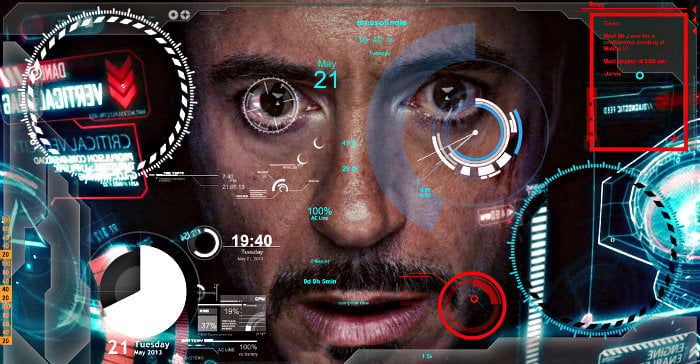
Tony Stark (Robert Downey Jr.) relies on the JARVIS artificial intelligence to help pilot his Iron Man suit -a model the military is looking at for future troops (Marvel Comics/Paramount Pictures)Rush To Military AI Raises Cyber Threats
WASHINGTON: As the US and other countries scramble to develop artificial intelligence (AI) solutions for military applications, the failure fix cyber vulnerabilities is teeing up a rush to failure, senior US and UAE AI gurus worry.Security Think Tank: Surviving the existential cyber punch part 2
Online Information Operations Cross Platforms. Tech Companies' Responses Should Too
In March, Facebook took down more than 2,600 pages, groups and accounts engaged in sweeping coordinated information operations on its platforms—an important step in the platform’s effort to prevent malign actors from spreading content designed to polarize and mislead. However, when our team at the Alliance for Securing Democracy took a close look at the small number of blocked pages and groups about which Facebook and its partner, the Digital Forensic Research Lab (DRFLab), shared information, we found that related accounts on Twitter, YouTube, and Instagram continue to operate, spreading falsehoods. Despite the promises of better communication and reform, there is a concerning lack of coordination between Facebook and its peers. The U.S. Military: Like the French at Agincourt?
Early on a Sunday morning in 1932, a fleet of some 150 fighters, dive-bombers and torpedo planes struck the naval base at Pearl Harbor. The ships lying at anchor on Battleship Row sustained direct hits. Also hit were the base’s fuel storage tanks and the Army Air Corps planes parked nearby at Hickam Field.