In light of the economic slowdown, it is important to note that long-term economic growth is a consequence of individual rights to private property, and its protection from expropriation from other individuals as well as the most powerful entity, the state itself.The Profession of Arms: A Guide for Young Army Officers
It takes courage, especially for a young officer, to check a man met on the road for not saluting properly or for slovenly appearance, but, every time he does, it adds to his stock of moral courage, and whatever the soldier may say, he has respect for the officer who does pull him up.
Read Document →The Dragon's Teeth: Assessing China's Military Modernization
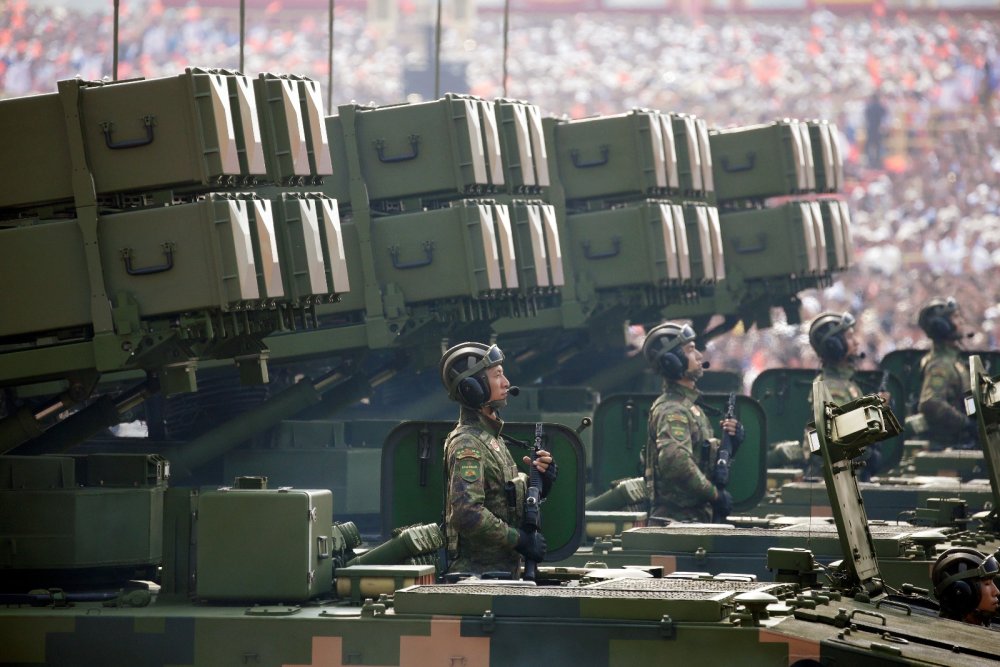
PLA has focused on modernising its capabilities across all warfare domains to achieve these goals. This includes land, air, and maritime operations, nuclear, space, counter-space, electronic warfare and cyberspace operations, aiming to become a fully integrated joint force.
Read Document →Transforming the PLA: A Decade of reorganisation from SSF to ISF
PRC has engaged in a sustained and broad effort to transform the PLA from an infantry-heavy, low-technology, ground forces-centric military into a high-technology, networked force with an increasing emphasis on joint operations and naval and air power projection.
Read Document →Eyes without Borders: Exploring the World of Open Source Intelligence (OSINT) in the Digital Age
Open Source Intelligence (OSINT) is gaining prominence with the rise of social media, the digital society and the vast growth of publicly and commercially available information (PAI and CAI).
Read Document →
The PLA’s Developing Cyber Warfare Capabilities and India's Options
Informationised warfare blurs the lines between peacetime and wartime. A nation in the information age cannot wait for the hostilities to break out to collect intelligence, carryout influence operations, develop antisatellite systems or design computer software weapons.
Read Document →
Galwan and After
Why did China did this when he is under tremendous pressure in all fronts, is this China's salami slice tactics being progressed rigorously, what will be new Rules of Engagement, what will be escalatory control mechanism, who has taken this decision, will there be some pressure put by China in India's North-East through insurgency.
Read Document →
India’s Joint Doctrine for Cyberspace Operations: A Critical Review
Chief of Defence Staff (CDS) General Anil Chauhan and Secretary, Department of Military Affairs, formally released declassified versions of the Joint Doctrines for Cyberspace Operations during the Chiefs of Staff Committee meeting in New Delhi.
Read Document →
Know your Enemy General(now Field Marshal) Syed Aseem Munir
Gen SA Munir's position in the hierarchy of Pakistan was not very comfortable. The state of economy, insurgency in Pakhtoonistan and Balochistan, attack on the Jaffar Express, constant protests by supporters of Imran Khan's supporters inside and outside of parliament.
Read Document →
Decoding Operation SINDOOR: Key Aspects and Implications
Precision strikes were carried out on nine sites—four in Pakistan and five in PoK—linked to anti-India terrorist groups such as the LeT, JeM and the Hizbul Mujahideen. The targeted sites included Muridke (LeT headquarters) and Bahawalpur (JeM headquarters).
Read Document →
Chinese Cyber Exploitation in India's Power Grid - Is There a linkage to Mumbai Power Outage?
The New York Times (NYT), based on analysis by a U.S. based private intelligence firm Recorded Future, reported that a Chinese entity penetrated India’s power grid at multiple load dispatch points. Chinese malware intruded into the control systems that manage electric supply across India, along with a high-voltage transmission substation and a coal-fired power plant
Read Document →20 October 2019
Why property rights matter for India
In light of the economic slowdown, it is important to note that long-term economic growth is a consequence of individual rights to private property, and its protection from expropriation from other individuals as well as the most powerful entity, the state itself.Indians are learning English through TikTok
With EduTok, the company has essentially created virtual miniature classrooms. By watching short, free, and entertaining videos, users can learn English phrases from minor celebrities. TikTok India highlighted two language channels in particular, English with Geet and Awal Creations. Geet, a disabled woman, teaches her followers English idioms like “kicked the bucket,” “spitting image,” and “I’m on the fence.” She has nearly 5 million fans on the platform. The latter, run by influencer Awal Madaan, provides translations from Hindi to English. He has more than 6 million followers.
India Delivers 2 More Mi-24V Attack Helicopters to Afghanistan
The Indian Ambassador to Afghanistan, Vinay Kumar, handed over the the last two of four retrofitted Mi-24V attack helicopters from Belarus to the Afghan Air Force (AAF) at an air base in Kabul on October 15, according to the Indian Embassy in Kabul.India: Residual Risks In Dantewada – Analysis
Inside Afghanistan’s Online Battlefield
In the early 2000s, the war in Afghanistan was largely fought in the country’s rural areas. As the war dragged on, entrepreneurs established social media companies that now drive modern politics. The world evolved into the present social media-dominated age; so did the Afghan war.Can a Negative Decision at the FATF Bolster Hardliners in Pakistan?
Later this week, the Financial Action Task Force (FATF) is set to release its findings concerning Pakistan’s case at the forum. Early reports from the ongoing meeting in Paris suggest that the country may evade blacklisting by the forum. However, it’s still expected that Islamabad will come under a lot of pressure as the majority of the recommendations by the FATF have only been implemented partially.Pakistan: The Weaponization Of Blasphemy – Analysis
Riots broke out in Ghotki town (Ghotki District) of Sindh on September 15, 2019, after a school principal from the minority Hindu community was booked on charges of alleged blasphemy. The Human Rights Commission of Pakistan (HRCP) tweeted a video of protesters breaking the infrastructure of the school and wrote, “Alarming reports of accusations of blasphemy in Ghotki and the outbreak of mob violence”. Videos of stick-wielding protesters were also shared on social media in which they were seen vandalising a Hindu temple. The protests erupted after a FIR (first information report) was filed against the Hindu principal of Sindh Public School on the complaint of Abdul Aziz Rajput, a student’s father, who claimed that the teacher had committed blasphemy. The principal, identified as Notan Lal, was booked and then arrested on charges of blasphemy on September 16. From ‘Land-Locked’ to ‘Land-Linked’: China’s Xi Goes to Nepal
China’s Record on Intellectual Property Rights Is Getting Better and Better
Competing With China on Technology and Innovation
Responding to China’s Complicated Views on International Order
The Cold War 2.0 between China and the US is already a virtual reality
Bolstering the Alliance Amid China’s Military Resurgence
We Asked an Expert to Imagine a U.S.-China War. We Wish We Hadn't.
How does the unthinkable happen? What series of events could lead to war in East Asia, and how would that war play out?Xi Jinping's Hong Kong dilemma
Why China fears sending the tanks into Hong Kong
China’s All-Effects All-Domain Strategy in an All-Encompassing Information Environment
The Middle East’s Lost Decades Development, Dissent, and the Future of the Arab World
Since the 9/11 attacks, the Arab world’s relative economic, social, and political underdevelopment has been a topic of near-constant international concern. In a landmark 2002 report, the UN Development Program (UNDP) concluded that Arab countries lagged behind much of the world in development indicators such as political freedom, scientific progress, and the rights of women. Under U.S. President George W. Bush, this analysis helped drive the “freedom agenda,” which aimed to democratize the Middle East—by force if necessary—in order to eradicate the underdevelopment and authoritarianism that some officials in Washington believed were the root causes of terrorism. Bush’s successor, Barack Obama, criticized one of the cornerstones of the freedom agenda—the U.S. invasion of Iraq in 2003—but he shared Bush’s diagnosis. In his first major foreign policy speech as president, delivered in Cairo in 2009, Obama called on Middle Eastern governments to make progress in democracy, religious freedom, gender equality, and “economic development and opportunity.” Implicit in his remarks was a widely shared view among Western observers of the Middle East: that the Arab world’s dysfunction was a product of social and political arrangements that thwarted human potential, furthered inequality, and favored a small elite to the detriment of the broader population.Explained Can NATO Members Kick Turkey Out of the Military Alliance?
American Withdrawal and the Future of Israeli Security
What is the future of Libya?
The Way Forward in Syria
ISTANBUL — The sudden decision by President Trump to endorse Turkey’s move to send its troops into Syria and pull out most of the American forces posted there seems to have shocked the country’s political and military establishment. American analysts and policymakers see events of the past week as largely benefiting Russia, the Syrian government, the remnants of the Islamic State and Iran.Trump's About-face in Syria Forces Israel to Rethink Its Middle East Strategy
A flash visit by U.S. Secretary of State Mike Pompeo to Israel as part of a campaign to calm the Middle East; a new Iranian accusation against Israel; a quite unusual meeting between the IDF chief of staff and Kahol Lavan chairman MK Benny Gantz – the accumulation of events over the past 24 hours stirs a certain sense of panic in the air. When some media outlets tie everything together (and report that the meeting between IDF chief Avi Kochavi and Gantz was held against the backdrop of “a possible Iranian attack”) it is easy to think that the Iranians are at our door, again.Free college won’t be enough to prepare Americans for the future of work
How Close Is RCEP to Reality?
Trade ministers of 16 countries from the Asia-Pacific region stand for a group photo during the Regional Comprehensive Economic Partnership (RCEP) ministerial meeting in Hanoi, Vietnam on Monday, May 22, 2017. Over the past few years, one of the few bright spots in trade that has been in the spotlight is the Regional Comprehensive Economic Partnership (RCEP). While the initiative continues to receive a lot of headlines, obstacles remain to it becoming a reality.Goodbye to the Middle East
America's Options for the Middle East After Syria
How 5G and data are shaping Army modernization
Fifth-generation telecommunications technology, known as 5G, and data-driven decision-making are changing how the Army operates and what the service’s workforce will need.What the Unrestricted Line Needs from the IW Community
Source Link