| BRIAN KNOWLTON | ||
Washington, Sept. 27: Along with
its surprising military success, the Islamic State group has
demonstrated a skill and sophistication with social media previously
unseen in extremist groups.
And just as the US
has begun an aggressive air campaign against the militants, Richard A.
Stengel, the under secretary of state for public diplomacy, believes the
US has no choice but to counter their propaganda with a forceful online
response.
“Sending a jazz
trio to Budapest is not really what we want to do in 2014,” said
Stengel, referring to the soft-edged cultural diplomacy that sent
musicians like Dave Brubeck on tours of Eastern-bloc capitals to counter
communism during the Cold War. “We have to be tougher, we have to be
harder, particularly in the information space, and we have to hit back.”
But now, digital
operators at the state department are directly engaging young people —
and sometimes extremists — on websites popular in Arab countries,
publishing a stream of anti-Islamic State messages, and one somewhat
shocking video, on Facebook or YouTube or Twitter, using the hashtag
#Think Again Turn Away.
Critics have
questioned whether this effort is large, nimble or credible enough. The
US’s image in West Asia — which seemed perched on the verge of
hopefulness when President Obama delivered a closely watched speech in
Cairo in 2009 — is now at “the bottom of a sliding scale”, said Lina
Khatib, director of the Carnegie Middle East Center, in Beirut.
Stengel, who joined the Obama administration in February after seven years as managing editor of Time
magazine, is focusing his efforts on an approach that reflects Obama’s
insistence that countries like Iraq must take responsibility for their
own defence. While secretary of state John Kerry was assembling a
military coalition against the Islamic State on his most recent trip to
West Asia, Stengel met Arab officials to create what he called in an
interview “a communications coalition, a messaging coalition, to
complement what’s going on the ground”.
The Centre for
Strategic Counterterrorism Communication is the state department’s
spearhead in this fight and potentially defines the kind of pushback it
would like to see friendly countries in the region engage in.
Formed in 2010 to
counter messaging from al Qaida and its affiliated groups, the
interagency unit engages in online forums in Arabic, Urdu, Punjabi and
Somali. It recently added English, making itself more transparent — and
more open to critical scrutiny.
Posting on
Twitter, Tumblr, YouTube and Facebook, members of the unit question
claims made by IS, trumpet the militants’ setbacks and underscore the
human cost of the militants’ brutality. Terror groups in Somalia and
Nigeria are also targeted.
|
||
| NEW YORK TIMES NEWS SERVIC |
28 September 2014
America in digital war with IS

Washington And The World Who’s Afraid of Narendra Modi? Why the Indian prime minister could be good news for Washington.
By ADAM B. LERNER September 26, 2014
Read more: http://www.politico.com/magazine/story/2014/09/whos-afraid-of-narendra-modi-111364.html#ixzz3EaQw9ASK
Before he even landed in New York Friday, Indian Prime Minister Narendra Modi’s celebrity had already touched down on American soil. Among the plans for his weeklong sojourn in New York and Washington, D.C., are a sold-out address to 30,000 people at Madison Square Garden, high-level diplomatic meetings (including with Israeli Prime Minister Netanyahu) and an official visit to the White House, where Modi will meet for the first time with President Obama. Making his trip a little complicated, Modi will be fasting the entire time for the Indian festival of Navaratri, consuming only liquids during his most high-profile foreign trip yet.
But all of this hubbub conceals the extent to which Modi’s election this spring in many ways caught American foreign policy elites with their pants down—and still appears to have them confused over how to approach the new leader of the world’s largest democracy. Hopes for closer U.S.-India haven’t materialized, and Modi’s first few enigmatic months in office have offered few clues to what kind of partner he can be for Washington. In a Wall Street Journal op-ed this week, Modi wrote vaguely of shared goals such as technological innovation, improved education and combatting terrorism. In an interview with Fareed Zakaria last Sunday, pressed on relations with the United States, Modi proposed no substantial policy initiatives, saying that “both Indians and Americans have coexistence in their natural temperament”—not exactly the rhetoric of a bold new alliance.
So how should the United States think of Narendra Modi? Among the Western pundit class, he has been painted as two divergent caricatures—the bold reformer in a rising economy or the bigoted oppressor holding his country back. Conservatives have celebrated Modi’s rise as the beginning of the end for India’s stagnation. In November, Goldman Sachs released an enthusiastic report, “Modi-fying Our View,” that endorsed Modi as an “agent of change” responsible for spurring double-digit economic growth in the state of Gujarat, where he was then chief minister. “India needs a jolt and Mr Modi looks like the man to provide it,” Gideon Rachman wrote in the Financial Times in April. On his visit to India this summer, Secretary of State John Kerry, too, applauded Modi’s “vision” for economic growth.
Read more: http://www.politico.com/magazine/story/2014/09/whos-afraid-of-narendra-modi-111364.html#ixzz3EaQw9ASK
Before he even landed in New York Friday, Indian Prime Minister Narendra Modi’s celebrity had already touched down on American soil. Among the plans for his weeklong sojourn in New York and Washington, D.C., are a sold-out address to 30,000 people at Madison Square Garden, high-level diplomatic meetings (including with Israeli Prime Minister Netanyahu) and an official visit to the White House, where Modi will meet for the first time with President Obama. Making his trip a little complicated, Modi will be fasting the entire time for the Indian festival of Navaratri, consuming only liquids during his most high-profile foreign trip yet.
But all of this hubbub conceals the extent to which Modi’s election this spring in many ways caught American foreign policy elites with their pants down—and still appears to have them confused over how to approach the new leader of the world’s largest democracy. Hopes for closer U.S.-India haven’t materialized, and Modi’s first few enigmatic months in office have offered few clues to what kind of partner he can be for Washington. In a Wall Street Journal op-ed this week, Modi wrote vaguely of shared goals such as technological innovation, improved education and combatting terrorism. In an interview with Fareed Zakaria last Sunday, pressed on relations with the United States, Modi proposed no substantial policy initiatives, saying that “both Indians and Americans have coexistence in their natural temperament”—not exactly the rhetoric of a bold new alliance.
So how should the United States think of Narendra Modi? Among the Western pundit class, he has been painted as two divergent caricatures—the bold reformer in a rising economy or the bigoted oppressor holding his country back. Conservatives have celebrated Modi’s rise as the beginning of the end for India’s stagnation. In November, Goldman Sachs released an enthusiastic report, “Modi-fying Our View,” that endorsed Modi as an “agent of change” responsible for spurring double-digit economic growth in the state of Gujarat, where he was then chief minister. “India needs a jolt and Mr Modi looks like the man to provide it,” Gideon Rachman wrote in the Financial Times in April. On his visit to India this summer, Secretary of State John Kerry, too, applauded Modi’s “vision” for economic growth.
Silk Road Diplomacy

The route of the voyages of Zheng He's fleet.
One minor problem in China’s history-based campaign—the history is distorted.
TANSEN SEN
http://www.outlookindia.com/printarticle.aspx?292067
NEW YORK
The romantic concept of a historic Silk Road by which camel caravans wend among the mountains and deserts of Central Asia is back in the news. So is talk on re-establishing the maritime networks by which the Chinese Admiral Zheng He steered his naval armada across the Indian Ocean seven times. China’s leaders promote the ancient trade routes, most recently during the Chinese President Xi Jinping’s visits to countries in Central and South Asia, to emphasize the nation’s historic role as a harbinger of peace and prosperity.
One minor problem in China’s history-based campaign— the history is distorted.
In September 2013, less than a year after assuming the position of general secretary of the Central Committee of the Communist Party of China, Xi launched new foreign policy initiative known as the “Silk Road Economic Belt.” In an address at Kazakhstan's Nazarbayev University, calling for cooperation and development of the Eurasian region through this new Silk Road initiative, Xi presented five specific goals: strengthening of economic collaboration, improvement of road connectivity, promotion of trade and investment, facilitation of currency conversion, and bolstering of people-to-people exchanges.
A month later, at the 16th ASEAN-China Summit held in Brunei, Chinese Premier Li Keqiang proposed the building of a 21st century “Maritime Silk Road” to jointly foster maritime cooperation, connectivity, scientific and environmental research, and fishery activities. A few days later, in his address to the Indonesian Parliament Xi confirmed this idea and stated that China would devote funds to “vigorously develop maritime partnership in a joint effort to build the Maritime Silk Road of the 21st century,” stretching from coastal China to the Mediterranean Sea.
In both speeches, Xi underscored China’s historical linkages with the respective regions and suggested that his proposals were intended to reestablish ancient friendly ties in a modern, globalized world. In Kazakhstan, Xi credited the Western Han envoy Zhang Qian with “shouldering the mission of peace and friendship” and opening up the door for east-west communication and establishing the “Silk Road.” In Indonesia, he praised the Ming dynasty Admiral Zheng He for bequeathing “nice stories of friendly exchanges between the Chinese and Indonesian peoples.”
India Shouldn't Get Drawn Into Islamic World Rivalries
By G Parthasarathy
New Indian Express and Sunday Standard, 28 Sep14.

The decision by the Obama administration to challenge the writ of the ruthless and extremist Islamic Sate of Iraq and Levant (ISIL) in Syria and Iraq is fraught with dangers of further destabilisation in the Islamic world. The Obama administration has declared that it will use its air power to attack ISIL in both Iraq and Syria. Its armed forces chief, General Dempsey, has indicated that he would not hesitate to seek presidential approval for sending in ground forces to fight side by side with the Iraqi forces and Iraqi Kurds to eliminate ISIL. The US has constituted a “coalition” of around 50 countries, ranging from Saudi Arabia and the UAE to the UK and Australia, which have pledged to back the Americans with air power and economic support. None of these countries have offered ground forces and some have not even publicly acknowledged their “support”.
What has made this entire effort seem strange is that while Iraq has supported the Shia-dominated Assad regime in neighbouring Syria to fight its opponents, including ISIL, the US has stepped up support for anti-Shia opponents of President Assad, like the “moderate” Sunni “Free Syrian Army”. Paradoxically, while the US seeks to fight ISIL in Syria, it simultaneously destabilises the Syrian government, which controls the best equipped and motivated armed forces in Syria. Moreover, the Americans have deliberately not invited the most powerful regional power, Iran, which is a close ally of the Syrian and Iraqi governments, to join its “coalition”.
There are already rumblings against US policies in the powerful Shia militias that back the Iraqi government. There is also unease in Sunni-dominated Arab Gulf countries to make common cause with a Shia-dominated Iraqi government. While both the US and Israel are hostile towards Iran, neither has a clear strategy for co-opting regional powers like Iran to confront ISIL. Moreover, given its close relations with the Assad regime in Syria and with Iran, Russia will not agree to grant international legitimacy to US actions through approval by the UN Security Council. Military intervention in Libya by the US, UK and France has led to the fragmentation of the country, which is now ruled by regional warlords, some of whom have virulently anti-American agendas. There are growing fears of similar Balkanisation, as the Americans wade into Iraq and Syria,
Oded Yinon, an Israeli intelligence analyst, envisaged the “dissolution of Lebanon”, following its invasion by Israel in 1982, as the forerunner for the dismemberment of Iraq and Syria. He predicted that Syria would fall apart into a Shia-Alawite dominated state along its coastal area and two Sunni-dominated states in the Aleppo area and around Damascus, with the Druzes dominating the Golan. A war-torn Syria is already broadly divided on these lines. Yinon also held that in Iraq “three or more states will exist around the three major cities of Basra, Mosul and Baghdad. Shia areas in the south will separate from the Sunni and Kurdish north”. He concluded: “The entire Arabian Peninsula is a natural candidate for dissolution due to internal and external pressures.”
New Indian Express and Sunday Standard, 28 Sep14.
The decision by the Obama administration to challenge the writ of the ruthless and extremist Islamic Sate of Iraq and Levant (ISIL) in Syria and Iraq is fraught with dangers of further destabilisation in the Islamic world. The Obama administration has declared that it will use its air power to attack ISIL in both Iraq and Syria. Its armed forces chief, General Dempsey, has indicated that he would not hesitate to seek presidential approval for sending in ground forces to fight side by side with the Iraqi forces and Iraqi Kurds to eliminate ISIL. The US has constituted a “coalition” of around 50 countries, ranging from Saudi Arabia and the UAE to the UK and Australia, which have pledged to back the Americans with air power and economic support. None of these countries have offered ground forces and some have not even publicly acknowledged their “support”.
What has made this entire effort seem strange is that while Iraq has supported the Shia-dominated Assad regime in neighbouring Syria to fight its opponents, including ISIL, the US has stepped up support for anti-Shia opponents of President Assad, like the “moderate” Sunni “Free Syrian Army”. Paradoxically, while the US seeks to fight ISIL in Syria, it simultaneously destabilises the Syrian government, which controls the best equipped and motivated armed forces in Syria. Moreover, the Americans have deliberately not invited the most powerful regional power, Iran, which is a close ally of the Syrian and Iraqi governments, to join its “coalition”.
There are already rumblings against US policies in the powerful Shia militias that back the Iraqi government. There is also unease in Sunni-dominated Arab Gulf countries to make common cause with a Shia-dominated Iraqi government. While both the US and Israel are hostile towards Iran, neither has a clear strategy for co-opting regional powers like Iran to confront ISIL. Moreover, given its close relations with the Assad regime in Syria and with Iran, Russia will not agree to grant international legitimacy to US actions through approval by the UN Security Council. Military intervention in Libya by the US, UK and France has led to the fragmentation of the country, which is now ruled by regional warlords, some of whom have virulently anti-American agendas. There are growing fears of similar Balkanisation, as the Americans wade into Iraq and Syria,
Oded Yinon, an Israeli intelligence analyst, envisaged the “dissolution of Lebanon”, following its invasion by Israel in 1982, as the forerunner for the dismemberment of Iraq and Syria. He predicted that Syria would fall apart into a Shia-Alawite dominated state along its coastal area and two Sunni-dominated states in the Aleppo area and around Damascus, with the Druzes dominating the Golan. A war-torn Syria is already broadly divided on these lines. Yinon also held that in Iraq “three or more states will exist around the three major cities of Basra, Mosul and Baghdad. Shia areas in the south will separate from the Sunni and Kurdish north”. He concluded: “The entire Arabian Peninsula is a natural candidate for dissolution due to internal and external pressures.”
Tensions Between Afghqanistan and Pakistan Rising As Last U.S. Combat Forces Prepare to Depart
Mistrust between Afghanistan and Pakistan soars as U.S. forces depart
Tim Craig
Washington Post, September 26, 2014
KABUL — As Taliban fighters kill a growing number of Afghan soldiers, the country’s leaders are blaming Pakistan, an accusation that has sent the neighbors’ relations to one of the lowest points in more than a decade.
Afghan officials say their allegations stem from an influx of foreigners fighting for a resurgent Afghan Taliban, as well as a Pakistani Islamist militant group’s recent announcement that it was abandoning domestic attacks and turning its sights across the border.
Afghans have long blamed Pakistan for the violence in their country, reserving special ire for the Pakistani spy organization that they and U.S. intelligence officials say has nurtured and supported Islamist militants. But those accusations are intensifying, and they now include charges that Pakistan’s military and Inter-Services Intelligence agency (ISI) are recruiting, training and equipping Afghan Taliban fighters as most U.S. troops withdraw from Afghanistan this year.
Pakistani officials strongly deny the charges, accusing outgoing Afghan President Hamid Karzai of paranoia and of scapegoating them for his own government’s failures. But as Afghans at all levels of the country’s government and military assert that they are being systematically undermined by Pakistan, also a key U.S. ally, the tensions are serving as a sign of how hard it will be for U.S. forces to withdraw from the region without risking a future conflict.
“We know they have not given up their dream of controlling Afghanistan,” Mohammad Umer Daudzai, the Afghan interior minister, said of Pakistan. “They want Afghanistan to be their satellite.”

Smoke rises following clashes between Afghan security forces and the Taliban insurgents during an anti-Taliban operation in Dur Baba district near the Pakistan-Afghanistan border on September 25, 2014. (Noorullah Shirzada/AFP/Getty Images)
Since spring, more than 2,000 Afghan police officers and soldiers have been killed, twice as many fatalities as during the same period last year, officials said. Thedeath toll can be partially linked to the drawdown of coalition forces, which has left Afghan troops more vulnerable. But Afghan officials have also issued public statements accusing Pakistan of sending army commandos, doctors and military advisers to support the Afghan Taliban.
Tim Craig
Washington Post, September 26, 2014
KABUL — As Taliban fighters kill a growing number of Afghan soldiers, the country’s leaders are blaming Pakistan, an accusation that has sent the neighbors’ relations to one of the lowest points in more than a decade.
Afghan officials say their allegations stem from an influx of foreigners fighting for a resurgent Afghan Taliban, as well as a Pakistani Islamist militant group’s recent announcement that it was abandoning domestic attacks and turning its sights across the border.
Afghans have long blamed Pakistan for the violence in their country, reserving special ire for the Pakistani spy organization that they and U.S. intelligence officials say has nurtured and supported Islamist militants. But those accusations are intensifying, and they now include charges that Pakistan’s military and Inter-Services Intelligence agency (ISI) are recruiting, training and equipping Afghan Taliban fighters as most U.S. troops withdraw from Afghanistan this year.
Pakistani officials strongly deny the charges, accusing outgoing Afghan President Hamid Karzai of paranoia and of scapegoating them for his own government’s failures. But as Afghans at all levels of the country’s government and military assert that they are being systematically undermined by Pakistan, also a key U.S. ally, the tensions are serving as a sign of how hard it will be for U.S. forces to withdraw from the region without risking a future conflict.
“We know they have not given up their dream of controlling Afghanistan,” Mohammad Umer Daudzai, the Afghan interior minister, said of Pakistan. “They want Afghanistan to be their satellite.”
Smoke rises following clashes between Afghan security forces and the Taliban insurgents during an anti-Taliban operation in Dur Baba district near the Pakistan-Afghanistan border on September 25, 2014. (Noorullah Shirzada/AFP/Getty Images)
Since spring, more than 2,000 Afghan police officers and soldiers have been killed, twice as many fatalities as during the same period last year, officials said. Thedeath toll can be partially linked to the drawdown of coalition forces, which has left Afghan troops more vulnerable. But Afghan officials have also issued public statements accusing Pakistan of sending army commandos, doctors and military advisers to support the Afghan Taliban.
Indo-US Military Trade: A Decade of Wasted Opportunities
26 Sep , 2014
C-130J Super Hercules
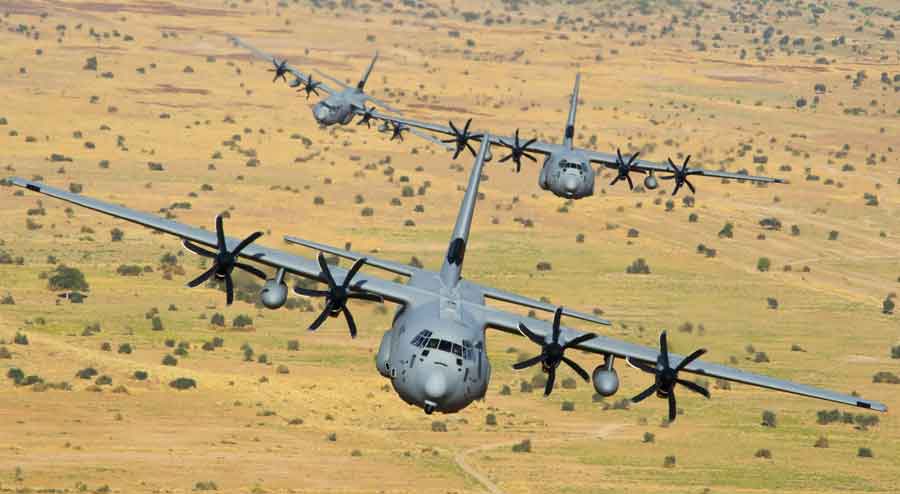 India acknowledges the technological superiority of the US weapon systems and wants to develop and produce them through joint ventures. It seeks partnership and not a seller-buyer relationship. However, India must appreciate that being a global power, US has a different perspective of world issues. It wants to safeguard its knowledge-superiority and prevent proliferation of critical technologies. Therefore, US laws concerning export of weapons are extremely comprehensive.
Within a period of less than ten years, India has emerged as the third largest buyer of US arms.
US readiness to sell AN/TPQ-37 Fire Finder counter-battery artillery radar sets to India in 2002 marked the beginning of a new chapter in Indo-US military cooperation. Although the said deal was worth only US$150 million, it was touted as a breakthrough of strategic proportions. Simultaneously, a Security Cooperation Group (SCG) was constituted to coordinate and expedite defence deals. Within a period of less than ten years, India has emerged as the third largest buyer of US arms. In the fiscal year ending September 2011, India signed contracts worth US$4.5 billion. Only Afghanistan (US$5.4 billion) and Taiwan (US$4.9 billion) were ahead of India. It is estimated that the total value of contracts inked between the US and India during the period 2003-2011 exceed US$12 billion.
Some of the major contracts pertain to the sale of the USS Trenton (now INS Jalashwa) amphibious troop carrier ship, P-8I maritime patrol aircraft, C-130J Hercules aircraft and C-17 Globemaster transport aircraft. In addition to some repeat orders, negotiations are underway for the purchase of 155mm Ultra Light Howitzers and Javelin anti-tank guided missiles. On the face of it, the list appears quite impressive. However, all is not well with the current equation between India and the US – both sides are dissatisfied at the current pace of progress of military trade. Despite regular SCG meetings, the relationship has not acquired the required degree of maturity and mutual comfort.
No deal carries transfer of technology provisions. All are pure ‘cash and carry’ sales.
Indo-US military deals are characterised by three significant features:-
All sales so far have been through government-to-government deals. US companies have not been able to win any major order in open competitive environment. In the case of Medium Multi-Role Combat Aircraft (MMRCA) deal, both the US companies Lockheed Martin (F-16) and Boeing (F-18) failed to make the grade in technical evaluation and got eliminated.
Sales are limited to the equipment in which the US is an undisputed leader. In other words, India approaches the US Government only when it has no alternate procurement source available to it, thereby indicating a certain degree of compulsion in approaching the US.
No deal carries transfer of technology provisions. All are pure ‘cash and carry’ sales. This is not a healthy sign, especially as Indian policy makers keep asserting that they are seeking production-partnership in military deals.
Sharif’s UN speech: His Master’s Voice
27 Sep , 2014
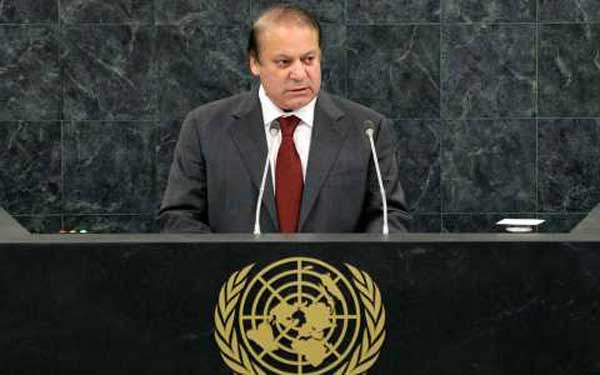
Nawaz Sharif at United National General Assembly
Pakistan Prime Minister Nawaz Sharif, once again, brought up the issue of Kashmir in the United National General Assembly (UNGA). He said that the “veil cannot be drawn over the core issue of Kashmir.” He called upon the UN to stand by its promise thereby hinting at the issue of plebiscite. In a blatant attempt at brinkmanship he said that “many generations of Kashmiris have lived under occupation accompanied by violence and abuse of their fundamental rights.”
…whether he (Nawaz Sharif) was speaking his mind or was merely reading out a script given by the Pakistan Army and its fundamentalist partners in Pakistan.
What is important here is to see whether he was speaking his mind or was merely reading out a script given by the Pakistan Army and its fundamentalist partners in Pakistan.
The foundation of this diabolic plan was laid immediately after the visit of the Pakistan premiere to India to attend the swearing- in ceremony of Prime Minister Modi. The visit had the media in raptures with talk of a new beginning where Kashmir will be sidelined in favour of building a larger trade based relationship.
The bold step taken by Prime Minister Sharif caused ripples of anxiety in the Pakistan army and its Jihadi partners led by the Lashkar-e Toiba (LeT). In this development they saw a burial of their Kashmir policy nurtured with great care over generations. Naturally, they were not ready to accept the development.
The efforts of the Pakistani Prime Minister were met by a spate of ceasefire violations and infiltration bids on the line of control between the two countries. The terror apparatus in India (Kashmir) was also energised into action; there were a large number of terrorist incidents in the Kashmir valley. There are no two views about the perpetrators of this violence against India.
The insecurity of the Pakistan army did not end here; the Nawaz Sharif tilt towards India and some other domestic compulsions led the Pakistan army to conclude that his wings would have to be clipped. This gave rise to the “Azaadi” and the “Revolution” Marches that managed to besiege the Prime Minister and the pillars of the state in Islamabad. The plan fell flat due to the absolute support that Nawaz Sharif got from other political parties. It is, however, a misfortune for the country that Nawaz Sharif had already lost his nerve. He is now toeing the line of the army and the fundamentalists to the hilt.
With the government of Pakistan firmly in their pocket the perpetrators of terror launched their second salvo towards disrupting the relationship between the two countries. This was necessitated by the fact that the government of India refused to be provoked by the mayhem unleashed along the line of control and in Kashmir and decided to go ahead with the scheduled secretary level talks in Islamabad.
The Threat of Jihadism from Al Qaeda in the Indian Subcontinent and Islamic State in Iraq and Syria
By Ganapathy Vanchinathan
September 25, 2014
“Nothing is more imminent than the impossible . . . what we must always foresee is the unforeseen.” - Victor Hugo, Les Miserables
In a recent seminar on National Security held by the Centre for Land Warfare Studies, a leading journalist said no major worry or threat in itself presented due to news of establishment al Qaeda in the Indian Subcontinent (AQIS). More recently, Prime Minister Narendra Modi, in his first interview as Prime Minister of India to a TV channel, responding to a question on the formation of AQIS, said it would be delusional to think Indian Muslims would respond to its call to launch jihad in the region adding that such ideas do injustice to the Muslims of India, who would live for and die for India.
Can we thus surmise, from the above statements, that all is gung ho, and there is nothing additional to worry about? Is there, behind all this, a lurking threat of change? Do we need to look through a telescope which has an ability to look around the corner? Firstly, what exact threats do these developments of global jihad pose to India? Clearly two come to mind. Will this development in jihad propaganda lead to -
One, the entry of foreign jihadis/increase in number of foreign jihadis entering into India and their executing terrorist acts.
Two, subversion of the target Indian population, their joining the global jihad in greater numbers, and further committing acts of terror on Indian soil.
Foreign Jihadis in India
When it comes to presence of foreign jihadis or terrorists operating on Indian soil, groups based in Pakistan have actually been infiltrating and operating in J&K ever since Independence; however, specifically in the context of the ongoing J&K terrorism, since the 1980s. Apart from Pakistani and Afghani terrorists, there have been a sprinkling of militants from other countries to include Sudan, Yemen and Lebanon. The available data suggests that numbers have dwindled or come to naught insofar as terrorists of countries other than Pakistan or Afghanistan are concerned. Available information of Pakistani terrorist groups operating in J&K point out that many of them have received training in the same madrasas where Taliban or al Qaeda have. These groups also received/continue to receive funding from al Qaeda. The AQIS itself is likely to be a sort of umbrella organisation for the already existing groups in the region, mainly in Pakistan and Afganisthan. It is also likely that AQIS would take over lead from groups like Lashkar-e-Taiba as a contact point and external agency controlling/directing terror for Indian jihadi groups like Indian Mujahideen (IM). Threats of incidents like the 26/11 Mumbai terrorist attack, February 2010 Pune German Bakery attack being perpetrated by foreign jihadis will therefore always remain alive, with possibly a spike in their chances of occurrence from time to time. For the moment threat from AQIS seems more focused within Pakistan with various jihadi groups fighting against the establishment and military in Pakistan. In J&K, response to terrorist threats has been fine-tuned over the years. Security forces, especially the Indian Army, have been fighting terrorism or insurgency for over three decades and have reached a level of professional competence which enables effective countering of such threats. Therefore, any increase in jihadi terror in J&K, while unlikely, can be expected to be effectively countered. However, in other parts of the country there will be a need to review intelligence and security organisations meant to gather intelligence, anticipate, prepare for and foil such threats from manifesting. Preparedness of the central intelligence agencies, state security agencies, coordination between them and effectiveness of state apparatus in handling threats of terrorism will be of prime concern.
Subversion of the Indian Target
Recall the “Message to the Muslims of India: Why Is There Not a Storm in Your Ocean?” video released by the al Qaeda ideologue Maulana Aasim Umar who has now been designated leader of AQIS. To say these cries fall on deaf ears may be wrong. The few terrorist acts which take place across the length and breadth of the country will find linkages to jihad. Jihadi organisations like IM and their sleeper cells operating and hibernating within India can be expected to receive motivation by such propaganda. The larger Indian Muslim population, however, has remained by and far inured from such jihadi provocations. The reasons could be many.
The secular nature of the Indian state that has long kept this threat at bay. The Indian Muslim has experienced more democratic, political and economic freedom, and opportunity and liberty and also exposure to media than possibly any of the Muslims inhabiting the geographical swathe extending all the way to Iraq.
What Does the Russian Food Import Ban Mean for Latin America?
By Carl Meacham
 The past eight months or so have seen much of the international community focusing on the unfolding crisis in Ukraine, as countries and international organizations alike have struggled to respond. Over the summer, the United States and the European Union began a process of imposing sanctions on Russia in an effort to dissuade Vladimir Putin’s further escalation of the conflict. And that process continues to date, with another round of joint U.S.-EU sanctions on the Russian oil, defense, and finance sectors imposed this past weekend.
In response to the summer’s sanctions, Russia announced a one-year full embargo on food imports from the countries participating in the sanctions in a retaliatory measure aimed to harm those states’ export economies.
But with Russia’s traditional sources of food imports off the table, who stands to gain? Could Latin America be poised to fill the void—and derive significant economic benefits—from the ongoing
sanctions?
Q1: What is the Russian ban on food imports?
A1: On August 7, Russia announced a one-year full embargo on food imports from the United States, European Union, and several of their allies, including Australia, Canada, and Norway. This measure was adopted after the United States and European Union tightened existing economic sanctions given the further escalation of the Ukraine crisis, where Russia is accused of supporting pro-Moscow separatist rebels in the East.
That round of sanctions tightening by the West came after suspicions of Russian involvement in the downing of Malaysia Airlines Flight MH17 on July 17, in which all 298 passengers died. The first round of sanctions hit following Russia’s annexation of the Crimea region in March of this year.
Russia is the European Union’s second-biggest market for food exports—consuming 10 percent of all European food products, valued at about US$43 million a year. The ban hit hard in the United States and Norway, as well, including US$303 million worth of U.S. chicken and upwards of US$1 billion of Norwegian seafood. Once it instated the ban, Russia began to seek new ways to boost farm production and to substitute for banned goods in order to prevent an upward surge in food prices. And this need for substitutes has created an unusual opportunity for countries in Latin America—especially Argentina, Brazil, Chile, Ecuador, and Uruguay.
DRAMATIC INCREASE IN RUSSIAN AIR INCURSIONS RATTLE BALTICS
September 25, 2014
Russian Air Incursions Rattle Baltics
The Baltic countries are registering a dramatic increase in Russian military provocations, rattling nerves in a region which fears it could be the next frontier after Ukraine in Moscow’s quest at asserting its regional power.
Nato fighters policing Baltic airspace were scrambled 68 times along Lithuania’s borders this year, by far the highest count in more than 10 years. Latvia registered 150 “close incidents”, cases where Russian aircraft were found approaching and observed for risky behaviour. Estonia said its sovereign airspace had been violated by Russian aircraft five times this year, nearing the total count of seven over the previous eight years.
Finland has had five violations of its airspace this year against an annual average of one to two in the previous decade, while Sweden last week suffered what Carl Bildt called the “most serious airspace incursion” in his eight years as foreign minister.
“A lot of people here and across northern Europe are worried about what it means for the future. It’s not benign, it’s rather unpleasant,” said James Rogers, lecturer at the Baltic Defence College. He added that the incursions were “Russia trying to remind everyone it is still a significant air power”.
Although the Baltic states have borne the brunt of Russian adventurism in the skies, there has been a much broader surge in incidents, and other Nato members including Canada, the US, the Netherlands, Romania and the UK have experienced airspace infringements as well.
According to one western official, so far this year there have been well over a hundred quick reaction alerts – the scrambling of fighter jets – because of Russian activity in the vicinity of alliance airspace, a threefold increase over the number for the whole of 2013.
“[We] can attribute some of these flights to an increase in Russian military exercises and activity along Nato’s eastern borders but in many cases the Russian military is being provocative by probing airspace they are not authorised to enter,” said one senior Nato military officer, who confirmed there was significant concern over the increased number of incidents. “As in Ukraine, Russian aggressiveness in the air adds to the tension between the international community and the Kremlin.”
Many of the reported incidents do not involve a violation of another state’s sovereign airspace – which extends 12 nautical miles from the shore of Nato member states – but an entry into air defence identification zones, areas in which a country requires the identification and control of foreign aircraft beyond its sovereign airspace.
In a typical instance, Russian aircraft will turn off transmitters that emit a transponder identification code and will deviate from standard flight plans, or else not file them at all. Such measures render planes invisible to civilian air traffic control systems.
Russia’s sorties involve a range of aircraft, from smaller Sukhoi Su-27 Flanker fighters and surveillance planes to Tupolev Tu-22 supersonic bombers and even giant Tupolev Tu-95 long-range nuclear bombers.
Presidential Elections : Afghanistan
By Harjit Hansi
September 27, 2014
Introduction
The Presidential elections were held on 05 April 2014, heralding for the first time in the history of Afghanistan democratic transition of power. Since no candidate secured more than 50% votes required to avoid a run-off, a second round of voting was held on 14 June 14 between the two leading candidates, i.e. Dr Abdullah Abdullah and Mr Ashraf Ghani Ahmadzai. The incumbent President Hamid Karzai was not eligible to participate due to a two-term limit. Around seven million of the 12 million eligible voters braved the threat of Taliban to cast their ballots.
Second Round Result
The preliminary results of the second round of election were declared on 07 July 14 by Afghan Independent Election Commission. Mr Ahmadzai secured approximately 56 per cent votes while Mr Abdullah got 44 per cent. The summarised result is as given below:-
| Candidate | Nominating Party | First Round | Second Round | ||
| Votes | % | Votes | % | ||
| Ashraf Ghani Ahmadzai | Independent | 2,084,547 | 31.56 | 4,485,888 | 56.44 |
| Abdullah Abdullah | National Coalition | 2,972,141 | 45.00 | 3,461,639 | 43.56 |
| Total Votes | 7,947,527 | ||||
Dr Abdullah refused to accept the result accusing President Hamid Karzai and Mr Ahmadzai of electoral fraud. In view of the standoff between the two Presidential candidates, revalidation of all ballots where fraudulent voting had been alleged was ordered under the watch of UN representatives / international community.
The rigging of votes and the blame game played by the two presidential candidates was leading to major political crisis in Afghanistan. To avert the upheaval and ensure peaceful transition of power, US Secretary of State John Kerry brokered an agreement between the two presidential candidates and proposed formulation of a National Unity Government by power sharing. The candidate who won the election would be appointed as the President, while his opponent would become the Chief Executive, a post equivalent to Prime Minister. The proposal was tentatively agreed by both the candidates.
Nomination of President
On 21 Sep 14, ending a year long turmoil, the Independent Election Commission of Afghanistan declared the electoral results and Mr Ashraf Ghani was named President-elect. The details of the election result were withheld to be declared later, apparently as part of the political agreement between Mr Ghani and Dr Abdullah Abdullah.
Analysis
Security Situation. Looking at the prevailing situation in Afghanistan, the new Government faces huge security, challenges. The terrorist activities continue to afflict Afghanistan as NATO forces have not been completely successful in weakening the Taliban.
The ANSF though being a young, evolving force, has not allowed Taliban/fundamentalist elements to exert their writ in Afghanistan. However, post drawdown of NATO forces, for ANSF to effectively operate and manage its internal security environment, there is a mandated requirement to enhance its present strength from 250,000 personnel to approximately 372,500. The increment in manpower and capability development is likely to cost close to $5-6 billion to the exchequer, which remains a critical issue.
Mr Ghani Ahmadzai and Dr Abdullah have both agreed to sign a bilateral security agreement with the United States for its troops to operate beyond 2014. The US plans to leave about 9,800 troops which will be responsible for advising and assisting Afghanistan security forces and conducting counterterrorism operations, which augers well for Afghanistan’s security environment.
War with ISIS: What Does Victory Look Like?
A pair of U.S. Air Force F-15E Strike Eagles fly over northern Iraq after conducting airstrikes against ISIL targets Sept. 23, 2014
Afghanistan, Pakistan, Somalia, Yemen, and now Syria and Iraq. The decade-plus duration of America's confrontation with al Qaedism offers lessons not only on how we battle extremist ideology but also how we should calibrate our expectations.
The traditional goal in warfare is simple: Defeat the adversary by destroying its will and capability to pose a threat. Force the adversary to capitulate.
With a nontraditional foe, it's not clear that we need to limit ourselves to traditional measures of victory. Containment could work.
We know by now that in no cases have the adversary's radical ideology been defeated. The most striking successes, such as Indonesia's evisceration of the Jemaah Islamiya organization and African forces' push against Al-Shabaab in Somalia, have only limited the reach of al Qaedism but failed to fully stem the flow of recruits to al Qaeda affiliates or squelch the ideology that underpins its festering.
The remainder of this commentary is available on cnn.com.
Andrew Liepman is senior policy analyst at the RAND Corporation and former deputy director of the National Counterterrorism Center. Philip Mudd is the former deputy director of the CIA's Counterterrorist Center.
This commentary originally appeared on CNN on September 25, 2014.
Losing the "Forgotten War" The U.S. Strategic Vacuum in Afghanistan, Pakistan, and Central Asia
SEP 25, 2014
The U.S. is now engaged in a major national debate over how to fight the Islamic State in Iraq and Syria. Afghanistan, however, has become the “forgotten war” at a time when the Taliban is making steady gains, civilian casualties are rising, there still is no clear U.S. plan, and its allies lack clear plans for any post-2014 aspect of transition.
Afghanistan is also only part of the story. Pakistan is as critical to any meaningful definition of strategic success in the fighting as Afghanistan. Pakistan, however, is in political chaos, has rising tensions with India, has only made uncertain progress in its latest military campaign, and has made no progress in the mix of economic and educational reforms that are critical to a stable future. Few Americans see Pakistan as having been anything but the most reluctant ally since 9/11 and many see Pakistan’s ISI as part of the enemy.
U.S. forces have effectively left Central Asia, but the U.S. has not announced any strategy to deal with Central Asia in the future, or how to adjust to the growing tension with Russia.
The end result is that United States has failed to define meaningful future strategies for Afghanistan, Pakistan, and Central Asia. It is cutting its presence in Afghanistan so quickly that its Transition efforts may well fail, and it has no clear future strategy for Pakistan or Central Asia.
As a result, the Burke Chair is issuing a study that examines the overall mix of problems in U.S. strategy in Afghanistan, Pakistan, and the region. It suggests the best solution for the U.S. in dealing with the complex problems in Afghanistan, Pakistan, and Central Asia may be the simplest and most minimalist approach. No vital U.S. national security priorities are currently involved that require sustained, major U.S. intervention, and strategic triage indicates that other areas and problems have a higher priority.
At the same time, there is still a chance that the U.S. can at least make Transition work in Afghanistan if the new Afghan government is unified and acts quickly enough to show it can be a credible partner, and if the Obama Administration is willing to provide the needed advisors and aid on a conditions-based level, rather than reduce the U.S. presence to an unworkable level by the end of 2015.
This paper is entitled Losing the “Forgotten War”: The U.S. Strategic Vacuum in Afghanistan, Pakistan, and Central Asia, and is available on the CSIS web site here.
Two other Burke Chair studies provide essential surveys of the progress and problems in the Afghan conflict:
Taliban Fighters Reported to Have Overrun District Center in Strategically Important Ghazni Province
Taliban Storm Afghan District Southwest of Capital, 100 Killed
Reuters, September 26, 2014
GHAZNI Afghanistan (Reuters) - Hundreds of Taliban fighters have stormed a strategic district in an Afghan province not far from the capital, killing dozens of people in five days of fighting and they could capture the area, officials said on Friday.
The Ghazni provincial government has lost contact with police in the province’s western district of Ajrestan, said Asadullah Safi, deputy police chief of the area.
Ghazni is southwest of the capital. The main highway linking Kabul to southern Afghanistan, where the Taliban have been making advances in recent months, passes through the province.
"If there is no urgent help from the central government, the district will collapse," Safi said.
The battle for Ajrestan illustrates the grave challenges facing Afghanistan’s new president and the security forces in holding territory as foreign combat troops prepare to leave at the end of the year.
No longer pinned down by U.S. air cover, Taliban fighters are attacking Afghan military posts in large numbers with the aim of taking and holding ground.
Heavy fighting was continuing in Ajrestan on Friday. Safi said a suicide car bomber attacked a police checkpoint early in the day before provincial authorities completely lost contact with the district.
The attack by an estimated 700 Taliban fighters began about five days ago and early reports were that more than 100 people had been killed, including 15 who were beheaded by the militants, said provincial deputy governor Ahmadullah Ahmadi.
The militants have been focussing on regaining important opium-growing areas, such as the southern province of Helmand, and areas where they have traditionally enjoyed support, such as Kunduz province in the north.
Control of Ghazni’s mountainous Ajrestan district, about 200 km (125 miles) from Kabul, could provide the Taliban with a launching point for attacks in two bordering provinces and along the crucial artery connecting the capital to Afghanistan’s second city of Kandahar in the south.
CALL FOR HELP
The growing Taliban threat is likely to be the most urgent challenge for the new, U.S.-brokered government of national unity between President-elect Ashraf Ghani and his former rival Abdullah Abdullah.
Provincial authorities have appealed for help from the central government in Kabul, where Ghani is in the process of taking over the presidency from Hamid Karzai.
Reuters, September 26, 2014
GHAZNI Afghanistan (Reuters) - Hundreds of Taliban fighters have stormed a strategic district in an Afghan province not far from the capital, killing dozens of people in five days of fighting and they could capture the area, officials said on Friday.
The Ghazni provincial government has lost contact with police in the province’s western district of Ajrestan, said Asadullah Safi, deputy police chief of the area.
Ghazni is southwest of the capital. The main highway linking Kabul to southern Afghanistan, where the Taliban have been making advances in recent months, passes through the province.
"If there is no urgent help from the central government, the district will collapse," Safi said.
The battle for Ajrestan illustrates the grave challenges facing Afghanistan’s new president and the security forces in holding territory as foreign combat troops prepare to leave at the end of the year.
No longer pinned down by U.S. air cover, Taliban fighters are attacking Afghan military posts in large numbers with the aim of taking and holding ground.
Heavy fighting was continuing in Ajrestan on Friday. Safi said a suicide car bomber attacked a police checkpoint early in the day before provincial authorities completely lost contact with the district.
The attack by an estimated 700 Taliban fighters began about five days ago and early reports were that more than 100 people had been killed, including 15 who were beheaded by the militants, said provincial deputy governor Ahmadullah Ahmadi.
The militants have been focussing on regaining important opium-growing areas, such as the southern province of Helmand, and areas where they have traditionally enjoyed support, such as Kunduz province in the north.
Control of Ghazni’s mountainous Ajrestan district, about 200 km (125 miles) from Kabul, could provide the Taliban with a launching point for attacks in two bordering provinces and along the crucial artery connecting the capital to Afghanistan’s second city of Kandahar in the south.
CALL FOR HELP
The growing Taliban threat is likely to be the most urgent challenge for the new, U.S.-brokered government of national unity between President-elect Ashraf Ghani and his former rival Abdullah Abdullah.
Provincial authorities have appealed for help from the central government in Kabul, where Ghani is in the process of taking over the presidency from Hamid Karzai.
China at a Crossroads in Gilgit-Baltistan
27 Sep , 2014
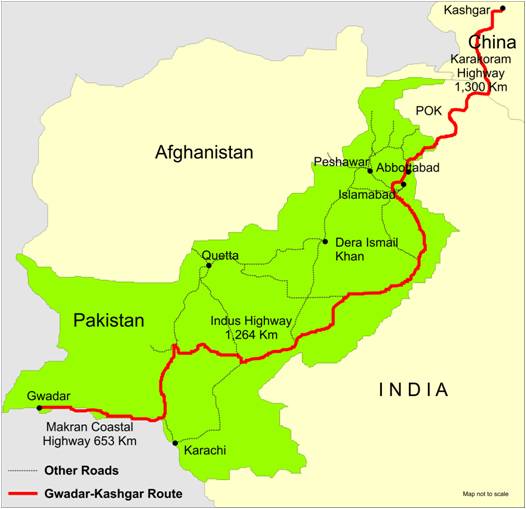
Pak-China Economic Corridor
With large outcry in Pakistan against recent Palestinian killings, one wonders at the nation’s pronounced silence on the continued Uighur genocide in China’s restive Xinjiang Province.
This absence of protest by Pakistan on Muslim oppression in China is not without reason. China is Pakistan’s major defense and trade ally. China has major investments in much of the country including the UN-declared disputed region of Gilgit-Baltistan which borders Xinjiang.
There are complaints against Chinese firms for denying jobs and financial compensation, and damaging farmland and infrastructure.
In Gilgit-Baltistan, China is involved in the construction of large-scale dams, telecommunication development, mining and port management. It is constructing highway and railroad systems between Xinjiang and the port cities of Karachi and Gawadar. This corridor will enable the flow of Iranian fuel northward into Xinjiang as well as Kazakh and Russian gas into Pakistan. Both the Chinese and Pakistani governments characterize these efforts as revolutionizing economic development of Pakistan. Despite these rosy claims, many such projects have led to increased insecurity and confrontations between the Chinese and the locals in Gilgit-Baltistan.
One such skirmish broke out on July 5 over control of a dry port joint venture between the Sino-Trans Chinese Company and the Sost Dry Port Trust. The trouble began when the Gilgit-Baltistan court ordered the reluctant Chinese officials to transfer port authority to the newly elected local chairman, Mr. Zafar Iqbal.
According to Mr. Iqbal, a Chinese national, Mr. Ju Yi, attacked him with a knife causing chest injury, after he arrived at the port office. Demonstrations erupted in Sost after the incident as local leaders and shareholders demanded stern action against the Chinese official. Given the importance of its relationship with China, Pakistan’s Prime Minister took notice of the situation at once and summoned both parties to Islamabad for talks.
Taiwan Ministry of Defense Denies That Former Chief Military Officer in U.S. Was Spy for China
Joseph Yeh
September 25, 2014
MND denies ex-head of US defense mission was spying
The Ministry of National Defense (MND) yesterday refuted a local media report that accused a former head of Taiwan’s defense mission in the United States of spying for China.
Military spokesman Luo Shao-he (羅紹和) yesterday told The China Post that the ongoing investigation into Major General Li Hsien-sheng (黎賢聖) has found no evidence to support the claim that he was engaged in espionage on behalf of mainland China, nor has any confidential military information been found to have been leaked to the other side of the Taiwan Strait, he said.
Luo’s comment came in response to a Chinese-language Apple Daily report yesterday that claimed the investigation into Li had found that he passed confidential information to China through his close connection to a female Chinese spy.
Quoting an unidentified military source, the newspaper said Li failed to pass five polygraph tests earlier this year. He failed to pass the tests after being asked about the keywords “woman” and “China,” the report said.
Further investigations show that Li had an intimate relationship with a 30-something-year-old Chinese spy during his previous post in Washington, the report said.
Commenting on the report, Luo said it is “pure speculation and deviates from the truth.”
The MND previously confirmed that Li had failed to pass required polygraph tests. He had already been called back to Taiwan, but the MND stressed that the homecoming was part of a regular personnel reshuffle and had nothing to do with the failed tests. It is still trying to determine the reasons behind Li’s failure to pass the tests, the MND said.
Different physical or physiological conditions can affect the results of polygraph tests, the MND added.
Meanwhile, the National Security Bureau (NSB, 國安局) head yesterday would not comment on Li’s case.
NSB Director-General Lee Shying-jow (李翔宙) said the bureau would not speculate on the ongoing investigation into Li and on whether the married general’s alleged involvement in spying for China was due to his alleged affair with a female Chinese spy.
But he stressed that the case did not cause national security concerns as the bureau and other related government units have done their best to beef up security measures, he told reporters during a Legislative session.
Li’s Comments
Li yesterday told the Chinese-language United Evening News that he did not engage in espionage activities for Beijing or have an extramarital affair with a female Chinese spy as reported in the Apple Daily.
Li said the investigation is still ongoing and he threatened to file a libel suit against the Apple Daily for the “ungrounded report” to defend his integrity, the report said.
At Least 50 Killed in a Series of Explosions in Western China Over Weekend, Chinese State Media
September 25, 2014
China State Media Say 50 Killed in Far West Attack
BEIJING — Chinese state media reported Thursday that 50 people, including 40 assailants, were killed in a series of explosions over the weekend in the far western region of Xinjiang, in what officials called a severe terror attack.
Regional authorities had earlier said that the explosions Sunday in Luntai county killed at least two people and injured many others.
The news portal Tianshan Net said bombs exploded at two police stations, a produce market and a store. It said the attack killed two police officers, two police assistants and six bystanders, and that 54 others were injured. It said police took swift action and 40 assailants were either shot dead or died in explosions.
Police captured two attackers, and an investigation found that Maimaiti Tuerxun, a man who was fatally shot, was responsible for the attack, the news portal said.
Regional authorities were not available for comment Thursday night.
Ethnic tensions in Xinjiang, home of the Muslim Uighur minority group, have killed more than 300 people in the past year and a half. Chinese authorities have blamed the unrest on foreign-influenced terrorists seeking a separate state. Many Muslim Uighurs bristle under Beijing’s heavy-handed restrictions on their religious life and resent the influx of the Chinese Han majority into their homeland.
On Tuesday, a court gave a life sentence to a Uighur scholar who has criticized China’s ethnic policies and sought to reduce tensions between Uighurs and the Han majority. The court found Ilham Tohti guilty of separatism, saying he incited ethnic hatred and instigated violence.
Authorities have also launched a one-year crackdown on terrorism in Xinjiang, and Chinese state media applauded Ilham Tohti’s guilty verdict as a victory in that campaign.
Scholars and human rights advocates say the strike-hard campaign could further radicalize the Uighur people and result in more violence.
Fixing India-China Relations Isn't Too Difficult
September 25, 2014
The dragon and the elephant can be best friends—the border dispute between the two giants is actually a minor issue.
There is little doubt that China and India together can determine the future of Asia. As India’s first prime minister, Jawaharlal Nehru, once said, if China and India hold together, the future of Asia is assured. Indeed, the countries share many similarities: large populations, ancient civilizations, developing economies, a history of being wronged by Western powers, immense potential to become global powers, etc. Thus it is not surprising that Chinese President Xi Jinping’s visit to India last week attracted global attention.
Then how fruitful was Xi’s visit to India? Some observers (here and here) believe that China missed a golden opportunity to forge a strong partnership with India by pointing to the border issue as a major obstacle. Nonetheless, a closer look at Xi Jinping’s speech shows that China is now ready to be flexible in at least three important areas vital to India’s national interests. They include the border dispute, India’s UN Security Council membership, and investment.
While many believe that the border dispute is the biggest obstacle in China-India relations, the border issue is actually not a big problem from a larger strategic perspective. As Xi said during his visit in India, “China has the determination to work with India through friendly consultation to settle the boundary question at an early date.” This is a strong signal to India that China is ready to solve the border issue in the not too distant future. Then the question for India is whether India is willing to take China’s offer.
There are good reasons to believe that India is also willing to resolve the border issue as soon as possible. This is because for India development should be the top priority for coming decades, which is a goal that China shares. This common national interest is the strongest force that brings the two giants together peacefully. Modi is a pragmatic leader who understands the importance of economic development for India and there is a good chance that the border issue will be resolved during Modi’s term.
3 Opportunities for Better US-India Defense Ties
By Hemal Shah
September 26, 2014
As Indian Prime Minister Narendra Modi arrives in the United States, U.S.-India defense ties face an era of opportunity.
India’s Prime Minister Narendra Modi will make his first visit to the White House to meet with President Obama on Monday. Modi was elected to power with a sweeping mandate in May after promising to restore India’s moribund economy and modernize the military. The bigger goal of the Obama-Modi summit is clear: How can the U.S. and India move toward a genuinestrategic partnership? Along with an emphasis on economic cooperation, deepening defense and security ties will be a focus of the visit.
As the two leaders meet, a Chinese incursion into the Indian territory of Ladakh continues, Pakistan engages in border firing from time to time, al Qaeda is working to expand its India operations, and ISIS looks to recruit more Indians. India’s military is poorly equipped and the state is ill-prepared to tackle emerging security threats.
Against this backdrop, the Obama-Modi summit next week, followed by Indian Defense Minister Arun Jaitley’s visit to the Pentagon next month, signals an opportunity to renew the 2005 New Framework Agreement on defense and security expiring this year. The 2005 Agreement was signed to expand defense trade, technology transfers, co-production, and collaboration on counterterrorism, security and stability. Much has been gained by both sides under the agreement: India conducts more joint exercises with the U.S. than with any other country; defense sales have shot up from zero to $9 billion with the U.S. displacing Russia as India’s biggest supplier last year. However, the two countries are yet to progress from a basic symbiotic arms trade – between the world’s largest arms importer and exporter – to a seamless, committed, relationship informed by a coherent strategy.
In other words, the 2005 Framework hasn’t fully been able to transform and deepen the U.S.-India defense relationship. The two countries may be bound together by common interests like containing China’s growing power, post-U.S. withdrawal coordination in Afghanistan, or maritime security in Asia. But both the U.S. and India still suffer from a lack of trust given their checkered history. India’s insistence on foreign policy autonomy at times complicates America’s strategic bet on India to maintain stability in Asia. Additionally, neither is familiar with the other’s bureaucratic processes. If the U.S. and India can commit to addressing these issues, their defense and security ties under the renewed agreement can bring a lot more value.
First, the United States and India need to work consciously to re-build mutual trust by eliminating their baggage from the past. In 1998, the U.S. imposed sanctions when India tested its nuclear weapons. With sanctions eliminated post 9/11, the U.S.-India defense relationship saw a guarded surge with the ratification of the 2005 agreement. Nonetheless, India is still upset from occasional U.S. failures to approve licenses for spare parts – for instance, when the U.S. decided to freeze the engine supply for India’s Shivalik-class stealth warships in 2009 – casting doubts on their reliability in times of need. India refrained from choosing U.S.-made F-16 and FA-18 jets from their combat aircraft competition in 2011, despite the U.S. removal of restrictions on technology sharing with Indian firms earlier, underscoring the need for deeper trust and cooperation. Moreover, America’s special relationship with, and arms sales to, Pakistan has always been a cause of concern for India. Similarly, wary of India’s close ties with Russia from the Cold War era, the U.S. is guarded with its transmission of sensitive technology or know-how to India.
China Triples Peacekeeping Presence in South Sudan
September 26, 2014
China will send a battalion of 700 troops to join the U.N. peacekeeping mission in South Sudan.
China’s defense ministry confirmed on Thursday that Beijing will send an additional 700 troops to join the U.N. peacekeeping mission in South Sudan (UNMISS). The new battalion will triple the number of troops China currently has deployed with UNMISS.
Speaking at the Ministry of National Defense’s monthly press conference, spokesperson Geng Yangshen announced that China will send “a 700-personnel infantry battalion” to act as U.N. peacekeepers in South Sudan. According to the U.N., this marks the first time China has contributed a battalion to a peacekeeping mission. Geng said the troops would “protect civilians, U.N. employees and humanitarian workers, and … perform patrol and security duties.” The battalion will be equipped with light weapons for use in self-defense, armored vehicles, and bullet-proof gear. The location of the troops, as well as the timing of their deployment, is still under discussion.
The U.N. peacekeeping mission in South Sudan was established in July 2011, with a limit of 7,000 troops. InMay 2014, in response to increased fighting between political factions in the country, the U.N. authorized raising the troop levels to 12,500. As of July 31, there were a total of 10,316 peacekeeping troops from over 50 countries in South Sudan, including 350 from China. That makes UNMISS the third largest U.N. peacekeeping mission in the world, after missions in the Democratic Republic of the Congo and Darfur.
China is fairly active in contributing to peacekeeping missions. Although it only ranks 14th on the list of largest contributors, China far outranks the other four permanent members of the U.N. Security Council (as Foreign Ministry spokesperson Hua Chunying pointed out in a recent press conference). For comparison, as of August 31, 2014, the U.S. had 117 troops deployed with the U.N.; Russia had a mere 91. On the other end of the scale, the largest contributor of troops is Bangladesh, with 8,455. China currently has 2,192 troops, police, and military experts deployed on U.N. peacekeeping missions around the world, of which 1,984 are security forces. That’s not bad for a country that only began sending troops (as opposed to police and observers) on U.N. peacekeeping missions last summer.