It was not particularly surprising when India boycotted the Pakistan Day celebrations at the Pakistani High Commission in New Delhi last weekend. Just weeks before, an extraordinary duel in the air above disputed Kashmir brought the two sides unthinkably close to war.The Profession of Arms: A Guide for Young Army Officers
It takes courage, especially for a young officer, to check a man met on the road for not saluting properly or for slovenly appearance, but, every time he does, it adds to his stock of moral courage, and whatever the soldier may say, he has respect for the officer who does pull him up.
Read Document →The Dragon's Teeth: Assessing China's Military Modernization
PLA has focused on modernising its capabilities across all warfare domains to achieve these goals. This includes land, air, and maritime operations, nuclear, space, counter-space, electronic warfare and cyberspace operations, aiming to become a fully integrated joint force.
Read Document →Transforming the PLA: A Decade of reorganisation from SSF to ISF
PRC has engaged in a sustained and broad effort to transform the PLA from an infantry-heavy, low-technology, ground forces-centric military into a high-technology, networked force with an increasing emphasis on joint operations and naval and air power projection.
Read Document →Eyes without Borders: Exploring the World of Open Source Intelligence (OSINT) in the Digital Age
Open Source Intelligence (OSINT) is gaining prominence with the rise of social media, the digital society and the vast growth of publicly and commercially available information (PAI and CAI).
Read Document →
The PLA’s Developing Cyber Warfare Capabilities and India's Options
Informationised warfare blurs the lines between peacetime and wartime. A nation in the information age cannot wait for the hostilities to break out to collect intelligence, carryout influence operations, develop antisatellite systems or design computer software weapons.
Read Document →
Galwan and After
Why did China did this when he is under tremendous pressure in all fronts, is this China's salami slice tactics being progressed rigorously, what will be new Rules of Engagement, what will be escalatory control mechanism, who has taken this decision, will there be some pressure put by China in India's North-East through insurgency.
Read Document →
India’s Joint Doctrine for Cyberspace Operations: A Critical Review
Chief of Defence Staff (CDS) General Anil Chauhan and Secretary, Department of Military Affairs, formally released declassified versions of the Joint Doctrines for Cyberspace Operations during the Chiefs of Staff Committee meeting in New Delhi.
Read Document →
Know your Enemy General(now Field Marshal) Syed Aseem Munir
Gen SA Munir's position in the hierarchy of Pakistan was not very comfortable. The state of economy, insurgency in Pakhtoonistan and Balochistan, attack on the Jaffar Express, constant protests by supporters of Imran Khan's supporters inside and outside of parliament.
Read Document →
Decoding Operation SINDOOR: Key Aspects and Implications
Precision strikes were carried out on nine sites—four in Pakistan and five in PoK—linked to anti-India terrorist groups such as the LeT, JeM and the Hizbul Mujahideen. The targeted sites included Muridke (LeT headquarters) and Bahawalpur (JeM headquarters).
Read Document →
Chinese Cyber Exploitation in India's Power Grid - Is There a linkage to Mumbai Power Outage?
The New York Times (NYT), based on analysis by a U.S. based private intelligence firm Recorded Future, reported that a Chinese entity penetrated India’s power grid at multiple load dispatch points. Chinese malware intruded into the control systems that manage electric supply across India, along with a high-voltage transmission substation and a coal-fired power plant
Read Document →31 March 2019
Pakistan Doesn’t Want Modi to Win
It was not particularly surprising when India boycotted the Pakistan Day celebrations at the Pakistani High Commission in New Delhi last weekend. Just weeks before, an extraordinary duel in the air above disputed Kashmir brought the two sides unthinkably close to war.Digital India: Technology to transform a connected nationMarch 2019 | Report
Netanyahu way or Helsinki?
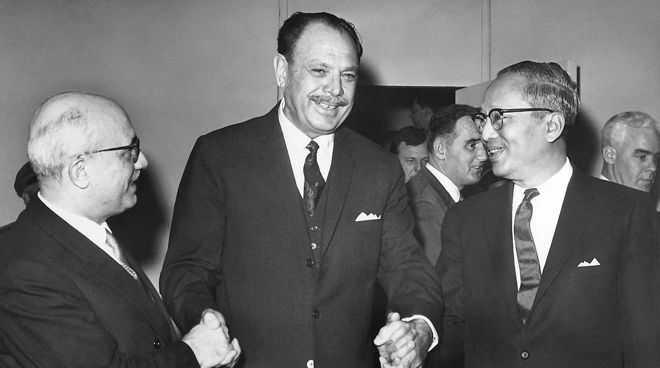
When ISI Director-General Hamid Gul met RAW chief AK Verma in 1988, the first such meeting between the two spy agencies, he expressed the same fears about India as Gen Ayub Khan had made 35 years earlier. In 1953, Ayub Khan had made a theatrical offer to the US: ‘Our army can be your army if you want us.’ He was not authorised to make any such offer, as he was in Washington DC only to prepare for Governor-General Ghulam Mohammed’s visit. But this pleased Secretary of State John Foster Dulles who was disappointed with India not joining his anti-communist alliance, Middle East Defense Organization (MEDO). Pakistan was thus able to steal a march over India and get US security guarantees. The India-China Rivalry Heats Up in South Asia
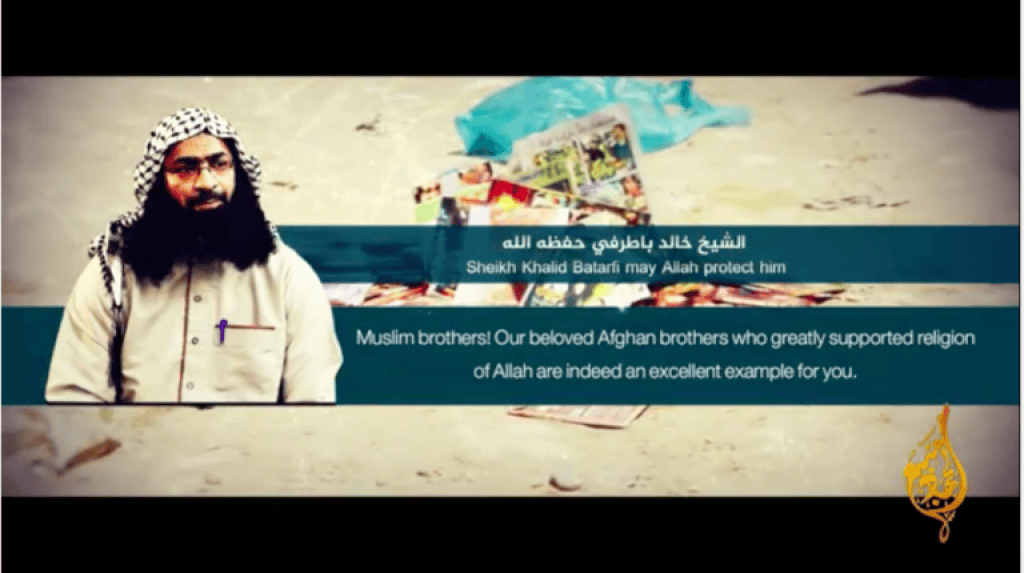
Why the Taliban should be required to renounce al Qaeda in any deal with US
In U.S. pursuit of peace talks, perilous rift opens with Afghan leader
CO19049 | Why Balancing Towards China is not Effective: Understanding BRI’s Strategic Role
China's Twenty-First Century Difficulties
Tensions continue to simmer between China and its neighbors over the South China Sea. Just days ago, Vietnam accused a Chinese vessel for ramming a Vietnamese fishing boat. U.S. National Security Advisor John Bolton said the United States will continue freedom of navigation operations to prevent Beijing from turning the area into “a new Chinese province.” These examples demonstrate the twenty-first century difficulties for China to overtly assert control over the maritime arena as regional competitors seek to check ambitions. Instead, China must offer cooperative norms and economic incentives that are mutually beneficial for its neighbors so that they voluntarily accept Chinese leadership. Recent Chinese progress in the maritime arena—establishing maritime codes of conduct, supporting port improvement projects, and providing ships to other countries—is a modern example of this buy-in strategy.Amid Thaw, Japan Is Seeing a Boom in Chinese Tourists
Japan is experiencing a boom in tourists from China. Official figures show the number of visitor arrivals from China increased four-fold over a five-year period, from 1.4 million in 2012 to 7.4 million in 2017. That means China has overtaken South Korea as the top source of visitors to Japan.The Man Who Took China to Space
Amid the escalating political and economic tensions across the Pacific, the 350,000 Chinese students in the United States are caught in the crossfire. The single biggest international student group in the world, many first came to the United States for its openness, but some now fear that America will soon slam its door on them as the trade war escalates. President Donald Trump’s administration sees Chinese students as potential perpetrators of espionage and intellectual property theft, and it has tightened restrictions for Chinese citizens at U.S. universities by shortening student visa durations for technology and mathematics students and intensifying visa scrutiny. White House senior advisor Stephen Miller even recommended a blanket visa ban on Chinese students.Why Was ISIS Successful?
The following essay is adapted from 'Armies of Sand: The Past, Present, and Future of Arab Military Effectiveness' by Kenneth M. Pollack, now available from Oxford University Press.Terrorist Use of Cryptocurrencies
The Future of Urban Warfare in the Age of MegacitiesFocus stratรฉgique, No. 88, March 2019
Beyond the Hanoi Summit
The Lost Art of American Diplomacy
The Living Lessons of Vietnam
Agreements Establishing Confucius Institutes at U.S. Universities Are Similar, but Institute Operations Vary
What Happened in Hanoi?
Shortly after the success of The Art of the Deal(1987) made Donald Trump a supposed expert on negotiation, he lobbied the George H.W. Bush administration to put him in charge of arms reduction talks with the Soviet Union. The position went instead to Richard Burt, an experienced diplomat and arms control expert. When the two men met at a New York social event, Trump pulled Burt aside to tell him what he would have done—and what Burt should do—to start off the negotiations. Greet the Soviets warmly, he said. Let the delegation get seated and open their papers. Then stand up, put your knuckles on the table, lean over, say “Fuck you,” and walk out of the room.What the withdrawal agreement ‘separation’ actually means for Brexit
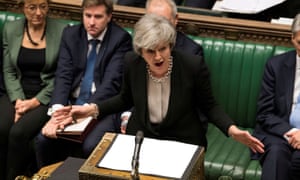
So we now know that the third attempt at the meaningful vote will not take place this week. In its place, the government will instead hold a vote on the divorce deal only – the withdrawal agreement – setting aside the future partnership for now.Perspectives on Taiwan Insights from the 2018 Taiwan-U.S. Policy Program
The World's Third Pole Is Melting
The Tibetan plateau, which holds the Hindu Kush Himalaya (HKH) ice sheet, is known as the world’s “Third Pole.” It holds the largest number of glaciers and snow after the Arctic and Antarctic. The Tibetan plateau has more than 46,000 glaciers, 14.5 percent of the world’s total. These glaciers give birth to Asia’s major river systems — the Indus, Sutlej, Brahmaputra, Irrawaddy, Salween, Mekong, Yangtze, and Yellow Rivers that provide lifelines to many countries and support a population of around 2 billion people.What Sri Lanka’s 2019 Budget Tells Us About Its Economic Health
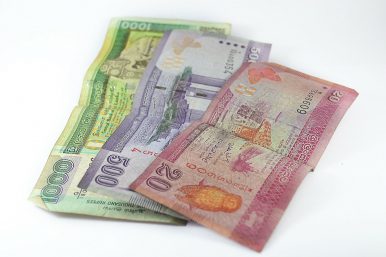
Following one of the most dramatic political crises in the recent history of South Asia, Sri Lanka’s government budget for 2019 was approved by the majority of the parliament on March 12. The 2019 budget was supposed to be presented to the parliament in November 2018, but President Maithripala Sirisena’s unexpected (and later overturned) decision to change prime ministers in October 2018 pushed back the budget. Later, a Vote of Account was passed by the parliament to provide finances until the budget could be presented in March.These are all the world's major religions in one map
A picture says more than a thousand words, and that goes for this world map as well. This map conveys not just the size but also the distribution of world religions, at both a global and national level.Organising a Government for Cyber: The Creation of the UK’s National Cyber Security CentreRobert Hannigan
HTTPS ISN'T ALWAYS AS SECURE AS IT SEEMS
WIDESPREAD ADOPTION OF the web encryption scheme HTTPS has added a lot of green padlocks—and corresponding data protection—to the web. All of the popular sites you visit every day likely offer this defense, called Transport Layer Security, or TLS, which encrypts data between your browser and the web servers it communicates with to protect your travel plans, passwords, and embarrassing Google searches from prying eyes. But new findingsfrom researchers at Ca' Foscari University of Venice in Italy and Tu Wien in Austria indicate that a surprising number of encrypted sites still leave these connections exposed.Andrew Marshall, Pentagon’s Threat Expert, Dies at 97
Why the biggest and best struggle to grow
The Pentagon is ‘Absolutely Unapologetic’ About Pursuing AI-Powered Weapons
Protecting the U.S. in the decades ahead will require the Pentagon to make “substantial, sustained” investments in military artificial intelligence, and critics need to realize it doesn’t take that task lightly, according to current and former Defense Department officials.Working in Non-Permissive Environments: Arming Civilians Isn’t the Answer
‘How Is Yoda?’: An Appreciation Of Andy Marshall
30 March 2019
Pak lie exposed by India Today TV: Terroristan flew F-16 jets to attack India
In an interview, Chaudhry Fawad Hussain said no American warplane had been deployed India Today's findings revealed Nauman Ali Kahn is an F-16 pilot Sourced images show Khan taking part in joint military exercise with US Air Force in 2010Asian Free Trade Proposal Is Broad in Scope, Narrow in Focus
The proposed Regional Comprehensive Economic Partnership (RCEP)'s comparatively narrow focus on tariffs to the exclusion of nontariff barriers would limit the agreement's boost to Asian trade. The 16 countries negotiating RCEP likely will not reach consensus on a final deal until after the conclusion of 2019 elections in India, Australia and Indonesia. Because India views free trade as a vehicle for economic growth in an era of rising protectionism, it will remain committed to negotiating an RCEP agreement, though its demands are likely to further delay a conclusive deal. Despite its limitations, RCEP offers the Association of Southeast Asian Nations a chance to help promote intraregional trade. China will demand a rapid resolution to negotiations so it can seek enhanced market access to offset a cooling economy against the backdrop of its trade war with the United States.One Step Closer to an Elusive Peace in Afghanistan
Last year, when President Donald Trump gave the go-ahead for negotiations to start between the US and the Taliban, nobody expected his patience to last very long. He could sabotage the American negotiating team at any time, many observers feared, by ordering an arbitrary pullout of US forces from Afghanistan, leaving the Afghan government vulnerable to a Taliban takeover of Kabul.US-China Who Is Bigger and When
When China Convinced the US That Uighurs Were Waging Jihad
They arrived at the American detention center in Guantรกnamo Bay, Cuba—where, as Defense Secretary Donald Rumsfeld put it, the “worst of the worst” would be held—a few months after 9/11, directly from Bagram Airfield in Afghanistan. There were 22 of them, all men, all of them Muslim, bearded, ranging in age from their early 20s to their mid-40s. Five had been captured by American forces following a battle in northern Afghanistan, and the other 17 were seized by police in Pakistan.