The Profession of Arms: A Guide for Young Army Officers
It takes courage, especially for a young officer, to check a man met on the road for not saluting properly or for slovenly appearance, but, every time he does, it adds to his stock of moral courage, and whatever the soldier may say, he has respect for the officer who does pull him up.
Read Document →The Dragon's Teeth: Assessing China's Military Modernization
PLA has focused on modernising its capabilities across all warfare domains to achieve these goals. This includes land, air, and maritime operations, nuclear, space, counter-space, electronic warfare and cyberspace operations, aiming to become a fully integrated joint force.
Read Document →Transforming the PLA: A Decade of reorganisation from SSF to ISF
PRC has engaged in a sustained and broad effort to transform the PLA from an infantry-heavy, low-technology, ground forces-centric military into a high-technology, networked force with an increasing emphasis on joint operations and naval and air power projection.
Read Document →Eyes without Borders: Exploring the World of Open Source Intelligence (OSINT) in the Digital Age
Open Source Intelligence (OSINT) is gaining prominence with the rise of social media, the digital society and the vast growth of publicly and commercially available information (PAI and CAI).
Read Document →
The PLA’s Developing Cyber Warfare Capabilities and India's Options
Informationised warfare blurs the lines between peacetime and wartime. A nation in the information age cannot wait for the hostilities to break out to collect intelligence, carryout influence operations, develop antisatellite systems or design computer software weapons.
Read Document →
Galwan and After
Why did China did this when he is under tremendous pressure in all fronts, is this China's salami slice tactics being progressed rigorously, what will be new Rules of Engagement, what will be escalatory control mechanism, who has taken this decision, will there be some pressure put by China in India's North-East through insurgency.
Read Document →
India’s Joint Doctrine for Cyberspace Operations: A Critical Review
Chief of Defence Staff (CDS) General Anil Chauhan and Secretary, Department of Military Affairs, formally released declassified versions of the Joint Doctrines for Cyberspace Operations during the Chiefs of Staff Committee meeting in New Delhi.
Read Document →
Know your Enemy General(now Field Marshal) Syed Aseem Munir
Gen SA Munir's position in the hierarchy of Pakistan was not very comfortable. The state of economy, insurgency in Pakhtoonistan and Balochistan, attack on the Jaffar Express, constant protests by supporters of Imran Khan's supporters inside and outside of parliament.
Read Document →
Decoding Operation SINDOOR: Key Aspects and Implications
Precision strikes were carried out on nine sites—four in Pakistan and five in PoK—linked to anti-India terrorist groups such as the LeT, JeM and the Hizbul Mujahideen. The targeted sites included Muridke (LeT headquarters) and Bahawalpur (JeM headquarters).
Read Document →
Chinese Cyber Exploitation in India's Power Grid - Is There a linkage to Mumbai Power Outage?
The New York Times (NYT), based on analysis by a U.S. based private intelligence firm Recorded Future, reported that a Chinese entity penetrated India’s power grid at multiple load dispatch points. Chinese malware intruded into the control systems that manage electric supply across India, along with a high-voltage transmission substation and a coal-fired power plant
Read Document →12 May 2020
Why Herd Immunity Won’t Save India From COVID-19
India in the Post COVID-19 World Order
The Belt and Road in Sri Lanka: Beyond the Debt Trap Discussion
US Envoy To Meet Taliban, Visit Pakistan And India To Revive Afghan Peace Talks
covid-19 knocks on american hegemony
Does China Really Owe the World Trillions of Dollars?
In times of uncertainty and anxiety, it’s always nice for some people to have someone to blame. In times of COVID-19, the culprit seems abundantly clear: the People’s Republic of China. Ever since the virus started spreading across the globe, an increasing number of voices have argued that the country where the pandemic originated should be held legally accountable, including the payment of all damages resulting from the outbreak, amounting to sums “in the trillions” of dollars. Two weeks ago, accompanied by a bizarre open letter to the government in Beijing—written by the editor—Germany’s largest tabloid, Bild, presented China with its “Corona Bill” (quite literally a bill, including more than 700 million euros for lost revenues sustained by professional football clubs), after having been reassured by U.S. Secretary of State Mike Pompeo that “there will be a time when the people responsible will be held accountable.” The move caused quite a stir. In recent days, the Trump administration has intensified pressure on Beijing to pay “very substantial” compensation, with some officials pushing U.S. intelligence agencies to look for evidence to support the unsubstantiated theory that the virus originated in a Chinese lab. The case for China’s duty to make reparation has been made a few times over the past two months already, with one author even advocating the possible employment of countermeasures should the country be unwilling to pay.China Is Buying Global Influence on the Cheap
The U.S. gives more money than China to many international organizations. So why do they seem more sympathetic to Beijing?Fast-forward China: How COVID-19 is accelerating five key trends shaping the Chinese economy
Coronavirus: What if a vaccine doesn't work?
The Realities of Tracking Aircraft Carriers With Civilian Satellites
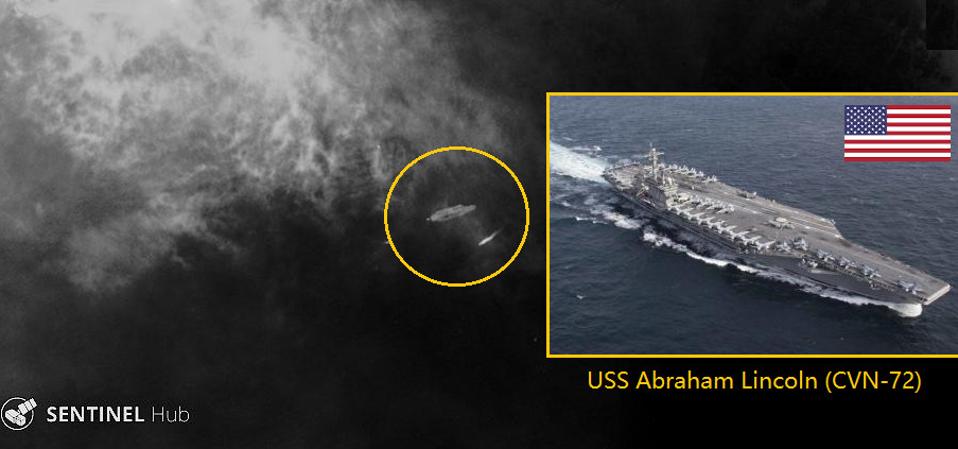
We recently showed how open-source intelligence analysts using freely available commercial satellite imagery can pinpoint a Chinese aircraft carrier hundred of miles out to sea. It wasn’t easy, but it worked. This applies to U.S. navy aircraft carriers also, but it is not always straightforward.China’s Military Is Tied to Debilitating New Cyberattack Tool
Can China’s Electric Car Industry Weather the COVID-19 Storm?
The electric vehicle industry in China has been a top priority for Beijing in recent years. Faced with the challenge of reopening the Chinese economy after months of lockdown due to the COVID-19 pandemic, how will new energy vehicles (NEVs) fare?The Building Blocks of a China Strategy
Is Putin really not worried about a rising China?
Is Xi Jinping Weaker Than We Think?
Russia Now Losing Out to China on Iranian Rail Route
Reviving Stalled BRI: China’s Two-Stage Approach – Analysis
Five Points about U.S. Trade Over the Last Thirty Years

Critiquing the State Department’s Nuclear Posture Clarification
Sorry, Americans, You Haven’t Even Had a Real Lockdown Yet
MADRID—Spain began easing its draconian, six-week coronavirus lockdown this week, and I still somehow found a way to get in trouble with the cops—again.European nations may be hesitant to trust AI for cybersecurity
WASHINGTON – When U.S. leaders talk about the promise of artificial intelligence, one application they regularly discuss is cybersecurity. But experts say European countries have thus far proven to be more measured in their approach to AI, fearing the technology is not yet reliable enough to remove human analysts.Limiting IDF Engagement in Civilian Crises
A team of researchers from the Institute for National Security Studies (INSS) and the Israel Democracy Institute (IDI) have conducted a study on how the IDF – particularly through the Home Front Command – could best use its various capacities to assist in the struggle against the coronavirus. The IDF should serve as a support system to reinforce and supplement civilian agencies, but it should not be drawn into the overall management of the crisis or specific economic and social tasks that exceed its authority, in order to avoid contravening democratic principles. Transfer of responsibility to the IDF for the management of mass disasters should be considered only in extreme cases of a national catastrophe where state systems have ceased to function. Even then, military action must be clearly subordinate to the political echelon, with close parliamentary and legal supervision.Where are the carriers?
An Abysmal Failure of Leadership
Cybersecurity and COVID: 5 LessonsCybersecurity and COVID: 5 Lessons
Without belaboring the point, there are many similarities between the COVID-19 pandemic and cybersecurity. We can learn from the response to the COVID pandemic lessons about cybersecurity.