A water effectiveness focus for agriculture policy will improve yield, change cropping patterns and reduce misery. It is the only way to mitigate the significant impact likely from climate change. Each year in India, one half of a billion people pray for rain. The rain has to be just right. Too little and there is drought. Too much and there are floods. In either of these cases, their agricultural crop does not provide them sufficient livelihood. Misery generally follows in its wake.The Profession of Arms: A Guide for Young Army Officers
It takes courage, especially for a young officer, to check a man met on the road for not saluting properly or for slovenly appearance, but, every time he does, it adds to his stock of moral courage, and whatever the soldier may say, he has respect for the officer who does pull him up.
Read Document →The Dragon's Teeth: Assessing China's Military Modernization
PLA has focused on modernising its capabilities across all warfare domains to achieve these goals. This includes land, air, and maritime operations, nuclear, space, counter-space, electronic warfare and cyberspace operations, aiming to become a fully integrated joint force.
Read Document →Transforming the PLA: A Decade of reorganisation from SSF to ISF
PRC has engaged in a sustained and broad effort to transform the PLA from an infantry-heavy, low-technology, ground forces-centric military into a high-technology, networked force with an increasing emphasis on joint operations and naval and air power projection.
Read Document →Eyes without Borders: Exploring the World of Open Source Intelligence (OSINT) in the Digital Age
Open Source Intelligence (OSINT) is gaining prominence with the rise of social media, the digital society and the vast growth of publicly and commercially available information (PAI and CAI).
Read Document →
The PLA’s Developing Cyber Warfare Capabilities and India's Options
Informationised warfare blurs the lines between peacetime and wartime. A nation in the information age cannot wait for the hostilities to break out to collect intelligence, carryout influence operations, develop antisatellite systems or design computer software weapons.
Read Document →
Galwan and After
Why did China did this when he is under tremendous pressure in all fronts, is this China's salami slice tactics being progressed rigorously, what will be new Rules of Engagement, what will be escalatory control mechanism, who has taken this decision, will there be some pressure put by China in India's North-East through insurgency.
Read Document →
India’s Joint Doctrine for Cyberspace Operations: A Critical Review
Chief of Defence Staff (CDS) General Anil Chauhan and Secretary, Department of Military Affairs, formally released declassified versions of the Joint Doctrines for Cyberspace Operations during the Chiefs of Staff Committee meeting in New Delhi.
Read Document →
Know your Enemy General(now Field Marshal) Syed Aseem Munir
Gen SA Munir's position in the hierarchy of Pakistan was not very comfortable. The state of economy, insurgency in Pakhtoonistan and Balochistan, attack on the Jaffar Express, constant protests by supporters of Imran Khan's supporters inside and outside of parliament.
Read Document →
Decoding Operation SINDOOR: Key Aspects and Implications
Precision strikes were carried out on nine sites—four in Pakistan and five in PoK—linked to anti-India terrorist groups such as the LeT, JeM and the Hizbul Mujahideen. The targeted sites included Muridke (LeT headquarters) and Bahawalpur (JeM headquarters).
Read Document →
Chinese Cyber Exploitation in India's Power Grid - Is There a linkage to Mumbai Power Outage?
The New York Times (NYT), based on analysis by a U.S. based private intelligence firm Recorded Future, reported that a Chinese entity penetrated India’s power grid at multiple load dispatch points. Chinese malware intruded into the control systems that manage electric supply across India, along with a high-voltage transmission substation and a coal-fired power plant
Read Document →10 August 2018
Reforming Indian agriculture by sprinkles and drips
A water effectiveness focus for agriculture policy will improve yield, change cropping patterns and reduce misery. It is the only way to mitigate the significant impact likely from climate change. Each year in India, one half of a billion people pray for rain. The rain has to be just right. Too little and there is drought. Too much and there are floods. In either of these cases, their agricultural crop does not provide them sufficient livelihood. Misery generally follows in its wake.U.S. Sanctions Threaten India's Importation of Iranian Oil
Too many deficits to bridge in modern era
WHAT ARE U.S. SPECIAL FORCES DOING IN FARAH, AFGHANISTAN?
Daily Memo: Iran's New Sanctions, China's Broken Traditions, Afghanistan's Definitions
Wanted: A Strategy for the Indo-Pacific Region
Four months ago, Singaporean foreign minister Vivian Balakrishnan stated that Singapore would not be joining the Free and Open Indo-Pacific (FOIP) because he did not know what the strategy entailed. In fact, the United States has not released a formal FOIP plan. At the time of his statement, public descriptions of the developing strategy had been confined to President Trump’s speech at the Asia-Pacific Economic Cooperation CEOs Summit and a press event at the State Department. At the time, the world knew only that the United States was pursuing an international rules-based order built around the centrality of ASEAN (Association for Southeast Asian Nations) and defined as free and open. Congressional testimony on May 15 provided a more refined statement of the principles “free” and “open,” but did not speak to the manner in which FOIP would achieve them.Can Iran Wait out Trump's Pressure Campaign?
U.S. foreign policy toward Iran is approaching a “back to the future” moment, with the Trump White House resurrecting the strategy pursued by President George W. Bush (and, for a while, President Barack Obama) of pressuring Iran economically into abandoning its nuclear pursuits. The question now is whether President Trump, or if necessary a successor, will push this pressure campaign—which the Administration is supplementing with outreach to Iran’s people and more security cooperation with its regional adversaries—to its conclusion.A Brief Guide to Understanding the Kurds
It has been said that the Kurds are a nation without borders, though that is only partly true. They are, of course, citizens of any number of countries, ones that envelop their homeland in the Middle East and ones much farther afield. But for the Kurds — a nation of some 25 million people who, despite their shared culture, speak different languages, practice different religions, subscribe to different political ideologies and hold different passports — citizenship is not such a simple matter. It would be more accurate to say that Kurds, having assimilated into countries they do not consider their own, tend to be citizens in name but not in practice. And they are subject, therefore, to discrimination and outright oppression. In Turkey, Kurdish language curriculums are still banned in most schools. In Iraq, an estimated 50,000 to 100,000 Kurds were killed in the late 1980s during Saddam Hussein's al-Anfal campaign. In Iran, as many as 1,200 Kurdish political prisoners were allegedly executed after the Iranian Revolution of 1979.YEMEN CIVIL WAR: U.S. LAWMAKERS RAISE ALARM BELLS ABOUT PENTAGON’S ROLE IN ‘WORLD’S WORST HUMANITARIAN CRISIS’
Congress rarely gets outraged over an internecine war in a distant land where American troops are not bleeding and dying. But in a rare exception, lawmakers have become deeply troubled over the Pentagon’s role in Yemen’s civil war—a conflict that has eviscerated the civilian population, provoked a deadly famine and ignited what health officials are calling the worst cholera outbreak in recorded history. For the first time since the war began in 2015, U.S. lawmakers are taking concrete steps to halt or tightly restrict weapons sales to their allies Saudi Arabia and the United Arab Emirates—the leaders behind an Arab coalition fighting Yemen’s rebels, who are seen as proxies for a common enemy, Iran. Much of the damage from the war, independent observers say, has been caused by Saudi and UAE airstrikes using U.S. and British warplanes and munitions, leading human rights groups to accuse Washington and London of complicity in Yemen’s agony.BATTLE OF THE PORTS: EMIRATES SEA POWER SPREADS FROM PERSIAN GULF TO AFRICA | OPINION
The past few weeks have been particularly rich in new developments for the UAE’s foreign policy. In Yemen, the UAE is at the forefront of the current struggle for the seizure of the Houthi-held port of Hodeidah, a critical chokepoint for the arms and humanitarian supplies to the Houthis, and an important access to the Red Sea and strait of Bab el Mandeb, where 4.8 million barrels of oil and 8 percent of global trade transit every day. On the other shore of the Red Sea, the Emiratis have reportedly played a key role at facilitating the rapprochement between 20-year rivals Eritrea and Ethiopia. On July 24, a few weeks after the two countries signed a peace agreement, Abu Dhabi hosted a tripartite summit with the two leaders, where it reaffirmed its support to their peace efforts. For the UAE, the stabilisation of these important partners could have strategic advantages, including for reinforcing its already solid influence on Horn of Africa’s ports. Indeed, Eritrea hosts the UAE’s first foreign military base in its port of Assab since 2015, and reports suggest that landlocked Ethiopia plans to use this port, possibly developed by Dubai Ports World, to diminish its reliance on the port of Djibouti.How Russia and America Crack Each Others Top Military Secrets
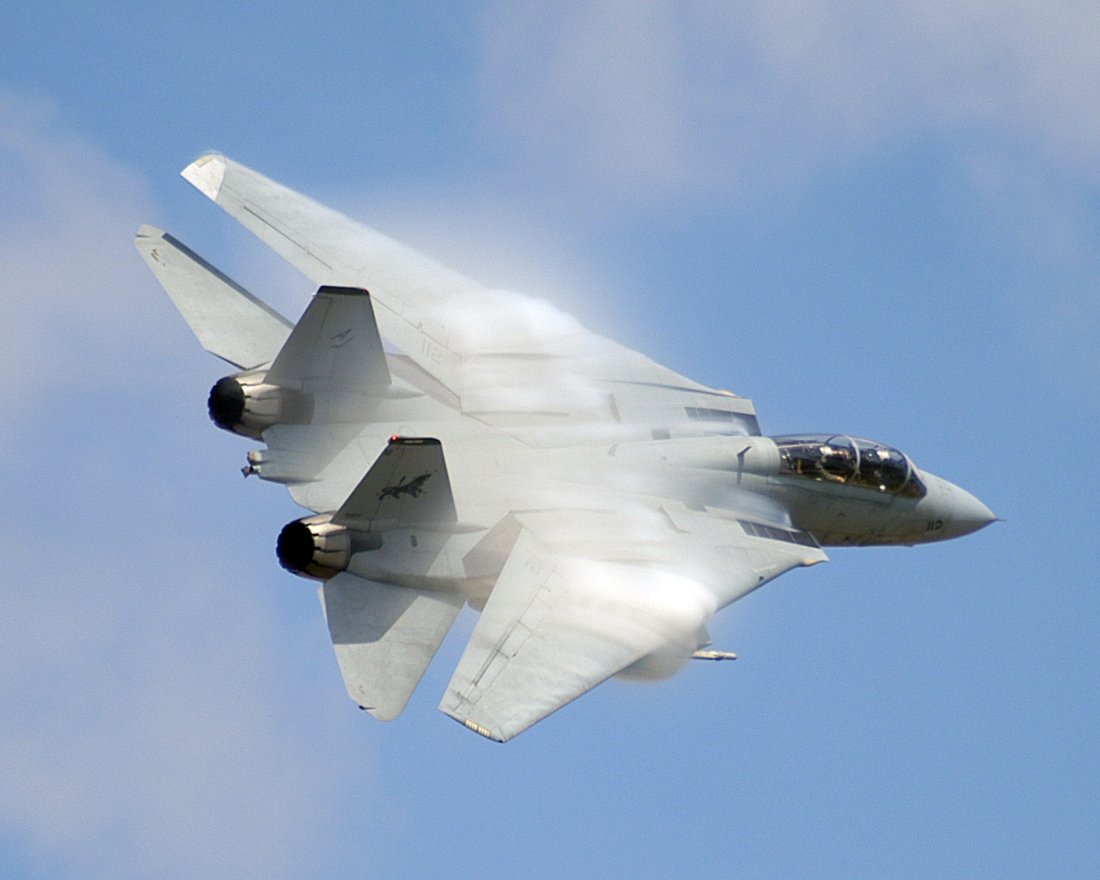
Other gear captured during the Arab-Israeli wars included T-62 and T-72 tanks, BMP infantry fighting vehicles, and Sagger anti-tank missiles. Both sides also lost and benefitted when their various Third World allies changed sides, and offered their new patrons a look at the weapons supplied by their old backers. Iran gave the Soviets a chance to inspect F-14 fighters delivered to the Shah’s air force, while the United States got to see Soviet weapons in Eastern European arsenals after 1989. Last month, Russia claimed that it recovered U.S. Tomahawk missiles that hit Syria, and would crack their secrets.The United States Must Be Realistic on Taiwan
It feels surreal to rehash the “Who lost China?” debate from nearly seventy years ago, but here we are yet again deliberating the future of Taiwan and its role in U.S.-China relations and in U.S. defense strategy more broadly. Watching the rapid meltdown of the incompetent and unpopular Nationalists in the Chinese Civil War, President Harry Truman made the correct decision to extricate the United States from that civil war. On January 5, 1950, he made a speech (discussed at length in the classicbook Useful Adversaries) that cited the Cairo Declaration and explained that “the United States would neither intervene militarily in the Taiwan Straits nor provide military assistance to combatants in the Chinese Civil War.”The 'Threat' of Nuclear Power Plant Closures
For years, the nuclear industry insisted that civilian nuclear power had nothing to do with weapons programs. That was then. Now, in a desperate attempt to keep no-longer-competitive nuclear plants from being shuttered, the industry claims there really has been a connection all along, and electricity customers should pay a premium to keep it going. It is one claim too many. In its latest public effort, the nuclear industry got several dozen retired generals and admirals, former State, Defense and Energy Department officials, three former chairmen of the Nuclear Regulatory Commission, and a sprinkling of former senators, governors, industrialists and other worthies to sign a June 26, 2018, letter to Energy Secretary Rick Perry attesting to the connection between U.S. nuclear power plants and national security. The letter urged him to weigh in with federal and state rate-setting bodies to raise customers’ electricity bills to keep U.S. nuclear plants from shutting down, however much that will cost.Russia Flexes Muscles of Airborne Forces
Building a great data platform
An Emerging Indo-Pacific Infrastructure Strategy
How is America preparing for the future of work?
Axios AM
No 104, Caucasus Analytical Digest: Armenia´s Velvet Revolution: Challenges to Regional Foreign Policy
This issue of the CAD focuses on the international and regional implications of Armenia’s 2018 ‘Velvet Revolution’. More specifically, the articles look at 1) whether Armenia’s spring 2018 political transformation led to any changes in the country’s foreign policy priorities; 2) how Azerbaijan’s political elite responded to the spring events; 3) what Georgians think about the revolution; 4) why Armenia’s political changes could prove a litmus test for the EU’s ability influence political change in its neighborhood; and 5) why Russia remained largely indifferent to the revolution.Congress offers millions in budget to cyber-harden missile defense systems
WASHINGTON — House and Senate lawmakers have authorized an injection of about $51 million in funding to cyber-harden missile defense systems, according to the fiscal 2019 National Defense Authorization Act conference report, and appropriators are expected to follow suit in the defense spending bill with roughly $100 million in additional funding. Congressional authorizers noted in a summary of the NDAA conference report, released July 23, that the conferees were supporting an increase in funding to address cyberthreats to U.S. missile defense systems.The future of work: Will robots take my job?
Venezuela’s Drone Attack May Not Be the Last
Why human-AI collaboration will dominate the future of work
LOW DENSITY LOGISTICS: SUSTAINING SPECIAL OPERATIONS FORCES IN AFRICA
Explaining the Hype Around Hypersonic Weapons
Countries around the world are in the process of developing hypersonic weapons technology, and the United States and China are leading the pack. With the technology needed for hypersonic missiles growing ever more feasible and accessible, we anticipate that both countries will have mature designs in the near future. The new missiles will be much faster than any current cruise missiles, and they will be extremely hard to detect. As the world adjusts to this evolving weaponry, the way countries approach offensive arms development and preemptive strikes is set to change dramatically.