The worst fears about the Defence Planning Committee (DPC) being yet another bureaucratic contrivance rather than an instrument for centralizing national security and defence decision-making were realized once the outcome of its first meeting became known. One report talked about the DPC chaired by NSA Ajit Doval with the three armed services chiefs — Admiral Satish Lanba, General Bipin Rawat, Air Chief Marshal BS Dhanoa, defence secretary Sanjay Mitra, expenditure secretary Ajay Jha, foreign secretary Vijay Gokhale, and Lt Gen Satish Dua heading the Integrated Services HQrs as member-secretary writing up the minutes, surveying the “geostrategic landscape” and deciding to come up with an รคction plan. Another reported that the stress was on the military services alighting on a coordinated plan to avoid developing duplication and triplication of capabilities that would be mindful of the financial constraints and keep in view rapidly advancing technologies and the likely nature of the wars of the future. In this context, the navy was asked not to push for the third indigenous aircraft carrier (that NHQ had hoped would have on board the prohibitively costly electromagnetic aircraft launch system (EMALS) that the US Navy is finding to be unaffordable. All present also apparently agreed that the flab needs to be excised. That’s all that has come out in the public realm.The Profession of Arms: A Guide for Young Army Officers
It takes courage, especially for a young officer, to check a man met on the road for not saluting properly or for slovenly appearance, but, every time he does, it adds to his stock of moral courage, and whatever the soldier may say, he has respect for the officer who does pull him up.
Read Document →The Dragon's Teeth: Assessing China's Military Modernization
PLA has focused on modernising its capabilities across all warfare domains to achieve these goals. This includes land, air, and maritime operations, nuclear, space, counter-space, electronic warfare and cyberspace operations, aiming to become a fully integrated joint force.
Read Document →Transforming the PLA: A Decade of reorganisation from SSF to ISF
PRC has engaged in a sustained and broad effort to transform the PLA from an infantry-heavy, low-technology, ground forces-centric military into a high-technology, networked force with an increasing emphasis on joint operations and naval and air power projection.
Read Document →Eyes without Borders: Exploring the World of Open Source Intelligence (OSINT) in the Digital Age
Open Source Intelligence (OSINT) is gaining prominence with the rise of social media, the digital society and the vast growth of publicly and commercially available information (PAI and CAI).
Read Document →
The PLA’s Developing Cyber Warfare Capabilities and India's Options
Informationised warfare blurs the lines between peacetime and wartime. A nation in the information age cannot wait for the hostilities to break out to collect intelligence, carryout influence operations, develop antisatellite systems or design computer software weapons.
Read Document →
Galwan and After
Why did China did this when he is under tremendous pressure in all fronts, is this China's salami slice tactics being progressed rigorously, what will be new Rules of Engagement, what will be escalatory control mechanism, who has taken this decision, will there be some pressure put by China in India's North-East through insurgency.
Read Document →
India’s Joint Doctrine for Cyberspace Operations: A Critical Review
Chief of Defence Staff (CDS) General Anil Chauhan and Secretary, Department of Military Affairs, formally released declassified versions of the Joint Doctrines for Cyberspace Operations during the Chiefs of Staff Committee meeting in New Delhi.
Read Document →
Know your Enemy General(now Field Marshal) Syed Aseem Munir
Gen SA Munir's position in the hierarchy of Pakistan was not very comfortable. The state of economy, insurgency in Pakhtoonistan and Balochistan, attack on the Jaffar Express, constant protests by supporters of Imran Khan's supporters inside and outside of parliament.
Read Document →
Decoding Operation SINDOOR: Key Aspects and Implications
Precision strikes were carried out on nine sites—four in Pakistan and five in PoK—linked to anti-India terrorist groups such as the LeT, JeM and the Hizbul Mujahideen. The targeted sites included Muridke (LeT headquarters) and Bahawalpur (JeM headquarters).
Read Document →
Chinese Cyber Exploitation in India's Power Grid - Is There a linkage to Mumbai Power Outage?
The New York Times (NYT), based on analysis by a U.S. based private intelligence firm Recorded Future, reported that a Chinese entity penetrated India’s power grid at multiple load dispatch points. Chinese malware intruded into the control systems that manage electric supply across India, along with a high-voltage transmission substation and a coal-fired power plant
Read Document →10 May 2018
DPC turning out, as expected, to be yet another bureaucratic pimple
The worst fears about the Defence Planning Committee (DPC) being yet another bureaucratic contrivance rather than an instrument for centralizing national security and defence decision-making were realized once the outcome of its first meeting became known. One report talked about the DPC chaired by NSA Ajit Doval with the three armed services chiefs — Admiral Satish Lanba, General Bipin Rawat, Air Chief Marshal BS Dhanoa, defence secretary Sanjay Mitra, expenditure secretary Ajay Jha, foreign secretary Vijay Gokhale, and Lt Gen Satish Dua heading the Integrated Services HQrs as member-secretary writing up the minutes, surveying the “geostrategic landscape” and deciding to come up with an รคction plan. Another reported that the stress was on the military services alighting on a coordinated plan to avoid developing duplication and triplication of capabilities that would be mindful of the financial constraints and keep in view rapidly advancing technologies and the likely nature of the wars of the future. In this context, the navy was asked not to push for the third indigenous aircraft carrier (that NHQ had hoped would have on board the prohibitively costly electromagnetic aircraft launch system (EMALS) that the US Navy is finding to be unaffordable. All present also apparently agreed that the flab needs to be excised. That’s all that has come out in the public realm.Afghan Futility and the Not-So-Curious Case of Lieutenant Jordan Rich
Exposing China’s Actions in the South China Sea
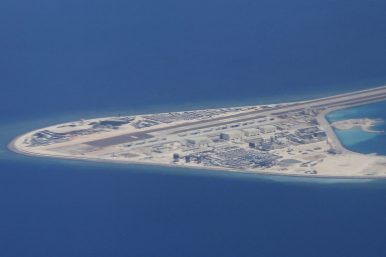
China is advancing toward its goal of establishing administrative control over much of the South China Sea. This trend is heightening regional concerns about the reliability of the United States, and enhancing China’s coercive leverage over the commercial and military activities of surrounding countries. If left unabated, the cumulative effect of China’s expanding influence in the South China Sea will make it increasingly difficult for the United States to defend its interests in Southeast Asia: U.S. security partnerships will weaken, the U.S. military will be left with fewer access and presence agreements, and neither regional institutions nor international law will substantially constrain China’s behavior.China quietly installed defensive missile systems on strategic Spratly Islands in hotly contested South China Sea
China's upstart chip companies aim to topple Samsung, Intel and TSMC
For most of its nine-year history, the museum has been mostly a place for school children to learn about the uses of computer chips. But it has become a hot ticket for officials from all over China ever since Beijing declared that creating a world-leading semiconductor industry was a top national priority. On a recent weekday this spring, Lance Long, the museum's director, was hosting a tour for officials from Urumqi, the Xinjiang capital known for being the world's most landlocked city. Before that, Long hosted groups from distant provinces such as Gansu and Yunnan and even Mongolia. All told, some 200 groups came last year for an education in China's next big thing."Many of these representatives knew very little about chips, but they all want to capture this once-in-a-lifetime investment opportunity being led by high-ranked policymakers," Long told the Nikkei Asian Review.China Deploys Long-Range Anti-Ship and Anti-Air Missiles to Spratly Islands For First Time
China appears to have deployed long-range anti-ship cruise missiles and air-defense missiles to the Spratly Islands, providing the islands with offensive reach for the first time. The move dashes hopes across the region that China would refrain from, or at least limit, its militarization of the extensive bases it has built on reclaimed coral reefs in the heavily disputed islands. Intelligence sources told CNBC News that China had placed supersonic YJ-12B anti-ship cruise missiles and HQ-9B anti-air missiles on Fiery Cross, Subi, and Mischief Reefs in the Spratly Islands. China’s Ministry of Foreign Affairs tried to downplay the significance of the deployment, but the White House Press Secretary said that China would face consequences for the missile emplacements and its continued militarization of its Spratlys features, without elaborating on what those might be.Best Of: China Ramps Up Navy to Challenge U.S. Dominance
According to CNBC, sources “with direct knowledge of U.S. intelligence reports” say China has installed long-range anti-ship and surface-to-air missiles on three of its artificial islands in the region—and the deployment took place in just the past 30 days. The deployment of missiles on these islands hasn’t been confirmed independently, but satellite photos published by CSIS’ Asia Maritime Transparency Initiative, which closely monitors Chinese construction on the islands, show the development of hardened shelters with retractable roofs. In our Friday ‘Best of’ series, we lay out the big picture for you by bringing you Expert Cipher Brief analysis on China’s considerable progress in developing advanced naval and force projection capabilities. China is going green. Here's how
After years of heavy industrialization, China’s environmental challenges are nearing a tipping point. The factories and power plants that have driven its economic growth have also polluted its air, water and soil, to the point where environmental hazards could lead to a significant risk to China’s society and economy, if not corrected in a timely manner. In a bid to tackle these challenges, China’s government has declared a “war on pollution” and introduced a number of green initiatives.Best Of: China Ramps Up Navy to Challenge U.S. Dominance
According to CNBC, sources “with direct knowledge of U.S. intelligence reports” say China has installed long-range anti-ship and surface-to-air missiles on three of its artificial islands in the region—and the deployment took place in just the past 30 days. The deployment of missiles on these islands hasn’t been confirmed independently, but satellite photos published by CSIS’ Asia Maritime Transparency Initiative, which closely monitors Chinese construction on the islands, show the development of hardened shelters with retractable roofs.How China has targeted U.S. industries
America’s being invaded by China and Russia with chips, bits and bytes
Guns vs butter at Wuhan
Economists warn Trump, Congress of dangers of protectionist trade policies
Syria crisis enters new danger zone
The Panmunjom Declaration: What it wasn’t supposed to be
Why Korea Can’t Replicate Germany’s Reunification
Applications of OCR You Haven’t Thought Of
Optical Character Recognition (OCR) is one of the few technologies that has found applications throughout the entire industrial spectrum, where the immediate saving of labour. (otherwise lost in onerous retyping of handwritten or typewritten data) is realised. With OCR, a huge number of paper-based documents, across multiple languages and formats can be digitised into machine-readable text, that not only makes storage easier (saving a bomb on space, fireproofing, pest-control etc), but also makes previously inaccessible data available to anyone at a click.Europe Has No Clue How to Handle an American Bully
If the United States tears up the Iran nuclear deal — the multilateral agreement that is currently making it impossible for Iran to acquire nuclear weapons — it will be more than just a typical Trumpian blunder or evidence of the continued influence of the hard-line wing of the Israel lobby and its Saudi and Gulf Arab counterparts. It will also be another sign of Europe’s strategic irrelevance, and its leaders’ collective inability to either stand up to the United States or alter its thinking on an issue of paramount importance.Brexit has caused Britain’s political pendulum to stick
The pendulum is stuck. The traditional laws of political gravity predict a swing away from the party of national government in local elections, but it has been a while since British politics followed the obvious arc of precedent. If last night’s council election results conform to any pattern, it is the laudable habit that voters have acquired of giving party leaders cause to scratch their heads and wonder what the hell is going on. There is no big national winner. Since the Tories were braced for a mauling and escaped without one, Theresa May will be feeling relatively relaxed today. Labour needed to demonstrate that last year’s general election gains were a staging post on the road to national power; that destiny was calling Jeremy Corbyn. Destiny didn’t hang up the phone, but it has put the opposition on hold. Labour had ambitious targets – Tory bastions in London such as Westminster and Wandsworth – that did not fall.AI Makes Personal Privacy a Matter of National Strategy
Three decisions Cyber Command’s new leader will have to make
Newly confirmed Army Lt. Gen. (P) Paul Nakasone will formally take the reins at the National Security Agency and Cyber Command following a ceremony May 4. In that role, Nakasone will head the 10th, and newest, combatant command. But as the organization takes on greater responsibilities, Nakasone will receive broad authorities as the global coordinator for cyber operations in the Department of Defense and as the joint force trainer for cyber. Here are three key decisions Nakasone will face and that will shape Cyber Command in the long term.Why can’t we read anymore?
The Marines now depend on 3D printing for parts in winter warfare
The Marine Corps has, in recent months, started to shift its focus away from operations in the Middle East and begun to emphasize preparing to operate in extreme cold— like that found in northern Europe and northeast Asia. US forces "haven't been in the cold-weather business for a while," Marine Corps Commandant Gen. Robert Neller said in January 2018. "Some of the risks and threats there, there is a possibility we are going to be there." That reorientation has placed new demands on Marines operating at northern latitudes in Europe and North America — and put new strains on their equipment. The Corps has issued requests for information on a new cap and gloves for intense cold, and it plans to spend nearly $13 million on 2,648 sets of NATO's ski system for scout snipers, reconnaissance Marines, and some infantrymen.Are We Really Ready for a Cyberattack?
Last month, the U.S. and U.K. governments released a joint “Technical Alert” on the dangers of “Russian state-sponsored cyber actors.” While timely and targeted, this alert shouldn’t be a surprise to anyone. We’ve witnessed enough cyberattacks in recent years to understand that the digital domain is humanity’s new battlefield. And while the West is ramping up its defenses, its efforts aren’t guided by an overall doctrine. That’s right: There is no master plan. What we need now, before a more serious cyberattack, is a doctrine along the lines of our National Response Framework. This document is, in its own words, “a guide to how the nation responds to all types of disasters and emergencies.” Resources, roles, responsibilities, you name it. From the Oval Office down to local governments. It even includes Native American Tribal Councils. No, seriously, look it up — because you can. This isn’t a secret, eyes-only doomsday plan. The National Response Framework is open to the public because it needs to be. There can’t be any room for misinterpretation or confusion.Here’s The Marine Corps’ New Plan To Shake Up Rifle Squads
Editor’s Note: This article by Hope Hodge Seck originally appeared on Military.com, the premier source of information for the military and veteran community. The Marine Corps is capping off 18 months of overhauling the way infantry units are trained and equipped by shaking up the structure of the rifle squad. In an address to an audience of Marines at a Marine Corps Association awards dinner near Washington, D.C., on Thursday night, Commandant Gen. Robert Neller said future squads will have 12 Marines, down from the current 13. But while the squads are losing a body, they will gain capability, with two new leadership positions, he said. he new squad will have three fire teams of three Marines each, an adjustment from the standard four-Marine fire teams of today, Neller said.