The Profession of Arms: A Guide for Young Army Officers
It takes courage, especially for a young officer, to check a man met on the road for not saluting properly or for slovenly appearance, but, every time he does, it adds to his stock of moral courage, and whatever the soldier may say, he has respect for the officer who does pull him up.
Read Document →The Dragon's Teeth: Assessing China's Military Modernization
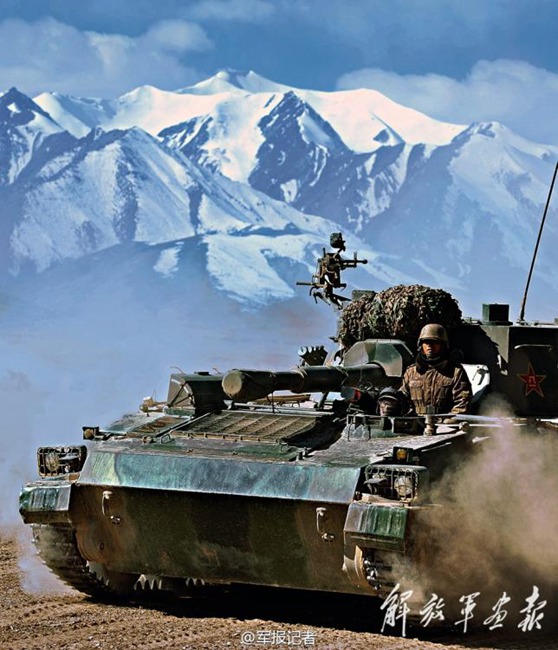
PLA has focused on modernising its capabilities across all warfare domains to achieve these goals. This includes land, air, and maritime operations, nuclear, space, counter-space, electronic warfare and cyberspace operations, aiming to become a fully integrated joint force.
Read Document →Transforming the PLA: A Decade of reorganisation from SSF to ISF
PRC has engaged in a sustained and broad effort to transform the PLA from an infantry-heavy, low-technology, ground forces-centric military into a high-technology, networked force with an increasing emphasis on joint operations and naval and air power projection.
Read Document →Eyes without Borders: Exploring the World of Open Source Intelligence (OSINT) in the Digital Age
Open Source Intelligence (OSINT) is gaining prominence with the rise of social media, the digital society and the vast growth of publicly and commercially available information (PAI and CAI).
Read Document →
The PLA’s Developing Cyber Warfare Capabilities and India's Options
Informationised warfare blurs the lines between peacetime and wartime. A nation in the information age cannot wait for the hostilities to break out to collect intelligence, carryout influence operations, develop antisatellite systems or design computer software weapons.
Read Document →
Galwan and After
Why did China did this when he is under tremendous pressure in all fronts, is this China's salami slice tactics being progressed rigorously, what will be new Rules of Engagement, what will be escalatory control mechanism, who has taken this decision, will there be some pressure put by China in India's North-East through insurgency.
Read Document →
India’s Joint Doctrine for Cyberspace Operations: A Critical Review
Chief of Defence Staff (CDS) General Anil Chauhan and Secretary, Department of Military Affairs, formally released declassified versions of the Joint Doctrines for Cyberspace Operations during the Chiefs of Staff Committee meeting in New Delhi.
Read Document →
Know your Enemy General(now Field Marshal) Syed Aseem Munir
Gen SA Munir's position in the hierarchy of Pakistan was not very comfortable. The state of economy, insurgency in Pakhtoonistan and Balochistan, attack on the Jaffar Express, constant protests by supporters of Imran Khan's supporters inside and outside of parliament.
Read Document →
Decoding Operation SINDOOR: Key Aspects and Implications
Precision strikes were carried out on nine sites—four in Pakistan and five in PoK—linked to anti-India terrorist groups such as the LeT, JeM and the Hizbul Mujahideen. The targeted sites included Muridke (LeT headquarters) and Bahawalpur (JeM headquarters).
Read Document →
Chinese Cyber Exploitation in India's Power Grid - Is There a linkage to Mumbai Power Outage?
The New York Times (NYT), based on analysis by a U.S. based private intelligence firm Recorded Future, reported that a Chinese entity penetrated India’s power grid at multiple load dispatch points. Chinese malware intruded into the control systems that manage electric supply across India, along with a high-voltage transmission substation and a coal-fired power plant
Read Document →19 November 2015
Unlimited Liability: Why Army Officers Don't Think Twice About Stepping Into Harm's Way
Seventh Pay Commission Likely to Propose 23% Hike: Report
Paris confirms IS’s weakness
Defining terror, evolving responses
Winter strategy for counter terrorism and counter propaganda in J&K
Interested in India’s Geopolitical future? Look to its States
For years, India-watchers have by equal measure championed the nation’s future role as the next regional if not global power and bemoaned its failure to live up to its strategic potential. At the heart of this optimism has been India’s fundamental capacities and characteristics—the size of its population, its democratic system of government, its geographic location in the heart of a dynamic Asia, and its deep and talented human capital pool. And yet, the pessimism has derived from the seeming inability of the federal government to make the whole equal more than the sum of its parts. While there are many reasons for this dichotomy, one of the most important is the outsized role played by India’s states in policymaking. To predict India’s future course, one must have a better understanding of its composite states. The Human Cost of India’s LCA Program
Pakistan's General Raheel Sharif Goes to Washington: Dรฉjร Vu All Over Again
China is ready
Geopolitical Consequences of China’s Slowdown
Despite being widely recognized as the most powerful emerging country in the world, China’s international position rests upon an untested foundation. Unlike other leading countries, whose national strength emanates from the confluence of military, economic, social, and geopolitical vectors, Chinese power is inexorably tied to the expansion of the Chinese economy. Breakneck economic growth has greatly elevated China’s regional standing, but Beijing’s goal of becoming a regional leader—which may eventually extend to displacing American preeminence in the Asia-Pacific—has yet to be achieved. A Delicate Balance In Beijing
17 November 2015
THIS IS ISIS’ NEW FAVORITE APP FOR SECRET MESSAGES
ISIS and the Logic of Anarchy
An Open Letter to Moderate Muslims
I was held hostage by Isis. They fear our unity more than our airstrikes
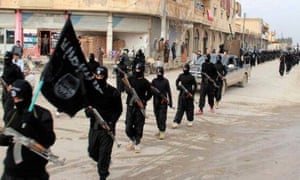
Isis fighters parading in Raqqa. ‘Everything convinces them that an apocalyptic process will lead to a confrontation between an army of Muslims from all over the world and others, the crusaders.Paris: The War With ISIS Enters A New Stage
NATO’S TWO-FRONT WAR
Russia’s Military Is a Shadow of What It Was During the Cold War
Three Takeaways From the Paris Terrorist Attacks
2016 Global Forecast
An annual collection of wide-ranging essays by CSIS experts, 2016 Global Forecast discusses the issues that will matter most to America and the world’s security and prosperity in the year ahead.Winning the War of Ideas
There is a broad consensus that the United States and the West are losing the messaging war against the Islamic State, al-Qaeda, and like-minded terrorists. Indeed, there has been much focus on terrorists’ use of social media to spread their message and attract thousands of followers from the heart of the Middle East to America’s heartland. The challenge from this ideology and global movement, however, is often reduced to a problem of messaging or public diplomacy. The reality is that we are losing more than just a battle in the media and on the Internet. Food Insecurity, Conflict, and Stability
Food insecurity is both a consequence and a cause of conflict, making it inexorably linked with political stability at regional, national, and international levels. Lack of access to affordable food has proven to trigger revolutions and spark unrest across the world. The first signs of the Arab Spring were riots in Algeria and Tunisia in 2011 over dramatic increases in the prices of dietary staples such as sugar, oil, and flour. The food-price crisis of 2007–2008 caused dozens of protests across the globe, serving as a wakeup call to the international community and the United States that investments in sustainable agricultural development are critical to political stability and national security. Soft Power and Security
International development assistance has been a critical tool for expanding political freedom, economic progress, and global security since the Marshall Plan following World War II. The security challenges facing the United States are broad and varied, and an effective administration will use the full array of tools at its disposal. In some cases, a military response to a security challenge is not the best option available. Ideally, we defuse threats before they manifest by expanding and strengthening the rules-based order that the United States and its allies constructed over the last 70 years. One of the most important questions facing the next American president will be: How do we apply development assistance and other forms of soft power to increase our security? Implications of Sustained Low Oil Prices
Countries and companies of all sizes continue to adjust to the new economic and market realities following the oil price collapse of 2014. And while the growth in U.S. unconventional production appears to be slowly abating, the upsurge in Organization of the Petroleum Exporting Countries (OPEC) output, robust global stock levels, and ongoing uncertainty around the strength of demand suggest that the oversupply and surpluses are likely to continue well into next year, exerting continued downward pressure on prices. Cyberoperators need to communicate
After Paris attacks, intel agencies coming to French aid
November 17, 2015
Paris Attacks Reignite Encryption Debate
"Disrupting the Cyber Status Quo"
Media coverage of cyber attacks has never been higher than it is today. Government officials and business executives around the world are more aware of cyber threats than ever before and taking measures to improve security. As a result, cybersecurity is one of the fastest-growing segments of the global technology industry with approximately $1.9 billion in venture capital funding in 2014 and hundreds of new cybersecurity startups.