The Profession of Arms: A Guide for Young Army Officers
It takes courage, especially for a young officer, to check a man met on the road for not saluting properly or for slovenly appearance, but, every time he does, it adds to his stock of moral courage, and whatever the soldier may say, he has respect for the officer who does pull him up.
Read Document →The Dragon's Teeth: Assessing China's Military Modernization
PLA has focused on modernising its capabilities across all warfare domains to achieve these goals. This includes land, air, and maritime operations, nuclear, space, counter-space, electronic warfare and cyberspace operations, aiming to become a fully integrated joint force.
Read Document →Transforming the PLA: A Decade of reorganisation from SSF to ISF
PRC has engaged in a sustained and broad effort to transform the PLA from an infantry-heavy, low-technology, ground forces-centric military into a high-technology, networked force with an increasing emphasis on joint operations and naval and air power projection.
Read Document →Eyes without Borders: Exploring the World of Open Source Intelligence (OSINT) in the Digital Age
Open Source Intelligence (OSINT) is gaining prominence with the rise of social media, the digital society and the vast growth of publicly and commercially available information (PAI and CAI).
Read Document →
The PLA’s Developing Cyber Warfare Capabilities and India's Options
Informationised warfare blurs the lines between peacetime and wartime. A nation in the information age cannot wait for the hostilities to break out to collect intelligence, carryout influence operations, develop antisatellite systems or design computer software weapons.
Read Document →
Galwan and After
Why did China did this when he is under tremendous pressure in all fronts, is this China's salami slice tactics being progressed rigorously, what will be new Rules of Engagement, what will be escalatory control mechanism, who has taken this decision, will there be some pressure put by China in India's North-East through insurgency.
Read Document →
India’s Joint Doctrine for Cyberspace Operations: A Critical Review
Chief of Defence Staff (CDS) General Anil Chauhan and Secretary, Department of Military Affairs, formally released declassified versions of the Joint Doctrines for Cyberspace Operations during the Chiefs of Staff Committee meeting in New Delhi.
Read Document →
Know your Enemy General(now Field Marshal) Syed Aseem Munir
Gen SA Munir's position in the hierarchy of Pakistan was not very comfortable. The state of economy, insurgency in Pakhtoonistan and Balochistan, attack on the Jaffar Express, constant protests by supporters of Imran Khan's supporters inside and outside of parliament.
Read Document →
Decoding Operation SINDOOR: Key Aspects and Implications
Precision strikes were carried out on nine sites—four in Pakistan and five in PoK—linked to anti-India terrorist groups such as the LeT, JeM and the Hizbul Mujahideen. The targeted sites included Muridke (LeT headquarters) and Bahawalpur (JeM headquarters).
Read Document →
Chinese Cyber Exploitation in India's Power Grid - Is There a linkage to Mumbai Power Outage?
The New York Times (NYT), based on analysis by a U.S. based private intelligence firm Recorded Future, reported that a Chinese entity penetrated India’s power grid at multiple load dispatch points. Chinese malware intruded into the control systems that manage electric supply across India, along with a high-voltage transmission substation and a coal-fired power plant
Read Document →6 August 2019
India – C-17 Sustainment Follow-on Support
Amrullah Saleh, the enemy of the Taliban
FILE - In this Oct. 26, 2008 file photo, former Afghanistan's intelligence chief Amrullah Saleh gestures during a press conference, in Kabul, Afghanistan. On Sunday, Dec. 23, 2018, Afghan President Ashraf Ghani appointed hard-line opponents of neighboring Pakistan to two top security posts. Ghani announced that Saleh will be the next interior minister and Asadullah Khaleed will be defense minister. (AP Photo/Rahmat Gul, File) Pakistani Duplicity Caused the United States to Lose in Afghanistan
“The war in Vietnam was not lost in the field, nor was it lost on the front pages of the New York Times or the college campuses. It was lost in Washington, D.C.”The death of Hamza bin Laden and the weakness of al-Qaida
Afghanistan war: UN says more civilians killed by allies than insurgents
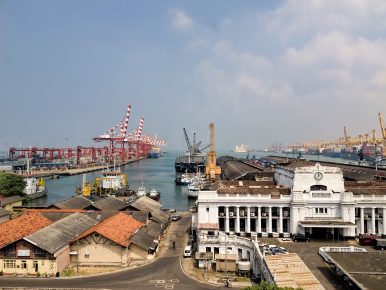
Against the Tide: The Growth of China-Sri Lanka Trade
The Right Way to Deal With Huawei
Did Trump Just Scuttle US-China Trade Talks (Again)?
China’s New Carrier to Begin New Round of Sea Trials This Week
How Beijing and Others Weaponized Interpol and the Magnitsky Act
About that Counter-Iran Coalition…
The Trump administration called for help, but Washington's friends have shrugged and calculated it is safer to stay away from "maximum pressure." There is a better way.Houthi attack kills more than 30 in Yemen's Aden, Saudi blames Iran
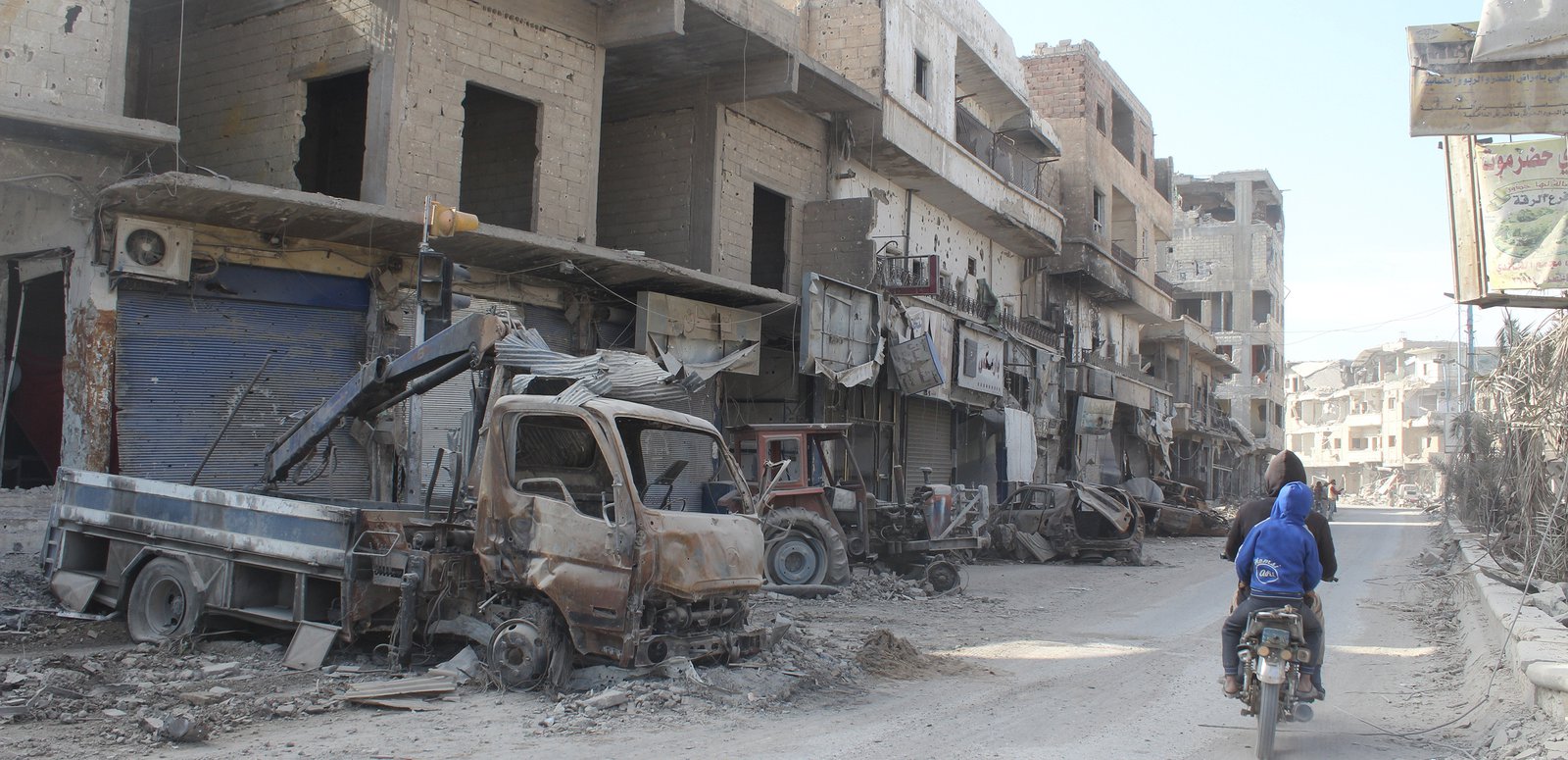
How Raqqa Became the Capital of ISIS
Combating disinformation and foreign interference in democracies: Lessons from Europe
This post is part of "Cybersecurity and Election Interference," a Brookings series that explores digital threats to American democracy, cybersecurity risks in elections, and ways to mitigate possible problems.Growing Tensions and Shrinking Affordability in Russia
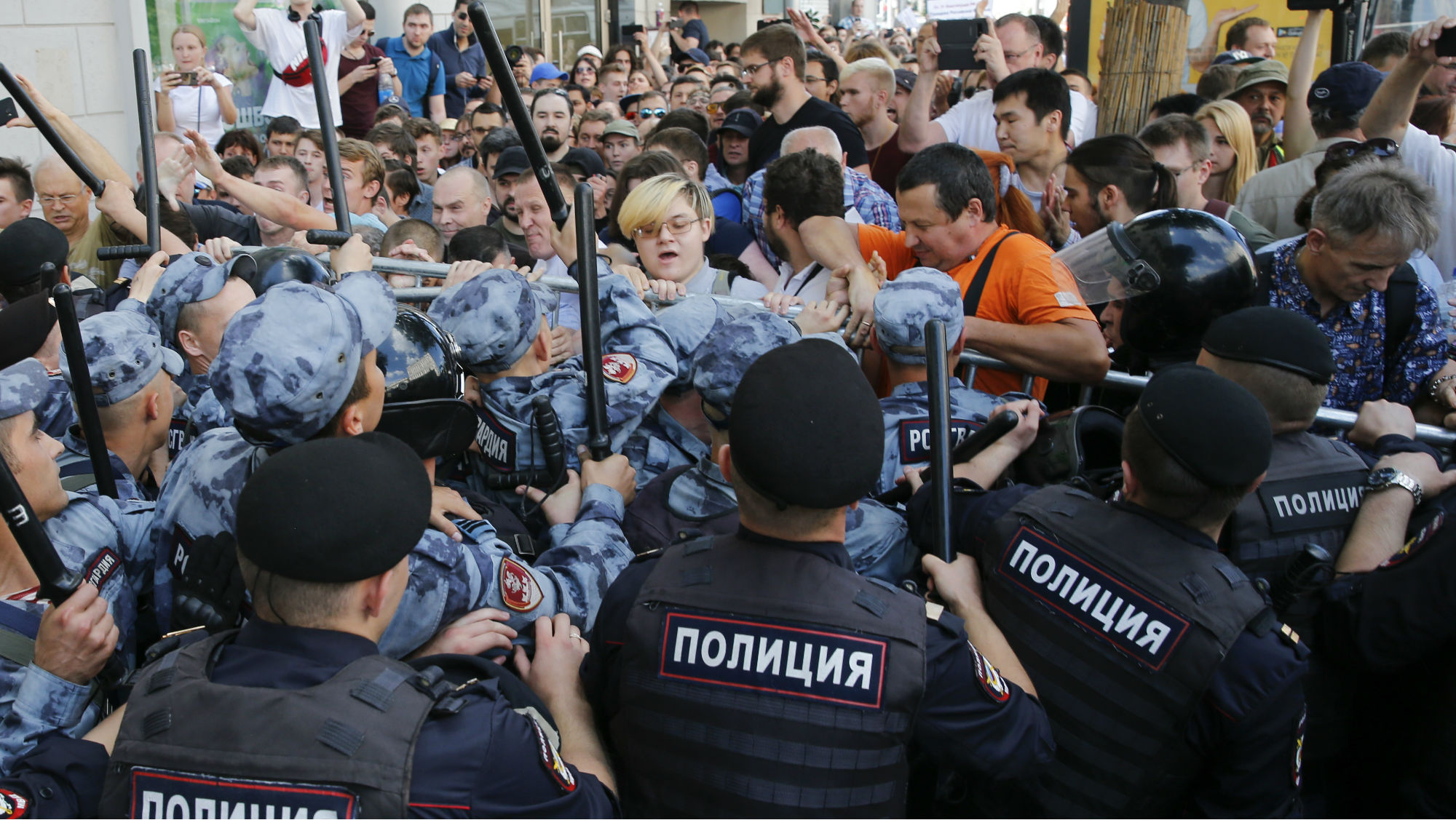
In early July, the Moscow Election Commission denied the requests of several opposition politicians to register as candidates for the Moscow city council elections, which are scheduled to take place Sept. 8. Protesters took to the streets beginning July 14, but considering the state of the economy and politics in Russia, they have more than just local elections to protest. The opposition has stated that it will continue to hold marches each Saturday, with the next scheduled for Aug. 3. The Kremlin will likely continue responding as it has been – with force.Russia’s Unusual Role in the Global Order
Student Feature – Advice on Writing for a Think Tank
The Techies Turning Kenya Into a Silicon Savannah
People hunched over greasy computer screens, crunching data, writing code: The scenes in Janek Stroisch’s photographic series Co.Ke are familiar to anyone who's ever been to a coffee shop in Silicon Valley. But this isn’t San Francisco. It’s Nairobi, in Kenya’s Silicon Savannah.US urges Germany to reconsider Persian Gulf mission
BERLIN — Washington isn't happy that Germany has rejected its request to join a U.S.-led naval security mission in the Persian Gulf.CII urges govt. to lower base price for 5G spectrum auctions
But What About China?
There was a post-superpower quality to this week’s Democratic debates. On both nights, foreign policy came up near the end, and the discussion focused mostly on the need to withdraw U.S.troops from Afghanistan, avoid war with Iran and, in Michael Bennet’s words, “invest in America again.” That’s fine, as far as it goes. But there was strikingly little discussion about America’s role in upholding a particular balance of power in the world. It was almost as if these Democratic candidates were running for prime minister of Canada.Hackers Could Use Connected Cars to Gridlock Whole Cities
When Trump Threatens Google, Here’s What He Doesn’t Get
Days after the Treasury Secretary cleared the U.S. tech giant of national security concerns, the president was rage-tweeting again.Cyber Capabilities Are Not Weapons of War? A Closer Look at the Analogy to Biological Weapons
Two Ways to Ward off Killer Spacecraft
If you worry that the recent near-collision between U.S. and Russian warships or Iran’s downing of an American drone could escalate into war, you should be even more worried about enemy actions against our U.S. satellites.Cold War in Cyberspace
Lessons from Special Operations Command: Cyber training for the multidomain force
Since U.S. Cyber Command’s elevation to a unified combatant command in 2018, comparisons have been drawn to Special Operations Command (SOCOM).Attracting, Recruiting, and Retaining Successful Cyberspace Operations Officers
How to best protect military industrial control systems from cyberattacks
Industrial control systems (ICS) enable the oversight of functions such as power, water supply and facilities at our military bases. Even more critically, they provide support that, without which, our mission systems simply would not work. And, more than ever, we’re recognizing that these systems are vulnerable to cyberattacks. Securing them in cyberspace is just as important to mission readiness as physically securing weapon systems on a flight line, in a sea port or at an ammunition depot.