The Profession of Arms: A Guide for Young Army Officers
It takes courage, especially for a young officer, to check a man met on the road for not saluting properly or for slovenly appearance, but, every time he does, it adds to his stock of moral courage, and whatever the soldier may say, he has respect for the officer who does pull him up.
Read Document →The Dragon's Teeth: Assessing China's Military Modernization
PLA has focused on modernising its capabilities across all warfare domains to achieve these goals. This includes land, air, and maritime operations, nuclear, space, counter-space, electronic warfare and cyberspace operations, aiming to become a fully integrated joint force.
Read Document →Transforming the PLA: A Decade of reorganisation from SSF to ISF
PRC has engaged in a sustained and broad effort to transform the PLA from an infantry-heavy, low-technology, ground forces-centric military into a high-technology, networked force with an increasing emphasis on joint operations and naval and air power projection.
Read Document →Eyes without Borders: Exploring the World of Open Source Intelligence (OSINT) in the Digital Age
Open Source Intelligence (OSINT) is gaining prominence with the rise of social media, the digital society and the vast growth of publicly and commercially available information (PAI and CAI).
Read Document →
The PLA’s Developing Cyber Warfare Capabilities and India's Options
Informationised warfare blurs the lines between peacetime and wartime. A nation in the information age cannot wait for the hostilities to break out to collect intelligence, carryout influence operations, develop antisatellite systems or design computer software weapons.
Read Document →
Galwan and After
Why did China did this when he is under tremendous pressure in all fronts, is this China's salami slice tactics being progressed rigorously, what will be new Rules of Engagement, what will be escalatory control mechanism, who has taken this decision, will there be some pressure put by China in India's North-East through insurgency.
Read Document →
India’s Joint Doctrine for Cyberspace Operations: A Critical Review
Chief of Defence Staff (CDS) General Anil Chauhan and Secretary, Department of Military Affairs, formally released declassified versions of the Joint Doctrines for Cyberspace Operations during the Chiefs of Staff Committee meeting in New Delhi.
Read Document →
Know your Enemy General(now Field Marshal) Syed Aseem Munir
Gen SA Munir's position in the hierarchy of Pakistan was not very comfortable. The state of economy, insurgency in Pakhtoonistan and Balochistan, attack on the Jaffar Express, constant protests by supporters of Imran Khan's supporters inside and outside of parliament.
Read Document →
Decoding Operation SINDOOR: Key Aspects and Implications
Precision strikes were carried out on nine sites—four in Pakistan and five in PoK—linked to anti-India terrorist groups such as the LeT, JeM and the Hizbul Mujahideen. The targeted sites included Muridke (LeT headquarters) and Bahawalpur (JeM headquarters).
Read Document →
Chinese Cyber Exploitation in India's Power Grid - Is There a linkage to Mumbai Power Outage?
The New York Times (NYT), based on analysis by a U.S. based private intelligence firm Recorded Future, reported that a Chinese entity penetrated India’s power grid at multiple load dispatch points. Chinese malware intruded into the control systems that manage electric supply across India, along with a high-voltage transmission substation and a coal-fired power plant
Read Document →2 June 2019
AI AND ITS FUTURE IN INDIA
Will Balochistan Blow Up China’s Belt and Road?
In 2015, when Chinese President Xi Jinping’s plane entered Pakistani airspace, eight Pakistan Air Force jets scrambled to escort it. The country’s leadership warmly welcomed the Chinese leader—and his money. On his two-day state visit, he announced a multibillion-dollar project called the China-Pakistan Economic Corridor (CPEC), which would form part of China’s Belt and Road Initiative and would revolve around the development of a huge port in the city of Gwadar.Now or Never: America Is on the Clock to Remove Troops from Afghanistan
Beware The Decline of U.S. Influence in South Asia
The 5G Fight Is Bigger Than Huawei
The latest salvos in the Trump administration’s campaign against Huawei may prove, at best, to be a Pyrrhic victory—or, at worst, directly undermine U.S. interests and objectives. At the moment, it remains unclear how the recent executive order, which creates sweeping authorities to bar and exclude companies or technologies linked to a “foreign adversary” from the United States, and the additionof Huawei to the government blacklist known as the Entity List will be implemented in practice.Did China Break the World Economic Order?
China Raises Threat of Rare-Earths Cutoff to U.S.
With a simple visit to an obscure factory on Monday, Chinese President Xi Jinping has raised the specter that China could potentially cut off supplies of critical materials needed by huge swaths of the U.S. economy, underscoring growing concerns that large-scale economic integration is boomeranging and becoming a geopolitical weapon.Low prices keep Huawei in the 5G game despite US concerns
The Huawei Sanction Might Just Pop the Tech Bubble
Last week, Chinese tech giant Huawei was officially sanctioned by the United States. That effectively means U.S.-based companies are banned from doing any sort of business with the mobile phone giant moving forward. And this is just the beginning.The Huawei Disaster Reveals Google’s Iron Grip on Android
Google’s Android is pitched as the open, free-for-everyone alternative to the iPhone. However, to comply with a recent order from the U.S. government, Google pulled the Chinese tech company and smartphone manufacturer Huawei’s license to use the proprietary Google software that sits on top of Android. In doing so, Google quietly exposed the powerful control it has over its supposedly open phone ecosystem.Huawei Shows the Chinese Internet will Win
If China cuts rare earth supplies, what can the US do?
China has once again hinted strongly that it may retaliate against the United States in the latest trade war round by cutting off US supplies of rare earth products. Why the fears of a U.S.-China tech cold war are overblown
Maybe President Trump's trade ban of telecommunications equipment giant Huawei signals the start of a long-term technological "cold war" between the United States and China. Anti-China hawks in Washington sure hope it does. As they see it, the tech leader of the 21st century will also be its leading economic and military superpower. And perhaps the most important way to make sure the world gets a second American Century is to completely disentangle America's tech sector — including manufacturing, investment capital, research, and workers — from China's. Step one: Kill Huawei, arguably that nation's most import tech firm.How ISIS Still Threatens Iraq
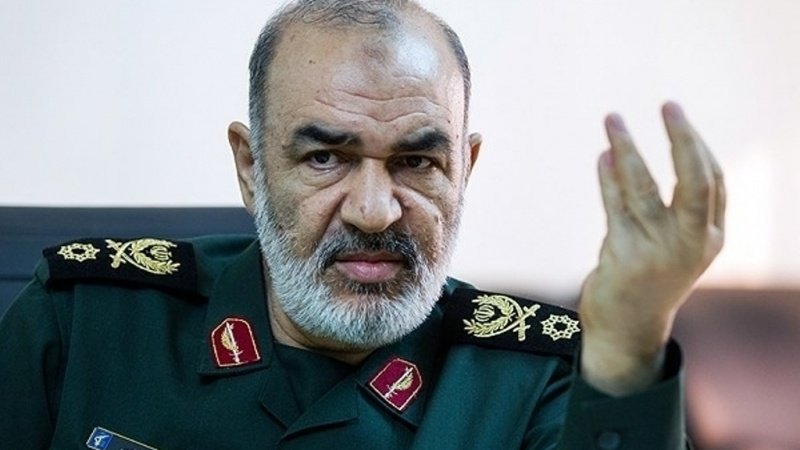
Will Iran Adopt A “Massive Retaliation” Doctrine?
On May 15, Iran announced that it would stop implementing some of its obligations under the 2015 nuclear deal (Joint Comprehensive Plan of Action or JCPOA) as a first response against U.S. sanctions. Additionally, the growing military threat against Iran is strengthening the military aspect of the Iranian government’s response. Beyond the current escalating tension between Iran and the U.S. that has grabbed so much media attention, Tehran is also considering longer-term military measures in response to U.S. pressure. Tehran believes that the Trump administration’s “maximum pressure” campaign could deepen the existing military expenditures disparity between Iran and its rivals and disrupt the regional military balance. It obscures Tehran’s military investments and increases the costs of implementing regional aspects of Iran’s deterrence capabilities. Trump sees “maximum pressure” as a way to restrain Iran’s power projection capacity to that of a “normal country“. However, Tehran fears that any future military imbalance could ignite a Saudi- or Israeli-led war even if that is not Trump’s intent. This is convincing Iranian leaders to adopt a new military doctrine.Making Sense of the European Parliament Election Results
Turkey and Russia are Bitter Frenemies
As Turkey and the United States bicker over Turkey’s purchase of an S-400 air defense system from Russia and its cooperation with Moscow in Syria, it is fair to ask whether Turkey and the West are heading for a real separation. It is true that Turkey is drifting away from the West. But it is still too early to say that it is ready to join forces with Russia, particularly in the Middle East.National Security Today Through 2028: Women Leading the Next Decade
Improvised Explosive Devices, a Near Perfect Asymmetric Weapon System of Necessity Rather than a Weapon of Choice
Views from the Capitals: European elections
Game of EU Thrones
Former NSA Officer Talks Dangers Of Information Ops
Inside the Controversial Company Helping China Control the Future of the Internet
Wargames as experiments: The Project on Nuclear Gaming’s SIGNAL framework
What can we learn from the Peloponnesian War that will help us deal with the intersection of cyber and nuclear conflict? What does World War I teach us about the role of nuclear-capable hypersonic weapons in warfare? The short answer to both questions is—probably not much. While extensive scholarship on nuclear warfare and strategy exists, empirical data on the impact of emerging technologies such as cyber weaponry, advanced intelligence, surveillance, and reconnaissance tools, and precision-guided munitions are lacking. Given the importance of policy-relevant research to equip decision-makers with tools to understand nuclear deterrence and reduce the likelihood of nuclear war, the scarcity of data available to analysts remains a critical gap.To Win The Cyber War, A Great Defense Is The Best Offense
Should State-Sponsored Cyber-Attacks Compel a Military Response?
A few weeks ago, members of the terrorist organization Hamas attempted to execute a cyberattack on Israeli targets. Israel responded by tracing the cyber attack back to a building in the Gaza strip and bombing it to kingdom come. That turn of events brings an interesting question regarding military retaliation when it comes to cyber attacks or espionage to the forefront. Nowadays, cyber-attacks targeting a state are not only used by terrorist organizations like ISIS or Hamas, but by legitimate governments too. Is military force a valid countermeasure when state actors are involved?A Whole-of-Government Approach to Gray Zone Warfare
This monograph provides an assessment of gray zone tactics used by the most active U.S. adversaries and builds the case for requiring U.S. Federal agencies to request that the Deputy National Security Advisor convene a National Security Council/Deputies Committee (NSC/DC) meeting whenever any Federal agency deems a gray zone approach to an international issue is appropriate. It also recommends that the United States should pursue the development of a standing National Security Council/Policy Coordination Committee (NSC/PCC) for gray zone solutions, with sub-NSC/PCCs for each component of the 4+1 (Russia, China, Iraq, North Korea, and violent extremist organizations) so that experts can be quickly assembled in times of crisis.THE ARMY INNOVATES BETTER THAN YOU THINK: A GUIDE TO THINKING ABOUT MULTI-DOMAIN OPERATIONS AND FIGHTING FUTURE WARS
Recently, the US Army has been developing a new vision of the future battlefield and how its forces will succeed there. Called Multi-Domain Operations (MDO), this new concept of warfare will enable the force to deal with future fights that span the land, air, maritime, space, and cyber domains. In many ways, MDO is a reaction to a decade of counterinsurgency (COIN) and its effects on the force. The contention is that the Army’s effectiveness at adapting to the threat of insurgency has dulled the skills required to face down a peer or near-peer competitor, like a rising China or Russia. In short, MDO advocates argue that there is a dangerous change underway in the threat environment for which the Army is unprepared. MDO represents the Army’s doctrinal response. For this response to be effective, and avoid previous doctrinal pitfalls, the Army and its civilian leaders must first appreciate the history of and motivations behind previous innovations in the Army. Multi-Domain Operations does not represent the first time the Army has turned against COIN. We are in many ways walking a well-worn doctrinal path, though one often only partially understood by scholars and historians. In the past, the Army engaged in surprising innovations that were based on changes in the threat environment and the availability of resources to address those changes. A number of these innovations confound cultural and bureaucratic perspectives on military innovation. As I discovered while researching and writing a new book, Military Realism: The Logic and Limits of Force and Innovation in the US Army, an analysis of the origins of doctrinal innovation and continuity in the Army from JFK to today offers an important perspective on military innovation. Those lessons from the Army’s own history should inform the way the service thinks about future war, including the move to Multi-Domain Operations.Why Venezuela’s Regime Hasn’t Collapsed Guaidรณ and What Army?
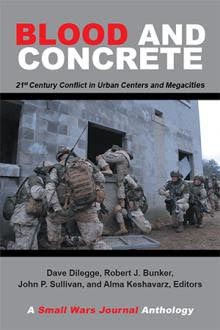
Blood and Concrete: 21st Century Conflict in Urban Centers and Megacities
Provides a foundation for understanding urban operations and sustaining urban warfare research. This Small Wars Journal (SWJ) Anthology documents over a decade of writings on urban conflict. In addition to essays originally published at SWJ it adds new content including an introduction by the editors, a preface on “Blood and Concrete” by David Kilcullen, a foreword "Urban Warfare Studies" by John Spencer, a postscript “Cities in the Crossfire: The Rise of Urban Violence” by Margarita Konaev, and an afterword “Urban Operations: Meeting Challenges, Seizing Opportunities, Improving the Approach” by Russell W. Glenn. These essays frame the discussion found in the collection’s remaining 49 chapters. Blood and Concrete continues the legacy of Small Was Journal's coverage of urban operations, conflict and combat. - Dave Dilegge, Robert J. Bunker, John P. Sullivan, and Alma Keshavarz, Editors.


.png)