The Profession of Arms: A Guide for Young Army Officers
It takes courage, especially for a young officer, to check a man met on the road for not saluting properly or for slovenly appearance, but, every time he does, it adds to his stock of moral courage, and whatever the soldier may say, he has respect for the officer who does pull him up.
Read Document →The Dragon's Teeth: Assessing China's Military Modernization
PLA has focused on modernising its capabilities across all warfare domains to achieve these goals. This includes land, air, and maritime operations, nuclear, space, counter-space, electronic warfare and cyberspace operations, aiming to become a fully integrated joint force.
Read Document →Transforming the PLA: A Decade of reorganisation from SSF to ISF
PRC has engaged in a sustained and broad effort to transform the PLA from an infantry-heavy, low-technology, ground forces-centric military into a high-technology, networked force with an increasing emphasis on joint operations and naval and air power projection.
Read Document →Eyes without Borders: Exploring the World of Open Source Intelligence (OSINT) in the Digital Age
Open Source Intelligence (OSINT) is gaining prominence with the rise of social media, the digital society and the vast growth of publicly and commercially available information (PAI and CAI).
Read Document →
The PLA’s Developing Cyber Warfare Capabilities and India's Options
Informationised warfare blurs the lines between peacetime and wartime. A nation in the information age cannot wait for the hostilities to break out to collect intelligence, carryout influence operations, develop antisatellite systems or design computer software weapons.
Read Document →
Galwan and After
Why did China did this when he is under tremendous pressure in all fronts, is this China's salami slice tactics being progressed rigorously, what will be new Rules of Engagement, what will be escalatory control mechanism, who has taken this decision, will there be some pressure put by China in India's North-East through insurgency.
Read Document →
India’s Joint Doctrine for Cyberspace Operations: A Critical Review
Chief of Defence Staff (CDS) General Anil Chauhan and Secretary, Department of Military Affairs, formally released declassified versions of the Joint Doctrines for Cyberspace Operations during the Chiefs of Staff Committee meeting in New Delhi.
Read Document →
Know your Enemy General(now Field Marshal) Syed Aseem Munir
Gen SA Munir's position in the hierarchy of Pakistan was not very comfortable. The state of economy, insurgency in Pakhtoonistan and Balochistan, attack on the Jaffar Express, constant protests by supporters of Imran Khan's supporters inside and outside of parliament.
Read Document →
Decoding Operation SINDOOR: Key Aspects and Implications
Precision strikes were carried out on nine sites—four in Pakistan and five in PoK—linked to anti-India terrorist groups such as the LeT, JeM and the Hizbul Mujahideen. The targeted sites included Muridke (LeT headquarters) and Bahawalpur (JeM headquarters).
Read Document →
Chinese Cyber Exploitation in India's Power Grid - Is There a linkage to Mumbai Power Outage?
The New York Times (NYT), based on analysis by a U.S. based private intelligence firm Recorded Future, reported that a Chinese entity penetrated India’s power grid at multiple load dispatch points. Chinese malware intruded into the control systems that manage electric supply across India, along with a high-voltage transmission substation and a coal-fired power plant
Read Document →21 January 2020
Why protests in India over the new citizenship law are much ado about nothing
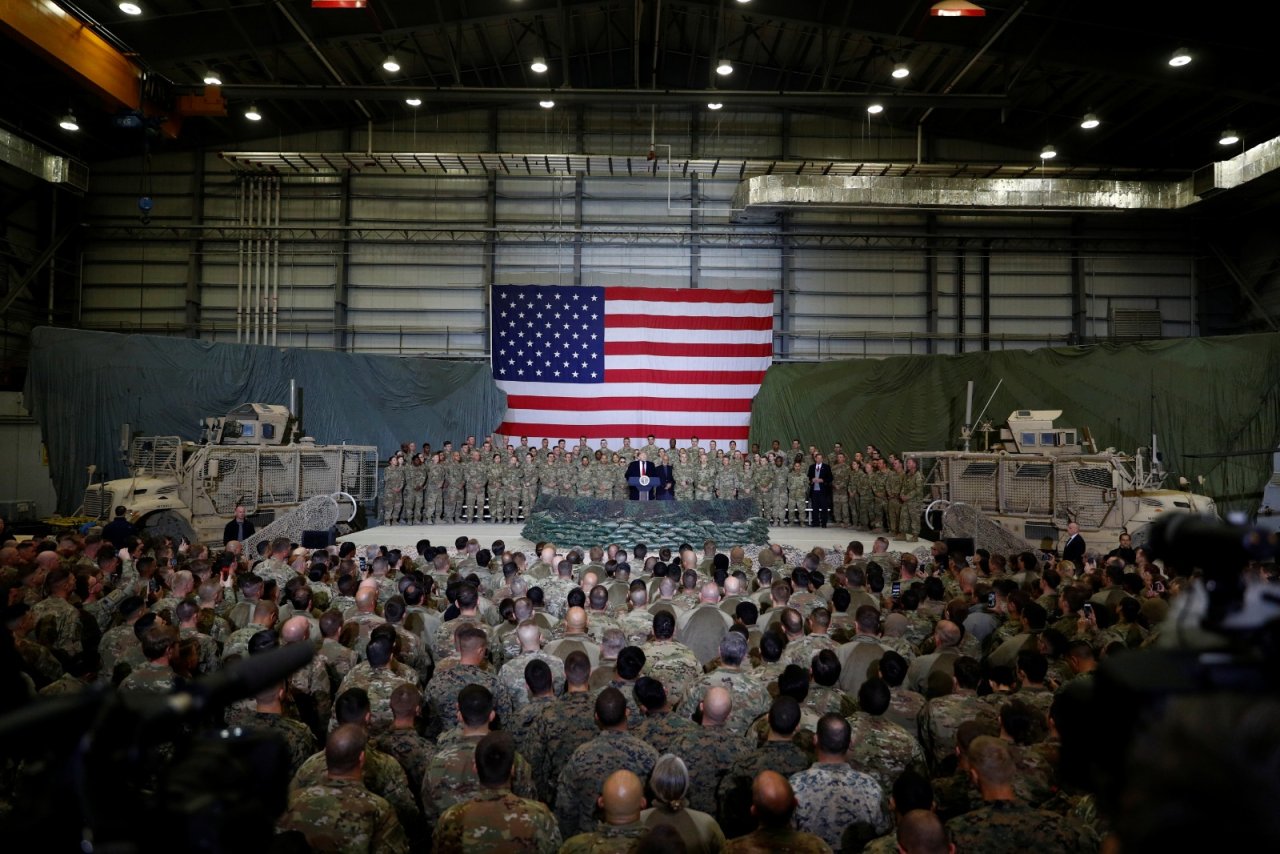
America Should Have Left Afghanistan 8 Years Ago, And The Same Problems Remain
South Africa's leaders are facing impending disaster
South Africa is on the brink of collapse. After years of corruption, mismanagement and poor investment, the fruits of the once-promising country have turned rancid. As the country’s leaders grapple with the impending disaster on their hands, tensions are boiling over. On January 10, Tito Mboweni, the finance minister, launched a series of tweets underscoring the gravity of the situation: “If you cannot effect deep structural economic reforms, then game over! Stay as you are and you are downgraded to Junck [sic] Status!! The consequences are dire. Your choice.”China’s Energy Options Narrow As Mideast Risks Rise – Analysis
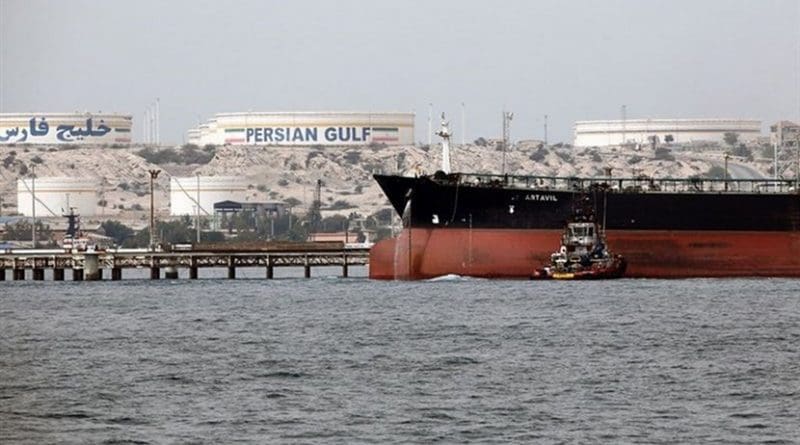
The threat of conflict between the United States and Iran will pressure China to deal with its rising reliance on foreign oil and gas after years of unchecked growth, analysts say.China’s Top Five War Plans
Taiwan Stands Up to Xi
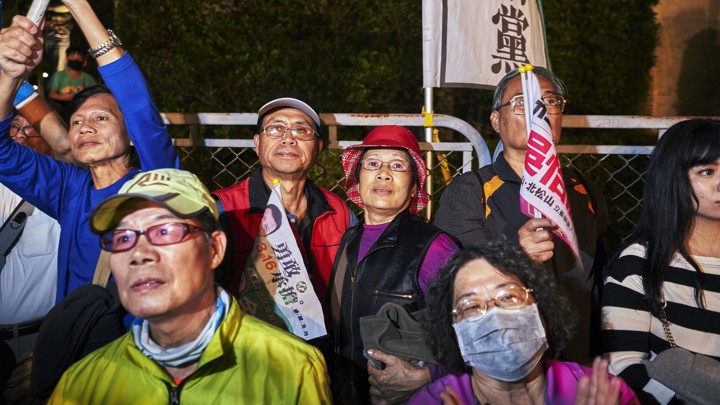
Taiwan can seem like the third rail of international diplomacy. If a country wants a good relationship with China, Beijing has effectively stated, it cannot have a meaningful relationship with Taiwan. Just this week, the city of Shanghai broke off official contacts with the city of Prague for signing a partnership treaty with Taipei. Beijing has long regarded Taiwan as nothing more than a renegade province. Under President Xi Jinping, China has systematically tried to reduce Taiwan’s international space, forcing it out of global organizations and forums, as well as increasing military and economic coercion to force it into a process of reunification.Trump Signs China Trade Deal, Putting Economic Conflict on Pause
What's inside the U.S.-China Phase One Deal?
The US Wants to Intimidate China with Hypersonics, Once It Solves the Physics
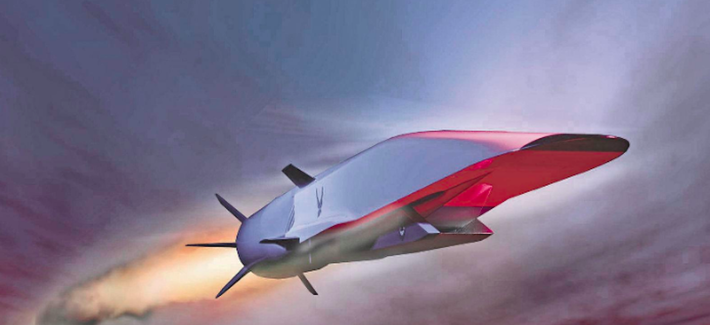
The U.S. is pressing ahead with new missiles, but questions remain about engineering, tactics, and even geopolitics.A WIN FOR DEMOCRACYA Stunner in Taiwan
A Delicate Truce in the U.S.-Chinese Trade War
Temporary cease-fires and false dawns have punctuated the 19-month-long trade war between China and the United States, only to dissipate with a sudden setback in negotiations, or a tweet from U.S. President Donald Trump that dialed up the heat on China while chilling global markets. And so the world heaved a sigh of relief when the two sides announced Phase I of a trade deal in December, the first step toward a negotiated peace.History's first superpower sprang from ancient Iran
Chief of Staff Aviv Kochavi on War and National Resilience
IDF Chief of Staff Lt. Gen. Aviv Kochavi stated in a recent public speech that “national resilience is…a positive multiplier for the IDF and a negative multiplier, when the IDF is strong and steadfast, for our enemies…When they realize that the people here understand what is expected from them…this has enormous significance…for the IDF…[and as a phenomenon] that will lessen the determination of the enemy.” The question, then, is how the State of Israel ensures that the civilian front continues to function as reasonably as possible during a war in which it can expect to suffer severe blows to the population, to property, and to critical infrastructures. Thus far the Israeli government has deliberately refrained from updating the public on its assessment regarding the potential consequences of war, wary of causing panic and lessening the public’s sense of security. Perhaps the Chief of Staff’s speech reflects a change in the military’s approach to this critical issue. This article contends that it is necessary to consider ways to gradually enhance the public’s mental preparedness for the next war by providing in advance a rational depiction of what is expected on the civilian front in a large-scale war. Sound information of this kind disseminated by the establishment has the ability to bolster national resilience.Senior IDF commanders do not comment frequently about the link between war and national resilience. A notable exception was the address in late December 2019 by Chief of Staff Lt. Gen. Aviv Kochavi in memory of the 15th Chief of Staff, Amnon Lipkin-Shahak, at the Interdisciplinary Center in Herzliya. In his address, Kochavi stated:Will Mirziyoyev’s Plodding Reforms Be Enough for Uzbekistan?
Last month, The Economist boldly labeled Uzbekistan its “country of the year,” declaring that “no other country travelled so far in 2019.” It is a remarkable achievement for a state that perennially finds itself at the bottom of international rankings on corruption, governance and human rights issues. But while Uzbekistan certainly is changing, the government’s quest for economic stability, not democracy, is driving the process.The President, His Relationship with Intelligence, and the Soleimani Strike
The Death of Oman’s Sultan Leaves a Void of Stability in a Volatile Region
The United States Influence And Competitors In The Indo-Pacific – Report
In December 2019, the Hudson Institute published a comprehensive report on the views of United States towards the Indo-Pacific region, entitled: “Strategies for the Indo-Pacific: Perceptions of the U.S. and Like-Minded Countries.” This volume is edited by Dr. Satoru Nagao, Hudson Institute Visiting Fellow. Could New Research on A.I. and White-Collar Jobs Finally Bring About a Strong Policy Response?
The encroachment of automation and robotics into the workplace has forced us to rethink the way that certain jobs are done, and it has produced anxiety about whether there will be enough jobs in the future for the human workers who need them. So far, much of the attention has focussed on blue-collar work, as factory assembly lines and warehouses have adopted automated processes more quickly and visibly than other industries. Automation on a factory floor evokes a simple image: robotic arms assembling parts into Tesla cars; mobile robots driving pallets of goods through Amazon distribution centers. In either scenario, the impact on human workers is easy to see. What is harder to visualize is how similar technology might find its way into the aspects of human labor that are invisible and not as easily routinized, such as complex decision-making, strategic planning, and creative thought.'We want to win the next war': US Army will revamp cyber operations to counter Russia and China
A Dangerous Escalation
Putin Signals Intention to Continue Steering Russia Beyond 2024, but Will He Solve Country’s Structural Problems?
The Race for Big Ideas Is On
In the past two weeks, escalating hostilities brought the United States to the brink of yet another conflict in the Middle East—this time with Iran. But such a conflict might not look much like the others that American forces have fought in the 21st century.Brexit could spell the end of globalization, and the global prosperity that came with it
The U.K. House of Commons has finally voted for Brexit. If the plan passes the House of Lords without much delay, the U.K. will leave the European Union several years after a 2016 referendum set it down this path.Why Is the United States So Bad at Foreign Policy?
In my last column, I described the “brain-dead” qualities of the Trump administration’s approach to the Middle East and especially Iran. In particular, I stressed that the administration had no real strategy—if by that term one means a set of clear objectives, combined with a coherent plan of action to achieve them that takes the anticipated reactions of others into account.Prepare For the Worst From Iran Cyber Attacks, As DHS Issues Warning: Experts
“I’m going to tell you a painful truth. When you have actors like this that are well trained — in the thousands — by a nation-state, if they are targeting something they will probably succeed,” says Diana Volere, whose (wonderful) title is “Chief Security Evangelist” at Saviynt. Over the past few years “Iran has been successful” in attacking a number of defense and civil aviation firms. Saviynt, based in El Segundo, helps organizations authenticate that people, software and systems accessing their networks are who and what they say they are, and not malicious actors.THE AI LITERACY GAP HOBBLING AMERICAN OFFICIALDOM
How one official wants to increase DHS cyber efficiency
The new Cybersecurity and Infrastructure Security Agency assistant director shared that adversaries switching up tactics are challenging CISA, which is looking to evolve how it collects and shares threat indicators. (JuSun)Windows 10 Has a Security Flaw So Severe the NSA Disclosed It
Microsoft released a patch for Windows 10 and Server 2016 today after the National Security Agency found and disclosed a serious vulnerability. It's a rare but not unprecedented tip-off, one that underscores the flaw's severity—and maybe hints at new priorities for the NSA.When Both Sides Have Drones, How Do You Know Which Ones to Kill?
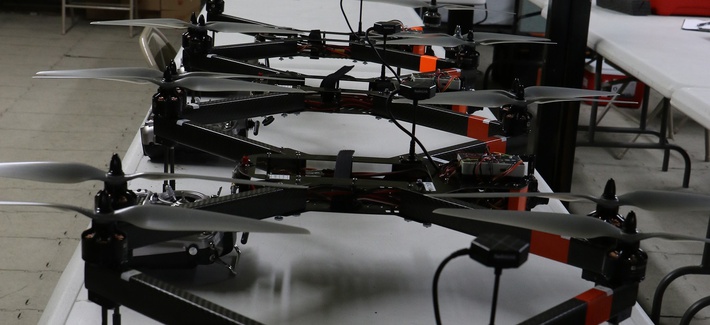
In November, the Army hosted a test of Pierce Aerospace’s Flight Portal ID at Fort Sill, Oklahoma. A friendly drone was equipped with a Bluetooth beacon, then sent aloft with a host of enemies, company CEO Aaron Pierce said. Air-defense operators in a Stryker ground vehicle was able to down the “enemy” drones and avoid the friendly one, using a Northrop Grumman anti-drone system called the Sophisticated Counter Unmanned Systems Weapon Radio Frequency that includes a 30mm X 113mm chain gun and a LiteEye electronic warfare system.