Earlier this month, Sri Lanka hosted a two-day conference among diplomats and non-government experts that rightly shone a spotlight on the increasing importance of the Indian Ocean. As highlighted by one delegation, it is currently what goes through the Indian Ocean (including half the world’s container traffic, one-third of bulk cargo transport, and around two thirds of the world’s maritime oil shipments) that particularly marks its global significance, rather than what may be produced from that ocean and its littoral states. The international trade associated with the Indian Ocean and the strategic significance of the region have become manifest.The Profession of Arms: A Guide for Young Army Officers
It takes courage, especially for a young officer, to check a man met on the road for not saluting properly or for slovenly appearance, but, every time he does, it adds to his stock of moral courage, and whatever the soldier may say, he has respect for the officer who does pull him up.
Read Document →The Dragon's Teeth: Assessing China's Military Modernization
PLA has focused on modernising its capabilities across all warfare domains to achieve these goals. This includes land, air, and maritime operations, nuclear, space, counter-space, electronic warfare and cyberspace operations, aiming to become a fully integrated joint force.
Read Document →Transforming the PLA: A Decade of reorganisation from SSF to ISF
PRC has engaged in a sustained and broad effort to transform the PLA from an infantry-heavy, low-technology, ground forces-centric military into a high-technology, networked force with an increasing emphasis on joint operations and naval and air power projection.
Read Document →Eyes without Borders: Exploring the World of Open Source Intelligence (OSINT) in the Digital Age
Open Source Intelligence (OSINT) is gaining prominence with the rise of social media, the digital society and the vast growth of publicly and commercially available information (PAI and CAI).
Read Document →
The PLA’s Developing Cyber Warfare Capabilities and India's Options
Informationised warfare blurs the lines between peacetime and wartime. A nation in the information age cannot wait for the hostilities to break out to collect intelligence, carryout influence operations, develop antisatellite systems or design computer software weapons.
Read Document →
Galwan and After
Why did China did this when he is under tremendous pressure in all fronts, is this China's salami slice tactics being progressed rigorously, what will be new Rules of Engagement, what will be escalatory control mechanism, who has taken this decision, will there be some pressure put by China in India's North-East through insurgency.
Read Document →
India’s Joint Doctrine for Cyberspace Operations: A Critical Review
Chief of Defence Staff (CDS) General Anil Chauhan and Secretary, Department of Military Affairs, formally released declassified versions of the Joint Doctrines for Cyberspace Operations during the Chiefs of Staff Committee meeting in New Delhi.
Read Document →
Know your Enemy General(now Field Marshal) Syed Aseem Munir
Gen SA Munir's position in the hierarchy of Pakistan was not very comfortable. The state of economy, insurgency in Pakhtoonistan and Balochistan, attack on the Jaffar Express, constant protests by supporters of Imran Khan's supporters inside and outside of parliament.
Read Document →
Decoding Operation SINDOOR: Key Aspects and Implications
Precision strikes were carried out on nine sites—four in Pakistan and five in PoK—linked to anti-India terrorist groups such as the LeT, JeM and the Hizbul Mujahideen. The targeted sites included Muridke (LeT headquarters) and Bahawalpur (JeM headquarters).
Read Document →
Chinese Cyber Exploitation in India's Power Grid - Is There a linkage to Mumbai Power Outage?
The New York Times (NYT), based on analysis by a U.S. based private intelligence firm Recorded Future, reported that a Chinese entity penetrated India’s power grid at multiple load dispatch points. Chinese malware intruded into the control systems that manage electric supply across India, along with a high-voltage transmission substation and a coal-fired power plant
Read Document →29 October 2018
A String of Fake Pearls? The Question of Chinese Port Access in the Indian Ocean
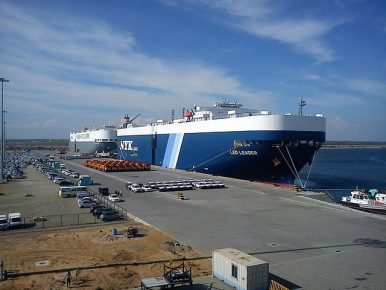
Earlier this month, Sri Lanka hosted a two-day conference among diplomats and non-government experts that rightly shone a spotlight on the increasing importance of the Indian Ocean. As highlighted by one delegation, it is currently what goes through the Indian Ocean (including half the world’s container traffic, one-third of bulk cargo transport, and around two thirds of the world’s maritime oil shipments) that particularly marks its global significance, rather than what may be produced from that ocean and its littoral states. The international trade associated with the Indian Ocean and the strategic significance of the region have become manifest.With Eye on China’s Belt Road Initiative, India to step up economic partnerships with Eastern, Southern Europe
India’s Trade With Iran
Staying in Afghanistan is the Definition of Insanity
Last week, House Armed Services Committee Chairman Rep. Mac Thornberry returned from a trip to Afghanistan and proclaimed, “reconciliation can lead to a representative political solution and a sustainable U.S. presence in Afghanistan . . . [because that] is the only way we can reliably defend America from the dangerous terrorist organizations that continue to operate in Afghanistan.” If that sounds familiar, it should. It’s just more of the same old Washington groupthink: “stay the course.” But we’ve been staying the course now for over seventeen years with no end in sight. This is the very essence of the definition of insanity: doing the same thing over and over again but expecting different results.Why Pakistan Isn’t Changing Its Taliban Policy
On September 28, Pakistan’s military chief, General Qamar Javed Bajwa, announced that 11 Taliban fighters would be executed for their role in killing 49 Pakistani civilians and 20 military personnel. In an official statement, Bajwa described the Taliban militants as “hardcore terrorists,” but declined to give a timetable for the executions or comment on possible death sentences for four other Taliban militants involved in similar criminal activities.CHINA’S COMING FINANCIAL CRISIS AND THE NATIONAL SECURITY CONNECTION
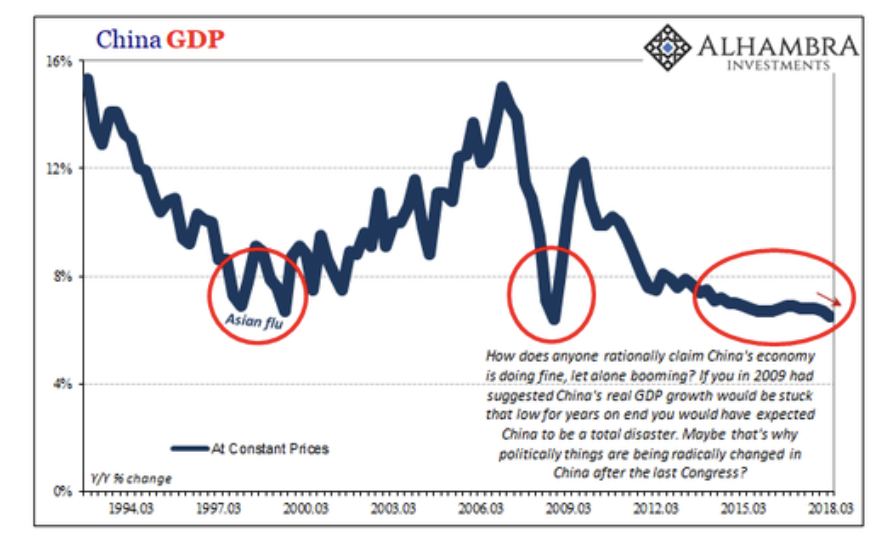
China is more economically vulnerable to a confrontation with the United States than it likes to admit. However, that weakness is not driven primarily by a budding trade war with America. China’s export volume growth has begun to slow with all major trading partners, not just the United States. A decade of reckless domestic credit growth is the primary source of China’s vulnerability. And that credit growth only temporarily abated in early 2018. There are already signs of more stimulus on the way. Over the past decade, China has been pursuing excessive GDP growth targets using massive injections of credit. China may respond to U.S. tariffs by pumping even more money into the economy, thereby exacerbating the underlying credit bubble. However, a renewed stimulus is going to occur anyway. Slow loan growth in 2017 has caused weaker GDP growth in 2018. To meet its GDP growth target for 2019, China again needs stronger credit growth.What Will the US-China Trade War Mean for Africa?
The arguments on all sides of the ongoing trade confrontation between the United States and China are by now well known. American, European, and Asian pundits and prognosticators have all weighed in, and predictions abound of the ultimate outcome of the Trump administration’s gambit to restructure the U.S.-China trade relationship.The U.S.-China Battle Complicates Vietnam's Economic Ambitions
By amassing political power, Vietnamese General Secretary Nguyen Phu Trong has effectively overturned the collective leadership in his country's political system, but questions remain as to whether such a model can continue after a leadership transition in 2021. The trade war between China and the United States could persuade some companies to relocate their high-end factories to Vietnam, yet the country's unskilled workforce and lower technological capacity will be a major weakness. Vietnam has been relying on a diversification strategy to reduce its economic reliance on China, but heightened competition between Beijing and Washington could complicate Hanoi's balancing act.China and the Last of the Multilateralists
In the early years of Xi Jinping’s presidency, China became increasingly assertive. It challenged neighbours and irksome international rules, while painting its behaviour as a measured response to other states’ mischief. Beijing lashed out at what it called Japan’s “militarism”; the “wrongful” deployment of the Terminal High Altitude Area Defense system in South Korea; “unfair” international arbitration on territorial claims in the South China Sea; the European Union’s “protectionist” view of China’s market economy status; Indian “provocations” on the Chinese border; and, of course, the United States’ “threatening” presence in East Asia. In reality, China insisted that status quo powers accept policies on its terms, while it became ever more unpredictable in its dealings with them. Europe learned this the hard way – through botched summits, interrupted or delayed dialogues, constant Chinese attempts to divide the EU, and Beijing’s sweeping disregard for implementing joint agendas and addressing European complaints.China Economy Dying: The Illusion Of Perpetual Growth
Abe-Xi summit comes as Chinese leader looks to create united front amid U.S. trade war
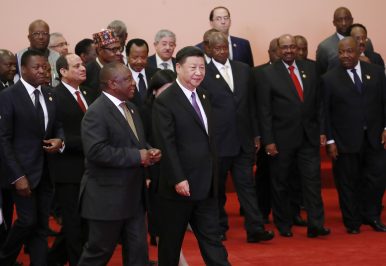
With all the fanfare generated by Prime Minister Shinzo Abe’s visit to Beijing later this week, perhaps the most significant aspect is that it is happening at all. Despite both taking office around the same time in 2012, Abe and his Chinese President Xi Jinping have never visited each other’s countries for a formal bilateral summit, with all of their previous encounters taking place on the sidelines of international conferences. But after six years, Abe will finally make the trek, paving the way for a reciprocal visit by Xi to Japan at some point in the future. “We want to use this opportunity to create momentum for us to map out and promote mutual cooperation and communication in various areas and to elevate Japan-China relations to a new level,” Chief Cabinet Secretary Yoshihide Suga said while announcing Abe’s visit to Beijing, which is scheduled to begin Thursday.China Wants More Nuclear-Armed Submarines. Should Everyone Be Worried?
A Year After Marawi, What’s Left of ISIS in the Philippines?
100-Megaton Nuclear Nightmare: How Do You Stop Russia's City-Killer Torpedo?
Only Macron Can Save Europe, Says Macron
US Navy’s New Naval Strike Missile to Deploy in 2019
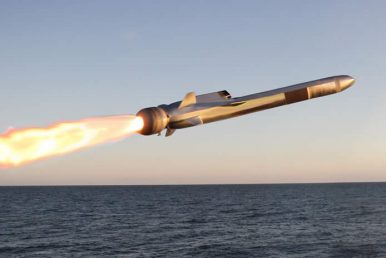
Norway-based Kongsberg Gruppen and U.S. missile maker Raytheon Company are expected to deploy and integrate their fifth-generation over-the-horizon Naval Strike Missile (NSM) in the U.S. Navy’s fleet of littoral combat ships (LCS) a few months ahead of schedule, defense industry executives revealed earlier this week at the at the Euronaval naval trade show in Paris. The U.S Navy selected the NSM for its LCS force and future frigates, designated FFG(X), in June of this year. “In that initial over-the-horizon award for LCS, the installation timeline was on a two-year delivery cycle,” Octavio Babuca of Raytheon company told Defense News. “But we are now working with the Navy to support an accelerated timeline to the deploying to littoral combat ships. That is mid-to-late 2019 time window.”The U.S. Withdrawal From the INF Treaty Is the Next Step in a Global Arms Race
The end of the INF treaty would again place Europe between Russian and U.S. intermediate-range nuclear missiles. Withdrawing from the INF allows the U.S. military to build up a formidable arsenal of missiles to challenge China and Russia. The termination of the treaty will galvanize an arms race between the great powers and could threaten the future of the New START arms control agreement. U.S. President Donald Trump announced on Oct. 20 that he intends to withdraw the United States from the Intermediate-Range Nuclear Forces (INF) Treaty. That agreement prohibits the deployment of nuclear and conventional ground-launched ballistic and cruise missiles with intermediate ranges, defined as 500-5,500 kilometers (310-3,410 miles). While the withdrawal will allow the U.S. military to build a formidable arsenal of missiles to challenge China and Russia, the treaty's termination will undoubtedly stoke a budding arms race between global great powers, and it could lead to the demise of other key arms control treaties such as the New START agreement.The I.N.F. Treaty, Explained
MOSCOW — The national security adviser, John R. Bolton, is in Moscow this week to explain to officials President Trump’s decision to pull out of a 1987 arms-control pact.U.S. Begins First Cyberoperation Against Russia Aimed at Protecting Elections
What an artificial intelligence researcher fears about AI
Could the cloud use the past to save troops in the future?
In this Saturday, Dec. 26, 2015 photo released by the U.S. Navy, the aircraft carrier USS Harry S. Truman transits the Strait of Hormuz. Iran flew a surveillance drone over a U.S. aircraft carrier and took "precise" photographs of it as part of an ongoing naval drill, state television reported Friday. The U.S. Navy said an unarmed Iranian drone flew near a French and American carrier on Jan. 12, but couldn't confirm it was the same incident. The U.S. Navy has transited the Strait of Hormuz for decades. Often, the conditions are smooth. Sometimes, the conditions are significantly less so and aircraft carriers are met with armed speedboats. There is an institutional memory to these incidents — word passed among sailors, logs recorded and archived, incident reports kept on file. But what if there was a way to make that information more immediately relevant, more functional? Rear Admiral Danelle Barrett, speaking at C4ISRNET’s Cloud 2020 event Oct. 18, wants the cloud to be the answer.The Army turns its attention to aerial electronic warfare
The Army’s rapid procurers are turning their focus to aerial electronic warfare solutions in response to ongoing needs in the European theater. The Army’s Rapid Capabilities Office has been working to deliver EW capabilities to Europe in phases that build upon each other, providing deployed forces with needed capabilities against a real threat now while also informing longer-term programs of potential requirements. A new effort “includes an aerial capability that extends the range of signal detection and will be used to inform the program of record, [Multifunction Electronic Warfare] Air Large,” Pete Manternach, EW lead for the RCO, said in written responses to C4ISRNET.Bill Gates Says We Shouldn’t Panic About Artificial Intelligence
What Weapons Will The US Build After The INF Treaty?
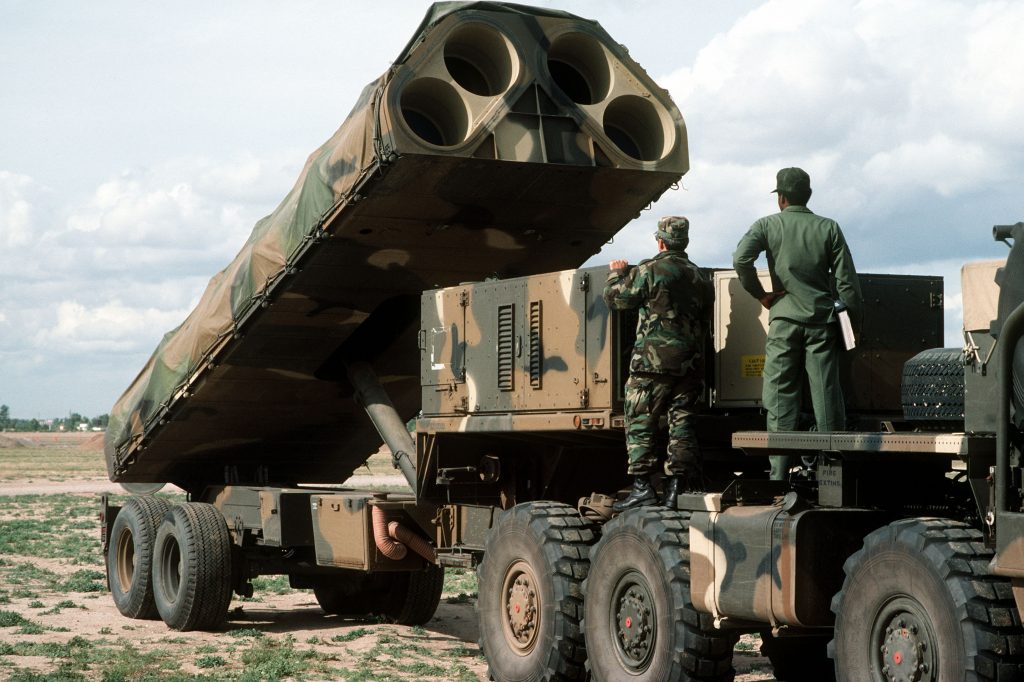
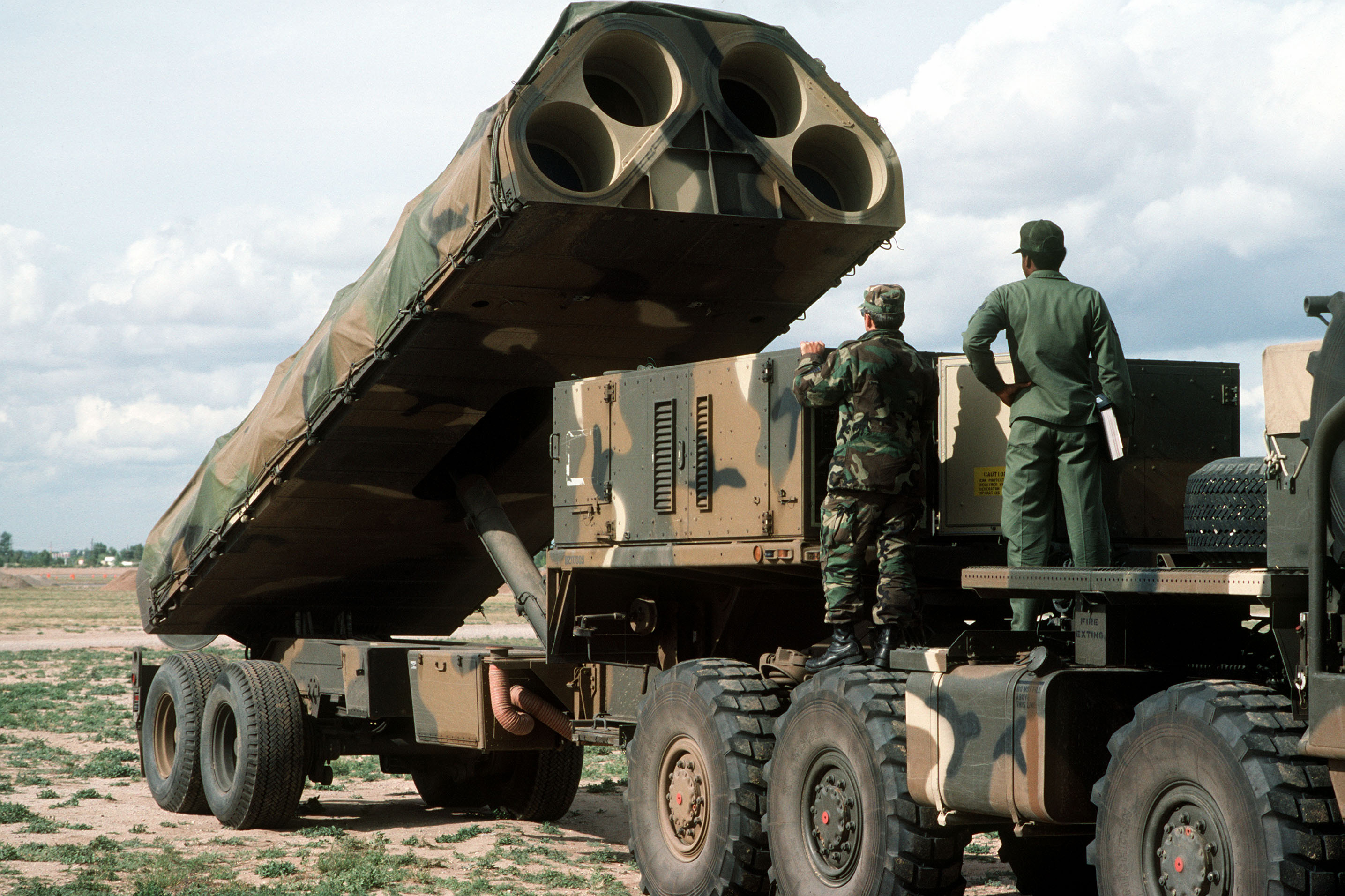
The Air Force’s BGM-109G Ground-Launched Cruise Missile (GLCM) was a Navy BGM-109A Tomahawk modified to fire from a Transporter-Erector-Launcher (TEL) truck. WASHINGTON: If President Trump withdraws from Reagan’s INF accord, it could jump-start fielding of new technologies that would have skirted the letter of the treaty, like ground-launched hypersonics. But it could also lead to less exotic solutions that the INF pact now bans outright, like mid-ranged ballistic missiles.As the product of a very particular moment in the Cold War, the misleadingly namedIntermediate-Range Nuclear Forces accord actually bans all cruise and ballistic missiles — . It doesn’t matter whether they carry nuclear warheads or conventional ones — that have a range between 500 to 5,500 kilometers, about 310 to 3,417 miles….but if and only they’re launched from the land. The exact same weapon, launched from a ship, submarine, or aircraft is completely legitimate.Army Wants to Use Robots to Help Conduct Precision Strikes on the Enem
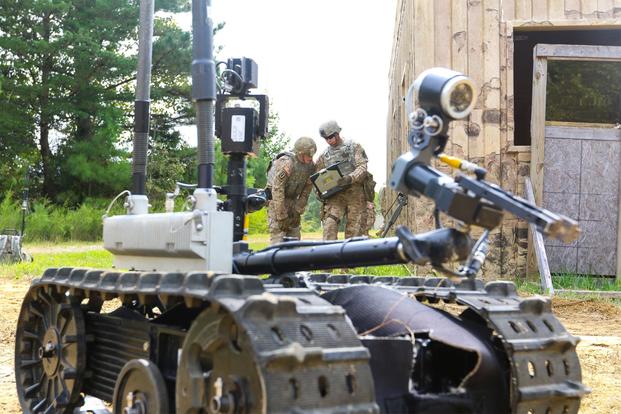
Army maneuver officials are hoping that a consortium of experts in non-military robotics can find new ways for combat units to defeat the enemy, especially in dense urban terrain. The Army's Capabilities Development and Integration Directorate, or CDID, at Fort Benning, Georgia, recently partnered with the National Advanced Mobility Consortium to conduct an outcome-based innovation workshop -- an approach to challenges that has been "proven in the commercial industry sector but never potentially used in a partnership with the military to get after some of the military's problems," according to Col. Tom Nelson, the head of CDID's Robotics Requirement Division.